Free template
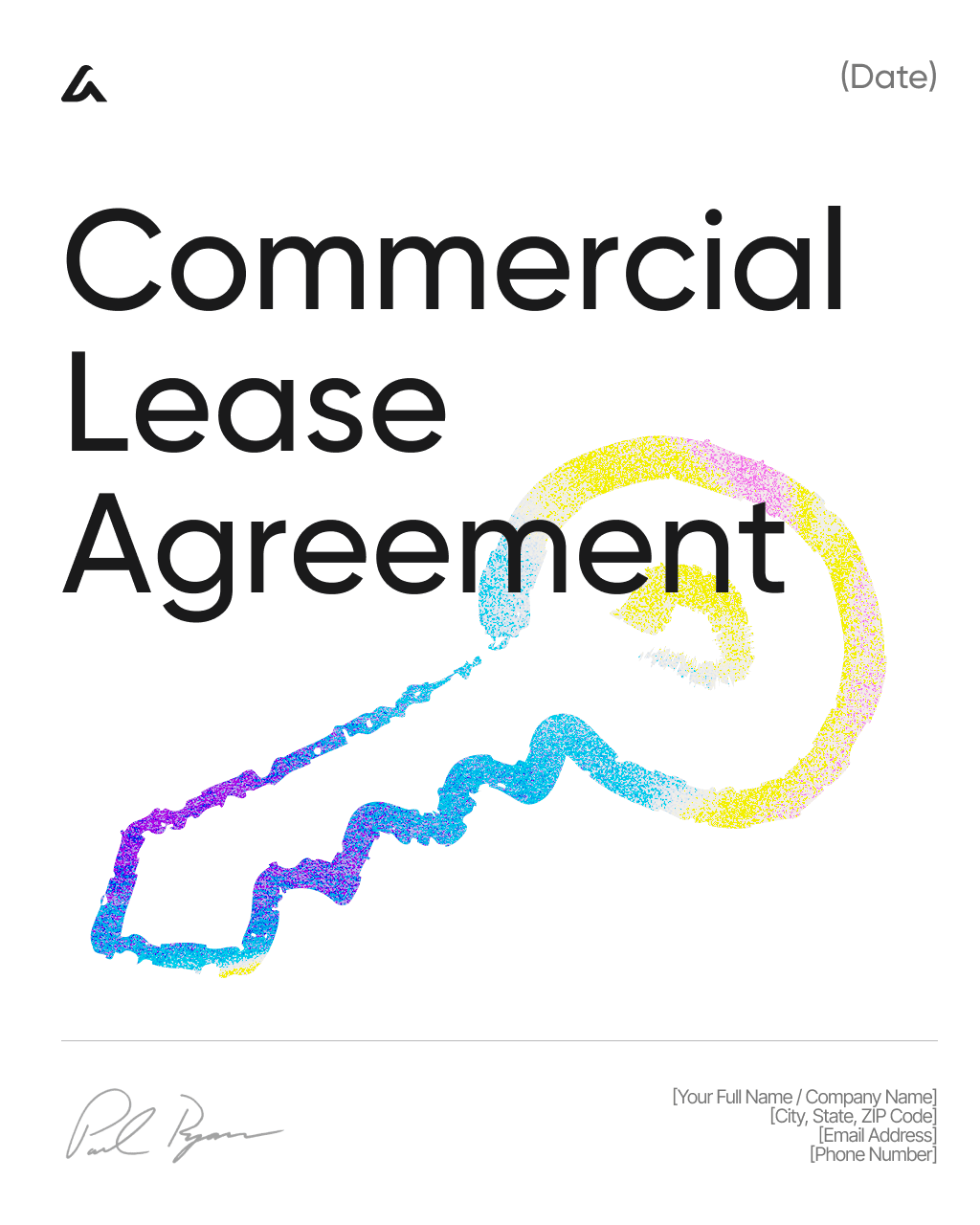
Commercial Sublease Agreement Template – Washington
Download template
Commercial Sublease Agreement Template
1. Term and Scheduling Focus
Start Date: [Start Date].
End Date: [End Date].
Renewal: [Renewal requires written consent of all Parties].
Operating Days/Hours: [Days], [Hours], [After-hours access rules, if any].
2. Parties, Consent, and Original Lease
This Commercial Sublease Agreement ("Agreement") is entered into on [Date], by and between Sublessor (Current Tenant): [Full Legal Name / Business Name], Sublessee (New Tenant): [Full Legal Name / Business Name], and Landlord: [Full Legal Name / Company Name].
Landlord Consent: [Required / attached as Exhibit B / pending].
Original Lease Date: [Original Lease Date].
Compliance: Sublessee agrees to comply fully with applicable terms of the Original Lease; Exhibit A: [attached / access reference].
3. Use of Premises (Activity Zones)
Authorized Use: [Authorized Use].
Primary Zone(s): [Describe zones used by Sublessee].
Shared Zone(s): [Reception], [Conference], [Storage], [Other].
Change of Use: The Sublessee may not change use without written consent of the Sublessor and Landlord.
4. Premises
The Sublessor subleases to the Sublessee the commercial space located at [Property Address], consisting of [Square Footage / Description of Area].
Premises Description: [Suite/Unit], [Floor], [Access points].
5. Utilities, Maintenance, Alterations
Utilities and Services: Sublessee shall be responsible for utilities [electricity/water/gas/internet/waste disposal], [directly / reimbursed to Sublessor].
Maintenance and Repairs: Sublessee shall keep the Premises in good order and condition; damage caused by Sublessee must be promptly repaired at Sublessee’s expense.
Structural Repairs: Sublessor remains responsible for structural repairs unless otherwise stated in the Original Lease.
Alterations and Improvements: No alterations without prior written consent of both Sublessor and Landlord; approved improvements remain with the Premises unless otherwise agreed.
6. Rent, Payments, and Deposit
Monthly rent: $[Amount], payable to [Sublessor/Landlord] on or before the [Day] of each month.
Security deposit: $[Amount], refundable subject to Section 10.
Late fees: [Specify amount or % after X days overdue].
Shared Amenities Fee (if any): $[Amount] for [parking/storage/conference/other] on [schedule].
7. Risk and Exit
Insurance: Sublessee shall maintain liability insurance of at least [Coverage Amount], naming both Sublessor and Landlord as additional insureds; proof required prior to occupancy.
Indemnification: Sublessee agrees to indemnify and hold harmless the Sublessor and Landlord against claims arising from Sublessee’s use of the Premises.
Assignment and Subletting: Sublessee may not assign or further sublet without prior written consent of the Sublessor and Landlord.
Termination: This Agreement may be terminated by expiration, written agreement of all Parties, or Sublessee default including non-payment or breach.
8. Shared Areas Allocation (Table)
Shared Resource | Allocation | Rules | Scheduling Method | Contact/Record ID |
[Parking] | [Spaces/permits] | [Rules] | [Calendar/first-come/assigned] | [Contact/ID] |
[Storage] | [Sq ft/shelves] | [Rules] | [Schedule/assigned] | [Contact/ID] |
[Conference Room] | [Hours/limits] | [Rules] | [Booking tool/method] | [Contact/ID] |
[Reception/Waiting Area] | [Use limits] | [Rules] | [Schedule/assigned] | [Contact/ID] |
9. Branding, Signage, and Public-Facing Materials
Permitted Signage: [Exterior], [Interior], [Directory], [Window], [None].
Approval Path: [Sublessor approval], [Landlord approval if required].
Removal at End of Term: [Yes/No], [restoration standard].
10. Security Deposit
The Sublessor shall hold the security deposit to cover damages or unpaid rent.
The deposit (minus deductions, if any) shall be returned within [X days] after sublease termination and surrender.
11. Governing Law
This Agreement shall be governed by and construed in accordance with the laws of Washington.
12. Signatures
Landlord (Consent): _______________________ Date: [Date] Name/Title: [Full Name, Title]
Sublessor: ______________________________ Date: [Date] Name/Title: [Full Name, Title]
Sublessee: ______________________________ Date: [Date] Name/Title: [Full Name, Title]
Shared-Space Coordinator (Acknowledgment): _______________________ Date: [Date] Name/Title: [Full Name, Title]
Flash deal
Flash deal
Today
Today
No time to fill it up? Generate your custom agreement with AI Lawyer in seconds
What’s Included
Legal Research
Legal Research
Legal Research
Contract Drafting
Contract Drafting
Contract Drafting
Document Review
Document Review
Document Review
Risk Analytics
Risk Analytics
Risk Analytics
Citation Verification
Easy-to-understand jargon
Details
Learn more about
Commercial Sublease Agreement Template – Washington
Click below for detailed info on the template.
For quick answers, scroll below to see the FAQ.
Click below for detailed info on the template.
For quick answers, scroll below to see the FAQ.
Washington Commercial Sublease Agreement Template FAQ
When is a shared-areas allocation clause most useful?
Shared allocations are most useful when the sublease involves more than just a locked suite, such as shared parking, storage, or conference rooms. Without a written allocation, parties often rely on informal habits that break down as staff change or business needs shift. A shared-areas table can specify what is allocated, what rules apply, and how scheduling is handled. This reduces day-to-day friction and helps both parties operate predictably, especially when customer traffic or deliveries depend on reserved resources.
How should scheduling for shared resources be handled in the sublease?
Scheduling should be described in a way that matches how the parties actually operate, such as a booking tool, a shared calendar, assigned time blocks, or first-come rules. The agreement should also identify who administers the schedule and how conflicts are resolved. When scheduling is clear, the sublessee can plan meetings and deliveries without repeatedly asking for permission, and the sublessor can protect access for its own operations. AI Lawyer can format shared-resource tables so allocations and scheduling methods are easy to review in negotiations.
What is the best way to describe the sublessee’s activity zones?
Activity zones describe how the sublessee will use the premises in practice, such as primary work areas and shared areas used occasionally. This is often clearer than a single broad use description, especially in partial subleases or co-working style arrangements. By listing primary and shared zones, the parties can set expectations about storage, foot traffic, and access. It also helps move-out because the parties can focus condition checks and restoration responsibilities on the zones the sublessee actually controlled.
How do signage and branding permissions reduce disputes?
Signage is a common flashpoint because building rules and landlord preferences can be strict, while the sublessee may need visibility for customers or deliveries. A signage clause can specify what types of signage are permitted and how approvals are obtained. It can also address whether signage must be removed and what restoration is required at the end of the term. When signage expectations are in the agreement, the sublessee can plan branding without risking a last-minute denial or removal request from building management.
What should be done if shared-resource usage changes mid-term?
If usage changes, the clean approach is to document the change in writing with an effective date and any revised fees or rules. For example, if the sublessee needs additional parking permits or expanded storage, the parties can update the allocation table rather than rewriting the entire agreement. This creates a clear record that matches actual operations. Documented changes are also easier to reconcile financially, because both sides can point to a dated record showing when the new allocation began.
How can the parties avoid confusion about who receives rent and fees?
The agreement should list the payee, due date, and payment method for base rent, and separately list any shared-amenity fees. If fees are billed on a different schedule or are reimbursed based on invoices, that should be stated so the sublessee does not treat the amounts as optional or included in rent. Clear payment mechanics reduce late fees and reduce the chance meaning is inferred from informal past practice. Keeping payments tied to a reference number also improves reconciliation across months.
What records should be kept for a clean move-out in a shared-space sublease?
Move-out is smoother when the parties can confirm surrender timing, access return, and the condition of the areas the sublessee used. For shared spaces, it helps to confirm removal of signage, return of parking passes, and any storage clean-out responsibilities. Photos or a short walkthrough record can reduce disagreement about the condition and whether anything was left behind. Keeping these records with the sublease packet makes it easier to support deposit deductions or refunds using objective evidence rather than memory.
Similar templates
Other templates from
Lease Agreement
Money back guarantee
Free trial
Cancel anytime
AI Lawyer protects
your rights and wallet
Money back guarantee
Free trial
Cancel anytime
AI Lawyer protects
your rights and wallet
Money back guarantee
Free trial
Cancel anytime
AI Lawyer protects
your rights and wallet
Money back guarantee
Free trial
Cancel anytime