Free template
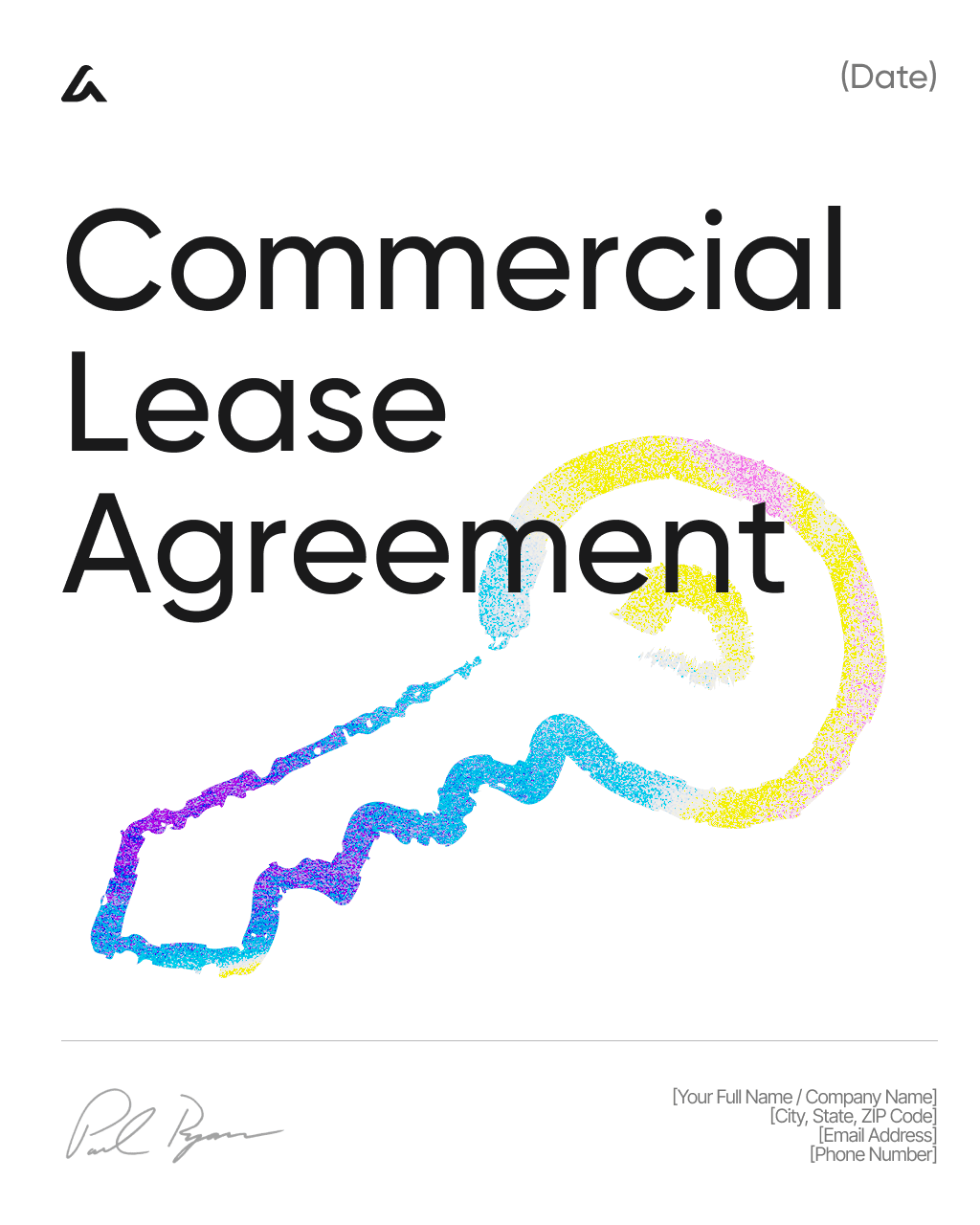
Commercial Lease Agreement Template – Florida
Set Florida commercial rent, responsibilities, and insurance documentation in one lease.
Downloaded 3975 times
Download template
Commercial Lease Agreement Template
Risk and Insurance Entry Point.
This Commercial Lease Agreement (the “Agreement”) is made and entered into as of [Date], by and between:
Landlord: [Full Legal Name], having a mailing address of [Address], hereinafter referred to as the “Landlord.”
Tenant: [Full Legal Name], having a mailing address of [Address], hereinafter referred to as the “Tenant.”
The Landlord and the Tenant may each be referred to herein as a “Party” and collectively as the “Parties.”
Insurance and Risk Allocation.
a. Tenant shall maintain commercial general liability insurance with coverage of at least [Minimum Coverage Amount], naming the Landlord as an additional insured.
b. Tenant shall maintain insurance for Tenant’s personal property, inventory, trade fixtures, and improvements to the extent not covered by Landlord’s property insurance, if any.
c. Waiver to Extent of Insurance: Each Party releases the other to the extent of insurance proceeds received for covered property damage losses.
Premises and Use.
a. The Landlord hereby leases to the Tenant the commercial property (“Premises”) situated at [Full Property Address and Description (suite number, floor, etc.)].
b. Permitted Use: [Describe Tenant’s Business/Authorized Use].
c. Tenant shall comply with applicable laws and shall obtain and maintain necessary licenses and permits.
Term.
a. The term of this Agreement (“Term”) shall commence on [Commencement Date] and shall expire on [Expiration Date], unless earlier terminated under this Agreement.
b. Month-to-Month: Holding over without a written extension shall be deemed a month-to-month tenancy on the same terms, except rent shall be [Percentage/Amount] of the then-current rent.
Rent and Fees.
a. Tenant shall pay monthly rent in the amount of [Rent Amount in USD], due on or before the [Due Date] day of each month, payable by [Payment Method].
b. Late Fee: If rent is not received within [Grace Period] after the due date, a late fee of [Late Fee Amount or Percentage] may be charged.
c. Returned Payment Fee: [Returned Payment Fee Amount].
Security Deposit.
a. Tenant shall pay a security deposit in the amount of [Security Deposit Amount in USD] before taking possession.
b. The security deposit may be applied to damages, unpaid rent, unpaid additional rent, or other charges resulting from Tenant’s breach.
c. Any return of the security deposit shall be handled in accordance with applicable law and this Agreement.
Operating Expenses and Utilities.
a. Lease Structure: [Gross / Modified Gross / Net / Triple Net (NNN)].
b. If additional rent applies, Tenant shall pay its proportionate share of [Taxes / Insurance / CAM] as invoiced pursuant to [Addendum A / this Section].
c. Utilities: Tenant shall arrange and pay for utilities required for operations, including electricity, gas, water, trash removal, internet, and telephone, unless otherwise specified.
Maintenance and Repairs.
a. Tenant shall keep the Premises in clean and orderly condition and promptly make non-structural repairs necessary due to Tenant’s use or occupancy.
b. Landlord shall be responsible for structural repairs to the roof, foundation, and exterior walls, except as otherwise agreed.
c. Alterations require Landlord’s prior written consent and must comply with applicable law and property requirements.
Casualty and Restoration Protocol.
a. If the Premises are damaged by casualty so it becomes substantially unusable, Landlord shall use available insurance proceeds to repair within a reasonable time.
b. If repairs cannot be completed within [Time Frame], either Party may terminate upon written notice.
c. Rent shall abate proportionately during any period the Premises remain untenantable, unless the damage is caused by Tenant.
d. Entry and Protection: After a casualty, Tenant shall cooperate with reasonable access requests for inspection and repair and shall secure Tenant’s personal property as practicable.
Assignment and Subletting.
a. Tenant shall not assign this Agreement or sublet any portion of the Premises without Landlord’s prior written consent.
b. Unauthorized transfers are void and constitute a default.
Default and Remedies.
a. Tenant is in default if Tenant fails to pay rent or other charges when due, or breaches a material term and fails to cure within [Cure Period] after notice.
b. Upon default, Landlord may terminate this Agreement, retake possession, and pursue remedies available at law or in equity.
c. Enforcement Costs: The breaching Party shall pay reasonable legal fees and costs to the extent permitted by law.
Notices and General Terms.
a. Governing Law and Venue: This Agreement shall be governed by the laws of the State of Florida. Any action shall be filed in the state or federal courts located in [County], Florida.
b. Notices shall be in writing and deemed given when delivered personally, sent by certified or registered mail (return receipt requested), or sent by a recognized courier service to the addresses above (or as updated by notice).
c. Entire Agreement; Severability: This Agreement and any addenda are the entire agreement. Invalid provisions do not affect remaining provisions.
Module 1 - Insurance Certificate Tracker.
The tracker below forms part of the Agreement.
Coverage | Carrier / Policy # | Limits | Effective - Expiration | Certificate / Endorsement Reference |
Commercial General Liability | [Carrier / Policy #] | [Minimum Coverage Amount] | [Effective Date - Expiration Date] | [COI/Endorsement ID] |
Property (Tenant Contents) | [Carrier / Policy #] | [Limit] | [Effective Date - Expiration Date] | [COI/Endorsement ID] |
Workers' Compensation (if applicable) | [Carrier / Policy #] | [Statutory / Limit] | [Effective Date - Expiration Date] | [COI/Endorsement ID] |
Auto Liability (if applicable) | [Carrier / Policy #] | [Limit] | [Effective Date - Expiration Date] | [COI/Endorsement ID] |
Module 2 - Utility Interruption and Emergency Contacts.
a. Emergency Contacts: Landlord: [Name/Phone/Email]; Tenant: [Name/Phone/Email].
b. Utility Outages: If utility service is interrupted, the Parties will coordinate reasonable access and communications to restore service where Landlord is responsible.
c. Temporary Measures: Tenant may use temporary measures for business continuity if permitted by applicable law and property rules.
Module 3 - Evidence Preservation for Claims (if any).
a. Incident Evidence: If a casualty or loss occurs, the Parties may preserve evidence such as [photos], [video], [CCTV camera ID], and [incident report identifiers].
b. Access to Evidence: Access and sharing of preserved evidence shall be [Method/Timeframe].
Signatures.
IN WITNESS WHEREOF, the Parties have executed this Commercial Lease Agreement on the dates indicated below.
Landlord: [Landlord Name]
Signature: ______________________________
Name/Title: [Authorized Signatory / Title]
Date: ______________________________
Tenant: [Tenant Name]
Signature: ______________________________
Name/Title: [Authorized Signatory / Title]
Date: ______________________________
Risk/Insurance Reviewer (if any): [Name]
Signature: ______________________________
Date: ______________________________
Flash deal
Flash deal
Today
Today
No time to fill it up? Generate your custom agreement with AI Lawyer in seconds
What’s Included
Legal Research
Legal Research
Legal Research
Contract Drafting
Contract Drafting
Contract Drafting
Document Review
Document Review
Document Review
Risk Analytics
Risk Analytics
Risk Analytics
Citation Verification
Easy-to-understand jargon
Details
Learn more about
Commercial Lease Agreement Template – Florida
Click below for detailed info on the template.
For quick answers, scroll below to see the FAQ.
Click below for detailed info on the template.
For quick answers, scroll below to see the FAQ.
Florida Commercial Lease Agreement Template FAQ
Why does this Florida lease version emphasize insurance documentation so heavily?
In many commercial leases, the practical risk question is not whether insurance exists, but whether the right parties are named and proof is delivered on time. Clear insurance terms reduce delays at move-in and make claims handling smoother if something goes wrong. A simple tracker in the lease helps both sides confirm coverage types, limits, and renewal dates. It also reduces disputes about whether an endorsement or additional insured status was actually provided.
What should a tenant insure versus what the landlord insures?
Landlords often insure the building structure, while tenants insure their personal property, inventory, and business operations. The lease should say which party carries which coverage and whether any costs are reimbursed as additional rent. If the tenant is improving the space, the tenant may also want coverage for those improvements. Clear allocation avoids gaps where each party assumes the other has coverage. If you are unsure, ask for each party to list coverages in the lease so the responsibilities are not guessed from customary practice.
How should a lease address downtime if the premises becomes unusable after a casualty?
The lease should address repair obligations, rent abatement during untenantability, and a termination right if repairs cannot be completed within a stated timeframe. It should also clarify access for inspection and repairs, and what happens to tenant personal property and fixtures. These clauses give both parties a plan for business interruption without renegotiating under pressure. Even a short casualty section can prevent major disagreements about when rent stops and when the lease can end.
What is the best way to prevent disputes about utilities and service interruptions?
Spell out who arranges each utility, who pays, and how the service is metered or allocated. For shared services, note the billing method and the expected invoice timing. If outages are a concern, include emergency contacts and a basic communication protocol so the parties coordinate rather than blame each other. A clear utilities clause also helps tenants set up accounts quickly and reduces late move-in surprises. It also helps to clarify responsibility for any tenant-installed equipment that depends on those services, such as alarms or refrigeration.
Does the landlord have to approve alterations and signage changes?
Many commercial leases require written landlord consent before the tenant alters the space, penetrates walls, changes building systems, or modifies signage. That consent clause protects the property and helps ensure work is coordinated with building requirements. If the tenant expects routine fit-out or branding updates, it can ask for a pre-approved scope or objective standards for approval. The key is writing down the approval process so the tenant is not stalled by unclear requirements.
How can a tenant plan for additional rent under a net lease structure?
Additional rent usually covers the tenant's share of items like taxes, insurance, and common area maintenance. To plan effectively, the lease should describe the allocation method, the categories included, and whether estimates and reconciliations will be used. If the landlord can bill estimates, set a reconciliation timeframe and a payment deadline for any true-up. Clear rules make the tenant's total occupancy cost more predictable. If caps or exclusions matter to you, negotiate them explicitly in the lease rather than relying on informal side emails.
What happens if the tenant wants to sublease because the business model changes?
Most leases restrict subletting and assignment without landlord consent. If flexibility matters, the tenant can negotiate a clear consent process, including the information the landlord can require and whether the original tenant remains liable. The lease can also require the subtenant to carry insurance and follow the same use limitations. Written transfer rules reduce risk for both sides if the tenant needs to restructure operations. Landlords often want to review the proposed subtenant's financials and intended use to protect the property and other occupants.
Similar templates
Other templates from
Lease Agreement
Money back guarantee
Free trial
Cancel anytime
AI Lawyer protects
your rights and wallet
Money back guarantee
Free trial
Cancel anytime
AI Lawyer protects
your rights and wallet
Money back guarantee
Free trial
Cancel anytime
AI Lawyer protects
your rights and wallet
Money back guarantee
Free trial
Cancel anytime