Organization/Company: [Company Name]
Program/Initiative Name: [Training Program Name]
Owner: [HR/L&D/Department]
Prepared By: [Name]
Date: [Date]
Version: [v1.0]
1. Purpose and Goals
1.1 Purpose: [Why this training exists].
1.2 Goals:
-
[Goal #1]
-
[Goal #2]
-
[Goal #3]
[Goal #1]
[Goal #2]
[Goal #3]
2. Target Audience
2.1 Audience Groups:
-
[Group #1] (e.g., new hires, managers, frontline staff)
-
[Group #2]
2.2 Prerequisites (Optional): [Required knowledge, access, certifications].
2.3 Training Volume (Optional): Estimated participants: [Number] per [month/quarter].
[Group #1] (e.g., new hires, managers, frontline staff)
[Group #2]
2.2 Prerequisites (Optional): [Required knowledge, access, certifications].
2.3 Training Volume (Optional): Estimated participants: [Number] per [month/quarter].
3. Scope and Content Outline
3.1 In Scope: [Topics included].
3.2 Out of Scope: [Topics excluded].
3.3 Learning Outcomes:
Participants will be able to: [Outcome #1]
Participants will be able to: [Outcome #2]
4. Delivery Methods
4.1 Formats (Select All That Apply):
☐ Self-paced modules ☐ Live workshops ☐ Recorded sessions ☐ Mentorship/shadowing ☐ On-the-job tasks ☐ External courses
4.2 Delivery Plan (Brief):
Week/Phase 1: [Format + topics]
Week/Phase 2: [Format + topics]
Ongoing: [Refreshers]
4.3 Accessibility and Remote Considerations (Optional): [Time zones, captions, accommodations].
5. Roles and Responsibilities
5.1 Program Owner: [Role] – accountable for outcomes.
5.2 Trainers/Facilitators: [Names/roles].
5.3 Managers: [Responsibilities].
5.4 Participants: [Attendance, completion, follow-through].
5.5 Support (IT/HR): [Access, tools, scheduling].
6.1 Training Materials: [Docs, slides, LMS modules].
6.2 Systems/Tools Needed: [Software, accounts].
6.3 Budget (Optional): $[Amount] + approvals.
7. Timeline and Cadence
7.1 Launch Date: [Date].
7.2 Training Cadence: ☐ One-time ☐ Monthly ☐ Quarterly ☐ Ongoing.
7.3 Key Milestones:
Content drafted by: [Date]
Pilot session by: [Date]
Full rollout by: [Date]
8. Measurement and Evaluation
8.1 KPIs (Select All That Apply):
☐ Completion rate ☐ Assessment scores ☐ Skill demonstration ☐ Manager feedback ☐ Time-to-productivity ☐ Error reduction ☐ Other: [KPI]
8.2 Evaluation Plan: [How KPIs are collected and reviewed].
8.3 Feedback Loop: [Survey timing, retros, improvements schedule].
9. Risk and Mitigation (Optional)
9.1 Key risks: [Low adoption, scheduling conflicts, limited trainer capacity].
9.2 Mitigation: [Plan].
10. Approvals
10.1 Approved by: [Name/Title] on [Date].
Signatures
Prepared By: [Name]
Date: [Date]
Signature: ___________________________
Approved By (Optional): [Name]
Title/Role: [Title]
Date: [Date]
Signature: ___________________________


 Promotion Letter Template
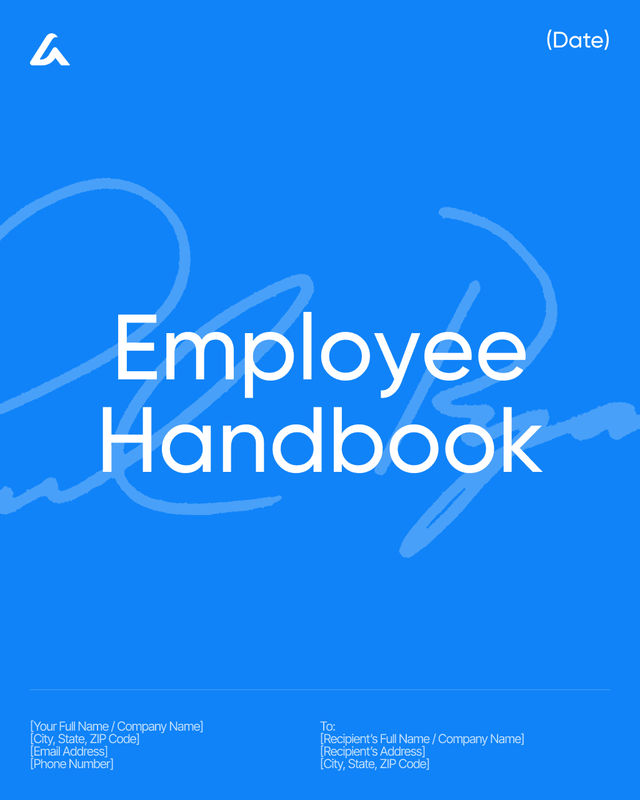 Employee Handbook
  Personal Injury Questionnaire Template
  OSHA Form 300A – Summary of Work-Related Injuries and Illnesses Template
 Employment Termination Letter
  Employment Verification Letter Template
  Unpaid Internship Agreement Template



 Workplace Injury Report Template
  Third-Party Injury Report Template
  Workplace Investigation Report Template
  Telecommuting Agreement Template
 Sports Injury Report Template
  Absence Without Notice Warning Letter Template
  Severance Agreement Template
  Application for Employment Template
  Settlement Agreement (Personal Injury) Template
  Arbitration Agreement Template