Self-Employment Income Verification Letter Template

Self-Employment Income Verification Letter Template

Self-Employment Income Verification Letter Template

Self-Employment Income Verification Letter Template

Typical length: 4-6 pages

Length: 4-6 pages

AI Assisted

Export: PDF & DOCX

Multi-jurisdiction ready

Multi-jurisdiction

Get your custom agreement in minutes

4.8 Rating

Downloaded 2267 times

Google For Startups

Google For Startups

NVIDIA Inception Program

NVIDIA Inception Program

Self-Employment Income Verification Letter Template


[Your Full Name / Business Name]
[Business Address]
[City, State, ZIP]
[Phone] | [Email]
[Website (Optional)]

Date: [Date]

To: [Requesting Party / Agency / Landlord / Bank Name]
[Address]
[City, State, ZIP]

Subject: Self-Employment Income Verification – [Your Full Name / Business Name]


1. Business and Self-Employment Details

1.1 Business Legal Name: [Business Name]
1.2 Business Type/Industry: [Industry]
1.3 Your Role/Title: [Owner / Sole proprietor / Partner / Contractor]
1.4 Self-Employed Since: [Month/Year]
1.5 Business Address: [Address]
1.6 Tax ID (Optional): [EIN/ID] (share only if necessary)


2. Income Summary

2.1 Income Period Covered: From [Start Date] to [End Date].
2.2 Gross Income (Optional): $[Amount] for the period / $[Amount] average per month.
2.3 Net Income (Optional): $[Amount] for the period / $[Amount] average per month.
2.4 Income Stability Note (Optional): My income is ☐ consistent ☐ seasonal ☐ variable based on projects/clients.


3. Supporting Documents (Recommended)

3.1 Attached or available upon request (select as applicable):

  • ☐ Recent tax return(s) (Form [__])

  • ☐ Profit and loss statement

  • ☐ Bank statements for [__] months

  • ☐ Client invoices/contracts

  • ☐ 1099 forms (if applicable)

  • ☐ Business license/registration

  • ☐ Other: [List]


4. Statement of Truth

4.1 I declare that the information provided in this letter is true and correct to the best of my knowledge. This letter is provided for verification purposes only.

Sincerely,
[Your Full Name]
[Business Name]


Signatures

Self-Employed Individual: [Full Name]
Date: [Date]
Signature: ___________________________


Accountant / Tax Preparer Verification (Optional)

Accountant/Preparer Name: [Name]
Firm Name: [Firm]
Phone/Email: [Contact]
License/Designation (Optional): [CPA/EA/Other]
Statement (Optional): I have reviewed financial records provided to me and confirm the income information above is consistent with those records, to the extent reviewed.

Date: [Date]
Signature: ___________________________

Self-Employment Income Verification Letter Template


[Your Full Name / Business Name]
[Business Address]
[City, State, ZIP]
[Phone] | [Email]
[Website (Optional)]

Date: [Date]

To: [Requesting Party / Agency / Landlord / Bank Name]
[Address]
[City, State, ZIP]

Subject: Self-Employment Income Verification – [Your Full Name / Business Name]


1. Business and Self-Employment Details

1.1 Business Legal Name: [Business Name]
1.2 Business Type/Industry: [Industry]
1.3 Your Role/Title: [Owner / Sole proprietor / Partner / Contractor]
1.4 Self-Employed Since: [Month/Year]
1.5 Business Address: [Address]
1.6 Tax ID (Optional): [EIN/ID] (share only if necessary)


2. Income Summary

2.1 Income Period Covered: From [Start Date] to [End Date].
2.2 Gross Income (Optional): $[Amount] for the period / $[Amount] average per month.
2.3 Net Income (Optional): $[Amount] for the period / $[Amount] average per month.
2.4 Income Stability Note (Optional): My income is ☐ consistent ☐ seasonal ☐ variable based on projects/clients.


3. Supporting Documents (Recommended)

3.1 Attached or available upon request (select as applicable):

  • ☐ Recent tax return(s) (Form [__])

  • ☐ Profit and loss statement

  • ☐ Bank statements for [__] months

  • ☐ Client invoices/contracts

  • ☐ 1099 forms (if applicable)

  • ☐ Business license/registration

  • ☐ Other: [List]


4. Statement of Truth

4.1 I declare that the information provided in this letter is true and correct to the best of my knowledge. This letter is provided for verification purposes only.

Sincerely,
[Your Full Name]
[Business Name]


Signatures

Self-Employed Individual: [Full Name]
Date: [Date]
Signature: ___________________________


Accountant / Tax Preparer Verification (Optional)

Accountant/Preparer Name: [Name]
Firm Name: [Firm]
Phone/Email: [Contact]
License/Designation (Optional): [CPA/EA/Other]
Statement (Optional): I have reviewed financial records provided to me and confirm the income information above is consistent with those records, to the extent reviewed.

Date: [Date]
Signature: ___________________________

Get your complete
agreement in minutes

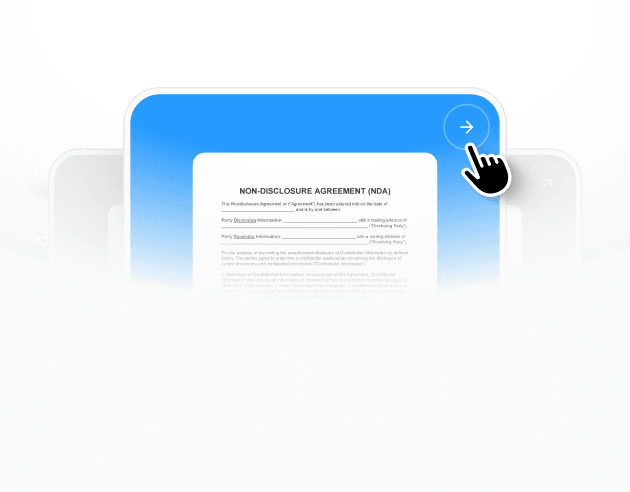
Select template illustration
Select a template

Each template already follows legal structure and best practices.

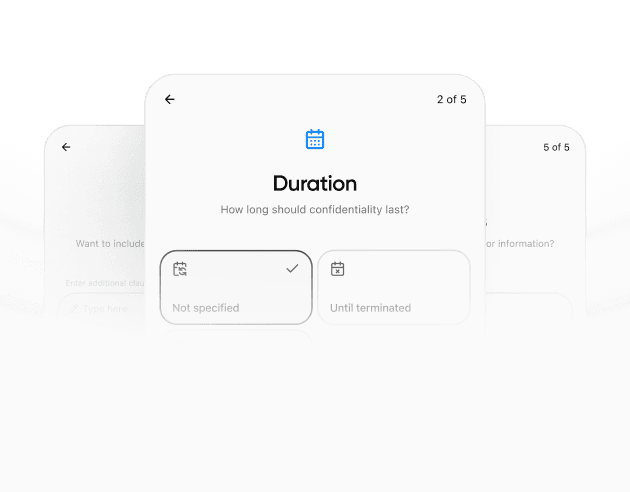
Provide details illustration
Provide details

The agreement is automatically filled and adapted to your inputs.

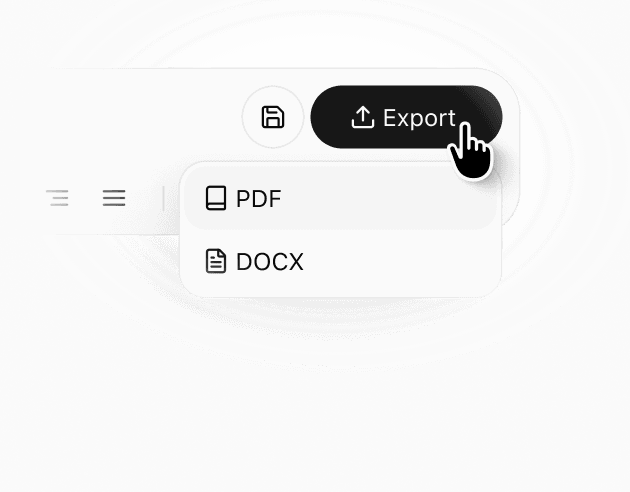
Review & download illustration
Review & download

Check the generated document, make edits if needed, and download a ready-to-use agreement.

Details

Learn more about

Self-Employment Income Verification Letter Template

Click below for detailed info on the template.
For quick answers, scroll below to see the FAQ.

Click below for detailed info on the template.
For quick answers, scroll below to see the FAQ.

Frequently asked · Self-employed income proof

Self-Employment Income Verification · Six recipients, 2026 evidence stack

Eight questions before you write a self-employment income verification letter. Below the FAQ: six recipient variants (mortgage lender, landlord, USCIS, government benefits, child-support court, SBA loan) each with sample opening; the 2026 income-evidence stack matrix (1040 Sch C, 1099-K, 1099-NEC, bank statements, P&L, CPA letter) showing what each recipient actually wants; and a note on the 2024 1099-K threshold change.

01Basics

What is a self-employment income verification letter?

A self-employment income verification letter is a self-written declaration of income, business type, and time in business, used as the self-employed equivalent of an employer's verification of employment letter when the writer has no employer to issue one. It is supporting evidence, not primary evidence; the receiving body will almost always cross-reference it against tax returns and bank statements.

The letter does three jobs: it puts the income figures in writing in a form a recipient can file and reference; it explains the structure of the business (sole prop, LLC, partnership) and the duration so the recipient can assess income stability; and it states the supporting documents available so the recipient knows what to ask for next. Without the letter, self-employed applicants frequently lose to W-2 applicants in mortgage, rental, and benefits processes because the recipient has nothing to anchor the income claim to.

02What to include

What should be included in the letter?

Seven elements, in this order. The structure below is what mortgage underwriters, landlords, USCIS adjudicators, and benefits caseworkers expect when they pick up a self-employment letter.

  1. Writer identification. Full legal name, business name (DBA if different), business address, EIN or SSN (last 4 if writing to non-government recipient), contact details.
  2. Business structure and duration. Sole proprietor / single-member LLC / multi-member LLC / S-corp / partnership; date business started; principal industry; state of formation if relevant.
  3. Income figures. Most recent calendar year and current year-to-date, both gross receipts and net business income (Schedule C line 31 for sole prop). State that figures match the filed 1040.
  4. Recipient identification. Specific addressee (lender name, landlord, USCIS service center) so the letter reads as targeted not generic.
  5. Purpose statement. One sentence on what the letter is supporting (mortgage application X, rental application for property Y, USCIS Form Z filing, court matter case number).
  6. Supporting documents list. Tax returns (years), 1099-Ks and 1099-NECs (years), bank statements (months), profit and loss (period), CPA letter if available.
  7. Signature, date, and either §1746 declaration or notarisation depending on whether the recipient requires sworn-statement form.
03Numbers

Should you include gross or net income?

Include both. The recipient will ask for whichever they care about; presenting one and not the other looks like you're hiding something.

Which one matters most depends on the recipient:

  • Mortgage lenders: Net income (after Schedule C deductions) is what underwriters use for DTI (debt-to-income) calculations. Showing only gross misleads the underwriter and triggers a Request for Information.
  • Landlords: Most use net to assess rental affordability (typically 2.5-3x net monthly income).
  • USCIS (public-charge / I-864 affidavit of support): Uses adjusted gross income from line 11 of Form 1040 as the official threshold.
  • SBA / business loan underwriters: Look at gross to assess business scale, net to assess profitability, and add back depreciation and one-time expenses for an adjusted EBITDA.
  • Court (child support, alimony): Both, plus the judge often imputes additional income for self-employed parents based on lifestyle indicators.
  • Government benefits (SNAP, Medicaid, ACA subsidies): Use Modified Adjusted Gross Income (MAGI) for most federal programs, computed from line 11 of Form 1040.
04Evidence

Do you need to attach documents?

Yes, and which combination of documents depends on the recipient. See the 2026 evidence-stack matrix in the BONUS section for the full breakdown; the universal pattern:

  • Tax returns (Form 1040 with Schedule C): The single most important document. Mortgage lenders typically want 2 years; USCIS wants the most recent year for I-864; landlords usually accept 1 year.
  • 1099-K and 1099-NEC forms: Issued by payment processors and clients respectively. Aggregate income across all 1099s should reconcile to gross receipts on Schedule C.
  • Bank statements: Personal and business bank statements covering 2-12 months depending on recipient.
  • Profit and Loss (P&L) statement: Year-to-date P&L, particularly for the current year before tax returns are filed.
  • CPA letter: Third-party verification by a licensed CPA confirming the figures; carries more weight than a self-written letter for most recipients.
  • Invoices and contracts: Sample invoices or signed client contracts demonstrating active business.
05CPA

Can an accountant sign it instead?

Yes, and a CPA letter is usually stronger than a self-written letter for high-stakes recipients (mortgage, USCIS I-864, large business loans). The CPA confirms the figures from their own review, which carries professional liability weight.

What a typical CPA verification letter includes:

  • CPA's license number, firm name, contact, and date of letter
  • Relationship to the client (how long they have prepared returns, what services they provide)
  • The income figures for the relevant tax year(s), reconciled to the filed return
  • Statement on the type of engagement (compilation, review, audit, or tax-return preparation only) and the resulting level of assurance
  • Disclaimer about limits of the verification

Important: many CPAs charge for verification letters ($75-$500 typical) and some refuse to issue them because of professional liability concerns under AICPA SSARS (compilation engagements). Ask early in the process; if your CPA does not provide them, a self-written letter accompanied by signed tax returns is the fallback.

062026 change

How does the 2024 1099-K threshold change affect this letter?

The IRS lowered the 1099-K reporting threshold from $20,000 + 200 transactions to $5,000 (no transaction minimum) for tax year 2024, then planned to phase to $2,500 in 2025 and $600 in 2026. If you're self-employed and accept payments via Stripe, PayPal, Venmo for Business, Square, Etsy, Uber, DoorDash, eBay, or similar, you will receive 1099-Ks for far more transactions than in prior years.

What this means for your verification letter in 2026:

  • Many gig-economy and side-business workers are getting 1099-K forms for the first time
  • The total of all 1099-Ks should reconcile to gross receipts on Schedule C; mismatches trigger IRS notices AND raise red flags with mortgage underwriters
  • The letter should reference 1099-Ks received and explain any reconciliation differences (refunds, payment processor fees, transactions across years)
  • Keep a 1099-K tracking sheet from all your payment processors; aggregate them carefully
  • Status of the phased reduction has shifted year-to-year through Congressional action; verify the current-year threshold before filing
07How-to

How do I write a self-employment income verification letter?

Keep it one page, address it to the specific recipient, lead with the income figures, and attach every supporting document you have. The BONUS section shows six recipient-specific variants with sample openings; the universal rules:

  • One page maximum; recipients spend 30-60 seconds on the letter
  • Specific recipient name and address, not "To Whom It May Concern" when possible
  • Specific business name, EIN, structure, and start date
  • Most recent tax year gross AND net + current year-to-date
  • List supporting documents available and offer to provide more
  • Sign and date; include §1746 declaration if recipient requires sworn-statement form
  • Match the tax-return figures EXACTLY; recipients independently verify via IRS Form 4506-C for mortgages
08Customise

Need a customized self-employment income letter?

Use AI Lawyer to generate one tailored to the recipient. Pick the recipient (mortgage lender, landlord, USCIS, government benefits, court, SBA), set your business structure and income figures; the assistant produces a letter with the right depth, the appropriate sworn-statement language, and the correct supporting-document checklist. For high-stakes filings (mortgage above $500K, USCIS public-charge contexts, court matters with income disputes), have a CPA verify the figures and have an attorney review the letter before sending.

Draft a verification letter your recipient will actually accept

Free template, six recipient variants, with the right gross/net figures, supporting-document checklist, and 2026 1099-K reconciliation built in.

Use the template

Similar templates

Other templates from

Employment Legal Templates

Money back guarantee

Free trial

Cancel anytime

AI Lawyer protects

your rights and wallet

🌐

Company

Learn

Terms

©2026 AI Lawtech Sp. z O.O. All rights reserved.

Money back guarantee

Free trial

Cancel anytime

AI Lawyer protects

your rights and wallet

🌐

Company

Learn

Terms

AI Lawtech Sp. z O.O.

©2026

Money back guarantee

Free trial

Cancel anytime

AI Lawyer protects

your rights and wallet

🌐

Company

Learn

Terms

©2026 AI Lawtech Sp. z O.O. All rights reserved.

Money back guarantee

Free trial

Cancel anytime

AI Lawyer protects

your rights and wallet

🌐

Company

Learn

Terms

©2026 AI Lawtech Sp. z O.O. All rights reserved.