AI Assisted
Export: PDF & DOCX
Get your custom agreement in minutes
4.8 Rating
Downloaded 3569 times
Get your complete
agreement in minutes
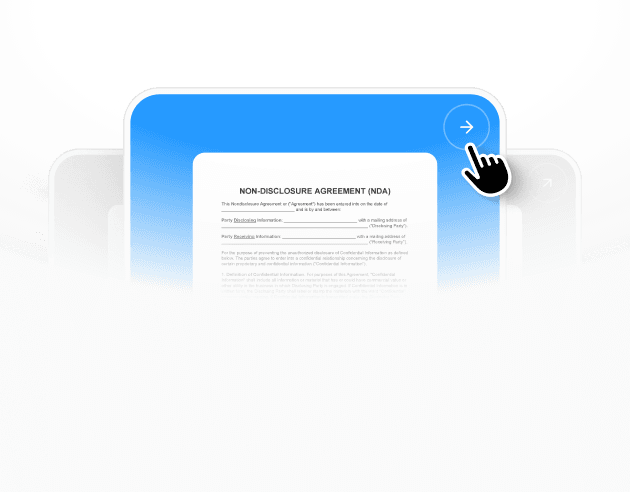
Select a template
Each template already follows legal structure and best practices.
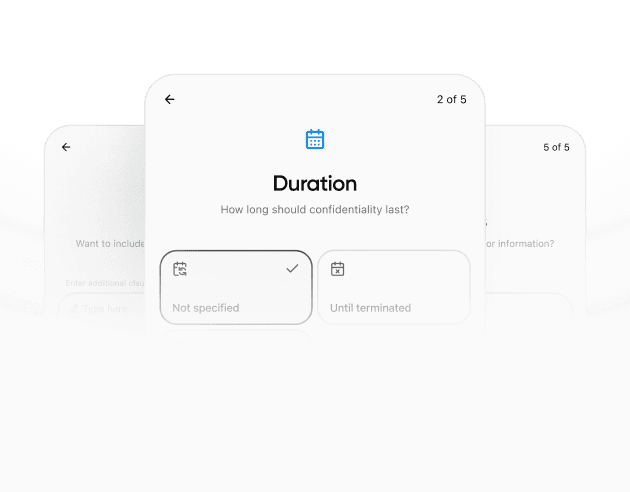
Provide details
The agreement is automatically filled and adapted to your inputs.
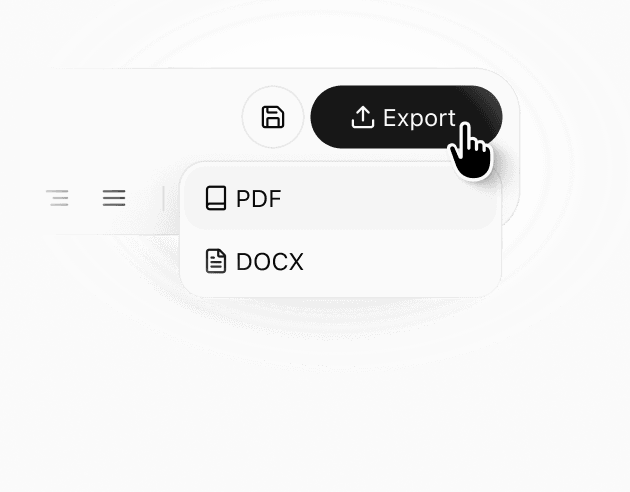
Review & download
Check the generated document, make edits if needed, and download a ready-to-use agreement.
Details
Learn more about
Notice to Vacate Template – Illinois
Illinois Notice to Vacate Template FAQ
Why put the forwarding address block near the top of the notice?
Forwarding address problems often cause delays after move-out because mail can be sent to the wrong place once the tenant leaves. Putting the forwarding address block near the top makes it easy to see and complete, which reduces the chance it is overlooked. It also centralizes post-move contact information in the same document as the termination date, so the landlord does not have to hunt for it later. When both parties have a clear address on file, deposit communications and closeout statements are less likely to be missed or returned.
Does listing possible deductions mean the landlord has already decided to deduct them?
No. A list of potential deduction categories is generally informational and helps set expectations about what may be considered at closeout. The actual decision should depend on what is owed and what condition issues exist at move-out. Keeping the categories general avoids making premature accusations while still reminding the tenant that unpaid obligations or damage beyond normal wear and tear can affect the deposit. This approach also encourages both sides to preserve receipts, photos, and repair communications, which makes any later discussion more concrete and less emotional.
How can a deposit deduction record table reduce disputes?
A deduction record table creates a simple, itemized way to connect any deduction to a supporting record identifier, such as an invoice, receipt, or photo set. If a disagreement arises, the parties can focus on whether the documentation supports the specific line item rather than arguing in general terms. The table also improves consistency because each entry is captured the same way. Even if no deductions occur, the structure encourages organized recordkeeping and helps the landlord maintain a clean closeout file for the tenancy.
What should the tenant do if they do not know their forwarding address yet?
If the tenant does not know the forwarding address on the notice date, the field can be left blank and provided later in writing. The value of the notice is that it sets a clear expectation that the address is needed for deposit or statement communications. Providing the address as soon as it is known helps avoid missed mail and reduces delays. It can also be helpful to provide a secondary email or phone number for post-move contact so questions can be resolved quickly if mailed communications are delayed or returned.
How specific should the access return method be in the notice?
It should be specific enough that the tenant can comply without guessing. Naming the return method, such as office drop, lockbox, or mail, and pairing it with a deadline reduces disputes about whether items were returned properly. If a lockbox is used, including a placeholder for the location or code helps ensure the tenant follows the same process as the landlord expects. Clear return mechanics support security and reduce last-minute complications at move-out. The more concrete the method, the less likely the parties are to argue about what “returned” means.
Is it appropriate to include a second signature line for records or accounting?
Yes, if the landlord’s process includes an internal reviewer who confirms that the record file is complete and that deposit communications are routed correctly. A second signature line can serve as an acknowledgment that the notice packet and related records are being handled through the landlord’s workflow. It does not change the tenant’s obligations and can be kept optional so small landlords can omit it. When multiple staff members are involved, an internal acknowledgment line can improve consistency and reduce mistakes in closeout administration.
Similar templates