Introducing Referent AI-native practice management software for modern law firms.

Explore Referent

IOU Agreement Template: Debt Acknowledgment & Repayment

  • Typical length: 4-6 pages
  • AI Assisted
  • Export: PDF & DOCX
  • Multi-jurisdiction ready
Get your custom agreement in minutes Create Agreement
4.8 Rating Downloaded 5540 times
Google For Startups NVIDIA Inception Program

IOU Agreement Template

This IOU Agreement (“Agreement”) is made as of [Date of Agreement].

1. Parties

Debtor (Person Who Owes Money):

Full Legal Name: [Debtor Full Legal Name]

Address: [Debtor Street Address, City, State/Province, ZIP/Postal Code, Country]

Phone: [Debtor Phone Number]

Email: [Debtor Email Address]

Creditor (Person to Whom Money Is Owed):

Full Legal Name: [Creditor Full Legal Name]

Address: [Creditor Street Address, City, State/Province, ZIP/Postal Code, Country]

Phone: [Creditor Phone Number]

Email: [Creditor Email Address]

2. Amount Owed and Acknowledgment of Debt

The Debtor acknowledges and agrees that the Debtor owes the Creditor the total sum of:

Amount Owed: [Amount in figures] ([Amount in words]) (“Debt”).

By signing this Agreement, the Debtor confirms that this Debt is valid and payable to the Creditor under the terms set out below.

3. Reason for the Debt

The Debt arises from the following, in general terms:

[Short description, such as “personal loan,” “reimbursement for paid expenses,” “money advanced for rent,” “business advance,” or similar.]

4. Interest (If Any)

Select one option and complete as needed:

  • Interest-Free:

    Interest Rate: 0% (no interest will be charged on the Debt).

  • Interest-Bearing:

    Interest Rate: [Annual Interest Rate %] per year, calculated on [simple interest or other basis] on the unpaid balance from [Interest Start Date] until the Debt is repaid in full.

Interest-Free:

Interest Rate: 0% (no interest will be charged on the Debt).

Interest-Bearing:

Interest Rate: [Annual Interest Rate %] per year, calculated on [simple interest or other basis] on the unpaid balance from [Interest Start Date] until the Debt is repaid in full.

5. Repayment Terms

Choose one structure and complete the details.

5.1 Single Payment

The Debtor will pay the full Amount Owed, plus any agreed interest, to the Creditor on or before:

Due Date: [MM/DD/YYYY]

OR

5.2 Installment Payments

The Debtor will repay the Amount Owed (and any interest, if applicable) in installments as follows:

Number of Payments: [Number of payments]

Amount of Each Payment: [Amount per payment]

Payment Frequency: [Monthly / Weekly / Other]

First Payment Due Date: [MM/DD/YYYY]

Subsequent Payments: [Description, such as “on the same day of each following month until the Debt is paid in full.”]

Unless the parties agree otherwise in writing, each payment will be applied first to any accrued but unpaid interest (if applicable) and then to the remaining balance of the Debt.

6. Payment Method

Payments will be made in [Currency] by: [Bank transfer / Cash / Check / Other method].

Payment Details (if applicable):

Payee / Account Name: [Account or Payee Name]

Bank / Institution: [Bank or Institution Name]

Account Number / IBAN: [Account Number or IBAN]

Payment Reference: [Suggested reference, such as “IOU – Debtor Name”]

7. Partial Payments and Additional Payments

The Creditor may accept partial payments without waiving the right to receive full payment of the remaining balance.

The Debtor may make additional payments at any time to reduce the outstanding balance early. Any such additional payment will be applied to the Debt in the same order as regular payments.

8. Late Payment and Default

8.1 Late Payment

A payment will be considered late if it is not received within [Number] calendar days after its due date.

Late Fee (if any): [Amount or Percentage, or “No late fee”].

8.2 Default

The Debtor will be in default under this Agreement if:

  • The Debtor fails to pay any amount due under this Agreement within [Number] days after receiving written notice of non-payment from the Creditor; or

  • The Debtor otherwise materially breaches this Agreement and does not correct the breach within [Number] days after written notice from the Creditor.

The Debtor fails to pay any amount due under this Agreement within [Number] days after receiving written notice of non-payment from the Creditor; or

The Debtor otherwise materially breaches this Agreement and does not correct the breach within [Number] days after written notice from the Creditor.

9. Effect of Default and Collection

If a default occurs and continues beyond any applicable cure period, the Creditor may, subject to applicable law:

  • Declare the entire remaining balance of the Debt (including any agreed interest and permitted fees) immediately due and payable; and

  • Take lawful steps to collect the unpaid amount, which may include making a formal demand, using a collection service, or seeking a court judgment.

Declare the entire remaining balance of the Debt (including any agreed interest and permitted fees) immediately due and payable; and

Take lawful steps to collect the unpaid amount, which may include making a formal demand, using a collection service, or seeking a court judgment.

10. No Security Interest

This IOU Agreement records an unsecured debt. No specific property or collateral is pledged to secure this Debt, unless the parties enter into a separate written security agreement.

11. Confirmation of Understanding

By signing this Agreement, both parties confirm that:

  • They understand the amount owed and the repayment terms.

  • The Debtor intends to repay the Debt in good faith according to this Agreement.

  • The Creditor agrees to accept repayment according to these terms unless the parties later agree in writing to different terms.

They understand the amount owed and the repayment terms.

The Debtor intends to repay the Debt in good faith according to this Agreement.

The Creditor agrees to accept repayment according to these terms unless the parties later agree in writing to different terms.

12. Changes to This Agreement

Any change to this IOU Agreement must be in writing and signed by both the Debtor and the Creditor.

If either party does not enforce a part of this Agreement at a particular time, that does not mean that part is waived or cannot be enforced later.

13. Notices

Any notices or demands related to this Agreement must be in writing and sent to the addresses or email addresses shown in Section 1, unless a party provides new contact details in writing.

Permitted notice methods include:

  • Personal delivery

  • Mail or courier

  • Email, if both parties use email and agree to receive notices electronically

Personal delivery

Mail or courier

Email, if both parties use email and agree to receive notices electronically

14. Governing Law

This Agreement is governed by the laws of [State/Province, Country], unless the parties specify a different governing law here: [Alternative Governing Law, if any].

15. Entire Agreement

This Agreement contains the entire understanding between the Debtor and Creditor regarding the Debt described in it and replaces any prior oral or written understandings about this specific amount owed.

Signatures

Debtor:

Signature: _______________________________

Printed Name: [Debtor Full Legal Name]

Date: [MM/DD/YYYY]

Creditor:

Signature: _______________________________

Printed Name: [Creditor Full Legal Name]

Date: [MM/DD/YYYY]

Witnesses (If Used)

Witness 1:

Signature: _______________________________

Printed Name: [Witness 1 Full Legal Name]

Address: [Witness 1 Address]

Date: [MM/DD/YYYY]

Witness 2:

Signature: _______________________________

Printed Name: [Witness 2 Full Legal Name]

Address: [Witness 2 Address]

Date: [MM/DD/YYYY]

Notary Acknowledgment (If Required)

State/Province of [State/Province]

County of [County]

On [Date], before me, [Notary Full Name], a Notary Public, personally appeared [Debtor Full Legal Name] and [Creditor Full Legal Name], who proved their identities on the basis of satisfactory evidence and acknowledged that they executed this IOU Agreement for the purposes stated in it.

Notary Public Signature: _______________________________

Notary Public Printed Name: [Notary Full Legal Name]

My Commission Expires: [Date]

Notary Seal: ☐

Download Free Template

Get your complete
agreement in minutes

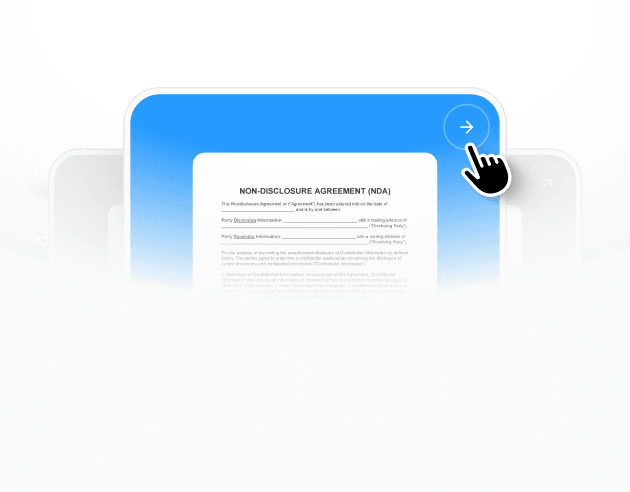
Select template illustration
Select a template

Each template already follows legal structure and best practices.

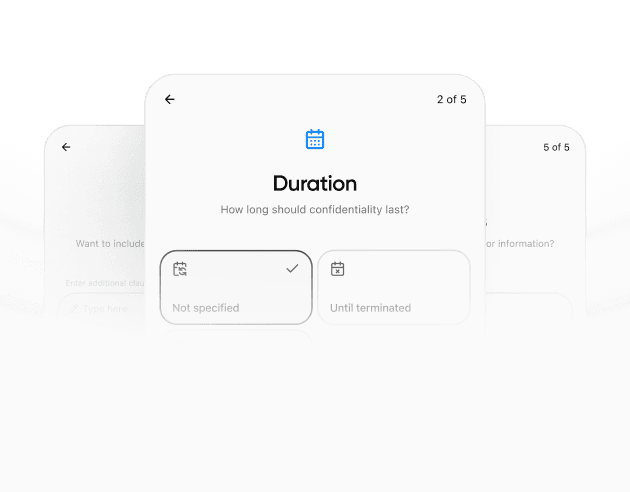
Provide details illustration
Provide details

The agreement is automatically filled and adapted to your inputs.

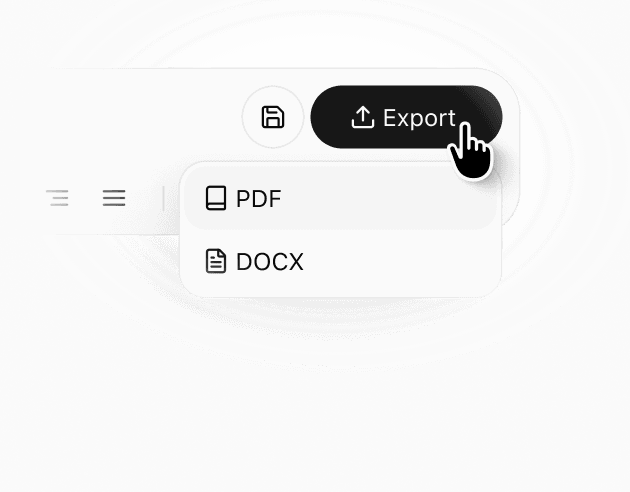
Review & download illustration
Review & download

Check the generated document, make edits if needed, and download a ready-to-use agreement.

Details

Learn more about

IOU Agreement Template: Debt Acknowledgment & Repayment

Click below for detailed info on the template.
For quick answers, scroll below to see the FAQ.

Learn more

Frequently asked · IOUs & simple debt

IOU Agreement · What makes it enforceable, and where a promissory note is safer

Eight questions to settle before you write or sign an IOU. A well-drafted IOU is a real, enforceable contract that gives you written proof of a debt; a vague one signed on a napkin can still work but leaves gaps a debtor's lawyer will drive through. Below the FAQ: a side-by-side of IOU vs promissory note vs loan agreement, sample clauses you can paste, and the two facts that genuinely vary by state — the interest cap and how long you have to sue.

01 Basics

What is an IOU?

An IOU (short for "I owe you") is a short written document in which one party acknowledges that they owe a specific sum of money to another and states, at minimum, how much is owed and when or how it will be repaid. It is the simplest, most informal way to put a debt in writing.

An IOU does three jobs at once. It records that a debt exists and fixes the amount, so the parties cannot later disagree about the number. It identifies who owes whom, removing the "that was a gift, not a loan" argument. And it creates a dated, signed piece of paper the creditor can point to if the debt is disputed. Because it is deliberately brief, an IOU works best for straightforward arrangements between people who trust each other — friends, family, or small businesses — where the value is low to moderate and the terms are simple.

02 Enforceability

Is an IOU legally binding and enforceable?

Yes — an IOU can be a legally binding, enforceable contract, provided it meets the basic requirements every contract needs and the debt itself is genuine. Its informality does not make it unenforceable; its lack of detail is what causes problems.

To be enforceable, an IOU generally needs the same core ingredients as any contract:

  • A clear debt. An identifiable sum acknowledged as owed by one named party to another.
  • Consideration. Something of value changed hands (money lent, goods supplied, expenses covered). A bare promise to pay with nothing given in return can be treated as an unenforceable gift promise.
  • Intent to be bound. Wording showing the debtor promises to repay, not merely a hope or moral obligation.
  • Signature. Signed by the debtor at least; ideally both parties, dated.

A signed IOU serves as strong written proof of the debt if a dispute reaches court. What it usually lacks — a default clause, interest terms, a collection mechanism — is why a promissory note or loan agreement is better for larger sums.

03 Compare

IOU vs promissory note vs loan agreement — what's the difference?

All three record a debt, but they sit on a spectrum from informal acknowledgment (IOU) to a fully detailed, negotiable instrument (promissory note) to a comprehensive contract (loan agreement). The right choice depends on how much is at stake and how much protection the lender needs.

  • IOU. The simplest. Acknowledges a debt and, at most, a basic repayment term. Rarely covers interest, default, collateral, or collection. Best for small, low-risk debts between people who trust each other.
  • Promissory note. A more formal, standalone promise to pay that typically spells out interest, a payment schedule, late fees, default, and acceleration. In many states it is a negotiable instrument that can be transferred to a third party. Better for meaningful sums where the lender wants enforceable terms.
  • Loan agreement. The most comprehensive — a full contract with representations, covenants, default and remedy clauses, collateral or security, governing law, and dispute resolution. Used for larger, more complex, or higher-risk loans.

See the side-by-side table below for enforceability, level of detail, and when to reach for each.

04 What to include

What should an IOU include?

Even a short IOU should capture six essentials. Each one closes off an argument a debtor could otherwise raise later.

  1. The parties. Full legal names and contact details of the debtor (who owes) and the creditor (who is owed), so there is no ambiguity about who is bound.
  2. The amount. The exact sum owed, ideally in both figures and words ("$2,500 (two thousand five hundred dollars)"), plus the currency.
  3. The reason. A brief description of why the debt exists (personal loan, reimbursed expenses, rent advanced, business advance). This establishes consideration and rebuts a "gift" defense.
  4. The date. The date the IOU is signed — and, if different, the date the money was actually lent, which starts the clock on interest and the statute of limitations.
  5. Repayment terms. Either a single due date or a simple installment schedule (number of payments, amount, frequency, first due date), plus payment method.
  6. Signatures. The debtor's signature is essential; the creditor's signature and any witnesses strengthen the document.

Optional but valuable additions: an interest rate (or an express "interest-free"), a late-fee provision, and a note on what happens on default. Sample wording for these is in the clause library below.

05 Formalities

Does an IOU need witnesses or notarization to be valid?

No. In almost all cases an IOU is valid and enforceable with just the debtor's signature — witnesses and a notary are not legally required for an ordinary personal debt. They are useful, not mandatory.

What witnesses and notarization actually add is evidentiary strength, not legal validity:

  • Witnesses can later confirm the debtor signed voluntarily and was the person who signed, which undercuts a "that isn't my signature" or "I was pressured" defense.
  • Notarization has a notary verify the signers' identities and attest that they signed, making the document much harder to challenge as a forgery and often smoother to use in court.

For small IOUs between friends, a plain signed document is normally fine. As the amount grows, add two witnesses and consider notarizing. Note that a few situations do carry formal requirements — for example, some states' statute of frauds requires certain agreements to be in writing, and a loan secured by real property involves separate formalities — so confirm locally for anything beyond a simple unsecured debt.

06 Interest

Can you charge interest on an IOU, and is there a limit?

Yes, you can charge interest if both parties agree to it in writing — but every state sets a ceiling through its usury laws, and those ceilings vary widely, so the safe move is to confirm your state's cap before setting a rate.

A few reliable principles apply nationwide:

  • Interest-free is always safe. If you charge no interest, no usury cap can be breached. Many personal IOUs are best kept interest-free.
  • Interest must be agreed and stated. If the IOU is silent, most states presume no interest until a judgment (though a "legal rate" may then apply). To charge interest, write the annual rate into the document.
  • Usury caps vary a lot by state. Limits differ from state to state and by loan type. For example, California's general usury limit is 10%, Florida's is 12%, and New York treats interest above 16% as civil usury and above 25% as criminal usury for most loans between individuals. Some states (such as Arizona, Utah, and Texas) let a written contract set a higher rate than the default. Because the numbers genuinely differ — confirm your state's usury limit locally rather than assuming a figure.

Charging above the cap can cost you the interest, and in some states the whole loan or even criminal exposure. When in doubt, stay modest or interest-free, and get the rate confirmed for your state.

07 Collection

What happens if they don't pay the IOU back?

You escalate in steps — a written reminder, then a formal demand letter, and if that fails, a lawsuit, usually in small claims court for smaller amounts. But you must act within your state's statute of limitations, which is the deadline to sue on the debt.

The practical sequence:

  • Written reminder. A polite note referencing the IOU and the missed date often resolves it.
  • Demand letter. A firmer written demand stating the amount, the deadline, and that you will pursue legal collection if unpaid. This also documents your effort.
  • Small claims court. For modest sums (limits vary by state, commonly in the $2,500-$25,000 range) you can sue without a lawyer. A signed IOU is strong evidence.
  • Formal suit or judgment enforcement. For larger debts, a civil suit; if you win, a judgment can be enforced through wage garnishment or liens where the law allows.

Mind the clock. The statute of limitations on a written debt varies significantly by state — roughly 3 years in states such as Delaware, Maryland, North Carolina, and South Carolina, up to 10 years in states such as Illinois, Indiana, and Iowa, and as long as 15 years in Kentucky. Once it expires, you generally lose the right to sue, so confirm your state's deadline early. Making a partial payment or acknowledging the debt in writing can, in some states, reset that clock — a detail worth checking before you accept a partial payment.

08 Customise

Need a customized IOU agreement?

Use AI Lawyer to generate one tailored to your situation. Set the parties, the amount and reason, whether it is interest-free or interest-bearing, and a single due date or installment schedule; the assistant produces a clean, readable IOU with the essentials in place — acknowledgment of debt, repayment terms, late-payment and default language, and signature and optional witness or notary blocks. For larger debts, business loans, or anything secured by property, have a licensed attorney review before signing, and confirm your state's interest cap and limitations period.

Put the debt in writing before it becomes a dispute

Free IOU template with amount, reason, repayment terms, optional interest and installments, plus signature, witness, and notary blocks — customize, download, and print in minutes.

Use the template
Similar templates

Other templates from

Financial Agreements