
Turn your law firm AI-native

Apply

Promise to Pay Agreement / Letter Template

  • Typical length: 4-6 pages
  • AI Assisted
  • Export: PDF & DOCX
  • Multi-jurisdiction ready
Get your custom agreement in minutes Create Agreement
4.8 Rating Downloaded 4413 times
Google For Startups NVIDIA Inception Program

Date: [Date]

From (Debtor): [Full Name / Business Name]

[Address]

[Phone] | [Email]

To (Creditor): [Full Name / Business Name]

[Address]

[Phone] | [Email]

1. Amount Owed

1.1 I, [Debtor Name], acknowledge that I owe [Creditor Name] the total amount of $[Amount].

1.2 Reason for the debt (optional): [Invoice # / services / loan / other].

2. Payment Terms

2.1 Payment Schedule (Select One):

☐ One-time payment of $[Amount] due on [Due Date]

☐ Installments of $[Amount] due on: [Dates]

☐ Other schedule: [Describe]

2.2 Payment Method: ☐ Bank transfer ☐ Check ☐ Cash ☐ Other: [Method].

2.3 Payment Destination: [Payment address/account details].

3. Late Payment (Optional)

3.1 Payment is late after [**] days.

3.2 Late fee: $[**] or [__]% (if permitted).

4. Default

4.1 If I fail to make a payment as agreed, the remaining balance may become immediately due (if allowed), and the Creditor may pursue lawful collection options.

5. No Waiver

5.1 Acceptance of partial or late payments does not waive the Creditor’s rights unless agreed in writing.

6. Governing Law (Optional)

6.1 This letter/agreement is governed by the laws of [State/Country].

Signatures

Debtor: [Full Name / Business Name]

Date: [Date]

Signature: ___________________________

Creditor (Optional Acknowledgment): [Full Name / Business Name]

Date: [Date]

Signature: ___________________________

Download Free Template

Get your complete
agreement in minutes

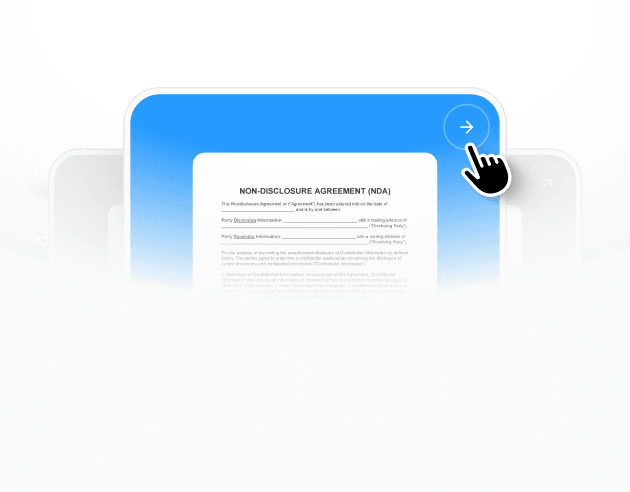
Select template illustration
Select a template

Each template already follows legal structure and best practices.

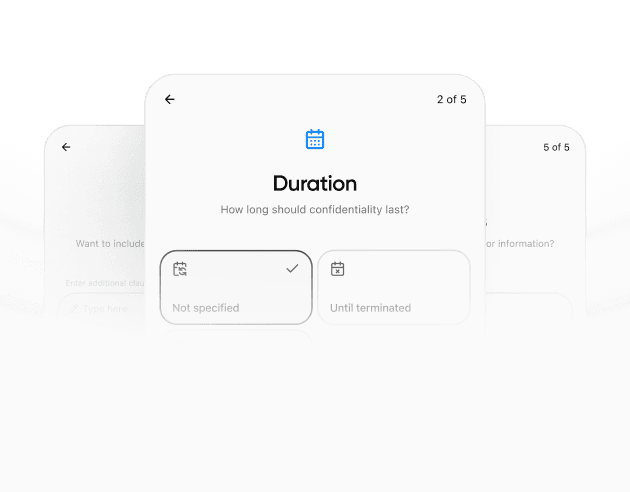
Provide details illustration
Provide details

The agreement is automatically filled and adapted to your inputs.

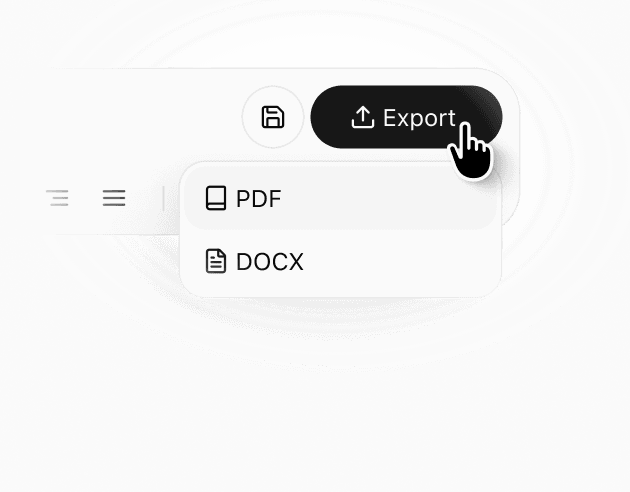
Review & download illustration
Review & download

Check the generated document, make edits if needed, and download a ready-to-use agreement.

Details

Learn more about

Promise to Pay Agreement / Letter Template

Click below for detailed info on the template.
For quick answers, scroll below to see the FAQ.

Learn more

Frequently asked · Debt, repayment, enforceability

Promise to Pay Agreement · Is it binding, how it compares, what to include

Eight questions to settle before you sign or send a promise to pay agreement. A well-drafted one turns an "I'll pay you back" into an enforceable written record with a schedule, a default remedy, and a paper trail you can take to court. A vague one is barely better than a text message. Below the FAQ: a side-by-side of promise to pay vs promissory note vs IOU, ready-to-adapt sample clauses, and a plain-language note on where you must confirm your state's rules.

01 Basics

What is a promise to pay agreement or letter?

A promise to pay agreement is a written document in which one party (the debtor) acknowledges owing a specific sum to another party (the creditor) and commits to repay it under stated terms — the amount, the schedule, and what happens if a payment is missed. It converts a loose understanding into a dated, signed record.

It is used most often for overdue invoices, personal loans between friends or family, informal debts that were never papered, and settlement arrangements where one side agrees to pay the other over time. The document does three jobs: it fixes the amount owed so neither side can later dispute the number; it sets a concrete repayment schedule with due dates; and it states the creditor's remedy if the debtor stops paying. Because it names the parties, the sum, and the terms, it is a stronger record than an email chain or a verbal deal — and much easier to enforce.
02 Enforceability

Is a promise to pay letter legally binding and enforceable?

Usually yes — if it has the elements that make any contract enforceable: a clear offer, acceptance, and consideration, made by parties with capacity, for a lawful purpose. A signed promise to pay a genuine, existing debt normally satisfies all of these.

The four things a court looks for:

  • Offer and acceptance. One side proposes definite repayment terms; the other agrees to them. A signature by both parties is the cleanest evidence of acceptance.
  • Consideration. Each side must exchange something of value. Where the debt already exists, the creditor's forbearance — agreeing not to sue immediately, or extending time to pay — is typically the consideration supporting the new promise.
  • Capacity and legality. Both parties must be adults of sound mind, and the debt and its terms must be lawful (an interest rate above your state's usury cap, for example, can be unenforceable).
  • Written and signed. Writing is not always legally required, but it is what makes the terms provable. Enforceability ultimately turns on your state's law and the nature of the underlying debt — confirm locally for anything significant.
03 Compare

Promise to pay vs promissory note vs IOU — what's the difference?

They sit on a spectrum from weakest to strongest. An IOU merely acknowledges a debt; a promise to pay agreement adds repayment terms and a remedy; a promissory note is a formal instrument that can also be negotiable under the law.

  • IOU. An informal note that a debt exists ("I owe you $500"). It records the fact of the debt but usually has no schedule, no interest, and no default terms. It has the least legal force and is the hardest to enforce.
  • Promise to pay agreement / letter. Adds the missing structure: the amount, a repayment schedule with due dates, optional interest and late fees, and a statement of what happens on default. This is the practical middle ground for personal debts, overdue invoices, and settlements.
  • Promissory note. A more formal instrument containing an unconditional promise to pay a fixed sum, on demand or at a definite time. If it meets the requirements of UCC Article 3 (unconditional promise, fixed amount, payable to order or bearer, no extra undertakings), it is a negotiable instrument the creditor can endorse and transfer to a new holder.

The three overlap heavily and the labels are used loosely in everyday life. Choose based on how much formality and transferability you need — the more money at stake, the closer to a promissory note you should be.

04 What to include

What should a promise to pay agreement include?

Eight elements. The more of these you fill in specifically, the harder the agreement is to dispute later.

  1. The parties. Full legal names (or business names) and addresses of the debtor and the creditor.
  2. The amount owed. The exact principal sum, stated in figures and ideally in words too, plus the reason for the debt (invoice number, loan, services) where helpful.
  3. Payment schedule. Either a single lump sum with a due date, or installments with specific amounts and dates. Vagueness here is the single most common defect.
  4. Payment method and destination. How and where payments go — bank transfer, check, cash — with account or address details.
  5. Interest and late fees (optional). Only if permitted by law and agreed by both parties; state the rate clearly.
  6. Default terms. What counts as a missed payment and what the creditor can do — often an acceleration clause making the whole balance due at once.
  7. No-waiver clause. Accepting a late or partial payment does not give up the creditor's other rights unless agreed in writing.
  8. Signatures and dates. Signed and dated by the debtor at minimum; the creditor's countersignature and optional witness or notary strengthen it.
05 Payment plans

Can it include a payment plan or installment schedule?

Yes — a promise to pay agreement is one of the most common ways to document an installment plan, and doing so is usually stronger than a lump-sum demand because it gives the debtor a realistic path to pay.

To make an installment schedule enforceable and unambiguous, spell out:

  • Each installment amount and its exact due date — for example "$250 on the 1st of each month, beginning [date], for [N] months" rather than "monthly payments."
  • The final payment / balloon amount if the last installment differs, so the total reconciles to the principal (plus any agreed interest).
  • A grace period, if any, before a payment counts as late.
  • An acceleration clause tying missed installments to the whole balance becoming due — this is what gives an installment plan real teeth.
  • Where partial payments apply first (to fees, interest, then principal), so the running balance is never in doubt.

A clear schedule also helps you at the counter of a small-claims court: the judge can see exactly which payments were due, which were missed, and how the balance was calculated.

06 Interest & usury

Can I charge interest, and what are the usury limits?

You can charge interest if both parties agree and the rate is within your state's legal maximum. That maximum — the usury cap — varies significantly by state, so the same rate can be lawful in one state and void in another.

What to know before you set a rate:

  • Caps vary widely by state. General usury limits commonly fall in a range from around 8% to 30% per year depending on the state and the type of loan; some states set one fixed figure, others use a floating index tied to a reference rate. Confirm your state's current cap locally.
  • Written agreements often permit a higher rate than the default legal rate that applies when no rate is stated — another reason to put the rate in writing.
  • Exceeding the cap has consequences. Charging above the usury limit can make the interest — and in some states part of the principal — uncollectible, and may expose the lender to penalties.
  • Business, consumer, and judgment debts can each have different caps in the same state.

If you want a simple letter, you can omit interest entirely and keep it to a clean repayment schedule. If you do charge it, verify the maximum for your state and loan type before signing — usury rules vary by state, so confirm locally.

07 Default

What happens if the debtor defaults?

If the agreement has an acceleration clause, the creditor can declare the entire remaining balance immediately due, then pursue lawful collection — a demand letter, a collection agency, or a lawsuit, often in small claims court for smaller sums.

  • Acceleration. A missed payment (subject to any grace period) lets the creditor call the whole outstanding balance due at once, rather than suing installment by installment. Acceleration is usually the creditor's choice, not automatic — the clause needs to say so.
  • Collections. The creditor can send a formal demand, refer the debt to a collection agency, or, if a third-party collector is involved, note that federal FDCPA rules govern how a consumer debt may be collected.
  • Small claims court. For amounts under the state's small-claims limit (limits vary widely by state, often somewhere between a few thousand and around $25,000), the creditor can sue without a lawyer and rely on the signed agreement and payment record as evidence.
  • Statute of limitations. The window to sue on a written contract is limited — roughly 3 to 10 years depending on the state (many fall in the 4-to-6-year band), and often shorter for pure debt claims. Miss it and the debt becomes time-barred. Confirm your state's period locally.

Because the deadline to sue and the small-claims limit both vary by state, check both before you rely on the agreement — never assume the numbers from another state apply.

08 Customise

Need a customized promise to pay agreement?

Use AI Lawyer to generate one tailored to your situation. Pick the scenario (overdue invoice, personal loan, settlement, or a structured payment plan), set the amount, the schedule, and the payment method; the assistant produces a promise to pay agreement with a clear installment schedule, optional interest and late-fee language, a no-waiver clause, and a default / acceleration provision — plus optional witness and notary blocks. For debts that are large, disputed, secured, or tied to a court judgment or a consumer borrower, have a licensed attorney confirm the interest rate and terms for your state before you sign.

Turn "I'll pay you back" into a record you can actually enforce

Free template with a short agreement format and a letter-style format, a clear installment schedule, optional interest and late fees, a default clause, and optional witness and notary sections.

Use the template
Similar templates

Other templates from

Financial Agreements