AI Assisted
Export: PDF & DOCX
Get your custom agreement in minutes
4.8 Rating
Downloaded 2298 times
Get your complete
agreement in minutes
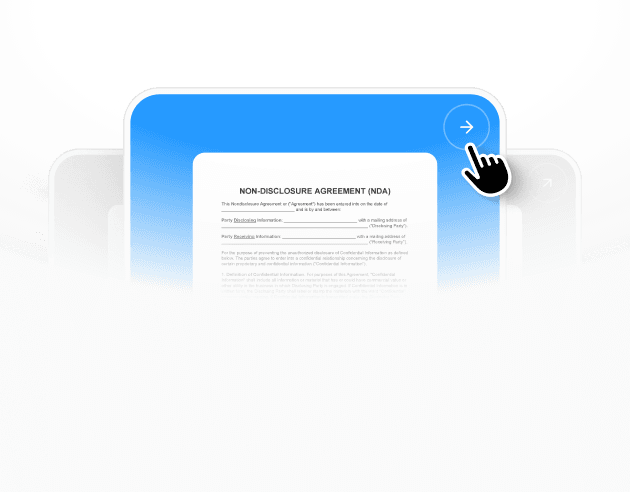
Select a template
Each template already follows legal structure and best practices.
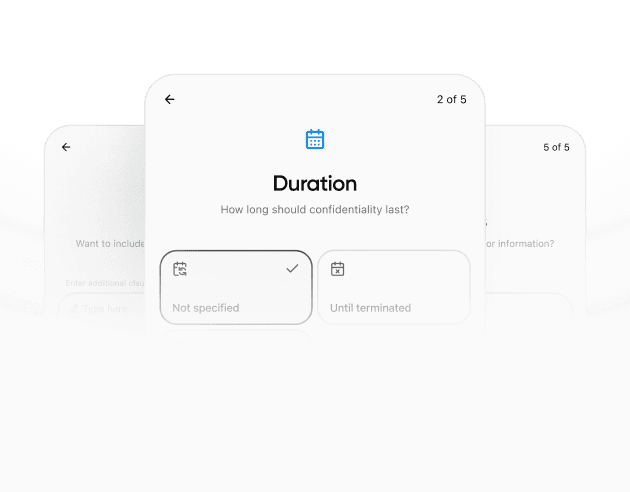
Provide details
The agreement is automatically filled and adapted to your inputs.
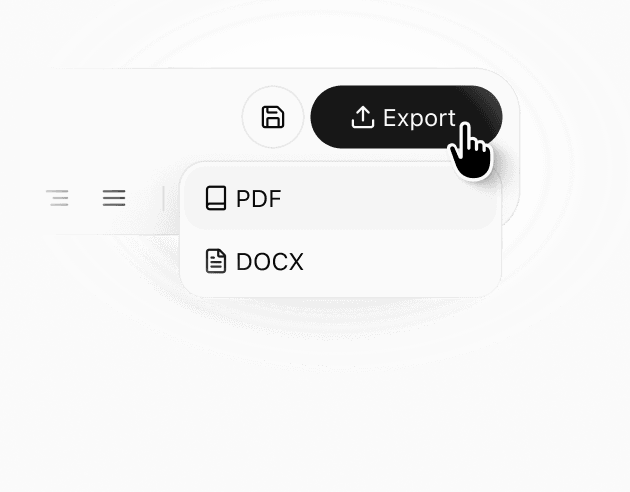
Review & download
Check the generated document, make edits if needed, and download a ready-to-use agreement.
Details
Learn more about
Training Proposal Template – Illinois
Illinois Training Proposal Template FAQ
How do I decide what metrics belong in a training proposal?
Choose metrics that connect directly to the objectives and are feasible to collect. If the goal is behavior change, use manager observations or workflow audits. If the goal is knowledge or skill, use short scenario assessments or practical exercises. Include at least one metric that reflects real work outcomes, such as reduced rework or faster cycle times, but only if you can access reliable data. The proposal should show when measurement happens and who owns collection so results are not an afterthought.
What is the difference between participant satisfaction and training effectiveness?
Satisfaction measures whether participants felt the session was useful and engaging, which can predict adoption but does not prove it. Effectiveness focuses on whether participants can apply the skill and whether workplace outcomes change. A strong proposal includes both: immediate feedback to improve delivery and a follow-up check that tests transfer to the job. When you separate these, stakeholders get a more honest view of impact and can decide whether reinforcement is needed.
How can I avoid overpromising outcomes?
State success criteria as targets rather than guarantees and document the assumptions required to achieve them. For example, behavior change often depends on manager reinforcement, workflow design, and time to practice. If those conditions are not present, the proposal should reflect that risk. Clear measurement timing also helps avoid inflated expectations, because stakeholders can see that some outcomes are evaluated weeks after training rather than immediately.
When should I classify a program as compliance or certification prep?
Use “compliance” when the training is meant to align behavior with required policies or standard procedures, and use “certification prep” when the objective is to pass an external or internal credential assessment. If the training is skill-building without a formal pass/fail component, label it as professional development or technical enablement. Clear classification improves stakeholder alignment on what completion means and what evidence is expected afterward.
How do I build reinforcement into the proposal without adding too many sessions?
Use lightweight reinforcement steps that fit normal work rhythms. Examples include short manager check-ins, templated feedback prompts, office hours, or a follow-up micro-assignment tied to real tasks. Document who owns each reinforcement action and when it will occur. Reinforcement does not need to be expensive; it needs to be consistent and targeted to the behaviors the training is trying to change.
What if stakeholders disagree about the success target?
Put the metric definitions and targets in the proposal and ask stakeholders to align before delivery begins. If alignment is difficult, start with a baseline measurement and define a target after the first cohort. You can also propose tiered targets, such as a minimum acceptable threshold and a stretch goal. The important part is that targets are explicit, measurable, and agreed by the roles responsible for acting on the results.
Can this proposal format work for both small teams and enterprise rollouts?
Yes. For small teams, you can keep the metrics table simple and focus on a few observable behaviors and a short follow-up. For enterprise rollouts, the same structure scales by adding cohorts, a longer measurement window, and clearer reporting responsibilities. The classification section helps when multiple programs are running at once, because stakeholders can quickly understand which initiatives require deeper reporting and reinforcement.
Similar templates