
What is a Logo Design Proposal?
A Logo Design Proposal is a client-facing document that defines the project scope, design process, deliverables, timeline, and fees for creating a new or refreshed logo. It aligns expectations before work begins.

This Logo Design Proposal (“Proposal”) is submitted on [Date] by [Designer/Firm Name], located at [Address], email [Email], phone [Phone], to [Client Name], located at [Address], email [Email], phone [Phone], regarding the project described below.
Project name: [Project Name]
Business/brand summary: [One paragraph]
Objectives: [e.g., launch new brand, modernize identity, improve legibility, unify sub-brands]
Success criteria: [e.g., readability at small sizes, brand recognition, alignment with positioning]
2.1 Discovery: stakeholder interview(s), brand questionnaire, competitive scan, audit of existing marks.
2.2 Concept Development: creative directions, mood boards, 3–5 initial logo concepts aligned to strategy.
2.3 Design Refinement: iteration on selected concept(s), color exploration, typography pairing, lockups.
2.4 Collateral Starter Set (optional): business card, letterhead, email signature, social avatar.
2.5 Brand Guidelines: logo usage rules, clear space, color values, typography, do’s and don’ts.
2.6 Handover: final files packaged and delivered, basic usage training call.
Exclusions: naming, trademark clearance, full brand strategy workshops, website design, packaging, and motion unless added via change authorization.
3.1 Logo master files: primary, reversed, monochrome, and small-space variants.
3.2 Formats: SVG, EPS, PDF (vector); PNG and JPG (raster) in common sizes.
3.3 Color systems: full color, grayscale, black; CMYK, RGB, and HEX values.
3.4 Lockups: horizontal and stacked; icon-only mark if appropriate.
3.5 Favicon/social icons: [sizes], exported and optimized.
3.6 Brand Guidelines (PDF, approx. [X] pages).
3.7 Collateral (if selected): print-ready files with bleeds and margins.
Start: [Target Start Date]
Milestones:
• Discovery complete: [Date]
• Concept presentation: [Date]
• Selected direction approval: [Date]
• Refinement round(s): [Date(s)]
• Brand guidelines draft: [Date]
• Final package delivery: [Date]
Dependencies: client feedback within [X] business days; timely access to assets; scheduling for review meetings.
5.1 Design Fee: $[Amount] (fixed) or $[Rate]/hour (estimated [Hrs] hours).
5.2 Retainer: $[Amount] due upon acceptance; credited to final invoice.
5.3 Progress Billing: [e.g., 40% concept, 40% refinement/guidelines, 20% final delivery] or monthly time and materials.
5.4 Reimbursables: fonts, stock assets, printing, shipping billed at cost + [X]% admin.
5.5 Payment Terms: net [X] days; late balances accrue [X]% per month.
Included revisions: [X] rounds on the selected concept.
Change process: out-of-scope requests require a signed change authorization with fee/time impact.
Acceptance: a deliverable is deemed accepted upon written approval or absence of feedback within [X] business days.
Provide brand inputs (mission, audience, values), existing assets (logos, fonts), and timely approvals; designate a single point of contact with decision authority; ensure availability for scheduled reviews.
Third-party assets (fonts, stock images, icons) are licensed to the client per vendor terms and are not transferrable beyond those terms. Licensing costs, if any, are paid by the client unless otherwise stated.
Upon full payment, the client receives ownership of the final approved logo files listed in Section 3 for use in connection with the brand and business specified in Section 1. Preliminary sketches, unused concepts, and working files remain the designer’s property unless purchased separately.
Designer may display the final logo and non-confidential project details in portfolios, award submissions, and marketing, after the client launches or grants permission. Client may request NDA treatment in writing.
Logos are designed for legibility across print and digital uses. Files are delivered in industry-standard formats and color spaces with export guidance. Accessibility contrast targets are considered for typical use cases.
The proposal does not include legal clearance, searches, or filings. Client is responsible for conducting trademark searches and registrations. Designer can coordinate with counsel upon request (additional fees may apply).
Examples include additional logo directions beyond those listed, sub-brand or campaign marks, motion/animation, complex illustration, and extended brand systems. These require separate scope and fees.
Cadence: weekly or milestone-based check-ins via [tool]. Response time targets: designer replies within [X] business hours; client feedback within [X] business days.
Both parties will keep confidential information private and use it only for project purposes, except where disclosure is required by law.
Neither party is liable for delays due to events beyond reasonable control (e.g., supply chain issues, illness, outages). Schedule will adjust reasonably.
Designer warrants deliverables will conform to this Proposal at delivery. No other warranties are made. Designer is not liable for indirect or consequential damages; liability is capped at fees paid.
Either party may terminate with [X] days’ written notice. Client will pay for work completed to date and any committed costs. Designer will provide all work-in-progress files as-is upon payment. Sections 9, 10, 12, 15, and 17 survive termination.
Good-faith negotiation; if unresolved within [30] days, proceed to [mediation/arbitration/litigation] in [Venue]. Governed by the laws of [State/Country].
By signing, the client accepts this Proposal, including scope, fees, schedule, and terms. Upon acceptance, the Proposal may be attached to the service agreement and incorporated by reference.
Client: ____________________________ Date: ____________
Designer: __________________________ Date: ____________
Exhibit A – Areas and Detailed Scope
[List deliverables per channel: print, web, social, merchandise; specify sizes and variants.]
Exhibit B – Fee Summary and Payment Schedule
[Table with milestones, amounts, due dates; include reimbursables if any.]
Exhibit C – Schedule and Milestones
[Timeline table or Gantt-style list with target dates and dependencies.]
Exhibit D – Asset and License Register (Optional)
[Fonts, stock items, license IDs, permitted uses, renewal dates.]
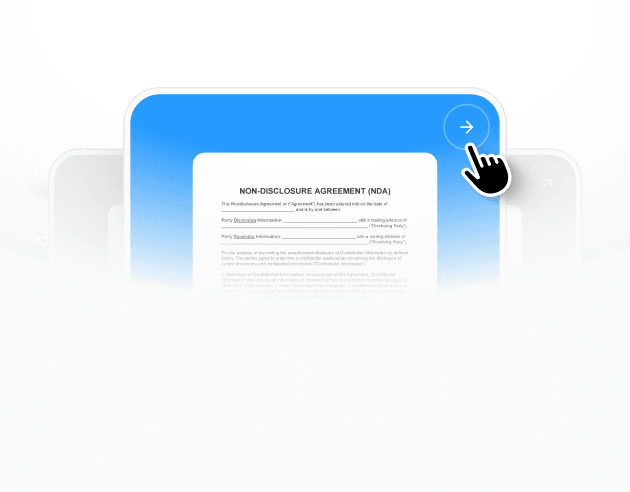
Each template already follows legal structure and best practices.
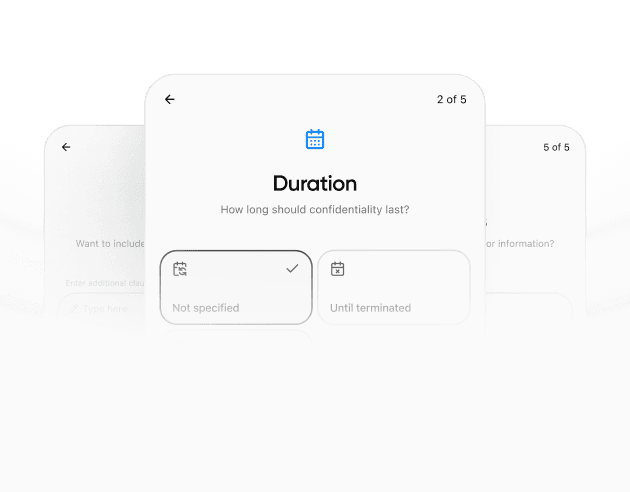
The agreement is automatically filled and adapted to your inputs.
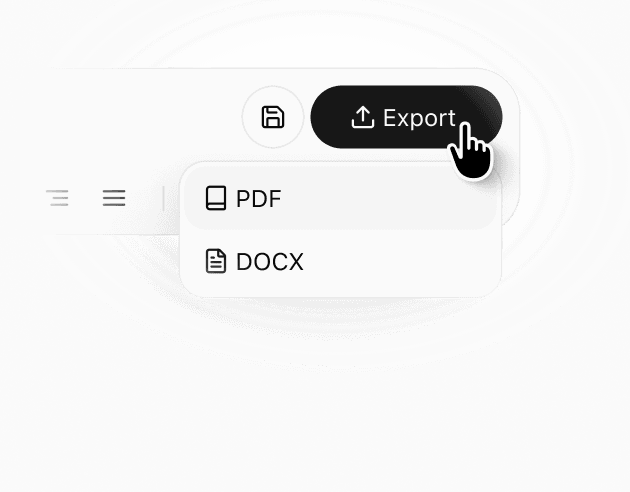
Check the generated document, make edits if needed, and download a ready-to-use agreement.
Click below for detailed info on the template.
For quick answers, scroll below to see the FAQ.
Frequently asked
A Logo Design Proposal is a client-facing document that defines the project scope, design process, deliverables, timeline, and fees for creating a new or refreshed logo. It aligns expectations before work begins.
It prevents scope creep, clarifies ownership and usage rights, and establishes a clear approval and revision process. A solid proposal builds trust and provides a foundation for the service agreement.
Use it after discovery and initial consultation but before drafting a service agreement. It fits new identities, rebrands, and logo refreshes for startups, SMBs, and established brands.
Include background and objectives, detailed scope and deliverables, phases and milestones, budget and fees, revision limits, file formats, usage rights, assumptions/exclusions, and acceptance terms.
Not quite. The proposal outlines the plan and commercial terms. Many teams attach the proposal as an exhibit to a separate service agreement so approved scope and fees are incorporated by reference.
Use our AI-powered builder to generate a branded Logo Design Proposal with scoped deliverables, allowance tables, and acceptance language — ready to share and sign.
 Product Launch Plan Template Product Overview Product Name: ___________________________ Description: [Brief summary of the product, its purpose, and key features] Target Audience… Proposal Templates
  Quote Template Quote Information Quote Number: [#] Date Issued: [Date] Valid Until: [Expiration Date] Prepared By: [Your Name / Company Name] Email: [Your Email Address] P… Proposal Templates
  Interior Design Proposal Template This Interior Design Proposal (“Proposal”) is submitted on [Date] by [Designer/Firm Name], located at [Address], email [Email], phone [Phone], to… Proposal Templates
  HR Training Proposal Template Prepared For: [Client Name / Company Name] Prepared By: [Trainer Name / Training Company Name] Date: [Date] Proposal Number: [Reference Number, if… Proposal Templates
  Web Design Proposal Template Proposal Title [Example: “Website Design for [Client Name]”] Prepared For [Client Name / Company Name] [Client Address] [Email Address] [Phone Number] Prepar… Proposal Templates
  Social Media Marketing Proposal Template Proposal Title [Example: “Social Media Marketing Strategy for [Client Name]”] Prepared For [Client Name / Company Name] [Client Address] [Email Address] [Ph… Proposal Templates
  Mobile Development Proposal Template Proposal Title [Example: “Mobile App Development for [Client Name]”] Prepared For [Client Name / Company Name] [Client Address] [Email Address] [Phone Numbe… Proposal Templates
  Sales Training Proposal Template Prepared For: [Client Name / Company Name] Prepared By: [Trainer Name / Training Company Name] Date: [Date] Proposal Number: [Reference Number, if… Proposal Templates
  IT Training Proposal Template Prepared For: [Client Name / Company Name] Prepared By: [Trainer Name / Training Company Name] Date: [Date] Proposal Number: [Reference Number, if… Proposal Templates
  Safety Training Proposal Template Prepared For: [Client Name / Company Name] Prepared By: [Trainer Name / Training Company Name] Date: [Date] Proposal Number: [Reference Number, if… Proposal Templates
  Grant Proposal Template [Organization Name] [Address] [Website] [Primary Contact Name, Title, Email, Phone] [Date] [Grantmaker Name] [Grant Program or RFP Title] Executive Summary Pr… Proposal Templates
  General Proposal Template Proposal Title [Insert the title of the proposal — e.g., "Digital Marketing Strategy for XYZ Company"] Prepared For [Client Name / Company Name] [Client… Proposal Templates
  Digital Marketing Proposal Template Proposal Title [Example: “Digital Marketing Services for [Client Name]”] Prepared For [Client Name / Company Name] [Client Address] [Email Address] [Phone… Proposal Templates
  Software Development Agreement Template This Software Development Agreement ("Agreement") is made and entered into on [Date], by and between: Client: [Full Name / Company Name] Address: [Clien… Proposal Templates
  Customer Service Training Proposal Template Prepared For: [Client Name / Company Name] Prepared By: [Trainer Name / Training Company Name] Date: [Date] Proposal Number: [Reference Number, if… Proposal Templates
  Training Proposal Template Proposal Title [Example: “Team Leadership Training for XYZ Company”] Prepared For [Client Name / Organization] [Client Address] [Email Address] [Phone Numbe… Proposal Templates
  BUSINESS PROPOSAL TEMPLATE Cover Page Proposal Title: [Insert Title] Prepared For: [Client Name / Company] Prepared By: [Your Name / Company] Date: [Insert Date] Executive Summary Thi… Proposal Templates
  Bid/Proposal Title: [Project Name / Bid Title] Bid Number (Optional): [Bid #] Date Submitted: [Date] Client/Owner: [Client Name] [Client Address] [Client… Proposal Templates