Introducing Referent AI-native practice management software for modern law firms.

Explore Referent

Marriage Affidavit for Immigration Template

  • Typical length: 4-6 pages
  • AI Assisted
  • Export: PDF & DOCX
  • Multi-jurisdiction ready
Get your custom agreement in minutes Create Agreement
4.8 Rating Downloaded 4564 times
Google For Startups NVIDIA Inception Program

This Marriage Affidavit for Immigration (the “Affidavit”) is made on [Date] by:

Affiant: [Full Name], date of birth: [DOB], address: [Address], phone/email: [Contact].

Spouse 1: [Full Name]

Spouse 2: [Full Name]

1. Affiant Relationship to the Couple

1.1 I, [Affiant Full Name], have known [Spouse 1 Name] since [Year/How met] and [Spouse 2 Name] since [Year/How met].

1.2 I am their: ☐ friend ☐ family member ☐ coworker ☐ neighbor ☐ religious/community member ☐ other: [Explain].

1.3 I interact with them: ☐ weekly ☐ monthly ☐ occasionally ☐ other: [Explain].

2. Observations of Their Relationship

2.1 I understand this affidavit may be used for an immigration matter, and I am providing truthful statements based on my personal knowledge.

2.2 I have observed their relationship in settings such as: [Holidays, gatherings, visits, daily life].

2.3 Examples that show their marriage is genuine include:

  • [Example #1: how they support each other]

  • [Example #2: shared responsibilities or routines]

  • [Example #3: family/social interactions]

[Example #1: how they support each other]

[Example #2: shared responsibilities or routines]

[Example #3: family/social interactions]

2.4 They present themselves publicly and privately as a married couple and appear committed to a shared life.

3. Key Facts (If Known)

3.1 Date Married: [Date]

3.2 Where Married: [City/State/Country]

3.3 Shared Address (If Known): [Address]

3.4 Children (If Any): [Names/ages]

3.5 Trips/Events (Optional): [List + dates]

4. Supporting Evidence (Optional)

4.1 I understand the couple may include additional documents, such as:

  • Photos together with family/friends

  • Joint lease/mortgage or utility bills

  • Joint bank/insurance documents

  • Travel records

  • Other: [List]

Photos together with family/friends

Joint lease/mortgage or utility bills

Joint bank/insurance documents

Travel records

Other: [List]

5. Statement Under Oath

5.1 I declare under penalty of perjury that the statements in this Affidavit are true and correct to the best of my knowledge.

5.2 I am willing to be contacted if additional information is needed at: [Phone/Email].

Signatures

Affiant: [Full Name]

Date: [Date]

Signature: ___________________________

Witnesses (If Required)

Witness Name: [Name]

Date: [Date]

Signature: ___________________________

Notary / Notarization (If Required)

State of [State]

County of [County]

On [Date], before me, [Notary Name], personally appeared [Affiant Full Name], known to me (or satisfactorily proven) to be the person whose name is subscribed to this Affidavit, and acknowledged that they executed it for the purposes stated.

Notary Public Signature: _______________________

My Commission Expires: _______________________

Notary Seal (if applicable): ___________________

Download Free Template

Get your complete
agreement in minutes

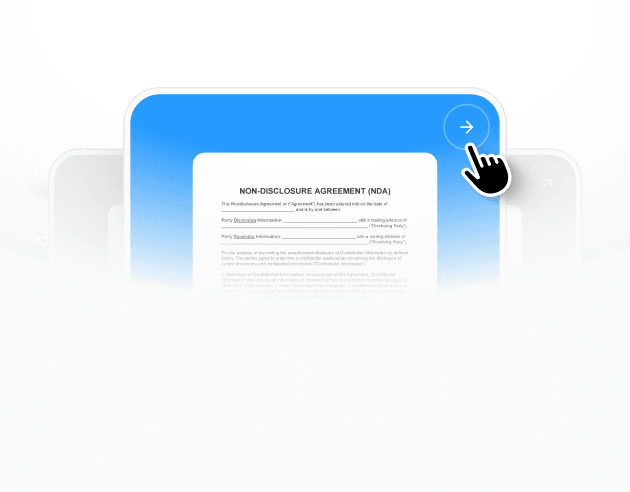
Select template illustration
Select a template

Each template already follows legal structure and best practices.

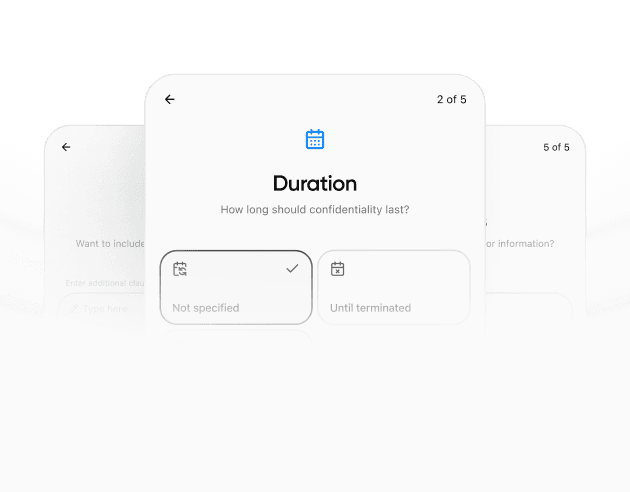
Provide details illustration
Provide details

The agreement is automatically filled and adapted to your inputs.

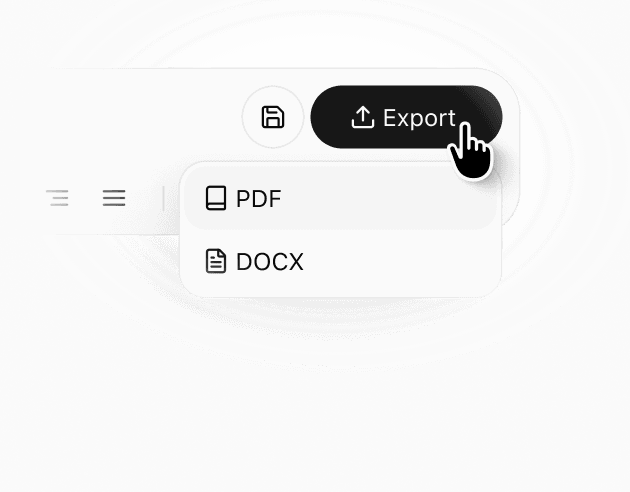
Review & download illustration
Review & download

Check the generated document, make edits if needed, and download a ready-to-use agreement.

Details

Learn more about

Marriage Affidavit for Immigration Template

Click below for detailed info on the template.
For quick answers, scroll below to see the FAQ.

Learn more

Frequently asked · Bona fide marriage evidence

Marriage Affidavit for Immigration · Third-party proof, I-751, I-130, §1746

Eight questions to settle before you write a marriage affidavit for an immigration case. A marriage affidavit is a sworn letter from a friend, relative, or community member who knows the couple, submitted to help prove the marriage is bona fide (real). It is supporting evidence, not primary evidence: it strengthens a filing built on joint documents, it does not replace one. Below the FAQ: what a strong affidavit contains, sample language, and the full list of bona-fide-marriage evidence USCIS actually weighs.

01 Basics

What is a marriage affidavit for immigration?

A marriage affidavit for immigration is a sworn written statement from a third party — usually a friend, relative, coworker, neighbor, or community member — attesting from personal knowledge that a couple's marriage is genuine and was entered into in good faith, not to obtain an immigration benefit.

It is submitted as supporting evidence with a marriage-based petition or application: Form I-130 (Petition for Alien Relative), the adjustment package that includes Form I-485, or Form I-751 (Petition to Remove Conditions on Residence). The affiant describes how they know the couple, how long, how often they see them, and specific things they have observed that show the spouses share a real life together. The document does not decide the case; it corroborates the couple's own documentary evidence and puts a named, contactable witness on the record.

02 When accepted

When does USCIS require or accept a marriage affidavit?

USCIS accepts third-party affidavits as a recognized form of bona-fide-marriage evidence, and its own regulations invite them — particularly where primary or secondary documentary evidence does not exist or is unavailable.

  • I-130 / I-485 (initial green card). USCIS regulations list "affidavits sworn to or affirmed by third parties having personal knowledge of the bona fides of the marital relationship" among the evidence a petitioner may submit to prove a genuine marriage.
  • I-751 (removal of conditions). When a marriage-based green card is issued for a marriage under two years old, the card is conditional. Form I-751 removes those conditions, and affidavits from people who have known the couple since residence was granted are commonly filed alongside the joint documents.
  • RFE or fraud interview. Affidavits are often added when USCIS issues a Request for Evidence questioning whether the marriage is real.
03 Who writes it

Who should write the affidavit?

Someone who personally knows both spouses and can give specific, first-hand, credible detail about their life together — not someone who is merely willing to vouch for them in the abstract. A U.S. citizen or lawful permanent resident affiant carries added credibility, but is not strictly required.

Good affiants typically include:

  • Close friends who have spent time with the couple regularly, in their home and at events
  • Family members from either side who have witnessed the relationship from early on
  • Neighbors who see the couple living together day to day
  • Coworkers or employers who know them as a married pair
  • Religious leaders or community members familiar with their shared life

Two or three strong, detailed affidavits are worth far more than ten vague ones. The affiant must be willing to be contacted by USCIS and, if asked, to confirm what they wrote.

04 What to include

What should a marriage affidavit include?

USCIS regulations require specific identifying details, plus a concrete explanation of how the affiant knows the marriage is real. Affidavits that skip these are given little or no weight.

  1. Affiant identification. Full legal name and current address, and the affiant's date and place of birth — these are expressly required by the regulation.
  2. Relationship to the couple. How the affiant knows each spouse, and since when.
  3. Basis of knowledge. Complete details explaining how the affiant acquired knowledge of the marriage — frequency of contact, occasions, shared settings.
  4. Specific observed facts. Named events, dates, places, and concrete anecdotes: helping them move, holidays spent together, how they support each other.
  5. Sworn attestation. A declaration under penalty of perjury (28 U.S.C. §1746) that the statements are true and correct.
  6. Signature and date. Signed and dated by the affiant.
05 Notarization

Does a marriage affidavit need to be notarized?

No. USCIS does not require notarization. A written declaration signed under penalty of perjury under 28 U.S.C. §1746 has the same legal force and effect as a notarized affidavit before a federal agency.

Under §1746, wherever a matter may be supported by a sworn, notarized affidavit, it may instead be supported by an unsworn declaration in substantially this form: "I declare under penalty of perjury that the foregoing is true and correct. Executed on [date]." (If the affiant signs outside the United States, the required wording adds "under the laws of the United States of America.") A declaration in this form needs no notary and no oath administered by an official.

Notarization is optional and never hurts — some people add it for extra comfort or because a template includes a notary block. But the substance of the affidavit, not the notary stamp, is what carries weight. A notarized affidavit full of vague generalities is worth less than an unnotarized §1746 declaration packed with specific, verifiable detail.

06 Weight

How much weight does a marriage affidavit carry?

It is supporting, corroborating evidence — not primary evidence. Affidavits reinforce a case built on joint documents; on their own they rarely carry a filing, and a stack of affidavits with no documentary backup is a red flag, not a substitute.

  • The standard USCIS applies. A marriage-based petitioner must prove the marriage is bona fide by a preponderance of the evidence — more likely than not. In practice, officers approach marriage cases skeptically and expect the couple to carry the burden of proof.
  • Where affidavits fit. They add human corroboration and explain gaps ("they lived apart for a year because of a military deployment"). They are strongest when they line up with, and add color to, the documentary record.
  • Their limit. Self-serving statements from interested parties are given less weight; detailed statements from disinterested third parties who clearly have personal knowledge are given more. Specificity is everything.
07 Compare

Affidavit vs primary evidence: what actually proves a bona fide marriage?

Primary evidence is documentary proof that the couple has genuinely merged their lives — joint finances, a shared home, shared responsibilities. Affidavits are secondary: they describe and corroborate what the documents show. Build the case on documents first, then add affidavits.

  • Primary (strongest). Joint bank and credit card accounts, jointly filed tax returns, a lease or mortgage in both names, joint insurance (health, auto, life with the spouse as beneficiary), and birth certificates of children born to the couple.
  • Strong secondary. Joint utility bills, mail addressed to both at the same address, joint travel records, and photographs together over time with family and friends.
  • Corroborating. Third-party affidavits like this one. They fill in the story and vouch for the couple, but they supplement the documents rather than replace them.

If a couple has little documentary evidence, the fix is usually to build more of it — not to file more affidavits.

08 Customise

Need a marriage affidavit tailored to your case?

Use AI Lawyer to generate one that follows the USCIS format. Set the affiant's relationship to the couple, how long and how well they know them, the specific things they have observed, and the filing type (I-130, I-751, or an RFE response); the assistant produces a declaration with the required identifying details, a proper §1746 penalty-of-perjury attestation, and space for concrete anecdotes rather than empty praise. Because immigration filings are high-stakes and a false statement can be treated as marriage fraud, have a licensed immigration attorney review the affidavit and the overall evidence package before you file.

Write a marriage affidavit USCIS will actually credit

Free template with the required affiant details, a §1746 penalty-of-perjury declaration, and prompts for the specific, observed facts that make an affidavit persuasive.

Use the template
Similar templates

Other templates from

Letters and Notices Templates