Introducing Referent AI-native practice management software for modern law firms.

Explore Referent

Affidavit Letter of Support for Immigration: Sample Template

  • Typical length: 4-6 pages
  • AI Assisted
  • Export: PDF & DOCX
  • Multi-jurisdiction ready
Get your custom agreement in minutes Create Agreement
4.8 Rating Downloaded 3501 times
Google For Startups NVIDIA Inception Program

Affidavit Letter of Support for Immigration Template

[Your Full Legal Name]

[Street Address]

[City, State/Province, ZIP/Postal Code]

[Country]

Phone: [Phone Number]

Email: [Email Address]

[Date]

To: [Name of Immigration Authority, Court, or “To Whom It May Concern”]

Subject: Affidavit Letter of Support for [Full Name of Applicant]

1. Affiant Identity and Background

I, [Your Full Legal Name], being duly sworn, state as follows:

I am over the age of [Age] and competent to make this affidavit.

I currently reside at [Full Residential Address].

My date of birth is [MM/DD/YYYY], and I was born in [City, State/Province, Country].

My current immigration or citizenship status is: [Citizen / Permanent Resident / Other lawful status].

My occupation is [Job Title], and I am employed by [Employer Name] at [Employer Address].

If self-employed, my business is [Brief Description of Business].

2. Applicant Information and Relationship

I am providing this affidavit in support of:

  • Full Name of Applicant: [Applicant’s Full Legal Name]

  • Date of Birth: [MM/DD/YYYY]

  • Country of Birth: [Country]

  • Current Address: [Applicant’s Address]

Full Name of Applicant: [Applicant’s Full Legal Name]

Date of Birth: [MM/DD/YYYY]

Country of Birth: [Country]

Current Address: [Applicant’s Address]

I have known [Applicant’s Name] since approximately [Month, Year].

I know [Applicant’s Name] as my [spouse / family member / friend / employee / employer / neighbor / community member / other relationship].

I first met [Applicant’s Name] under the following circumstances:

[Brief description of how you met, where, and in what context.]

3. Description of Relationship and Personal Knowledge

I have personal knowledge of [Applicant’s Name] because:

[Explain how often you see or communicate, activities you do together, and how well you know their daily life or family situation.]

To the best of my knowledge, [Applicant’s Name] is a person of good moral character. I base this on the following observations:

  • [Short example of honesty, reliability, or integrity.]

  • [Short example of work ethic or family responsibilities.]

  • [Short example of community, school, or religious involvement.]

[Short example of honesty, reliability, or integrity.]

[Short example of work ethic or family responsibilities.]

[Short example of community, school, or religious involvement.]

If this affidavit is being used in a family-based or marriage-based immigration case, I can describe the relationship I have observed between [Applicant’s Name] and [Spouse/Partner’s Name] as follows:

[Describe what you have personally seen about the couple or family, such as time spent together, shared responsibilities, and family events you have attended.]

4. Support Provided to the Applicant

I currently provide, or intend to provide, support to [Applicant’s Name] in the following ways:

  • Emotional and personal support:

    [Briefly describe how you support them emotionally, especially during the immigration process.]

  • Housing or accommodation (if applicable):

    [Describe any housing offered, including address and approximate dates or duration.]

  • Financial support (if applicable):

    [Describe any financial help, such as contributions to rent, food, transportation, or other expenses, with approximate amounts or frequency if appropriate.]

  • Practical assistance (if applicable):

    [Describe assistance with transportation, childcare, translation, appointments, or other daily needs.]

Emotional and personal support:

[Briefly describe how you support them emotionally, especially during the immigration process.]

Housing or accommodation (if applicable):

[Describe any housing offered, including address and approximate dates or duration.]

Financial support (if applicable):

[Describe any financial help, such as contributions to rent, food, transportation, or other expenses, with approximate amounts or frequency if appropriate.]

Practical assistance (if applicable):

[Describe assistance with transportation, childcare, translation, appointments, or other daily needs.]

Within my means and abilities, I am willing to continue supporting [Applicant’s Name] in the ways described above while their immigration matter is pending and, if needed, after a decision is made.

5. Reason for the Affidavit and Impact of the Immigration Case

I understand that [Applicant’s Name] is currently involved in the following type of immigration process:

[Brief description, e.g., applying for lawful permanent residency, defending against removal, seeking a family-based visa, etc.]

I believe that a favorable decision in this immigration case would be in the best interests of [Applicant’s Name], their family, and our community because:

  • [Reason 1 – e.g., strong employment or education record.]

  • [Reason 2 – e.g., close family ties and responsibilities.]

  • [Reason 3 – e.g., community involvement or positive contributions.]

[Reason 1 – e.g., strong employment or education record.]

[Reason 2 – e.g., close family ties and responsibilities.]

[Reason 3 – e.g., community involvement or positive contributions.]

6. Statement of Truth

I declare that I have read this affidavit (or it has been read to me) in a language I understand.

I further declare that the facts stated in this affidavit are true and correct to the best of my knowledge and belief.

If requested, I am willing to testify in person or by other lawful means to confirm the information provided in this affidavit.

7. Attachments (Optional)

The following documents are attached in support of this affidavit (if available):

  • Copy of my government-issued photo ID

  • Evidence of my legal status (if relevant)

  • Photos, letters, or other documents showing my relationship with [Applicant’s Name]

  • Other: [Describe]

Copy of my government-issued photo ID

Evidence of my legal status (if relevant)

Photos, letters, or other documents showing my relationship with [Applicant’s Name]

Other: [Describe]

8. Affiant’s Signature

I declare under penalty of perjury under the laws of [State/Province, Country] that the foregoing is true and correct.

Affiant’s Signature: _______________________________

Printed Name: [Your Full Legal Name]

Date: [MM/DD/YYYY]

9. Notary Public / Authorized Official Acknowledgment

State/Province of: ___________________________

County/Region of: ___________________________

Subscribed and sworn to (or affirmed) before me on this ____ day of ____________, 20,

by [Your Full Legal Name], who is personally known to me or who has provided satisfactory identification.

Notary Public / Authorized Official Signature: _______________________________

Printed Name: ______________________________________________

Title: ______________________________________________

Commission Number (if applicable): ____________________________

My Commission Expires: ______________________________

Download Free Template

Get your complete
agreement in minutes

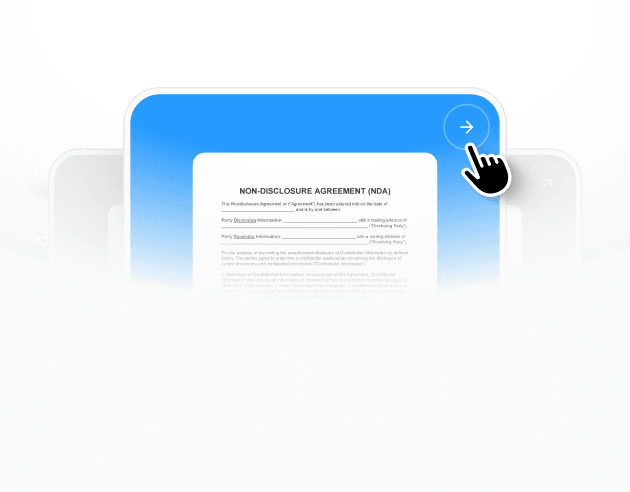
Select template illustration
Select a template

Each template already follows legal structure and best practices.

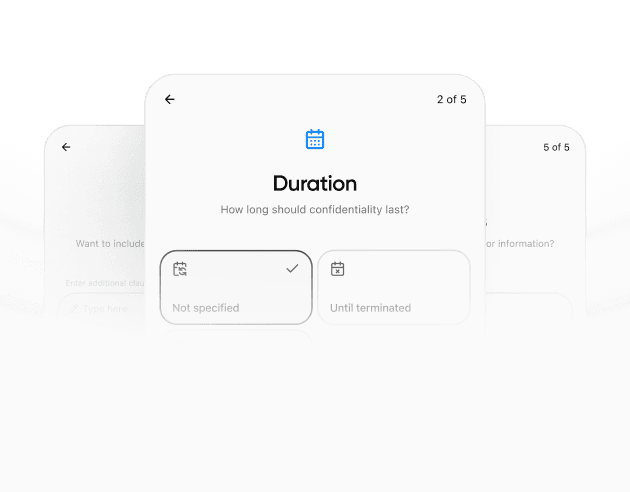
Provide details illustration
Provide details

The agreement is automatically filled and adapted to your inputs.

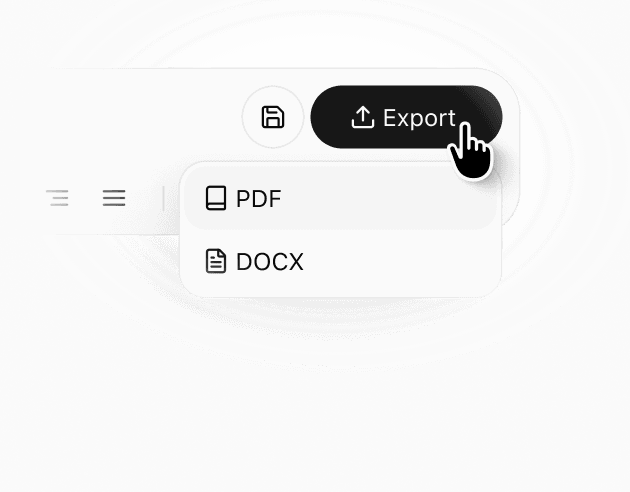
Review & download illustration
Review & download

Check the generated document, make edits if needed, and download a ready-to-use agreement.

Details

Learn more about

Affidavit Letter of Support for Immigration: Sample Template

Click below for detailed info on the template.
For quick answers, scroll below to see the FAQ.

Learn more

Frequently asked · Immigration support letters

Affidavit Letter of Support for Immigration · The character letter, not the Form I-864 financial contract

Eight questions to settle before you write an affidavit letter of support for an immigration case. The most important point comes first: this narrative "letter of support" is a personal character statement, and it is NOT the government financial sponsorship form (Form I-864). People conflate the two constantly, and it changes what you have to prove. Below the FAQ: sample opening clauses for the most common scenarios (marriage, family, character, hardship, support offered), the §1746 penalty-of-perjury language, and a plain callout on where a financial affidavit is required instead.

01 Basics

What is an affidavit letter of support for immigration?

An affidavit letter of support for immigration is a sworn written statement in which a third party (the "affiant") describes how they know the applicant, what they know about the applicant's character and circumstances, and any personal support they provide. It is a narrative character-and-relationship letter, submitted as evidence in support of an immigration, visa, or residency case.

The letter does three jobs. It puts a named, identifiable person on the record vouching for specific facts about the applicant. It gives the decision-maker — a USCIS officer or an immigration judge — first-hand observations they cannot get from forms alone (how a marriage functions day to day, what the applicant's reputation is, what hardship a family would suffer). And, when it includes a penalty-of-perjury statement, it commits the affiant to the truth of those facts under law. It is documentary evidence, not a form and not a financial guarantee.

02 Critical distinction

Is this the same as the Form I-864 "Affidavit of Support"? (Read this first)

No — and this is the single most important thing to understand. A narrative affidavit letter of support is a personal character statement with no financial obligation. Form I-864, "Affidavit of Support Under Section 213A of the INA," is a completely different thing: a legally binding financial contract.

The names are confusingly similar, but they do different jobs:

  • The support LETTER (this template). A narrative statement about character, relationship, and personal support. Anyone with genuine knowledge of the applicant can write one. It carries no money obligation and enforces nothing against the writer beyond the truth of what they said.
  • Form I-864 (the financial contract). A form a U.S. citizen or lawful permanent resident signs to accept legally enforceable financial responsibility for an intending immigrant, most often in a family-based green-card case. The sponsor must show income at or above 125% of the Federal Poverty Guidelines (100% for an active-duty service member sponsoring a spouse or child). The obligation typically lasts until the immigrant becomes a U.S. citizen or is credited with 40 quarters of work (about 10 years).

If a case requires proof that the immigrant will not become a public charge, that is the I-864 (or, for certain temporary and humanitarian categories, Form I-134, Declaration of Financial Support) — a character letter cannot satisfy it. Figure out which your case actually needs before you write anything.

03 Who

Who can write an affidavit letter of support for an immigration case?

Anyone with a genuine relationship to the applicant and real personal knowledge of the facts they describe. Unlike Form I-864, there is no citizenship or income requirement to write a narrative support letter — you vouch for what you have seen, not for anyone's finances.

Common affiants and what they typically speak to:

  • Spouse or partner — the bona fides of the relationship in marriage-based cases (shared life, finances, family events witnessed first-hand)
  • Family members — family ties, history, and the impact a decision has on relatives
  • Friends and community members — character, reputation, day-to-day conduct over time
  • Employers and coworkers — work ethic, reliability, length of employment
  • Landlords, teachers, clergy, community leaders — stability, integrity, and community involvement

Credibility beats status. A letter from someone who clearly knows the applicant well, gives specific dated examples, and writes in their own voice outweighs a generic letter from someone with a more impressive title. Letters from U.S. citizens and permanent residents can carry extra weight in some contexts, but the substance is what matters.

04 Use case

When does USCIS (or an immigration judge) actually use these letters?

Whenever a case turns on facts about a person — character, a relationship, or the hardship a decision would cause — that forms and financial documents cannot show on their own. The letter is supporting evidence an officer or judge weighs alongside the required forms; it rarely stands alone.

  • Marriage-based green cards (Forms I-130 / I-485) — friends and family attest to the bona fides of a genuine marriage
  • Removal of conditions (Form I-751) — third-party affidavits supporting a real, ongoing marriage when other joint evidence is thin
  • Good moral character showings — naturalization (Form N-400) and other contexts where character is an element
  • Cancellation of removal and hardship waivers — describing the hardship to qualifying relatives if the applicant were removed
  • Asylum and humanitarian cases — corroborating an applicant's account or community ties
  • Bond hearings and discretionary decisions — showing community ties, stability, and support

See the scenario section below for opening clauses tailored to the common ones.

05 What to include

What information should an immigration affidavit letter of support include?

Seven elements, in roughly this order. A strong letter is specific, factual, and traceable to the affiant's own experience rather than opinion or praise.

  1. Affiant identity and standing. Full legal name, address, date of birth, and — if relevant and true — immigration or citizenship status and occupation.
  2. How the affiant knows the applicant. When and how you met, and the nature and length of the relationship ("I have known [Applicant] since March 2019, when...").
  3. Basis of personal knowledge. How often you see or communicate, activities shared, how much of the applicant's daily life you actually observe.
  4. Specific, dated examples. Concrete incidents that show character, work ethic, family responsibility, or (in marriage cases) the reality of the relationship. Examples beat adjectives.
  5. Any support provided. Emotional, housing, financial, or practical support you give or intend to give — described factually. (Note: this is not the enforceable financial sponsorship of Form I-864.)
  6. Statement of truth. A clear declaration that the contents are true and correct, ideally in penalty-of-perjury form.
  7. Signature block and attachments. Signature, printed name, date, and any supporting documents (a copy of your photo ID, evidence of your status, photos or records of the relationship).
06 Notarization

Does an immigration support letter need to be notarized?

Usually not for federal immigration filings — USCIS generally does not require notarization of a personal support letter if it includes a penalty-of-perjury statement under 28 U.S.C. §1746. That federal statute lets an unsworn declaration carry the same force and effect as a notarized affidavit, and it is prosecutable as perjury if false.

Practical guidance:

  • The §1746 declaration is the norm. Close the letter with: "I declare under penalty of perjury under the laws of the United States that the foregoing is true and correct," then sign and date. That is what USCIS looks for on narrative support letters.
  • Notarization is optional but can add credibility. It is rarely wrong, just usually unnecessary. Attaching a copy of your government-issued photo ID is a simple, high-value way to reinforce the penalty-of-perjury statement.
  • Some receiving bodies DO require it. Foreign consulates, certain courts, and some non-USCIS processes may require notarization (and sometimes an apostille or consular authentication). The financial forms (I-864, I-134) are themselves signed under penalty of perjury and do not need a notary.

When in doubt, follow the specific instructions of the office handling the case, and verify before you sign.

07 How-to

How do I write and format one, and how long should it be?

Write it as a formal letter of about one to three pages, in first person, in your own words, built around specific dated facts rather than praise. Long enough to give real examples; short enough that every sentence earns its place.

Rules that hold across scenarios:

  • Use a formal letter format: contact block, date, a "To Whom It May Concern" or named-authority line, and a subject line naming the applicant
  • Break it into short labeled sections (identity, relationship, personal knowledge, examples, support, statement of truth)
  • Lead with specifics: exact dates, places, and concrete incidents. "I attended their wedding on June 8, 2021, and have shared holidays with them every year since" beats "they are a loving couple"
  • Separate what you saw, what you were told, and what you believe — do not present hearsay or opinion as first-hand fact
  • Avoid casual language, exaggeration, and anything you cannot back up; overstatement damages credibility
  • Close with the §1746 penalty-of-perjury line, sign, date, and attach a copy of your photo ID
08 Customise

Need a customized affidavit letter of support?

Use AI Lawyer to turn your notes into a clear, well-organized letter using this template. Tell it who you are, how you know the applicant, the examples you want to include, and the type of case; the assistant produces a structured letter with the right sections, the §1746 penalty-of-perjury language, and a signature and (optional) notary block. You remain responsible for making sure everything is true, checking whether the case also requires a financial form (I-864 or I-134), and confirming notarization rules with the office handling the matter. This is document-drafting support, not legal advice — for removal, asylum, waivers, or any case involving criminal history, have a licensed immigration attorney or BIA-accredited representative review before filing.

Write a support letter that reads as credible, specific, and true

Free template, scenario-specific opening clauses, with the §1746 penalty-of-perjury language and a signature/notary block built in — and a clear line on where a financial affidavit is required instead.

Use the template
Similar templates

Other templates from

Letters and Notices Templates