Introducing Referent AI-native practice management software for modern law firms.

Explore Referent

Affidavit of Non Prosecution Template

  • Typical length: 4-6 pages
  • AI Assisted
  • Export: PDF & DOCX
  • Multi-jurisdiction ready
Get your custom agreement in minutes Create Agreement
4.8 Rating Downloaded 5306 times
Google For Startups NVIDIA Inception Program

This Affidavit of Non Prosecution (the “Affidavit”) is made on [Date] by:

Affiant: [Full Name], date of birth: [DOB] (optional), address: [Address], phone/email: [Contact].

Role: ☐ Reporting party ☐ Alleged victim ☐ Witness ☐ Other: [Explain]

Defendant/Accused (If Known): [Full Name]

Case Number (If Any): [Case No.]

Agency/Report Number (If Any): [Report No.]

Court (If Any): [Court/County]

1. Purpose

1.1 I am submitting this Affidavit to request that the prosecutor consider declining to pursue charges related to the incident described below, where permitted.

2. Incident Information

2.1 Date of Incident: [Date]

2.2 Location: [Address/City]

2.3 Brief Description (Plain Language): [2–5 sentences].

3. Voluntary Statement

3.1 I am signing this Affidavit voluntarily.

3.2 I have not been threatened, forced, or offered anything of value to sign this Affidavit: ☐ Yes ☐ No (explain).

3.3 I understand that the prosecutor may still continue the case even if I request non-prosecution.

4. Restitution and Contact Preferences (Optional)

4.1 Restitution Requested: ☐ No ☐ Yes, amount/description: [__].

4.2 Preferred Contact Method: [Phone/Email/Mail].

4.3 No-Contact/Protective Order (If Any): ☐ None ☐ Yes (explain; this Affidavit does not change it).

5. Statement Under Oath

5.1 I declare under penalty of perjury that the statements in this Affidavit are true and correct to the best of my knowledge.

Signatures

Affiant: [Full Name]

Date: [Date]

Signature: ___________________________

Witnesses (If Required)

Witness Name: [Name]

Date: [Date]

Signature: ___________________________

Notary / Notarization (If Required)

State of [State]

County of [County]

On [Date], before me, [Notary Name], personally appeared [Affiant Full Name], known to me (or satisfactorily proven) to be the person whose name is subscribed to this Affidavit, and acknowledged that they executed it for the purposes stated.

Notary Public Signature: _______________________

My Commission Expires: _______________________

Notary Seal (if applicable): ___________________

Download Free Template

Get your complete
agreement in minutes

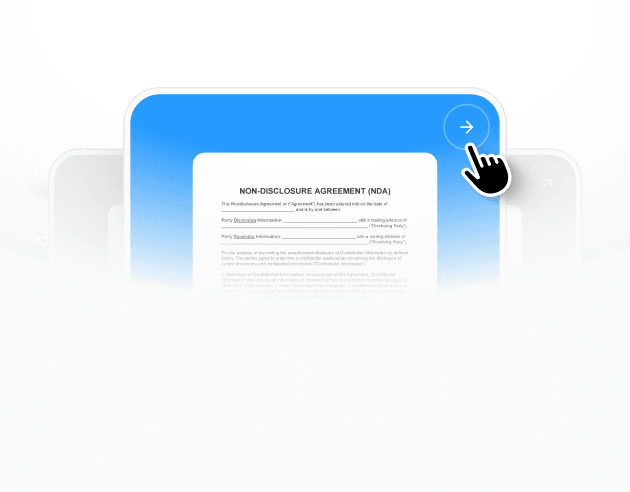
Select template illustration
Select a template

Each template already follows legal structure and best practices.

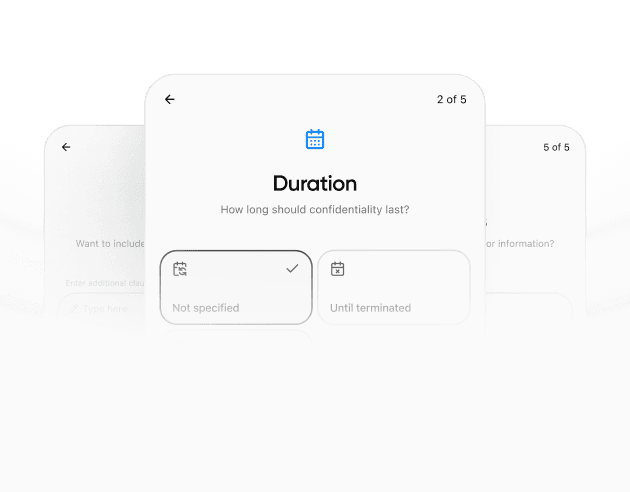
Provide details illustration
Provide details

The agreement is automatically filled and adapted to your inputs.

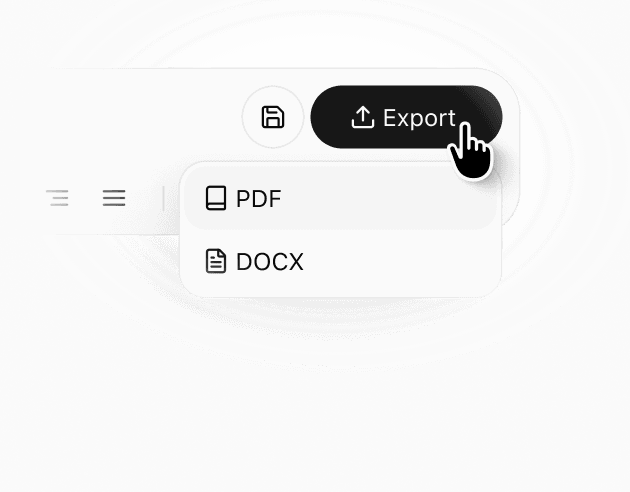
Review & download illustration
Review & download

Check the generated document, make edits if needed, and download a ready-to-use agreement.

Details

Learn more about

Affidavit of Non Prosecution Template

Click below for detailed info on the template.
For quick answers, scroll below to see the FAQ.

Learn more

Frequently asked · Criminal charges, victims, prosecutors

Affidavit of Non-Prosecution · What it does, what it cannot do, and when it backfires

Eight questions to settle before you sign an affidavit of non-prosecution (ANP). The single most important fact: the prosecutor, not you, decides whether charges are dropped — and in domestic-violence cases many offices will proceed anyway under a "no-drop" policy. Below the FAQ: a section-by-section breakdown of what the affidavit contains, a clear "what it does and does not do" table, and the coercion warning that turns a well-meant affidavit into a criminal problem.

01 Basics

What is an affidavit of non-prosecution?

An affidavit of non-prosecution (ANP) is a sworn, written statement — usually from the alleged victim or the person who reported an incident — telling the prosecutor that they do not want criminal charges pursued and asking the office to consider dropping the case.

It is signed under penalty of perjury, and in many offices it is notarized. Despite the formal-sounding name, an ANP has no automatic legal force: it does not dismiss the case, drop the charge, or bind the court. What it actually is is a piece of evidence and a formal request — one input the prosecutor weighs alongside the police report, 911 recordings, photographs, medical records, and any independent witnesses. In some jurisdictions it is also called a non-prosecution affidavit, an affidavit to drop charges, or a victim's request for non-prosecution. Terminology and effect vary by state and even by county.

02 Critical

Does signing an affidavit of non-prosecution drop the charges?

No — not by itself, and often not at all. In every U.S. jurisdiction a criminal charge belongs to the state, not to the victim, so only the prosecutor (and ultimately the court) can dismiss it. The victim cannot "drop charges."

This is the point people most often get wrong. Once police make a report, the case is the state's, brought on behalf of the public. An ANP is a request the prosecutor may honor when the evidence is thin and the victim's account is central, but they are not obligated to. Two common outcomes:

  • The prosecutor proceeds anyway. If there is independent evidence — a 911 call, visible injuries, photos, third-party witnesses — many offices will continue the case without your testimony. This is called evidence-based prosecution.
  • Domestic-violence "no-drop" policies. Many prosecutor offices, and a handful of states by statute, have "no-drop" policies that direct prosecutors to continue domestic-violence cases even when the complaining witness recants or asks to stop. The ANP is noted, but the case moves forward.
03 Use case

When and why is an affidavit of non-prosecution used?

It is used when the alleged victim or reporting party genuinely does not want the case pursued and wants that position formally on the record — most commonly in assault, domestic-violence, and other misdemeanor matters where the parties know each other.

Typical situations where an ANP comes up:

  • A reporting party believes the incident was a misunderstanding, was exaggerated in the moment, or has been resolved between the parties.
  • A misdemeanor assault or family-violence charge where the victim wants to reconcile or does not want the defendant to face conviction.
  • Cases where the victim's cooperation is the main evidence, so their unwillingness to proceed genuinely affects the prosecutor's ability to prove the case.

It is best understood as a way to communicate the victim's true, voluntary position to the prosecutor — not as a lever that forces an outcome. The prosecutor still exercises independent judgment about public safety and the strength of the evidence.

04 Who signs

Who can sign an affidavit of non-prosecution?

Typically the alleged victim or the person who reported the incident signs it. The signer must be telling the truth of their own free will — an ANP signed under pressure, or containing false statements, creates serious legal problems for everyone involved.

Two guardrails matter:

  • It must be truthful. The affidavit is sworn under penalty of perjury. Recanting a true report — saying "it never happened" when it did — is a false statement, not a favor, and can expose the signer to perjury or false-report charges.
  • It must be voluntary. If the defendant, their family, or their attorney pressured, threatened, or induced the signer, the affidavit is tainted, may be disregarded, and the pressure can be prosecuted as witness tampering (see below). This template includes an explicit section stating whether any pressure or threats occurred, for exactly this reason.

If you feel unsafe, or unsure whether signing is in your interest, speak with an attorney or a local victim-advocate before signing anything.

05 Formalities

Does an affidavit of non-prosecution need to be notarized?

Often yes. Because it is a sworn affidavit, many courts and prosecutor offices require it to be notarized, and some require the signer to appear in person. Requirements vary by jurisdiction, so confirm with the specific office.

Practical points on formalizing the document:

  • Notarization. A notary confirms your identity and witnesses your signature, which is why this template includes a full notary block. Some offices will only accept a notarized ANP; others accept an unsworn declaration under penalty of perjury.
  • Witnesses. Some jurisdictions or offices prefer or require a witness signature in addition to (or instead of) a notary. The template includes an optional witness section.
  • Filing. A notarized affidavit still has to reach the right person — usually the assigned prosecutor or the victim-witness coordinator, not just the court clerk. Ask where and how to submit it, and keep a copy.

Notarization confirms that you signed; it does nothing to change the prosecutor's discretion over the charge.

06 Warning

Can you be pressured into signing one — and is that a crime?

Yes, this is a real and dangerous risk. Pressuring, threatening, or persuading a victim to sign an affidavit of non-prosecution can be witness tampering or obstruction of justice — a felony under federal law (18 U.S.C. §1512) and equivalent state statutes.

Prosecutors are highly alert to coerced ANPs, especially in domestic-violence cases where the person accused has influence over the victim. Key realities:

  • The defendant must not be involved in drafting or obtaining it. If the accused, their family, or their lawyer pressures the victim, drafts the words for them, or induces the affidavit, that conduct can be charged separately as tampering — on top of the original case.
  • An affidavit produced under pressure can hurt the case for both sides. A prosecutor who suspects coercion may proceed more aggressively, and the coercion itself becomes new evidence.
  • Protective and no-contact orders still apply. An ANP does not lift a no-contact order. Contacting the victim to discuss signing one can itself violate the order and be a separate crime.

If you are being pushed to sign, that is a reason to stop and get help — not to sign faster.

07 Does it help

Does an affidavit of non-prosecution actually help?

It can help in the right case — a weak-evidence misdemeanor where the victim's genuine, voluntary wish not to proceed is the deciding factor — but it is never a guarantee, and it carries real downsides if handled carelessly.

Where it tends to matter and where it does not:

  • Can matter: minor cases resting largely on the victim's testimony, where the prosecutor has genuine discretion and the ANP is clearly voluntary and truthful.
  • Rarely decisive: cases with strong independent evidence, felonies, injuries, prior history, or offices with no-drop policies. Here the affidavit is noted but the case continues.
  • Can backfire: if it reads as coerced, contradicts the original report, or contains a false recantation, it can trigger tampering or perjury scrutiny and make things worse.

Treat it as a truthful, voluntary communication of your position — filed through the right channel — not as a magic dismissal.

08 Customise

Need an affidavit of non-prosecution tailored to your situation?

Use AI Lawyer to generate one tailored to your matter. Set the incident details, the case or report identifiers, your role (reporting party, alleged victim, witness), whether restitution is requested, and any protective order in place; the assistant produces an affidavit with the voluntary-and-not-coerced statement, the penalty-of-perjury declaration, and a notary and optional witness block built in. Because this is a criminal matter where the prosecutor — not you — controls the outcome, and where coercion can itself be a felony, have a licensed attorney review before you sign, and contact local victim-support services if you feel unsafe or pressured.

Put your position on the record — truthfully and voluntarily

Free template with the voluntary-statement and no-coercion section, penalty-of-perjury declaration, and notary plus optional witness blocks. Remember: it is a request to the prosecutor, not a dismissal.

Use the template
Similar templates

Other templates from

Letters and Notices Templates