AI Assisted
Export: PDF & DOCX
Get your custom agreement in minutes
4.8 Rating
Downloaded 2386 times
Get your complete
agreement in minutes
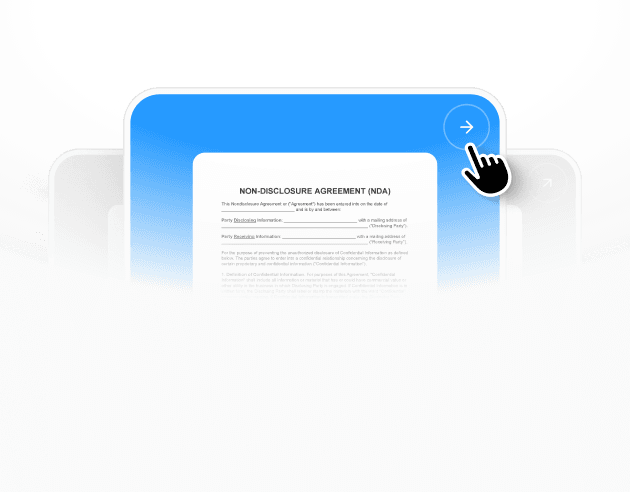
Select a template
Each template already follows legal structure and best practices.
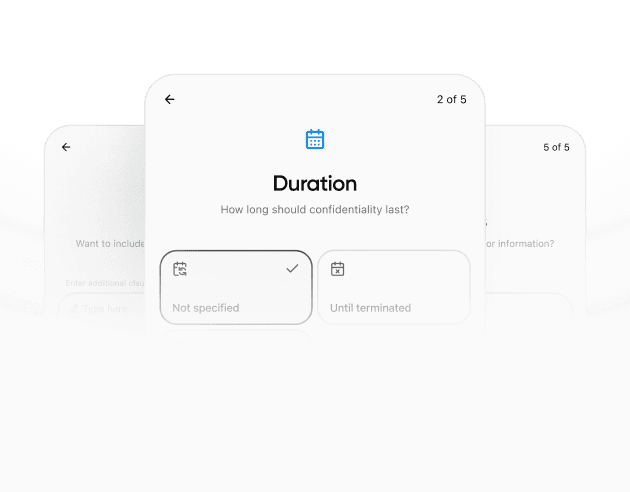
Provide details
The agreement is automatically filled and adapted to your inputs.
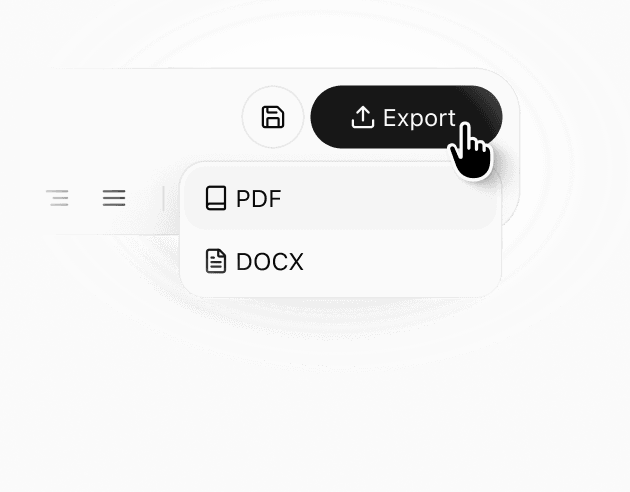
Review & download
Check the generated document, make edits if needed, and download a ready-to-use agreement.
Details
Learn more about
Witness Statement Template – California
California Witness Statement Template FAQ
Who should complete a witness statement, and when should it be written?
A witness statement is best completed by someone who personally observed the relevant events or conditions. It is usually most reliable when written soon after the incident, while details like timing, positioning, and exact words are still fresh. If you are writing later, it can help to anchor your memory using objective references such as messages, calendar entries, photos, or receipts. The statement should reflect what you directly perceived, and it should distinguish between what you know from observation and what you learned from others.
How can a witness keep the statement accurate without guessing?
Accuracy improves when you focus on specific observations and avoid filling gaps with assumptions. If you do not know a fact, use an “unknown” or “approximate” entry rather than guessing a precise time or sequence. Write in chronological order and include sensory details that support reliability, such as distance, lighting, obstacles, and where you were standing. If you recall exact phrases, record them carefully. If you are unsure, you can indicate uncertainty within the factual narrative by describing what you remember and what you cannot recall.
Why is the narrative split into Before, Trigger, Contact, After, and Immediate Response?
That structure helps readers understand the flow of events without forcing the witness to compress everything into one paragraph. “Before” captures the context, “Trigger” highlights what changed, “Contact/Mechanism” focuses on the key moment, and “After” captures what followed. “Immediate Response” records actions taken, which can matter in investigations and claims. This segmentation also helps reduce contradictions because you are less likely to jump backward and forward in time when each segment has a clear purpose.
What exhibits are appropriate to attach to a witness statement?
Exhibits should be items that help a reader verify what you observed or when it occurred. Common examples include photos or videos, screenshots of relevant messages, a copy of a report number, or a simple diagram of the scene. If you did not create the document, you can still reference it as an exhibit if you have permission to include it or if you are instructed to attach it. Keep exhibit labels consistent so the reader can match the statement to the attached items without confusion.
How should the timeline table be used?
The timeline table is a compact way to record key timestamps and events while linking each entry to a person or evidence item. Even when exact times are unknown, you can use approximate times or sequencing markers to show order, such as “shortly after” or “before the call.” The table is helpful when multiple events occur quickly, or when you need to reconcile your memory with objective evidence like call logs or camera footage. It also makes it easier for reviewers to see the flow at a glance.
Can you correct a witness statement after signing it?
Yes, corrections are usually handled by creating an additional statement or an amendment that identifies what is being corrected and why. The safest approach is to preserve the original statement and clearly document the change rather than rewriting history. If you add information later, tie it to a reason, such as locating a photo that clarified timing. If you are generating a clean amendment page with consistent formatting, AI Lawyer can help you produce a matching add-on statement that aligns with the original layout.
Similar templates