Bona Fide Marriage Letter Template: USCIS Evidence & Affidavit

Bona Fide Marriage Letter Template: USCIS Evidence & Affidavit

Bona Fide Marriage Letter Template: USCIS Evidence & Affidavit

Bona Fide Marriage Letter Template: USCIS Evidence & Affidavit

Typical length: 4-6 pages

Length: 4-6 pages

AI Assisted

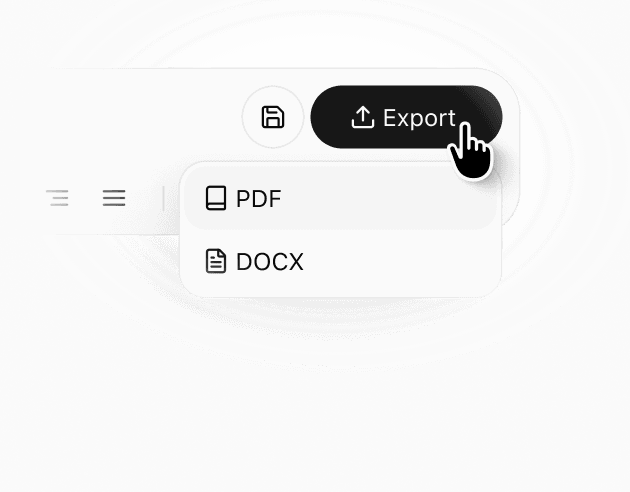
Export: PDF & DOCX

Multi-jurisdiction ready

Multi-jurisdiction

Get your custom agreement in minutes

4.8 Rating

Downloaded 4129 times

Google For Startups

Google For Startups

NVIDIA Inception Program

NVIDIA Inception Program

Bona Fide Marriage Letter Template


[Your Full Legal Name]
[Street Address]
[City, State, ZIP Code]
[Country]
Phone: [Phone Number]
Email: [Email Address]

[Date]

U.S. Citizenship and Immigration Services (USCIS)
[Name of Service Center or Field Office]
[USCIS Address Listed on Request or Notice]

Re: Bona Fide Marriage Letter for [Full Name of Spouse] and [Full Name of Spouse]
Receipt Number (if any): [USCIS Receipt Number]
A-Number (if any): [A-Number]

To Whom It May Concern:


Introduction

My name is [Your Full Legal Name]. I am [the U.S. citizen / lawful permanent resident / spouse] of [Spouse’s Full Name]. I am writing this letter to provide a detailed explanation of our relationship and to confirm that our marriage is a genuine, bona fide marriage entered into in good faith.


How We Met

[Briefly describe how and where you first met, including approximate date, place, and circumstances.

Example structure:

  • When you first met.

  • In what setting (work, school, online, social event, etc.).

  • Your first impressions and how you began communicating.]


Development of Our Relationship

[Describe how the relationship developed over time, including key milestones, such as:

  • When you started dating seriously.

  • When you decided to be exclusive or committed.

  • Important trips, events, or holidays spent together.

  • Meeting each other’s families or close friends.

Include approximate dates and locations where possible.]


Engagement and Wedding

[Explain how you decided to get married, including:

  • When and where you became engaged (if applicable).

  • Why and when you decided to marry.

  • Date and place of the wedding or civil ceremony.

  • Who attended (family, friends, witnesses).

  • Any cultural or religious elements of the ceremony.]


Our Life Together as a Married Couple

[Describe your daily married life, such as:

  • Where you live together (address, since when).

  • How you share household responsibilities (cooking, cleaning, bills, errands).

  • How you spend weekends, holidays, and vacations.

  • Any children you have together or from previous relationships and how you care for them.

Focus on real, concrete examples of your shared life.]


Financial and Household Arrangements

[Describe how you manage finances and major responsibilities, for example:

  • Joint bank accounts or credit cards.

  • Shared lease or mortgage and utilities in one or both names.

  • Health, car, or life insurance policies listing each other as beneficiaries.

  • Major purchases or financial planning done together.

You may refer to documents you are submitting in your application or response.]


Family, Friends, and Community

[Explain how your families, friends, and community know you as a married couple, such as:

  • Family gatherings, holidays, or celebrations you attend together.

  • Friends who know you as a couple.

  • Community, church, school, or social activities you participate in together.

Mention any support or recognition of your relationship from others.]


Supporting Documents (If Applicable)

[Optional paragraph referencing evidence; keep it brief, for example:]

We are submitting documentation in support of our bona fide marriage, including but not limited to: [joint lease or mortgage, joint bank statements, tax returns, photos with family and friends, travel records, birth certificates of children, insurance policies, or other relevant documents].


Closing Statement

Our relationship is based on love, mutual respect, and a shared commitment to building a life together. We did not marry for immigration purposes. We respectfully ask that USCIS recognize our marriage as bona fide and approve the related immigration application.

I declare under penalty of perjury under the laws of the United States that the information in this letter is true and correct to the best of my knowledge.

Sincerely,

[Your Full Legal Name]
[Relationship to Spouse, e.g., “Petitioning Spouse”]

[Optional: City and State of Signing]
[Optional: Date of Signature if different from letter date]


Bona Fide Marriage Letter Template


[Your Full Legal Name]
[Street Address]
[City, State, ZIP Code]
[Country]
Phone: [Phone Number]
Email: [Email Address]

[Date]

U.S. Citizenship and Immigration Services (USCIS)
[Name of Service Center or Field Office]
[USCIS Address Listed on Request or Notice]

Re: Bona Fide Marriage Letter for [Full Name of Spouse] and [Full Name of Spouse]
Receipt Number (if any): [USCIS Receipt Number]
A-Number (if any): [A-Number]

To Whom It May Concern:


Introduction

My name is [Your Full Legal Name]. I am [the U.S. citizen / lawful permanent resident / spouse] of [Spouse’s Full Name]. I am writing this letter to provide a detailed explanation of our relationship and to confirm that our marriage is a genuine, bona fide marriage entered into in good faith.


How We Met

[Briefly describe how and where you first met, including approximate date, place, and circumstances.

Example structure:

  • When you first met.

  • In what setting (work, school, online, social event, etc.).

  • Your first impressions and how you began communicating.]


Development of Our Relationship

[Describe how the relationship developed over time, including key milestones, such as:

  • When you started dating seriously.

  • When you decided to be exclusive or committed.

  • Important trips, events, or holidays spent together.

  • Meeting each other’s families or close friends.

Include approximate dates and locations where possible.]


Engagement and Wedding

[Explain how you decided to get married, including:

  • When and where you became engaged (if applicable).

  • Why and when you decided to marry.

  • Date and place of the wedding or civil ceremony.

  • Who attended (family, friends, witnesses).

  • Any cultural or religious elements of the ceremony.]


Our Life Together as a Married Couple

[Describe your daily married life, such as:

  • Where you live together (address, since when).

  • How you share household responsibilities (cooking, cleaning, bills, errands).

  • How you spend weekends, holidays, and vacations.

  • Any children you have together or from previous relationships and how you care for them.

Focus on real, concrete examples of your shared life.]


Financial and Household Arrangements

[Describe how you manage finances and major responsibilities, for example:

  • Joint bank accounts or credit cards.

  • Shared lease or mortgage and utilities in one or both names.

  • Health, car, or life insurance policies listing each other as beneficiaries.

  • Major purchases or financial planning done together.

You may refer to documents you are submitting in your application or response.]


Family, Friends, and Community

[Explain how your families, friends, and community know you as a married couple, such as:

  • Family gatherings, holidays, or celebrations you attend together.

  • Friends who know you as a couple.

  • Community, church, school, or social activities you participate in together.

Mention any support or recognition of your relationship from others.]


Supporting Documents (If Applicable)

[Optional paragraph referencing evidence; keep it brief, for example:]

We are submitting documentation in support of our bona fide marriage, including but not limited to: [joint lease or mortgage, joint bank statements, tax returns, photos with family and friends, travel records, birth certificates of children, insurance policies, or other relevant documents].


Closing Statement

Our relationship is based on love, mutual respect, and a shared commitment to building a life together. We did not marry for immigration purposes. We respectfully ask that USCIS recognize our marriage as bona fide and approve the related immigration application.

I declare under penalty of perjury under the laws of the United States that the information in this letter is true and correct to the best of my knowledge.

Sincerely,

[Your Full Legal Name]
[Relationship to Spouse, e.g., “Petitioning Spouse”]

[Optional: City and State of Signing]
[Optional: Date of Signature if different from letter date]
Get your complete
agreement in minutes

Select template illustration
Select a template

Each template already follows legal structure and best practices.

Provide details illustration
Provide details

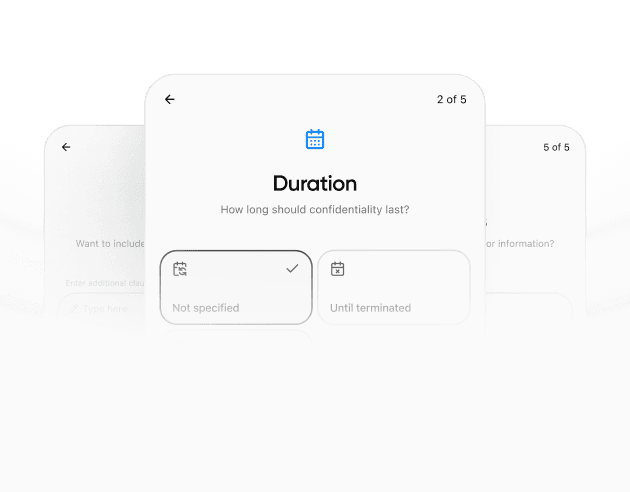
The agreement is automatically filled and adapted to your inputs.

Review & download illustration
Review & download

Check the generated document, make edits if needed, and download a ready-to-use agreement.

Details

Learn more about

Bona Fide Marriage Letter Template: USCIS Evidence & Affidavit

Click below for detailed info on the template.
For quick answers, scroll below to see the FAQ.

Click below for detailed info on the template.
For quick answers, scroll below to see the FAQ.

Frequently asked · 2026 USCIS Guidance

Bona Fide Marriage Letter · FAQ

Six questions petitioners ask before they file. Answers grounded in the six bona-fide-marriage indicia at 8 CFR 204.2(a)(1)(iii) and the USCIS Policy Manual update of October 17, 2025 (Policy Alert 2025-23).

01 Basics

What is a bona fide marriage letter for immigration?

It is a written statement that explains why your marriage is real and not entered into for an immigration benefit. "Bona fide" is the legal term USCIS uses to describe a marriage that was entered in good faith. The letter sits alongside documents (joint lease, joint bank statements, photos, tax returns) and serves a job that documents alone cannot: it tells the human story behind those documents and ties them together as evidence of a shared life.

The letter can come from either of two sources, and you usually want both:

  • The petitioning couple themselves, often jointly. This is sometimes called the "personal statement," and it walks the officer through how the relationship began, developed, and looks today.
  • A third party who has personally observed the couple, such as a family member, friend, employer, pastor, or landlord. This is the "third-party affidavit," explicitly listed as competent evidence at 8 CFR 204.2(a)(1)(iii)(B)(5).

Either way, the goal of the letter is the same: corroborate the six bona-fide-marriage indicia the regulation lists, in plain language that an adjudicator can read in under two minutes. The October 17, 2025 USCIS update Policy Alert 2025-23 reinforced "totality of the circumstances" review at both the I-130 stage and the AOS interview. What you write is read carefully, not skimmed.

02 Who writes it

Who writes a bona fide marriage letter to USCIS?

Two kinds of letters, two kinds of writers. The personal statement comes from the couple themselves (often a joint letter signed by both spouses). The third-party affidavits come from people who know the couple, with non-family writers (employer, landlord, pastor, long-time friend) typically carrying more weight than family because officers assume less bias.

Letter 1 · Self

Joint or individual statement from the couple

Tells the officer how the relationship started, how it developed, and what your shared life looks like now. Usually one to two pages. Either spouse can write, or both jointly.

Stronger when: chronological, dated, candid about any rough patches, and signed by both spouses.

Letter 2 · Third party

Sworn affidavit from someone who knows you

Corroborates the personal statement with first-hand observations. Family is fine but pair with at least one non-family writer. See the marriage-support template for the full writer hierarchy.

Stronger when: writer has known you both for years, in different contexts (work + community + family), with specific dated observations.

Three-letter rule of thumb: one joint personal statement from the couple, plus two to three third-party affidavits from different parts of your life. More than five third-party letters tends to backfire because officers start comparing them for boilerplate.

03 Anatomy

What should I include in a bona fide marriage letter?

Every paragraph should map to one of the six bona-fide-marriage indicia at 8 CFR 204.2(a)(1)(iii)(B). That is the framework USCIS adjudicators are trained on. If a paragraph would be true of any married couple in the world, cut it.

1
Joint property ownership
Deeds, titles, joint mortgages. Witness corroboration of "we helped them move in."
2
Joint tenancy / shared residence
Lease in both names, utility bills, mailbox, neighbor corroboration.
3
Commingled finances
Joint accounts, joint tax returns, shared credit, beneficiary designations.
4
Birth certificates of children
Or shared parental responsibility for stepchildren.
5
Third-party affidavits
The regulation explicitly names them as competent evidence.
6
Any other relevant documentation
Photos, travel records, family integration, social media history.

The seven-section skeleton (same for self-statement and third-party affidavit, framed differently):

  • Writer identity and standing (full name, status, employer, contact)
  • Relationship history with dated milestones (first meeting, dating, engagement, marriage)
  • Cohabitation, finances, routines (mapped to indicia #1 to #3)
  • Family and community integration (mapped to indicia #4 and #6)
  • Honest treatment of any complication (separation, long-distance, prior marriage)
  • Direct opinion on bona fides
  • Sworn closing per 28 U.S.C. §1746 or notary block

The petitioner couple's personal statement adds one extra paragraph: the "how we met" story. Third-party letters skip that and focus on observations of the relationship as it stands now.

04 Length

How long should a bona fide marriage letter be?

One to two pages. Single-sided, 12 pt, plain prose. Two well-anchored pages always beat five emotional pages. USCIS officers read dozens of these per day. A dense, dated, specific letter is read carefully. A long narrative gets skimmed and discounted.

What makes a letter feel "long" to an officer is not word count; it is the ratio of specific observations to general sentiment. Hit these targets and length takes care of itself:

  • At least three dated anchors (when you met, when you started dating, when you married, plus optional milestones)
  • At least one observation per indicium that the writer has first-hand knowledge of
  • One paragraph that honestly addresses anything complicated (long-distance, prior marriage, age gap, language barrier, religion / family disagreement)
  • A plain opinion sentence on bona fides (no flowery language)
  • A perjury or notary closing

If you find yourself padding to fill space, the letter is finished. Officers reward concision because it signals you have actually thought about which facts matter.

For mandatory marriage-based AOS interviews (which returned in 2026) and any Stokes referral, the officer will use your letter as a fact anchor for the interview. The shorter and more specific it is, the easier it is to defend in person.

05 Disclaimer

Is this bona fide marriage letter sample legal advice or a USCIS form?

No. This template is a drafting aid, not legal advice, and not an official USCIS form. It does not prove a bona fide marriage on its own, and it does not replace counsel from a licensed immigration attorney or an accredited representative.

The rules change. Two 2025–2026 updates affect every marriage-based filing:

  • Policy Alert 2025-23 (October 17, 2025): reinforced the "totality of the circumstances" standard at both the I-130 stage and the AOS interview, and barred future marriage benefits for any prior fraud finding.
  • Matter of Jin, 29 I&N Dec. 441 (BIA 2026): now permits USCIS to reopen an already-approved I-130 on the basis of post-approval fraud evidence. What you submit today can be re-examined years later.

Strongly retain counsel when any of these apply to your case:

  • Either spouse has a prior immigration violation or any earlier fraud finding
  • Either spouse has a criminal record, especially crimes of moral turpitude or domestic violence
  • I-751 waiver based on divorce, death, abuse, or extreme hardship
  • Active removal proceeding or NTA on file
  • High-risk-country flags from the December 2025 / January 2026 review memos
  • Significant age gap, language barrier, prior multiple-marriage history, or other "soft" red flags that disproportionately trigger Stokes referrals
06 AI Lawyer

How can AI Lawyer help with a bona fide marriage letter?

AI Lawyer turns the facts you already know about your relationship into a structured, USCIS-ready draft mapped to the six bona-fide indicia. The flow asks a short set of dated questions, picks the right form-specific framing (I-130, I-751 joint, I-751 waiver, K-1, N-400), and produces a printable, signature-ready letter.

What you get from a single drafting session:

  • Two letters, not one: drafts both the couple's joint personal statement and a third-party affidavit template you can hand to your strongest witness.
  • Indicium coverage check: flags any paragraph that does not map to a regulatory indicium at 8 CFR 204.2(a)(1)(iii).
  • Form-aware framing: picks I-130, I-751 joint, I-751 waiver, K-1, or N-400 wording for you so the letter speaks to the actual standard.
  • Red-flag pass: scans your draft against the eleven failure modes officers are trained to spot, including AI-style phrasing, missing perjury declaration, identical-paragraph duplication across affidavits, and stale dates.
  • Evidence portfolio builder: generates a tiered checklist (see the section below) of all the documents and letters you should submit alongside this one.
  • Form-ready output: printable and exportable as PDF and DOCX, formatted to letter size, ready for wet signature or notarization.

You stay responsible for the truth. You and any third-party affiant must confirm every name, date, address, employer, and observation. AI-generated text is drafting support, not legal advice. For any case with the complications listed in question 5, retain a licensed immigration attorney.

Ready to draft your bona fide marriage letter?

AI Lawyer drafts both the joint personal statement and a third-party affidavit template, maps each paragraph to one of the six 8 CFR 204.2 indicia, and exports a notary-ready PDF or DOCX.

Create my letter →

Similar templates

Other templates from

Letters and Notices Templates

Money back guarantee

Free trial

Cancel anytime

AI Lawyer protects

your rights and wallet

🌐

Company

Learn

Terms

©2026 AI Lawtech Sp. z O.O. All rights reserved.

Money back guarantee

Free trial

Cancel anytime

AI Lawyer protects

your rights and wallet

🌐

Company

Learn

Terms

AI Lawtech Sp. z O.O.

©2026

Money back guarantee

Free trial

Cancel anytime

AI Lawyer protects

your rights and wallet

🌐

Company

Learn

Terms

©2026 AI Lawtech Sp. z O.O. All rights reserved.

Money back guarantee

Free trial

Cancel anytime

AI Lawyer protects

your rights and wallet

🌐

Company

Learn

Terms

©2026 AI Lawtech Sp. z O.O. All rights reserved.