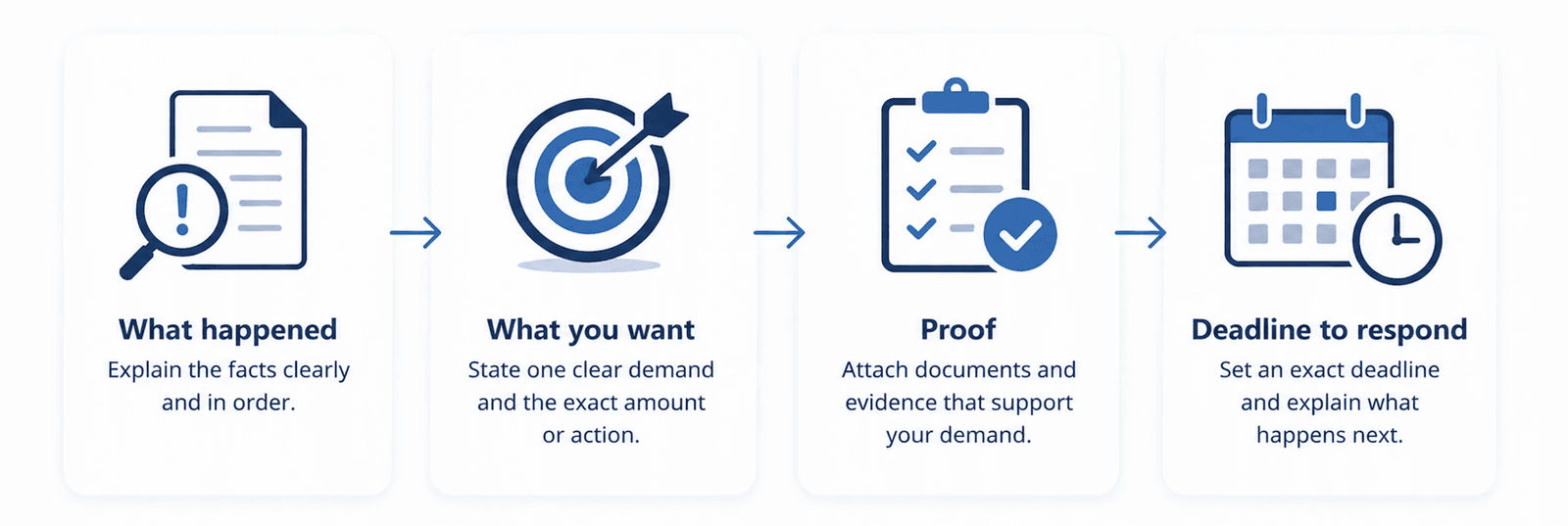

An immigration letter of support written for a family member helps USCIS understand the applicant’s character, family ties, and role in the community. This kind of letter should include detailed examples, an evident connection to the applicant, and should maintain a professional tone. Below is presented a brief guide on writing such letters and a sample for your convenience.
Throughout the last decade, U.S. immigration laws and procedures have seen significant changes. However, even though data provided by the Pew Research Center shows that the United States of America is still one of the most desired countries in terms of immigration (the United States hosts more immigrants than any other country in the world), the process of selection still remains very thorough. As of June 2025, 51.9 million immigrants resided in the U.S., 15.4% of the population (Source: Pew Research Center), and every year there are thousands of applications for permanent residence, work, and family-based visas being considered.
You Might Also Like:
-
Top 10 AI Legal Research Tools to Revolutionize Your Legal Workflow
-
2026 AI Forecast: From Medicine to Legal Tech — A Full Market Rundown
Purpose of the Immigration Letter of Support
The first and foremost purpose of a support letter for an immigrant is to portray the character, community engagement, and family life of the applicant. Although the USCIS officers scrutinize all the legal papers, starting from employment letters and ending with tax documents, the character support letter provides some extra information in qualitative terms. This means that it tells more than the dry facts about the applicant.
Definition – Character Reference Letter
Character references or letters are written testimonials from individuals who are familiar with the applicant, attesting to the applicant’s moral character, integrity, and good standing within his/her community or family.
While not required in all circumstances, a well-written letter can be extremely useful. As a case in point, for assessing an applicant in the context of family-based immigration applications – for instance, when a citizen applies on behalf of his/her brother/sister or a permanent resident for his/her spouse – the USCIS might rely upon the quality of personal references that would give the agency a clearer picture of the relationship and the integration of the applicant within American society (Source: USCIS Official Website).
Which Case Is the Letter For?
Find out what your relative applied for first. It decides who reads your letter and what they look for.
| Case | Who reads it | What the letter should show |
|---|---|---|
| Naturalization (Form N-400) | USCIS officer | Their character and ties to the U.S., from years of knowing them |
| Marriage green card or Form I-751 | USCIS officer | What you’ve seen of the couple’s life together. An I-751 affidavit also needs your address, date and place of birth |
| Waiver (Form I-601 or I-601A) | USCIS officer | How a denial would hurt the U.S. citizen or green card holder relative |
| Removal proceedings | Immigration judge | Family ties and hardship. Open with “Honorable Immigration Judge” |
One recent change is worth knowing about if the case is a naturalization case. On August 25, 2026, USCIS issued Policy Alert PA-2026-10, Investigations and Examinations for Naturalization Eligibility, which reintroduces personal investigations — also known as neighborhood investigations — under section 335(a) of the Immigration and Nationality Act. In practice that means officers may question an applicant’s neighbors and coworkers, and the agency may also waive the investigation in a given case. USCIS prefers letters from U.S. citizens who are not relatives, so it is worth sending yours alongside a neighbor’s or a coworker’s.
Key Components of the Letter
1. Introduction
Start with an introduction of yourself and how you know the applicant, for example:
“My name is John Smith, an American citizen born and raised in California. I’ve known the applicant, Jessica Miller, for more than 15 years, because she is my niece and has been living near me for most of her life.”
The importance of establishing your identity and relationship to the applicant should not be overlooked. It will help the immigration officials determine how credible you are. If you have known the applicant since they were young, or even from some major events in their life, such as birthday parties, graduations, or church services, it is wise to mention it.
2. Statement of Support:
Provide reasons why you completely agree with the immigration petition of the applicant:
“I fully endorse Jessica Miller’s petition for residency because I have seen firsthand how she is dedicated not only to our family but to the community we live in. Her honesty, hardworking attitude, and kindness have had a very positive effect on everybody around her.”
You should explain why you believe that the person in question will be able to embody the values of America and comply with U.S. laws. It is best to consider the personal traits of the individual and describe why these traits match the national lifestyle.
3. Evidence and Examples:
Being specific will help you. Vagueness in your endorsement will reduce its impact. Be sure to provide examples as well as document your statements. For example:
“For the past three years, Jessica has volunteered at the Harmony Community Center by coordinating the after-school tutoring program for kids from poor backgrounds. Based on the annual reports published by Harmony Community Center for the year 2022–2023 (Harmony Community Center Annual Reports), Jessica has volunteered more than 150 hours, during which she regularly appeared every weekend and holiday season. Her efforts helped improve academic performance and morale of the students.”
One can also discuss the applicants’ participation in church organizations, cultural fairs, local sports clubs, or neighborhood initiatives. If the applicant organized a run in favor of a local hospital or even helped elderly members of the community shop for groceries amid the pandemic, such stories will create a relatable image for the immigration officers.
4. Additional Character Insights:
Apart from community involvement, individual behavior and family contributions are important indicators of one’s character. For instance:
“Jessica is an important member of our family. She often helps her young cousins with their homework, she educates them on the importance of respect and responsibility in life, and arranges family get-togethers which strengthen ties within our family. Her ability to create bonds and treat other people with kindness is in line with the principles which the US has always believed in.”
One should not forget about the applicant’s ability to fit into a new culture, his or her language skills, or civic awareness. For instance, one may note that the applicant regularly participates in civic discussions or town halls, votes if eligible, or is aware of what happens in the country.
5. Conclusion:
Your closing should reaffirm your full support and emphasize your willingness to furnish additional details:
“I am sure that giving Jessica Miller permanent residency status will ensure that she continues to make positive contributions to our society. If you need more information or any clarification, feel free to call me at (XXX-XXX-XXXX) or email me at [email protected].”
When the Letter Is About Hardship
A waiver changes the scenario. On Form I-601 or I-601A the officer is weighing what would happen to the qualifying relative — the applicant’s U.S. citizen or green card holder spouse or parent — if the waiver is denied. If that qualifying relative is you, your letter is first-hand evidence of your own hardship. Separation is painful. The loss of income is also painful. USCIS considers both aspects in almost every case, so be sure to demonstrate how these hardships compound. Saying “it would be difficult for us” conveys very little to an officer. Stating, “Without the $2,400 a month my husband provides, I would be unable to pay rent or take my mother to her dialysis appointments,” provides them with concrete facts to verify.
Your letter should answer:
-
If the waiver is denied, would you go with your relative or stay? What would you leave behind?
-
Is someone at home sick or counting on you for rides to appointments?
-
Picture the first month without them. Who pays the bills? Who picks up the kids?
-
Does the State Department warn against travel to their country? Then say so.
Support each argument with documentation, for example, a schedule of your mother’s dialysis treatments or a tax return from the previous year. If your relative asks an immigration judge to cancel a deportation order, the requirements become more stringent: the hardship that would be faced by their spouse, parent, or child (who is a U.S. citizen or a green card holder) must be “exceptional and extremely unusual.”
Statistics and the Importance of Support Letters
Neither USCIS nor AILA publishes a figure for how much a support letter changes a case outcome, so treat any percentage quoted online as unsourced. What the agency does state is how such letters are weighed: in good moral character determinations the officer considers the totality of the circumstances and weighs all factors, favorable and unfavorable, with community involvement and the applicant’s credibility among them (USCIS Policy Manual, Volume 12, Part F, Chapter 2). AILA’s own guidance asks letter writers to state how they know the applicant and for how long, and to give concrete examples instead of general praise (AILA, Guidelines for Letters in Support of Stay Motions).
There are other facts as well that show that in case of changing immigration policies, the presence of strong community participation can tip the scales. For instance, with the increasing scrutiny of immigration policy in the United States, being able to showcase civic involvement and moral conduct becomes even more important in such a scenario. The USCIS keeps updating its guidelines, and numerous legal experts have mentioned how a heartfelt letter can actually complement the legal arguments in case the applicant has to prove their hardship, moral character, or indispensable presence in the US.
According to some recent news articles, it is common for community advocacy groups, churches, or colleges to come forward and advocate for an individual who may be deported or whose removal proceedings are pending. In some high-profile cases these collective efforts have led to deferred action or a more favorable outcome, which shows that character references can play a substantial role in building a positive narrative about the applicant.
Tips for Writing an Effective Letter
Writing a persuasive recommendation requires balancing a sincere, personal perspective with strict professional standards. Keep the following practical tips in mind to make your text more compelling and legally sound.
-
Be truthful and authentic. Truth leads to building trust. It is a fact that immigration officers are well-versed in recognizing exaggerations and inconsistencies. Stick to the facts and focus on the applicant’s true nature and actions.
-
Give concrete examples. If you say that she is very kind, explain why. For instance, you can write, “She takes her elderly neighbors to their medical appointments every Tuesday and Friday to make sure they get proper treatment.”
-
Stay professional and formal. Although it is important to be polite and sincere, at the same time it is an official letter, and you should avoid using any informal language, jokes, or irrelevant personal anecdotes.
-
Structure and clarity. Structure and clarity of thought are important aspects of an effective letter of recommendation. You should use short paragraphs and headings wherever necessary.
-
Focus on relevance. Include elements from the applicant’s life that are relevant to the traits that USCIS holds in high regard: legal compliance, strong family relationships, academic and occupational aspirations, community involvement, flexibility, and reverence for American ideals.
Additional Considerations
Beyond the basic formatting and writing style, several administrative and situational factors can influence how your letter is perceived. Pay close attention to these final practical considerations before submitting your document.
-
Who may write the letter? Those in family relations, close acquaintances, the applicant’s boss, his neighbors, religious leaders, teachers, or anyone who knows the applicant personally may write a letter on his behalf. Different sources will give a wider perspective. For example, a letter written by the employer may portray the hardworking attitude of the applicant, while the letter written by a clergy member will illustrate the philanthropic and upright character of the applicant.
-
Notarization. In general, letters are not required to be notarized. It is best to refer to the latest USCIS guidelines or seek advice from an immigration lawyer in case it is necessary.
-
Several letters. The use of several letters from various perspectives – one emphasizing family ties, another professional demeanor, and the third highlighting volunteer spirit – may enhance the image of the applicant.
-
Culture and contextual awareness. If the applicant has just gotten comfortable in American society or started speaking English, you can talk about how well they have done. This is because what they do is not only about adaptation, but also about making an enrichment to the society.
-
Current immigration atmosphere. With the changing policies on immigration and the increased levels of scrutiny that people face in today’s immigration environment, it becomes even more vital to make a good presentation. The media often tells stories of people whose cases are stronger due to the community support they get.
Before You Send the Letter
-
Sign and date it. An undated letter is harder to rely on, and an old one may not describe the family today.
-
Slip in a copy of your ID. A U.S. passport or green card copy shows the officer who’s vouching.
-
Can’t get to a notary? Under 28 U.S.C. § 1746, your own signature has the same weight if you end with “I declare under penalty of perjury that the foregoing is true and correct.” Writing from abroad? Add “under the laws of the United States of America” after “perjury.”
-
Written in another language? 8 CFR § 103.2(b)(3) requires a full English translation, with the translator certifying that the translation is complete and accurate and that they are competent to translate from that language into English.
-
Hand it to your relative or their lawyer to file. Don’t mail it to USCIS or the court yourself.
Sample Letter
Date: January 10, 2026
To: U.S. Citizenship and Immigration Services (USCIS)
Dear USCIS Officer:
I would like to introduce myself as John Smith, a US citizen from California. This letter is written in support of my niece, Jessica Miller, who is currently applying for permanent resident status.
I completely support Jessica’s application since she has always displayed qualities that match American values. In the last three years, Jessica has been volunteering at the Harmony Community Center, where she has helped with after-school tutoring sessions for children from underserved neighborhoods and coordinated annual food drives in the holiday seasons. According to the annual report of Harmony Community Center (Source: Harmony Community Center Annual Reports) 2022–2023, Jessica has invested more than 150 hours as a volunteer, contributing to better academic results and raising the morale of numerous students.
In my family, Jessica is known as an honest and caring person who has always helped out her younger cousins with school assignments and inspired them to volunteer in community service too. She has frequently hosted gatherings for us, where all the generations and people from various backgrounds come together and strengthen the bond of unity and mutual respect among them. Not only in family settings, but I have also witnessed Jessica taking part in various events in our community, like cleaning up parks and participating in cultural festivals, proving her willingness to embrace the diversity of our community and contribute to it.
Based on Jessica’s character, participation in the community, and her family duties, I’m sure she will be an excellent permanent resident who will contribute greatly to the social and cultural development of our nation.
If you need any additional information or clarifications, don’t hesitate to contact me at (XXX-XXX-XXXX) or [email protected].
Sincerely,
John Smith
Example of working with AI Lawyer
What is AI Lawyer?
AI Lawyer is a unique online service based on artificial intelligence technologies that helps users prepare various legal papers in a very quick and professional way, including immigration recommendation letters. This service uses real-life examples, standard templates, regulations, and best practices to provide structure, wording, and arguments that fit modern requirements. It provides an intuitive interface and the possibility to check logical and stylistic mistakes.
According to statistics, there is a high demand for AI Lawyer among its users who need help in preparing immigration recommendation letters. This happens because of the fact that a well-prepared and logically substantiated recommendation letter may greatly increase your chances to get positive decisions from immigration authorities. With AI Lawyer, you will be able not only to get expert advice but also to save your time.
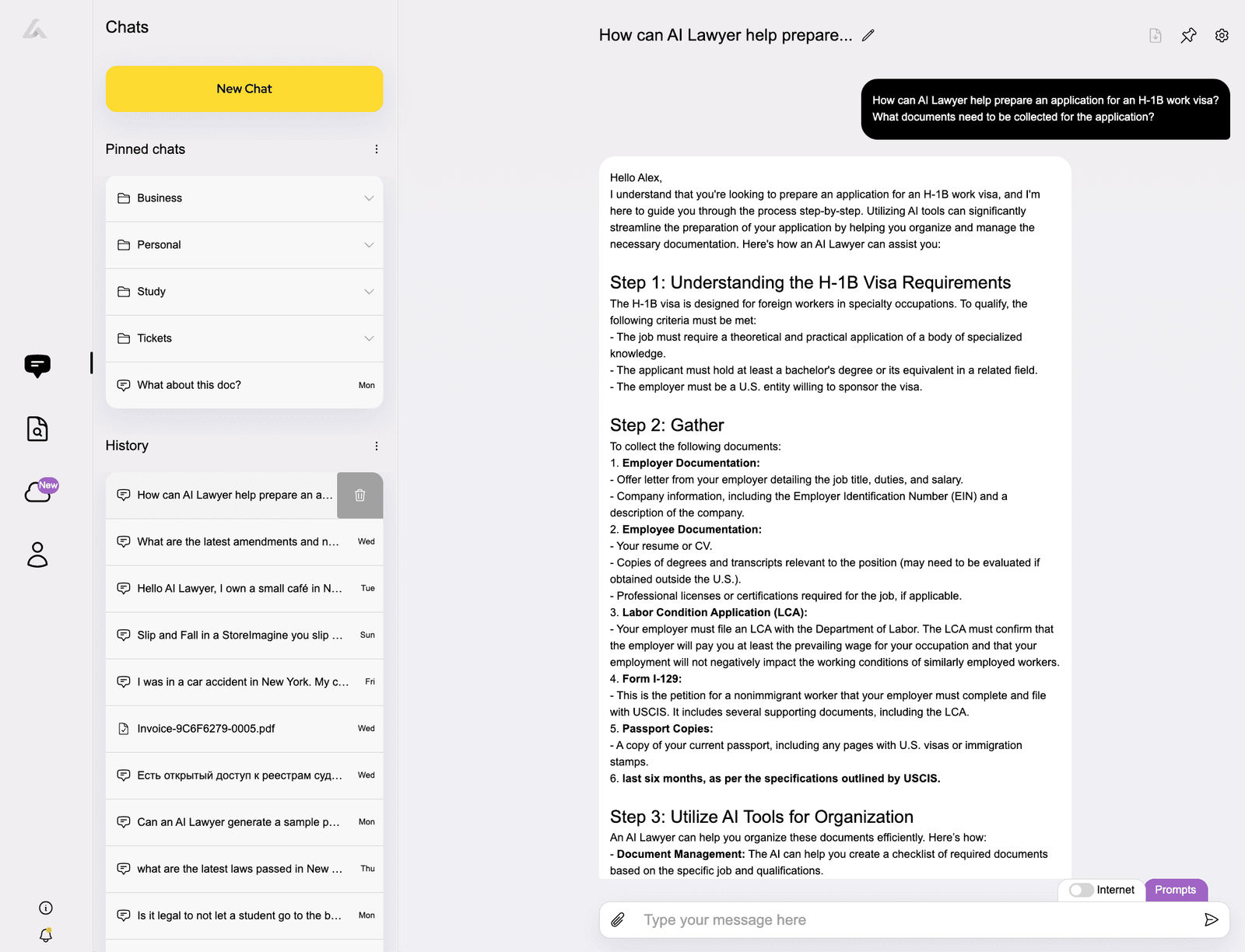
Let’s ask AI Lawyer how he could help us in creating a letter of recommendation for immigration.

AI Lawyer’s answer.
Letter of Recommendation for Immigration
[Your Name]
[Your Address]
[City, State, Zip Code]
[Email Address]
[Phone Number]
[Date]
U.S. Citizenship and Immigration Services
[USCIS Address]
[City, State, Zip Code]
Dear USCIS Officer,
I am pleased to write and fully recommend Alex [Last Name] for his immigration to America. Alex has been my professional colleague and friend in the area of marketing for [duration of your relationship, e.g., “over three years”].
Working with Alex at [Company Name] in New York, I have observed Alex’s outstanding talent and commitment to his career. Over the past few years, he has shown dedication, creativity, and knowledge of the market. Alex’s talent and hard work have helped him earn the admiration of his peers and superiors.
Apart from being talented, Alex also has the special gift of interacting with people who come from various backgrounds. Alex’s interpersonal abilities have enabled him to form positive relationships with clients, colleagues, and other stakeholders in the business environment. I firmly believe that Alex will use his unique qualities in the United States as well.
Moreover, it is also worth mentioning that Alex demonstrates a strong desire to improve himself professionally. He always looks for opportunities to learn and grow, which has led him to create some innovative marketing strategies and thus help our company. It is clear that Alex enjoys his work, and I am sure that he would be an invaluable asset for any company in the United States.
To conclude, I would like to state that I fully support Alex’s application for immigration. I am convinced that his skills and his positive approach will be useful for the community and the marketing industry in the country. If you need additional information, please call me at [Your Phone Number] or email me at [Your Email Address].
Thank you for your consideration.
Sincerely,
[Your Name]
[Your Job Title]
[Your Company]
Data Needed to Fill Out the Letter Properly
To personalize and complete the letter of recommendation, you will need the following information:
-
Your Full Name: The name of the person writing the letter.
-
Your Address: Your complete address, including city, state, and zip code.
-
Your Email Address and Phone Number: Contact information for the letter writer.
-
Date: The date you are writing the letter.
-
USCIS Address: The specific address for the U.S. Citizenship and Immigration Services office handling the application.
-
Alex’s Last Name: Include Alex’s last name for formality.
-
Duration of Relationship: How long you have known Alex.
-
Company Name: The name of the company or organization where you both worked together.
-
Examples of Contributions: Specific achievements or contributions Alex has made in his marketing role.
-
Your Job Title: The title of the person writing the letter, to establish credibility.
-
Your Company: The name of the company you are associated with.
Step-by-Step Guide
Transforming these requirements into a final document is a straightforward process when handled in an organized manner.
-
Gather Information: Collect all the data mentioned above.
-
Draft the Letter: Use the template provided and fill in the relevant fields with the gathered information.
-
Review for Accuracy: Check the letter for any errors or omissions.
-
Format the Letter: Ensure the letter is professionally formatted.
-
Print and Sign: Print the letter and sign it if it is required to be sent in hard copy.
-
Submit: Include the letter with Alex’s immigration application as needed.
By following these steps and filling in the necessary details, you will create a strong letter of recommendation for Alex’s immigration application.
Sources and References
Demographic context on U.S. immigration is drawn from the Pew Research Center’s analyses of the U.S. foreign-born population and related statistical summaries, as well as data compiled by the Migration Policy Institute on immigrant numbers and trends. Guidance on good moral character evaluations, supporting evidence, and the role of affidavits and letters of support is based primarily on the USCIS Policy Manual (including Volume 12, Part F – Good Moral Character; and Volume 1, Part E – Evidence), official USCIS filing guidance, and related policy memoranda. Practical insights on the preparation and impact of character reference letters reflect materials from the American Immigration Lawyers Association (AILA) and reputable practitioner resources discussing effective support letters in immigration proceedings.
For the sections on case types, hardship letters, and what to do before filing, we referenced USCIS Policy Alert PA-2026-10, Investigations and Examinations for Naturalization Eligibility (August 25, 2026), and the chapter it amends on background investigations and security checks in the USCIS Policy Manual, Volume 12, Part B, Chapter 2. The rule on unsworn declarations is 28 U.S.C. § 1746, and the translation requirement is 8 CFR § 103.2(b)(3).
You Might Also Like:
-
Top 10 AI Legal Research Tools to Revolutionize Your Legal Workflow
-
2026 AI Forecast: From Medicine to Legal Tech — A Full Market Rundown
Disclaimer: This information is for general knowledge and does not constitute legal advice. For guidance on your specific situation, consult a qualified attorney licensed in your state.