

Artificial Intelligence (AI) has been one of the fastest-growing technologies of the last decade, transforming everything from healthcare and finance to media and entertainment. According to Fortune Business Insights’ 2025 AI market press release, the global AI market was valued at USD 294.16 billion in 2025 and is projected to reach USD 375.93 billion in 2026. Meanwhile, Gartner’s 2025 spending forecast suggests worldwide AI spending will top USD 2 trillion in 2026, driven by AI being integrated into products like smartphones and PCs, alongside continued infrastructure investment. This rapid expansion is fueled by the convergence of big data, powerful computing capabilities, and continuous algorithmic improvements. Looking ahead to 2026 and beyond, it’s clear that AI’s role will only become more deeply embedded in the global economy and our everyday lives.
In this article, we’ll explore seven key areas where AI is making its mark: Medicine, Science, Video, Text, Sports, AI Assistants, and Legal Tech. Each section provides an overview of the domain, a brief forecast for 2026, and an example of a real-world AI service already making strides in that sector.
You Might Also Like:
1. AI For Lawyers
Overview
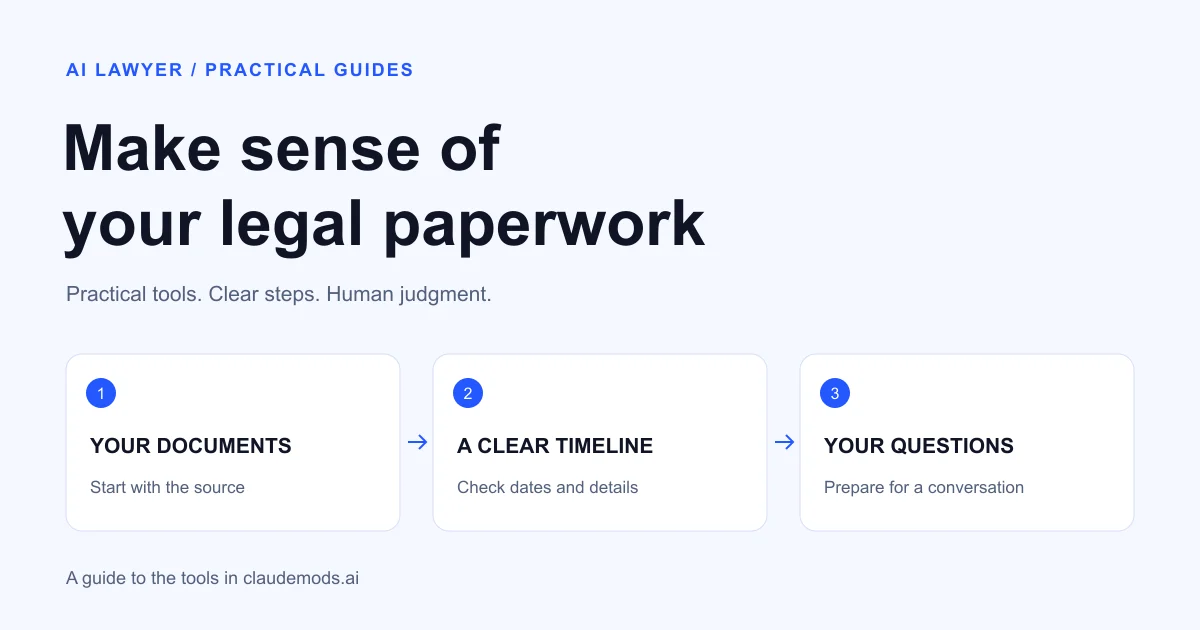
While historically conservative, the legal sector is increasingly embracing AI to handle research, document review, and even preliminary case analysis. By automating routine legal work, AI helps lawyers spend more time on strategy and client-facing communication. As the ABA’s 2024 Artificial Intelligence TechReport reports, adoption is already measurable: 30.2% of surveyed attorneys say their offices use AI-based tools, rising to 47.8% at firms with 500+ lawyers.
AI can rapidly analyze vast legal databases, looking for precedents, relevant statutes, and potential contradictions in case files. This can reduce manual research time and help attorneys prepare stronger arguments faster. Some firms are experimenting with AI chatbots to handle basic, frequently asked questions in areas like immigration or family law, where the chatbot can triage simple requests before a lawyer steps in.
Forecast for 2026
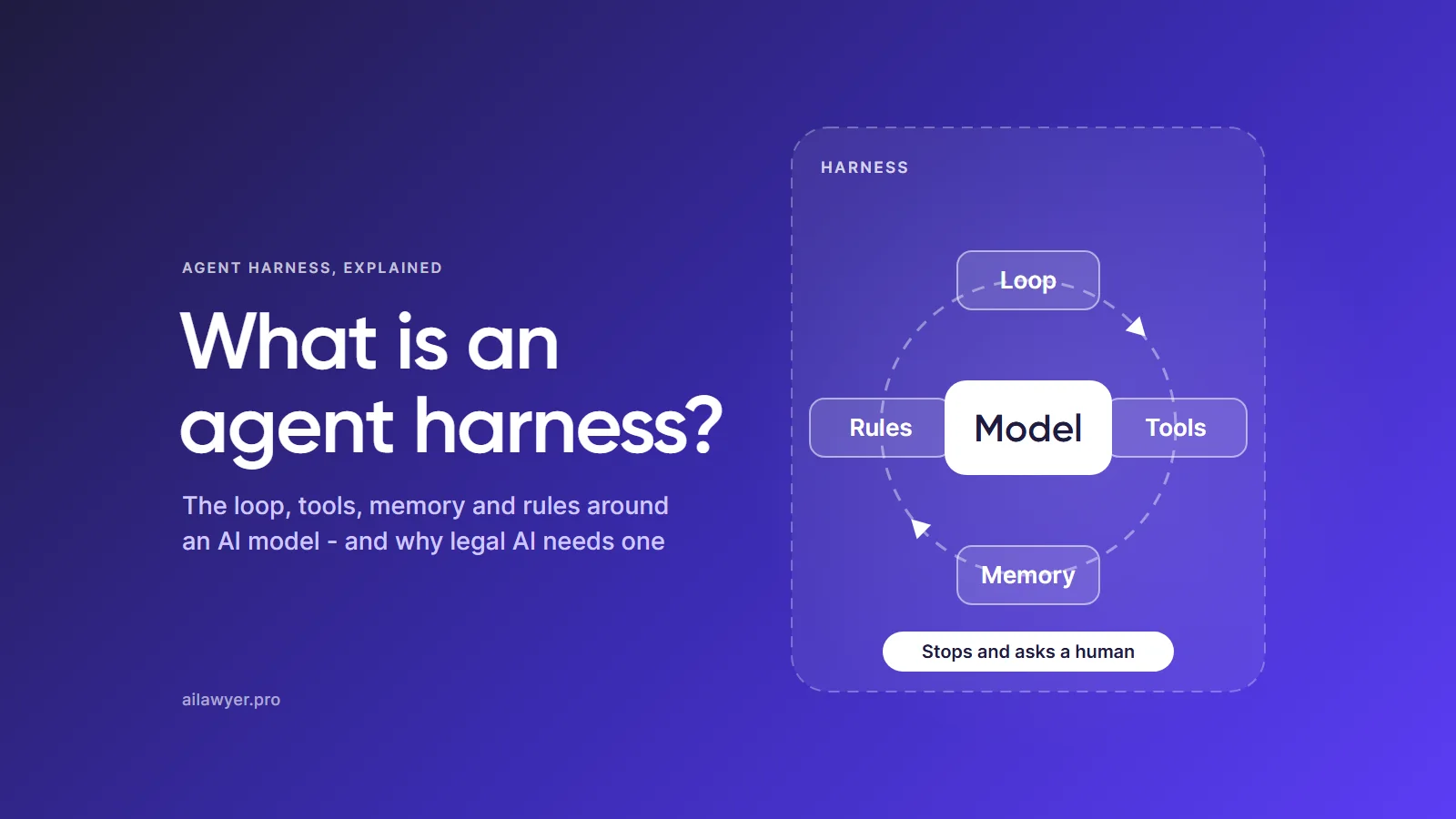
As AI becomes more capable, it will increasingly handle complex work like drafting briefs, summarizing evidence, and supporting outcome assessments and settlement scenarios. As “AI drafting” becomes more common, human review and clear responsibility for accuracy will be non-negotiable. Ethical concerns and data security will remain paramount given the sensitivity of legal materials, especially around confidentiality and privilege. These efficiency gains will continue to reshape client expectations by pushing for faster turnaround times and clearer, more transparent billing.
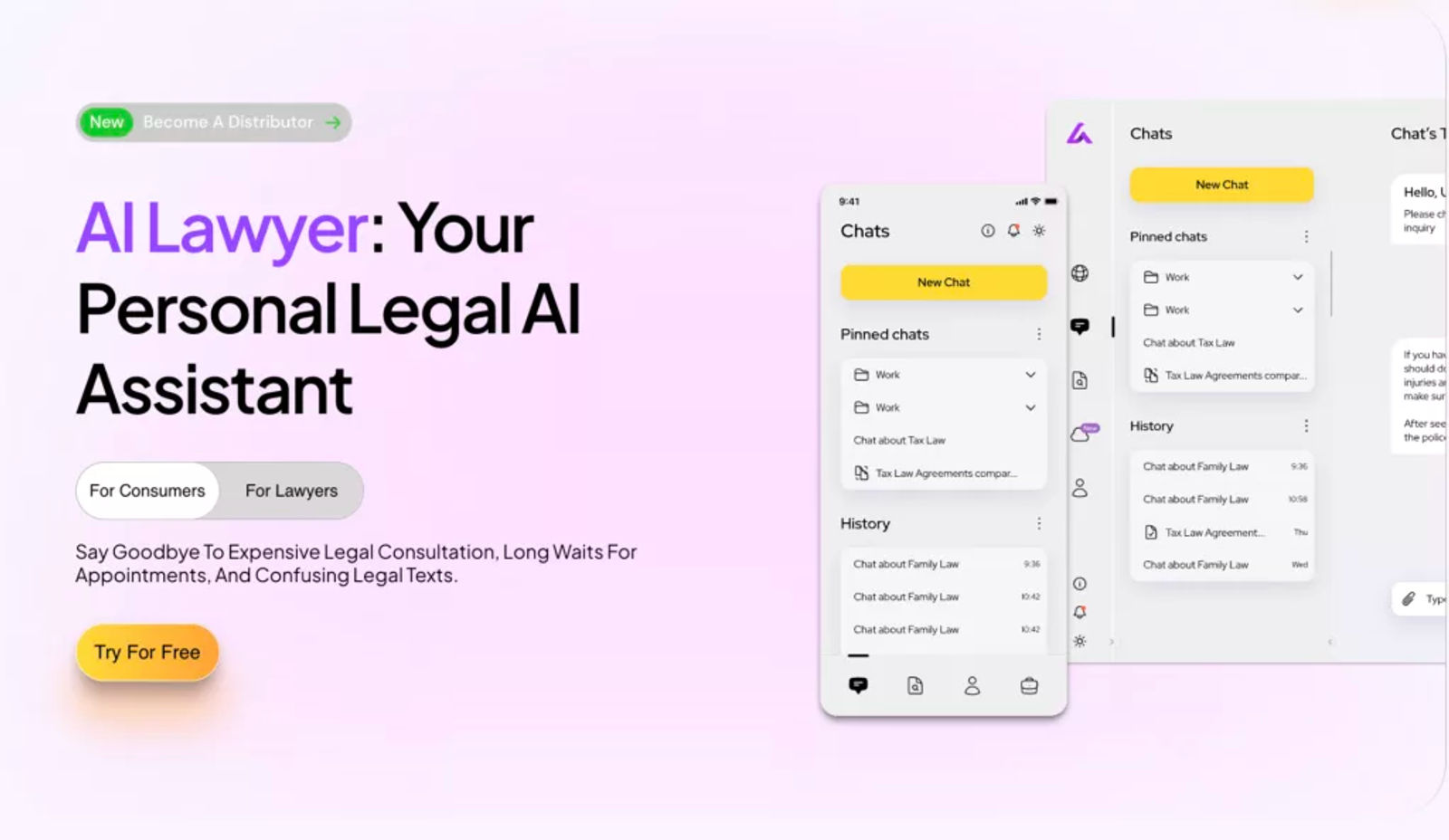
Service Example: AI Lawyer
AI Lawyer specializes in automating legal document preparation and research, helping both legal professionals and clients navigate complex legal processes with greater speed and accuracy.
2. AI in Medicine
Overview
AI in medicine has advanced rapidly in recent years, driven by the need for faster, more accurate diagnoses, more personalized treatment, and cost-effective healthcare. AI is increasingly used to speed up clinical decision-making by turning large volumes of data into actionable signals for clinicians. In areas like medical imaging and digital pathology, machine-learning models can flag suspicious findings so specialists can prioritize cases sooner and reduce missed abnormalities. Beyond diagnosis, AI is improving care delivery by supporting robotic-assisted surgery and by streamlining telehealth workflows, from triage to visit summaries and follow-ups.
Another growing trend is using AI to predict disease outbreaks: researchers combine signals from hospital/EHR data with real-time indicators like mobility, web searches, and even social media to improve early warning. These models can spot abnormal patterns earlier than traditional reporting by continuously scanning multiple data streams. In the enterprise layer, Merative (formerly IBM Watson Health) is a healthcare data-and-analytics company that helps organizations use clinical data for decision support and research. The AMA’s 2024 physician survey reports that health AI is now mainstream: 66% of physicians say they used it in 2024 (up from 38% in 2023).
Forecast for 2026
By 2026, AI-assisted diagnostic tools will be mainstream in many major hospitals, building on the fact that the American Medical Association reports 66% of physicians used health AI in 2024 and that usage is spreading from documentation into clinical workflows like imaging triage and risk flagging. Personalized medicine will be more accessible as AI interprets genomic and clinical data at scale, making it easier to match prevention and treatment decisions to individual risk profiles. Ambient documentation and clinical decision support can reduce clerical load and burnout, with the Peterson Health Technology Institute’s 2025 report summarizing early real-world pilots that reported meaningful burnout reductions after deploying AI “scribe” workflows.

Service Example: IBM Watson Health
This platform provides AI-enhanced solutions for healthcare decision-making, focusing on research, analytics, and diagnostics.
3. AI in Science
Overview
AI is accelerating discoveries across physics, chemistry, astronomy, and more. Machine-learning systems can sift through massive scientific datasets far faster than any human team, including data streams from instruments like the Large Hadron Collider. This kind of high-level pattern recognition helps researchers spot subtle signals and generate hypotheses for further investigation. In climate science, AI is increasingly used to refine large-scale models and improve predictions of extreme weather and warming trends.
In addition, AI-driven drug discovery is shortening early-stage R&D by helping researchers prioritize molecules, analyze structures, and run in-silico simulations before committing to expensive lab work. This shifts more trial-and-error into computation, so teams can iterate from design to testing in weeks rather than starting every cycle from scratch in the lab. (Reuters) A 2021 Deloitte study cited in Nature’s analysis of AI in biopharma R&D reports that 38% of biopharma companies use AI day-to-day, while another 31% are actively investigating these tools.
Forecast for 2026
Looking ahead, AI will increasingly become an indispensable partner for scientists, automating routine workflows and enabling predictive modeling at much larger scales. As AI “agent” systems mature, they will be able to plan experiments, run simulations, and summarize results — while scientists stay responsible for validation and interpretation. We can also expect AI to surface new hypotheses by detecting patterns that human researchers might overlook across complex datasets. Collaborative AI networks will speed discovery by sharing signals across labs and models, especially in fields like clean energy, genetics, and advanced materials.

Service Example: DeepMind
Although not exclusively focused on one field, DeepMind’s AI research (including the well-known AlphaFold project) has revolutionized protein folding predictions, significantly impacting drug discovery and structural biology.
4. AI in Video
Overview
AI technologies for video are already reshaping entertainment, content creation, and social media. Modern tools automate key parts of the workflow — upscaling, object tracking, and platform-ready edits — so creators can iterate faster across formats. Because recommendation systems influence what people watch next, they have become a default feature across streaming platforms. And the scale is already massive: Fortune Business Insights estimates the global video streaming market was USD 674.25 billion in 2024.
AI also plays a role in content moderation, using computer vision to flag inappropriate footage before it reaches a wider audience. By catching risky clips early, AI can reduce harmful exposure while human reviewers handle edge cases and appeals. The movie and television industries are also experimenting with AI for visual effects and animation, which lets smaller teams produce high-quality shots with fewer resources. Platforms such as Runway’s Gen-3, Synthesia, and OpenAI’s Sora show that AI can generate new video from text and blend real actors into virtual settings.
Forecast for 2026
We’re now seeing more AI-driven interactive videos that adapt storylines based on real-time viewer signals, which turns video into a personalized “choose-your-path” experience at scale. This is especially relevant for e-learning, where interactive lessons can tailor pacing and explanations to each student’s engagement level. As generative video becomes easier to produce, deepfakes create higher-stakes trust and safety risks, making stronger detection methods and clearer legal and platform policies critical for responsible use.
Service Example: Runway ML
Runway ML provides an intuitive platform for video editing, content generation, and special effects through machine learning, making advanced video manipulation accessible to a broad user base.
5. AI in Text
Overview
Text-based AI has gained significant momentum in recent years, driven by advances in Natural Language Processing (NLP) and large language models. OpenAI’s GPT-5.2 Chat model is a current example of how modern LLMs generate, rewrite, and analyze text for real workflows. See the model card here: GPT-5.2 Chat. Other model families — such as BERT and its successors — still underpin many search, classification, and retrieval pipelines. As McKinsey’s The state of AI in 2025: Agents, innovation, and transformation reports, 88% of respondents say their organizations regularly use AI in at least one business function. Read the survey summary here: McKinsey Global Survey 2025. In practice, this means text-heavy work like support, social monitoring, and reporting is increasingly automated or accelerated by AI in day-to-day workflows.
Beyond corporate use, AI text generators are influencing journalism, marketing, and even creative writing. In newsrooms, AI is increasingly used for routine, data-heavy reporting such as sports recaps or market updates, which frees human journalists to focus on deeper analysis and investigative work. Machine translation tools like Google Translate and DeepL have also become indispensable for global communication. By lowering language barriers in real time, machine translation makes cross-border collaboration and publishing significantly faster.
Forecast for 2026
Expect advanced NLP models to handle more subtle language, including sarcasm, cultural references, and emotional context, with stronger performance in long conversations and multilingual settings. As writing assistants become built into everyday tools, they will increasingly offer real-time help with clarity, tone, grammar, and structure across school and work. On the flip side, as AI-generated content scales, the risk of persuasive misinformation will rise, especially on social platforms — making detection systems, provenance/labeling, and public media literacy more important than ever.
Service Example: OpenAI’s GPT-5.2
GPT-5.2 is OpenAI’s flagship model for coding and agentic tasks, and it powers many modern text workflows — from customer support and document drafting to long-form content generation and multi-step automation. For an overview, see OpenAI’s “Introducing GPT-5.2” and the GPT-5.2 model page in the OpenAI API docs.
6. AI in Sports
Overview
From analyzing player performance to forecasting game outcomes, AI has transformed sports analytics. Professional teams use sensors, wearables, and camera-based tracking to collect detailed athlete data, which machine learning then turns into insights for training load, injury prevention, and tactical planning. By converting raw tracking data into actionable recommendations, AI helps teams optimize performance while reducing overuse and fatigue-related risks. Broadcasters also use AI for automated highlight generation and clip tagging. Because these systems learn what each fan watches and replays, they can assemble personalized highlight packages around favorite players, moments, or teams.
The sports betting industry also benefits from AI-driven predictive models that update in-play odds, recalculating probabilities as new match events unfold. Research on live betting markets shows odds react dynamically to “news” during a match, which is exactly the kind of real-time signal these models ingest. You can see an academic example in the paper “The reaction to news in live betting.” And analytics talent is now institutionalized in elite sport: MIT notes that 75% of Premier League clubs employ in-house data analysis teams, reflecting how data science has become embedded in performance and fan engagement. See “Winning with data: professional sports analytics.”
Forecast for 2026
In 2026, AI is moving closer to practical coaching support that goes beyond raw stats, turning live tracking data into situational recommendations as games unfold. As systems translate real-time signals into actionable options, coaching insights become faster, more specific, and easier to apply in-game. VR training is also expanding, with AI-driven simulations that adapt drills and scenarios based on an athlete’s decisions and workload. Fan engagement is becoming more personalized through AR/VR overlays and interactive viewing modes that bring more of the stadium experience into the home.

Service Example: Stats Perform
Stats Perform uses AI and data analytics to deliver insights, real-time updates, and predictive models for broadcasters, professional teams, and betting companies.
7. AI Assistants
Overview
AI assistants serve as personal helpers, automating tasks from scheduling to answering queries. Voice tools like Siri, Alexa, and Google Assistant paved the way, but in 2026 many assistants are now specialized for business operations, coding help, and content creation. In Salesforce’s State of the Connected Customer (6th edition), 55% of customers say they’ve used self-service chatbots, but over two-thirds say they won’t use a company’s chatbot again after just one negative experience.
Modern AI assistants can integrate with calendars, email, and other apps, reducing manual data entry and offering proactive suggestions. By connecting to the tools people already use, assistants can surface reminders, draft responses, and automate simple workflows without constant copy-paste. Voice recognition improvements have also made voice-controlled assistants more accessible. Because hands-free control lowers friction, it can be especially helpful for accessibility needs and in contexts like driving where touch input isn’t practical.
Forecast for 2026
AI assistants are becoming common in both personal and professional settings, especially inside productivity suites and business tools. As assistants gain permissioned access to apps and workflows, they can proactively start tasks — like reordering essentials or turning long meetings into clear action items. With improved natural-language understanding, they can handle more complex, multi-step requests and increasingly become part of everyday routines.
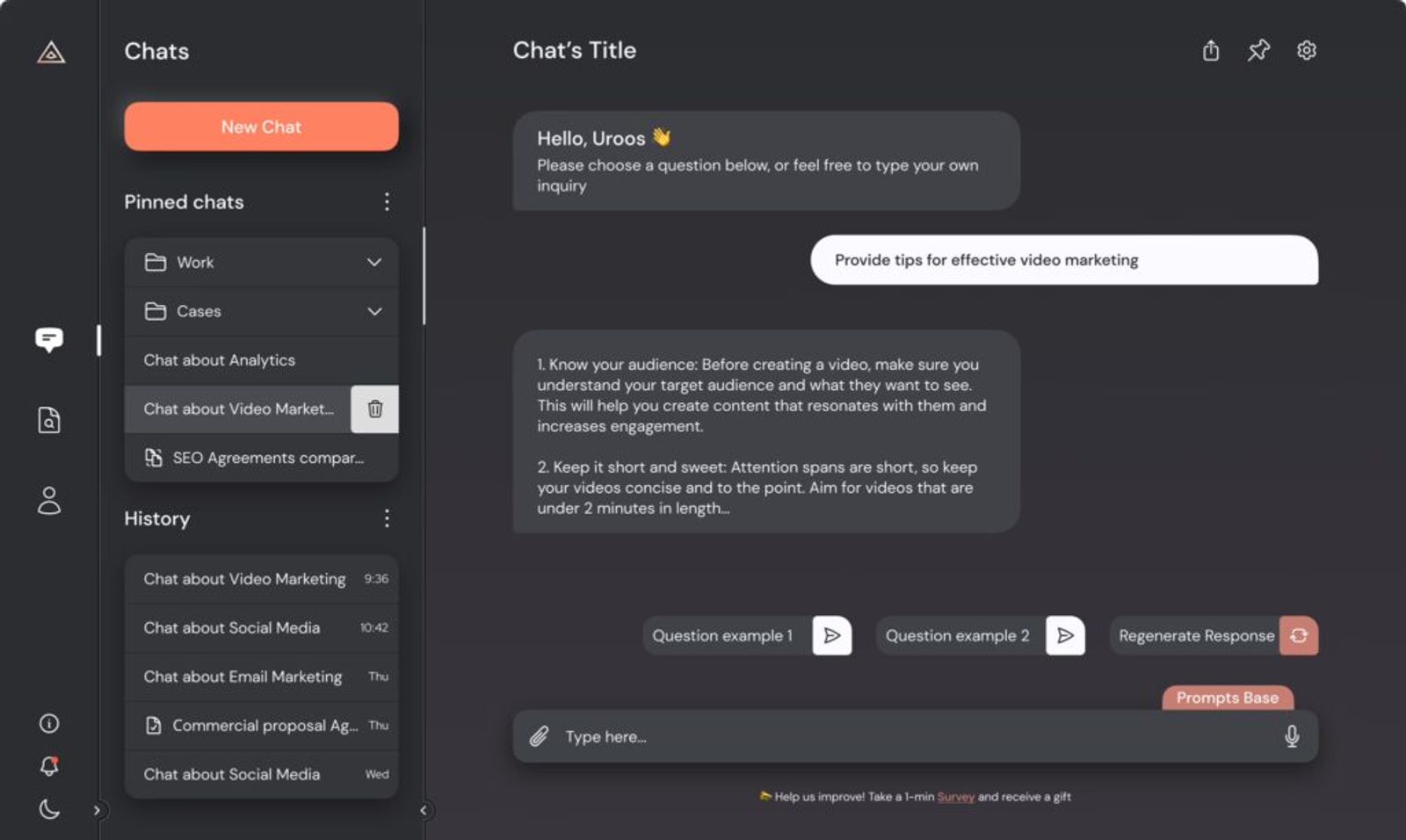
Service Example: AI Assistant
AI Assistant offers a versatile platform that integrates with productivity suites, communication apps, and scheduling software, aiming to streamline personal and business workflows through advanced natural language interactions.
Conclusion
In 2026, AI is quickly becoming omnipresent — improving the way we heal, learn, entertain ourselves, manage our lives, and even handle sensitive legal matters. From medical AI supporting earlier detection and smarter workflows to legal AI speeding research and drafting, the technology is on a fast track to becoming an invaluable ally across industries. AI is becoming an operating layer across products and services, not just a standalone feature.
Balancing innovation with ethics remains crucial. Responsible deployment requires strong privacy controls, human oversight, and clear accountability for outcomes. As AI’s reach expands, regulation, transparent development practices, and user education will all play pivotal roles in ensuring the benefits are widely shared. In 2026, the best next step is to test practical AI tools in real workflows, measure results, and scale what proves safe and valuable.
Sources and References
Data and projections cited in this article are based on reputable industry analyses and official reports. Market sizing and spend outlooks draw on sources such as Fortune Business Insights’ AI market outlook, Gartner’s AI spending forecasts, and McKinsey’s State of AI research. Legal-tech adoption references are supported by the ABA’s 2024 Artificial Intelligence TechReport, which summarizes how firms report AI usage across practice contexts. See the 2024 AI TechReport.
Healthcare and clinical workflow references use sources such as the American Medical Association’s reporting on physician AI use and the Peterson Health Technology Institute’s review of early AI deployments. Scientific and drug-discovery examples draw on peer-reviewed research and leading labs (for example, Nature’s coverage of AI in biopharma R&D and DeepMind’s AlphaFold overview), while video/streaming and sports context is informed by industry and research summaries such as Omdia’s video market outlook and MIT’s overview of professional sports analytics. Service examples are based on publicly available product documentation and official pages from providers mentioned in the article (e.g., OpenAI, Runway, Synthesia, and others).
You Might Also Like:
Disclaimer: This information is for general knowledge and does not constitute legal advice. For guidance on your specific situation, consult a qualified attorney licensed in your state.