DUI Character Reference Letter from Family or Friend Template

DUI Character Reference Letter from Family or Friend Template

DUI Character Reference Letter from Family or Friend Template

DUI Character Reference Letter from Family or Friend Template

Typical length: 4-6 pages

Length: 4-6 pages

AI Assisted

Export: PDF & DOCX

Multi-jurisdiction ready

Multi-jurisdiction

Get your custom agreement in minutes

4.8 Rating

Downloaded 2198 times

Google For Startups

Google For Startups

NVIDIA Inception Program

NVIDIA Inception Program

DUI Character Reference Letter from Family or Friend Template


[Your Full Name]
[Your Street Address]
[City, State/Province, ZIP/Postal Code]
[Phone Number]
[Email Address]

[Date]

The Honorable [Judge’s Full Name]
[Name of Court]
[Street Address]
[City, State/Province, ZIP/Postal Code]


1. Introduction and Relationship

Re: Character Reference Letter for [Defendant’s Full Name] – DUI Case [Case Number]

Dear Judge [Judge’s Last Name],

My name is [Your Full Name], and I am [your relationship to the defendant, e.g., “the mother of,” “the older brother of,” “a close family friend of,” “the long-time partner of”] [Defendant’s Full Name]. I have known [him/her/them] for approximately [number] years. I am writing this letter to provide a character reference for [Defendant’s Name] in connection with [his/her/their] DUI case.


2. How You Know the Person and General Character

Over the time I have known [Defendant’s Name], I have come to see [him/her/them] as a [brief description: e.g., “hard-working and caring parent,” “reliable employee,” “supportive family member,” “dedicated student,” etc.].

Some examples of [his/her/their] character include:

  • [Example: “[Defendant’s Name] regularly helps care for family members, including [children/parents], by….”]

  • [Example: “[He/She/They] has maintained steady employment at [Employer] as a [Job Title] and is known for being punctual and dependable.”]

  • [Example: “In our community, [Defendant’s Name] has volunteered for [organization or activity] and has shown a genuine desire to help others.”]

From my experience, [Defendant’s Name] is someone who [highlight key traits: “takes responsibilities seriously,” “is honest and respectful,” “is committed to family and work obligations,” etc.].


3. Awareness of the DUI Incident and Its Impact

I am aware that [Defendant’s Name] was charged with driving under the influence (DUI) on [Date of Incident]. I understand that this is a serious matter and that driving under the influence can have dangerous consequences.

Since the incident, I have observed that [Defendant’s Name] has been [describe reactions: “deeply remorseful,” “embarrassed,” “ashamed,” “very worried about the impact on family, work, and future opportunities,” etc.]. [He/She/They] has openly acknowledged the mistake and spoken about how seriously [he/she/they] takes this situation.


4. Positive Changes and Steps Taken Since the DUI

Since the DUI incident, I have seen [Defendant’s Name] take meaningful steps to address what happened and to reduce the risk of anything like this occurring again, including:

  • [Example: “Attending DUI education classes or counseling sessions and engaging sincerely in the process.”]

  • [Example: “Avoiding driving after any alcohol use and planning transportation in advance when going out.”]

  • [Example: “Reducing or abstaining from alcohol use and making healthier lifestyle choices.”]

  • [Example: “Continuing to fulfill work and family responsibilities despite the stress of the case.”]

From my perspective, these actions show that [Defendant’s Name] understands the seriousness of the DUI and is trying to learn from this experience rather than dismiss it.


5. Opinion of Character and Request to the Court

Based on my long-term relationship with [Defendant’s Name], I believe that this DUI incident does not reflect who [he/she/they] is as a person overall. In my experience, [he/she/they] is generally [describe: “responsible,” “caring,” “trustworthy,” “devoted to family,” “dedicated to work,” etc.], and I have not known [him/her/them] to be reckless or indifferent to the safety of others.

I respectfully ask the Court to take [Defendant’s Name]’s character, responsibilities, and efforts to change into consideration when determining the outcome of this case. I understand that there must be consequences for what happened, but I hope that the Court will also recognize [his/her/their] remorse and potential to continue being a positive, law-abiding member of the community.


6. Willingness to Support

I will continue to support [Defendant’s Name] by [describe how you will help: “encouraging responsible decisions,” “assisting with transportation when needed,” “supporting ongoing treatment or counseling,” etc.]. I believe that with continued guidance and support, [he/she/they] will move forward from this incident in a positive way.


7. Closing and Contact Information

Thank you for taking the time to read this letter and consider my perspective on [Defendant’s Name]’s character. If the Court has any questions or needs additional information, I am willing to be contacted at [phone number] or [email address].

Respectfully,

[Your Signature, if printed]
[Your Full Name]
[Date]

DUI Character Reference Letter from Family or Friend Template


[Your Full Name]
[Your Street Address]
[City, State/Province, ZIP/Postal Code]
[Phone Number]
[Email Address]

[Date]

The Honorable [Judge’s Full Name]
[Name of Court]
[Street Address]
[City, State/Province, ZIP/Postal Code]


1. Introduction and Relationship

Re: Character Reference Letter for [Defendant’s Full Name] – DUI Case [Case Number]

Dear Judge [Judge’s Last Name],

My name is [Your Full Name], and I am [your relationship to the defendant, e.g., “the mother of,” “the older brother of,” “a close family friend of,” “the long-time partner of”] [Defendant’s Full Name]. I have known [him/her/them] for approximately [number] years. I am writing this letter to provide a character reference for [Defendant’s Name] in connection with [his/her/their] DUI case.


2. How You Know the Person and General Character

Over the time I have known [Defendant’s Name], I have come to see [him/her/them] as a [brief description: e.g., “hard-working and caring parent,” “reliable employee,” “supportive family member,” “dedicated student,” etc.].

Some examples of [his/her/their] character include:

  • [Example: “[Defendant’s Name] regularly helps care for family members, including [children/parents], by….”]

  • [Example: “[He/She/They] has maintained steady employment at [Employer] as a [Job Title] and is known for being punctual and dependable.”]

  • [Example: “In our community, [Defendant’s Name] has volunteered for [organization or activity] and has shown a genuine desire to help others.”]

From my experience, [Defendant’s Name] is someone who [highlight key traits: “takes responsibilities seriously,” “is honest and respectful,” “is committed to family and work obligations,” etc.].


3. Awareness of the DUI Incident and Its Impact

I am aware that [Defendant’s Name] was charged with driving under the influence (DUI) on [Date of Incident]. I understand that this is a serious matter and that driving under the influence can have dangerous consequences.

Since the incident, I have observed that [Defendant’s Name] has been [describe reactions: “deeply remorseful,” “embarrassed,” “ashamed,” “very worried about the impact on family, work, and future opportunities,” etc.]. [He/She/They] has openly acknowledged the mistake and spoken about how seriously [he/she/they] takes this situation.


4. Positive Changes and Steps Taken Since the DUI

Since the DUI incident, I have seen [Defendant’s Name] take meaningful steps to address what happened and to reduce the risk of anything like this occurring again, including:

  • [Example: “Attending DUI education classes or counseling sessions and engaging sincerely in the process.”]

  • [Example: “Avoiding driving after any alcohol use and planning transportation in advance when going out.”]

  • [Example: “Reducing or abstaining from alcohol use and making healthier lifestyle choices.”]

  • [Example: “Continuing to fulfill work and family responsibilities despite the stress of the case.”]

From my perspective, these actions show that [Defendant’s Name] understands the seriousness of the DUI and is trying to learn from this experience rather than dismiss it.


5. Opinion of Character and Request to the Court

Based on my long-term relationship with [Defendant’s Name], I believe that this DUI incident does not reflect who [he/she/they] is as a person overall. In my experience, [he/she/they] is generally [describe: “responsible,” “caring,” “trustworthy,” “devoted to family,” “dedicated to work,” etc.], and I have not known [him/her/them] to be reckless or indifferent to the safety of others.

I respectfully ask the Court to take [Defendant’s Name]’s character, responsibilities, and efforts to change into consideration when determining the outcome of this case. I understand that there must be consequences for what happened, but I hope that the Court will also recognize [his/her/their] remorse and potential to continue being a positive, law-abiding member of the community.


6. Willingness to Support

I will continue to support [Defendant’s Name] by [describe how you will help: “encouraging responsible decisions,” “assisting with transportation when needed,” “supporting ongoing treatment or counseling,” etc.]. I believe that with continued guidance and support, [he/she/they] will move forward from this incident in a positive way.


7. Closing and Contact Information

Thank you for taking the time to read this letter and consider my perspective on [Defendant’s Name]’s character. If the Court has any questions or needs additional information, I am willing to be contacted at [phone number] or [email address].

Respectfully,

[Your Signature, if printed]
[Your Full Name]
[Date]

Get your complete
agreement in minutes

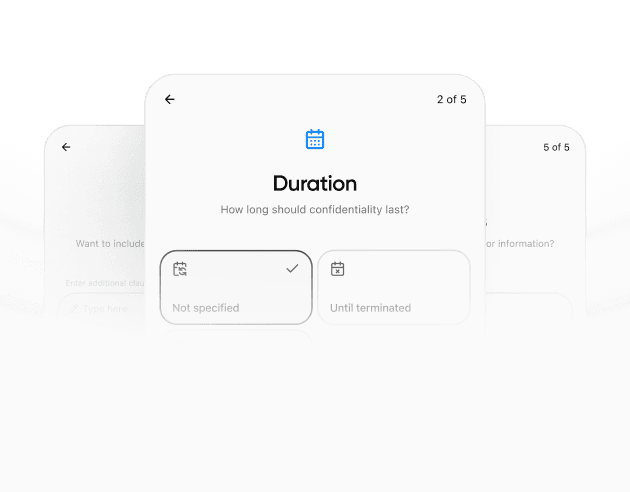
Select template illustration
Select a template

Each template already follows legal structure and best practices.

Provide details illustration
Provide details

The agreement is automatically filled and adapted to your inputs.

Review & download illustration
Review & download

Check the generated document, make edits if needed, and download a ready-to-use agreement.

Details

Learn more about

DUI Character Reference Letter from Family or Friend Template

Click below for detailed info on the template.
For quick answers, scroll below to see the FAQ.

Click below for detailed info on the template.
For quick answers, scroll below to see the FAQ.

Frequently asked, Character reference letters for court

Character Reference Letter for Court , templates, examples, judge-ready samples (2026)

A character reference letter for court is a one-page personal letter that gives a judge first-hand insight into who the defendant is outside the courtroom. This hub covers six use cases (general criminal sentencing, DUI or DWI, drug court, white-collar federal, family or custody, and license reinstatement), how to address the judge correctly, what to include, and the anti-patterns that quietly torpedo a letter. Templates, samples, and a use-case matrix below.

01Disambiguation

Character reference letter for court vs letter of support: what is the difference?

A character letter answers "who is this person." A support letter answers "why should this request be granted."

A character reference letter for court focuses on the writer's personal knowledge of the subject's character, values, and conduct, usually in the context of a criminal or civil case where a judge is weighing sentencing or eligibility. A letter of support is broader and often functional, written to back a specific request such as a license reinstatement, immigration benefit, parole hearing, or housing application. Many situations call for both, and a single letter can serve both purposes if it discusses character first and then ties that character to the specific relief being requested.

02Protocol

How do I address the judge in a character reference letter?

The Honorable [First Last] on the inside address. Dear Judge [Last]: on the salutation.

Address the envelope and inside heading to The Honorable [First Name] [Last Name], followed by the court name and address. Open the letter with Dear Judge [Last Name]: and use a colon, not a comma. Do not write "Honorable Judge Smith," "Your Honor" as a salutation, or "Dear Sir/Madam." If you are unsure of the judge's first name, look up the case docket or court website rather than guessing. For federal judges, "The Honorable" is also correct, and you can add their title such as "United States District Judge" on the line below their name. Get this detail right because court staff often screen for protocol before the judge sees the letter.

03Structure

What should I include in a character reference letter, and what should I avoid?

Include who you are, how long you have known the person, in what context, specific examples of positive character, and an honest statement about the offense if relevant.

Keep it to one page. Avoid lying or exaggerating, attacking the prosecution or victim, claiming the person is "incapable" of the offense (judges read this as denial), demanding a specific sentence, asking the judge to ignore the law, or including character claims unrelated to the case. Do not write in legalese. Do not copy a template word for word. Judges read dozens of these and recognise boilerplate immediately. Your credibility, and therefore the defendant's, depends on the letter sounding like a real person who actually knows them. See the anti-pattern checklist below for an 11-item list of things to leave out.

04DUI / DWI

DUI or DWI character reference letter: what is specific to this use case?

Acknowledge the seriousness of impaired driving. Do not minimise. Document remedial steps.

For DUI or DWI cases, the letter should acknowledge the seriousness of impaired driving without minimising the offense or making excuses. Judges in DUI sentencing want to see that the defendant has insight into the harm caused, has taken concrete remedial steps (alcohol education, treatment, voluntary attendance at MADD impact panels, sobriety programs), and has support keeping them accountable. If the defendant needs a hardship or restricted license to keep working or caring for family, mention that briefly. Avoid framing the incident as "out of character" if it implies the defendant has a drinking problem they have not addressed. First-offense letters lean on remediation; repeat-offense letters lean on sustained behavioural change documented over time.

05Family writer

Can a family member write a character reference letter?

Yes. Disclose the relationship upfront so the judge can weight it appropriately.

Family members (parents, spouses, siblings, adult children, grandparents) regularly write character reference letters for court, and judges read them. The key is disclosing the relationship at the start of the letter. A family letter should add information a non-family writer could not, such as long-term behavioural patterns, family responsibilities, caregiving obligations, or context about the defendant's role in the household. Avoid pure character endorsements without specifics, because judges discount unsupported family praise. Combining one or two strong family letters with letters from employers, neighbours, clergy, or community members is generally more persuasive than four letters all from the same household.

06Quantity

How many character reference letters should be submitted to the court?

Three to six is typical. Quality outweighs quantity.

Most defense attorneys recommend three to six letters for a typical sentencing. Five well-written letters from people who genuinely know the defendant across different parts of their life (work, family, community, faith, recovery) carry more weight than fifteen near-identical letters from one social circle. For federal sentencing or high-stakes cases, ten to twenty letters are not unusual, but each should add a distinct perspective. Always coordinate through the defense attorney, who decides which letters to include in the sentencing memorandum and may suggest edits. Submitting too many redundant letters can dilute the message and signal an orchestrated campaign rather than genuine community support.

07Notary

Does a character reference letter for court need to be notarised?

Typically no. The letter is not sworn testimony.

Courts do not require notarisation for character reference letters because the letters are not sworn testimony and are submitted to inform the judge rather than to establish facts of record. The letter should be signed in original ink (or with a verifiable electronic signature) and include the writer's full legal name, address, phone number, and email, so the court could in theory verify authorship. A small number of jurisdictions or specific judges may request notarisation or a sworn declaration under penalty of perjury (sometimes labeled a "declaration" rather than a "letter"). Always confirm with the defendant's attorney, who will know the local practice and the particular judge's preferences.

08Writer record

Can I write a character reference letter if I have a criminal record myself?

Yes in most cases. Disclose your record honestly and briefly at the start.

A prior record does not disqualify you from writing a character letter. In fact, a writer who has been through the system and now describes the defendant as a positive influence on their own rehabilitation can be persuasive. Disclose your record honestly and briefly, ideally at the start of the letter, so the judge does not feel it was concealed. Explain how much time has passed and what you have done since. Avoid writing if your offense involves the same victim or is recent and unresolved, because that undermines credibility. When in doubt, ask the defense attorney whether your letter helps or hurts before submitting.

Similar templates

Other templates from

Letters and Notices Templates

Money back guarantee

Free trial

Cancel anytime

AI Lawyer protects

your rights and wallet

🌐

Company

Learn

Terms

©2026 AI Lawtech Sp. z O.O. All rights reserved.

Money back guarantee

Free trial

Cancel anytime

AI Lawyer protects

your rights and wallet

🌐

Company

Learn

Terms

AI Lawtech Sp. z O.O.

©2026

Money back guarantee

Free trial

Cancel anytime

AI Lawyer protects

your rights and wallet

🌐

Company

Learn

Terms

©2026 AI Lawtech Sp. z O.O. All rights reserved.

Money back guarantee

Free trial

Cancel anytime

AI Lawyer protects

your rights and wallet

🌐

Company

Learn

Terms

©2026 AI Lawtech Sp. z O.O. All rights reserved.