

Introduction
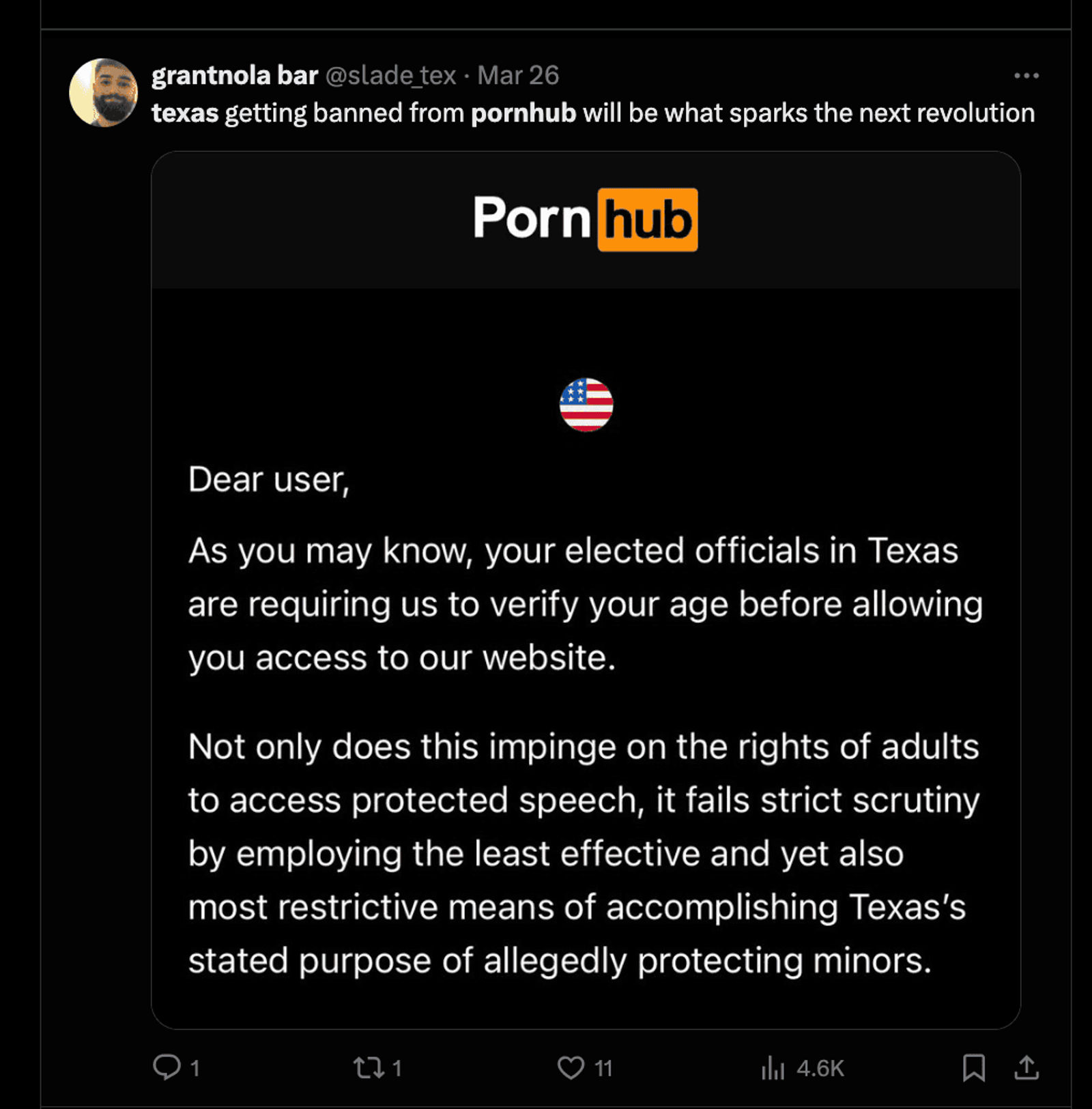
In recent developments, Texas has passed a law that mandates age and identity verification for users accessing adult websites. This regulation aims to shield minors from adult content but has led to significant reactions, including a notable decision by PornHub to block access to its website for users in Texas. This move and the law itself have sparked a debate on privacy rights, the effectiveness of such measures, and the broader implications for online content access.
Pornhub wasn’t ordered off Texas by the state, but its parent company, Aylo, chose to block the site from Texas on March 14, 2024, after the federal appeals court allowed the law to take effect. Aylo blocked Texas users from visiting all its sites, including YouPorn and Brazzers, and as of October 2026, still does.
You Might Also Like:
Overview of the Law
The new Texas legislation requires adult websites to implement a robust age verification process, ensuring that all users can prove they are of legal age with official documents. The primary goal behind this law is to prevent underage individuals from accessing pornography, addressing growing concerns about the exposure of minors to such content online. In response to these stringent requirements, PornHub, one of the largest adult content platforms, opted to restrict access to its services within Texas. This decision underscores the complexities and challenges faced by online platforms in balancing user privacy, regulatory compliance, and the protection of minors.
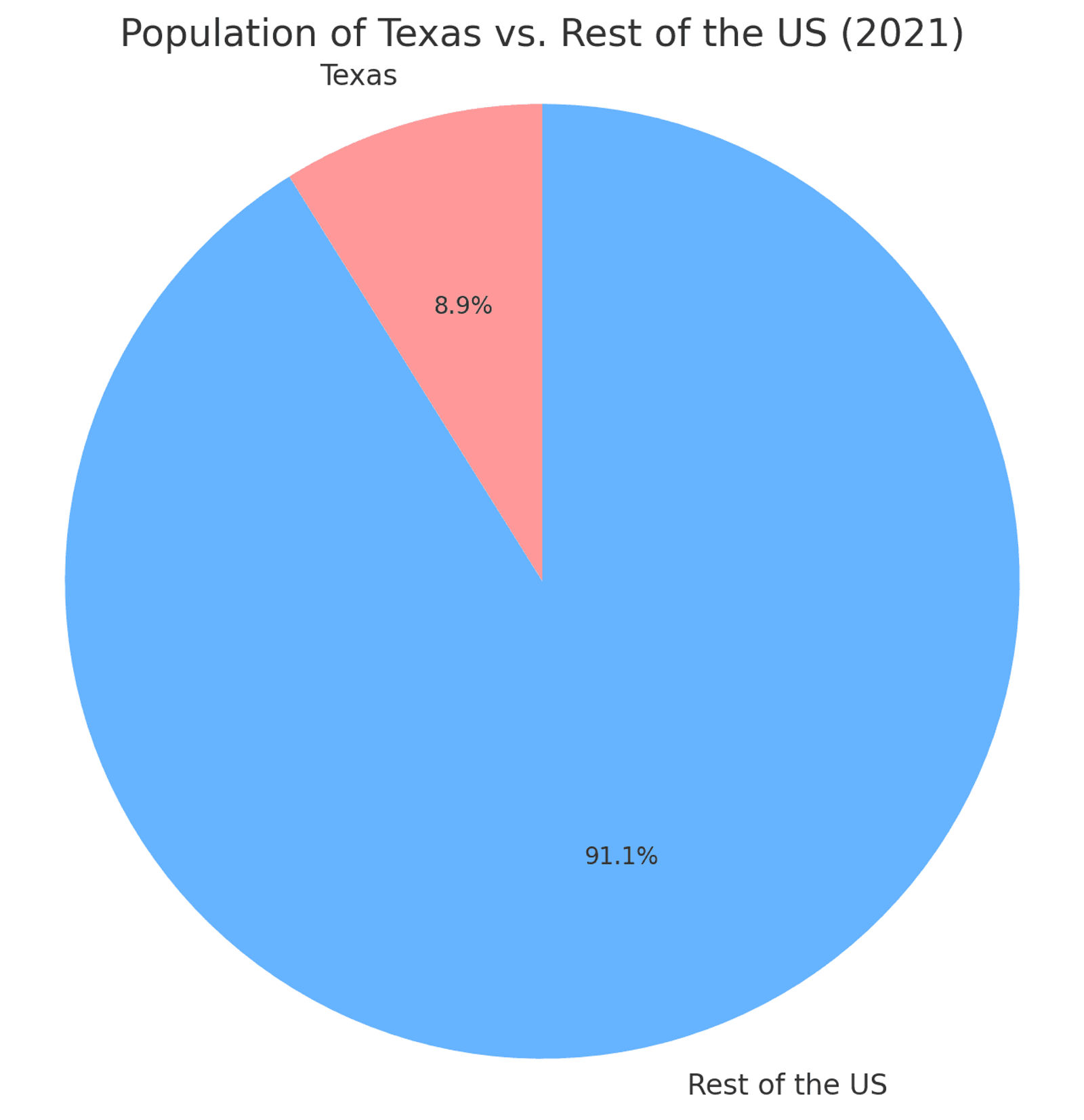
Here’s a pie chart showing the proportion of Texas’s population relative to the total population of the United States in 2021. Texas accounts for a significant portion of the U.S. population, illustrating its importance demographically within the nation. ChatGPT created this diagram.
Reasons for the Blockade
PornHub’s decision to block users in Texas stems from the new law requiring age verification. This law aims to protect minors but poses privacy and operational challenges. PornHub argues that enforcing such verification could infringe on user privacy and trust. Additionally, the financial risk of non-compliance, with fines up to $250,000 per day, makes the cost of implementing these measures potentially prohibitive. This situation highlights the difficulty in balancing user privacy with regulatory requirements.
Questions About Fines
The fines for failing to comply with the Texas law are substantial and raise concerns about their effectiveness and fairness. Similar to GDPR fines in Europe, these penalties aim to enforce compliance but can disproportionately affect smaller entities. The debate centers on finding the right balance between protecting minors and ensuring a free, accessible internet. While large platforms may block access to avoid fines, smaller sites may struggle with compliance costs, potentially limiting online content diversity.
Why the Penalties Matter
Penalties matter in these kinds of laws because they deter websites from noncompliance. In Texas’ case, the penalties are codified under H.B. 1181, in Chapter 129B of the Texas Civil Practice and Remedies Code, as:
- Up to $10,000 for each day a website operates without implementing age verification as required by the law;
- Up to $10,000 for each instance a website retains users’ age verification identifying information; and
- Up to another $250,000 if a minor accesses explicit material because of a website’s failure to comply with the law.
The Texas AG can file suit to enforce this law in Travis County or in the county where the violating company has its principal place of business. In Aylo’s case, Paxton filed suit in February 2024, claiming $1.6 million in fines, and up to $10,000 for each additional day Pornhub operates. The case was paused while the Supreme Court reviewed the law, but it reopened the day the law was allowed to stay in effect.
In March 2024, Texas sued the operators of two other adult websites that had not implemented age verification, Chaturbate and xHamster.
What H.B. 1181 Means for People in Texas
H.B. 1181 regulates websites, not visitors. Every duty and penalty in the law falls on the site operator, so an adult who views legal adult content in Texas does not violate it.
| Situation | Allowed under H.B. 1181? | Who carries the legal risk |
|---|---|---|
| An adult views legal adult content | Yes | No one; the law sets no duties for visitors |
| An adult uses a VPN | Yes; the law does not mention VPNs | No one under this law |
| An adult verifies their age on a compliant site | Yes | The site and its verification provider, which may not keep the user’s identifying information |
| A site lets Texas visitors in without age verification | No | The site operator, which faces the fines above, including the extra $250,000 if a minor gets access |
For adults, the practical cost of the law is privacy rather than legal exposure: using a compliant site means handing an ID or other personal data to a verification provider.
Impact of Porn on Mental Health
The state’s argument for the negative impact of porn on mental health is significant. By consulting AI Lawyer, we aim to gain a deeper understanding and analysis of the situation. We will inquire about studies related to this issue to provide a well-rounded view. The concerns typically highlighted include addiction, unrealistic expectations about sex, and potential impacts on relationships. These factors are cited as reasons for implementing strict regulations like the Texas law, aiming to mitigate exposure to pornographic content and its perceived detrimental effects on society.
What does AI Lawyer say? Is it true that that pornography is addictive, that exposure to pornography could result in body image and mental health issues, and increase the demand for child exploitation?
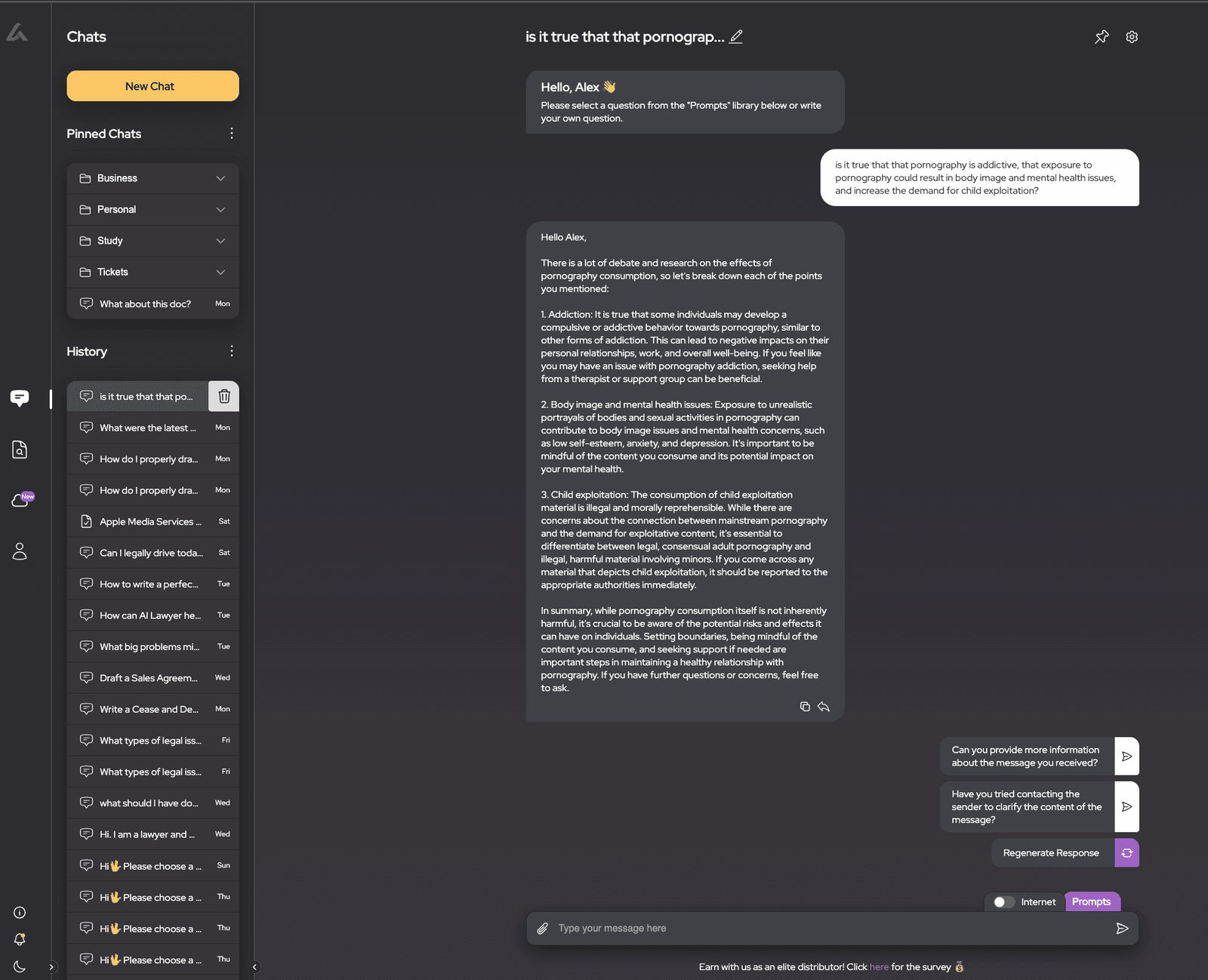
AI Lawyer:
Hello Alex,
There is a lot of debate and research on the effects of pornography consumption, so let’s break down each of the points you mentioned:
1. Addiction: It is true that some individuals may develop a compulsive or addictive behavior towards pornography, similar to other forms of addiction. This can lead to negative impacts on their personal relationships, work, and overall well-being. If you feel like you may have an issue with pornography addiction, seeking help from a therapist or support group can be beneficial.
2. Body image and mental health issues: Exposure to unrealistic portrayals of bodies and sexual activities in pornography can contribute to body image issues and mental health concerns, such as low self-esteem, anxiety, and depression. It’s important to be mindful of the content you consume and its potential impact on your mental health.
3. Child exploitation: The consumption of child exploitation material is illegal and morally reprehensible. While there are concerns about the connection between mainstream pornography and the demand for exploitative content, it’s essential to differentiate between legal, consensual adult pornography and illegal, harmful material involving minors. If you come across any material that depicts child exploitation, it should be reported to the appropriate authorities immediately.
In summary, while pornography consumption itself is not inherently harmful, it’s crucial to be aware of the potential risks and effects it can have on individuals. Setting boundaries, being mindful of the content you consume, and seeking support if needed are important steps in maintaining a healthy relationship with pornography. If you have further questions or concerns, feel free to ask.
We can also turn on the internet function and try to ask about research on this topic: What’s the latest on Pornhub banning Texas users?
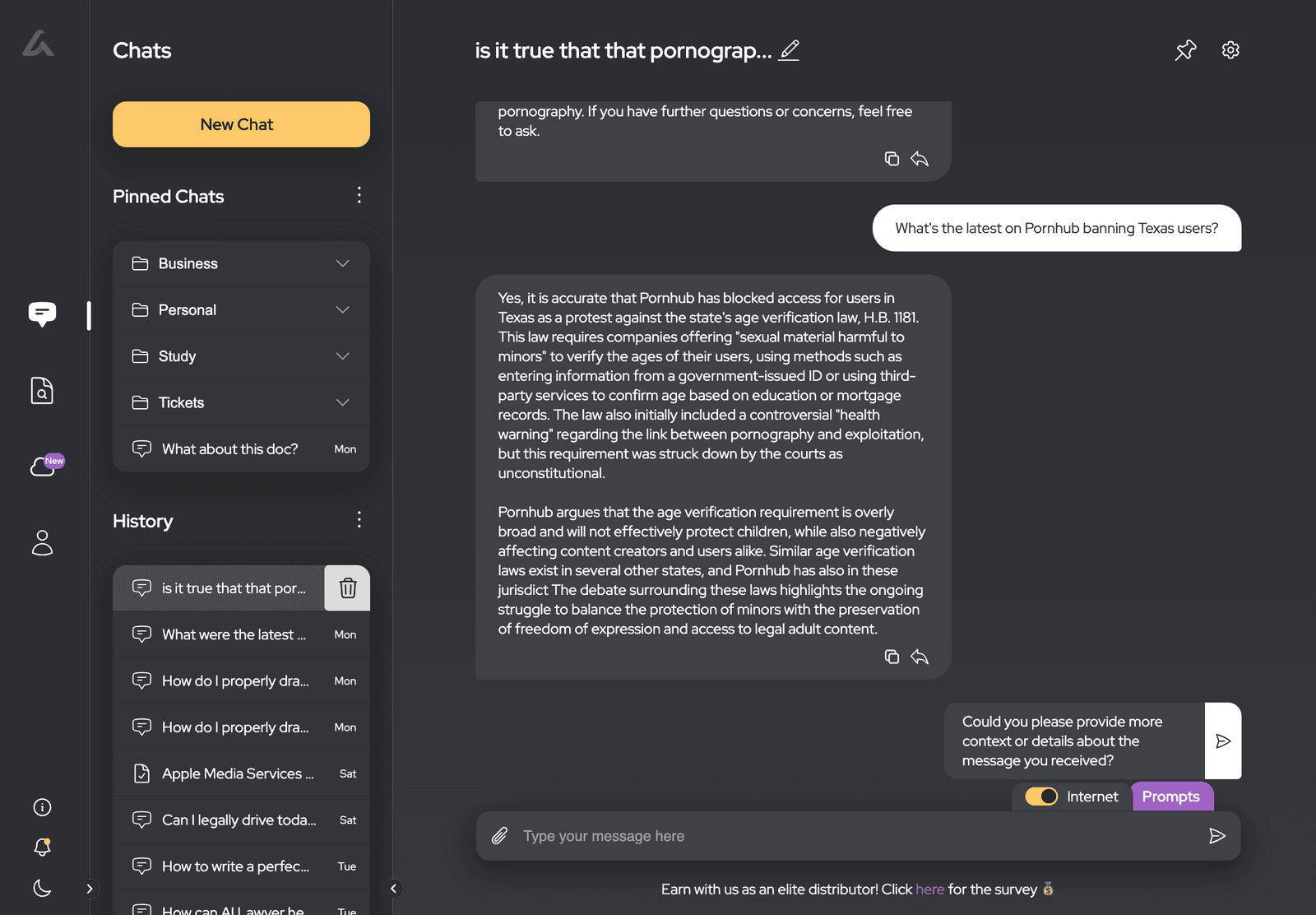
AI Lawyer: Yes, it is accurate that Pornhub has blocked access for users in Texas as a protest against the state’s age verification law, H.B. 1181. This law requires companies offering “sexual material harmful to minors” to verify the ages of their users, using methods such as entering information from a government-issued ID or using third-party services to confirm age based on education or mortgage records. The law also initially included a controversial “health warning” regarding the link between pornography and exploitation, but this requirement was struck down by the courts as unconstitutional.
Pornhub argues that the age verification requirement is overly broad and will not effectively protect children, while also negatively affecting content creators and users alike. Similar age verification laws exist in several other states, and Pornhub has also in these jurisdict The debate surrounding these laws highlights the ongoing struggle to balance the protection of minors with the preservation of freedom of expression and access to legal adult content.
Has age verification decreased access for minors?
As of writing, two studies have attempted to answer this question. A peer-reviewed 2026 New York University study looked at Google Trends data and found that searches of the largest adult site complying with age verification went down 51% three months after a state’s law took effect, but that searches of the largest adult site not complying with the law increased 48.1%, and searches of VPNs (tools people can use to get around geoblocks) increased 23.6%. A June 2026 working paper from the National Bureau of Economic Research estimated that after state age verification laws took effect, people spent about 10% less time on adult sites. Breaking that down, of every 100 hours previously spent on adult sites, around 50 hours of that time continued to be spent on adult sites that never restricted access, about 30 hours continued to be spent on restricted sites using VPNs, about 10 hours was shifted to adult sites that didn’t comply with these laws, and about 10 hours of usage stopped. Both studies measured general access to these sites, not specifically the access minors may or may not have had.
Why Texas Matters Beyond Texas
Texas’ adult site age verification law already has plenty of company. As of August 2026, 27 states have laws requiring age verification to access adult websites, with the two most recent being Iowa (added on July 1, 2026) and Missouri (added on August 28, 2026). Additionally, a federal rule may be coming: on June 29, 2026, the House passed the KIDS Act by a vote of 267–117, which includes another bill, the SCREEN Act, that would require adult sites across the country to verify users’ ages. As of November 2026, the Senate has not passed it. Its own version of the SCREEN Act won a 15–13 committee vote in August 2026, but the vote fell short of a quorum, so it still needs a revote before it can reach the Senate floor.
Aylo (Pornhub’s parent company), and perhaps other companies, do not want age verification to happen at the adult website level, instead preferring it happen at the device or operating system levels. In a July 2026 letter to lawmakers across the country, including Texas’ governor (Greg Abbott) and attorney general (Ken Paxton), Aylo argues that this is where age verification belongs.
How might this story end?
In the evolving narrative of PornHub’s response to the Texas law on age verification, many are left wondering about the future implications for users, the platform, and online content regulation. To gain insights into potential outcomes, we turned to AI Lawyer, an innovative tool designed to provide legal analysis and perspectives on complex issues. Below, AI Lawyer offers a thoughtful examination of how this situation might unfold, exploring various scenarios that balance the need for protecting minors with the rights to privacy and access to information.
We asked AI Lawyer:
How do you think this story ends?
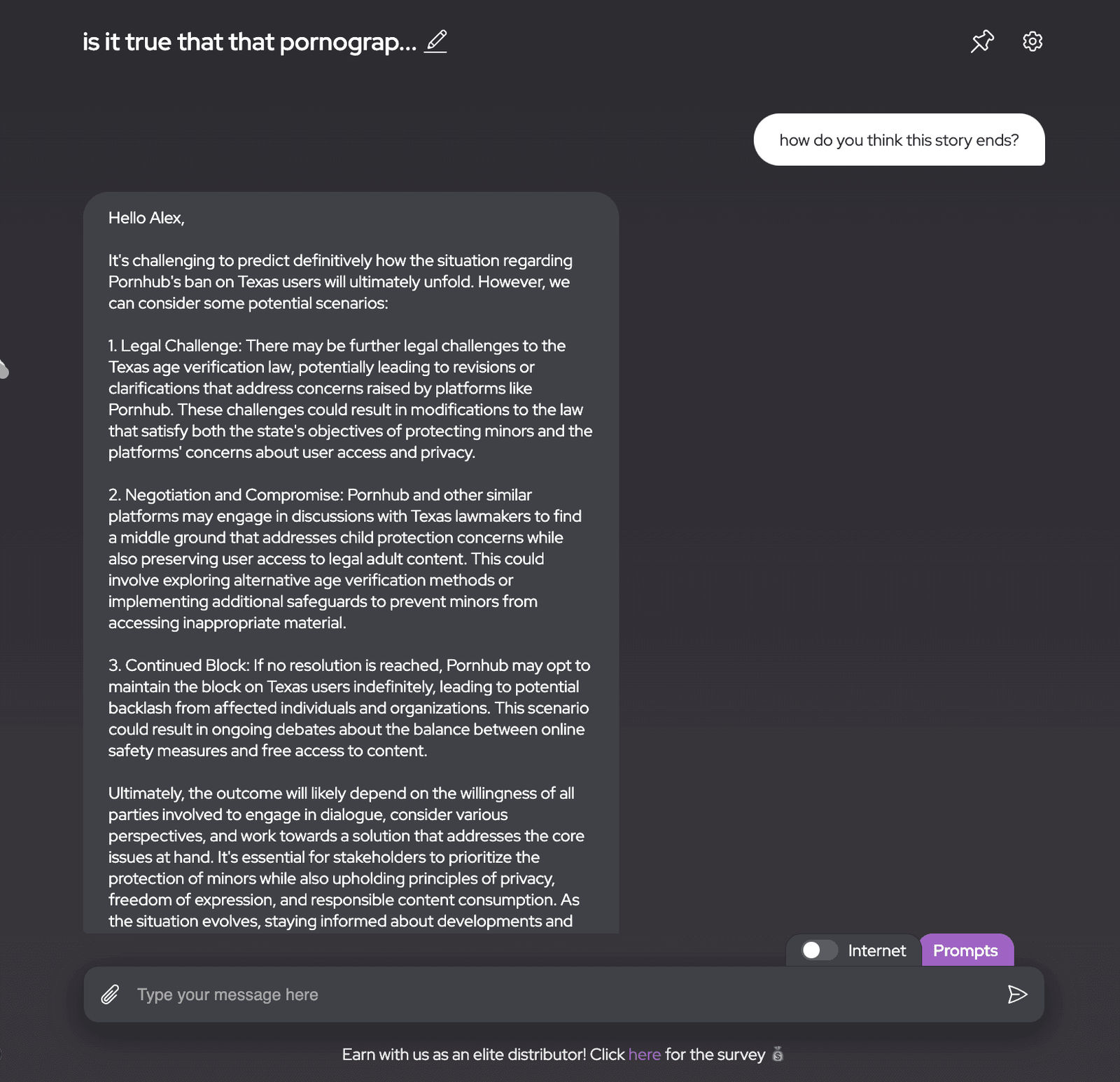
AI Lawyer:
It’s challenging to predict definitively how the situation regarding Pornhub’s ban on Texas users will ultimately unfold. However, we can consider some potential scenarios:
1. Legal Challenge: There may be further legal challenges to the Texas age verification law, potentially leading to revisions or clarifications that address concerns raised by platforms like Pornhub. These challenges could result in modifications to the law that satisfy both the state’s objectives of protecting minors and the platforms’ concerns about user access and privacy.
2. Negotiation and Compromise: Pornhub and other similar platforms may engage in discussions with Texas lawmakers to find a middle ground that addresses child protection concerns while also preserving user access to legal adult content. This could involve exploring alternative age verification methods or implementing additional safeguards to prevent minors from accessing inappropriate material.
3. Continued Block: If no resolution is reached, Pornhub may opt to maintain the block on Texas users indefinitely, leading to potential backlash from affected individuals and organizations. This scenario could result in ongoing debates about the balance between online safety measures and free access to content.
Ultimately, the outcome will likely depend on the willingness of all parties involved to engage in dialogue, consider various perspectives, and work towards a solution that addresses the core issues at hand. It’s essential for stakeholders to prioritize the protection of minors while also upholding principles of privacy, freedom of expression, and responsible content consumption. As the situation evolves, staying informed about developments and participating in constructive discussions can help shape the resolution of this complex issue. If you have any specific concerns or questions about the situation, feel free to ask for further guidance.
Finally
As we navigate the intricate interplay between regulation, privacy, and access to online content, the case of PornHub’s blockade in Texas emerges as a pivotal moment in digital history. This article has delved into the multifaceted aspects of the new Texas law, from its intentions and implications to the broader debates it has ignited about mental health, freedom of expression, and the role of technology in safeguarding minors. Through the lens of AI Lawyer, we’ve explored potential outcomes, highlighting the complexity of finding a resolution that honors both the protection of vulnerable individuals and the rights of adults to access information. As this story continues to unfold, it serves as a critical reminder of the ongoing challenges at the intersection of law, technology, and society, urging stakeholders to seek balanced solutions in an ever-evolving digital world.
Sources and References
Discussion of Texas’s age-verification regime and Pornhub’s response is based on the text of Texas House Bill 1181, related legislative materials, the U.S. Supreme Court’s decision in Free Speech Coalition, Inc. v. Paxton, and statements from the Texas Attorney General summarizing enforcement of the law against major adult-content sites.
Demographic context for Texas’s share of the U.S. population draws on U.S. Census Bureau data showing the state surpassing 30 million residents in 2022 in “Texas Population Passes the 30-Million Mark in 2022” and complementary projections from the Texas Demographic Center, underscoring its significance in national policy debates.
Claims about pornography’s potential impact on addiction, brain function, body image, and mental health reflect the contested health-warning language embedded in H.B. 1181 and are contrasted with empirical research, including the American Psychological Association’s review “Is pornography addictive?” and recent peer-reviewed studies on compulsive internet pornography use and mental health and problematic pornography use, mental health, and well-being, which find associations with depression, anxiety, and body-image concerns while emphasizing that causality and prevalence remain active areas of scientific debate.
Sources for the 2026 update:
- Axios – Pornhub blocks access in Texas (March 14, 2024)
- Texas Attorney General – lawsuit against Aylo (February 2024)
- Bloomberg Law – Texas lawsuit against Aylo revived after the Supreme Court ruling
- Texas Attorney General – lawsuits against the operators of Chaturbate and xHamster (March 2024)
- NYU CSMaP – Age Verification and Public Adaptation (2026)
- NBER Working Paper 35322 – Can Online Activity Be Regulated? Evidence from Adult Websites
- Recording Law – age-verification laws by state
- The Daily Signal – House passes the KIDS Act with the SCREEN Act
- U.S. Senate Commerce Committee – Commerce Committee Advances Kids Online Safety Legislation (August 5, 2026)
- Axios Austin – Pornhub targets age verification laws in Texas (August 2026)
You Might Also Like:
Disclaimer: This information is for general knowledge and does not constitute legal advice. For guidance on your specific situation, consult a qualified attorney licensed in your state.