

A sexual image does not have to be real to do real damage. In the era of AI-generated intimate deepfakes, an ordinary photo can be turned into humiliating sexual content and circulated fast enough to overwhelm any later explanation. By the time a target says the image is fake, other people may already have seen it, saved it, and treated it as real.
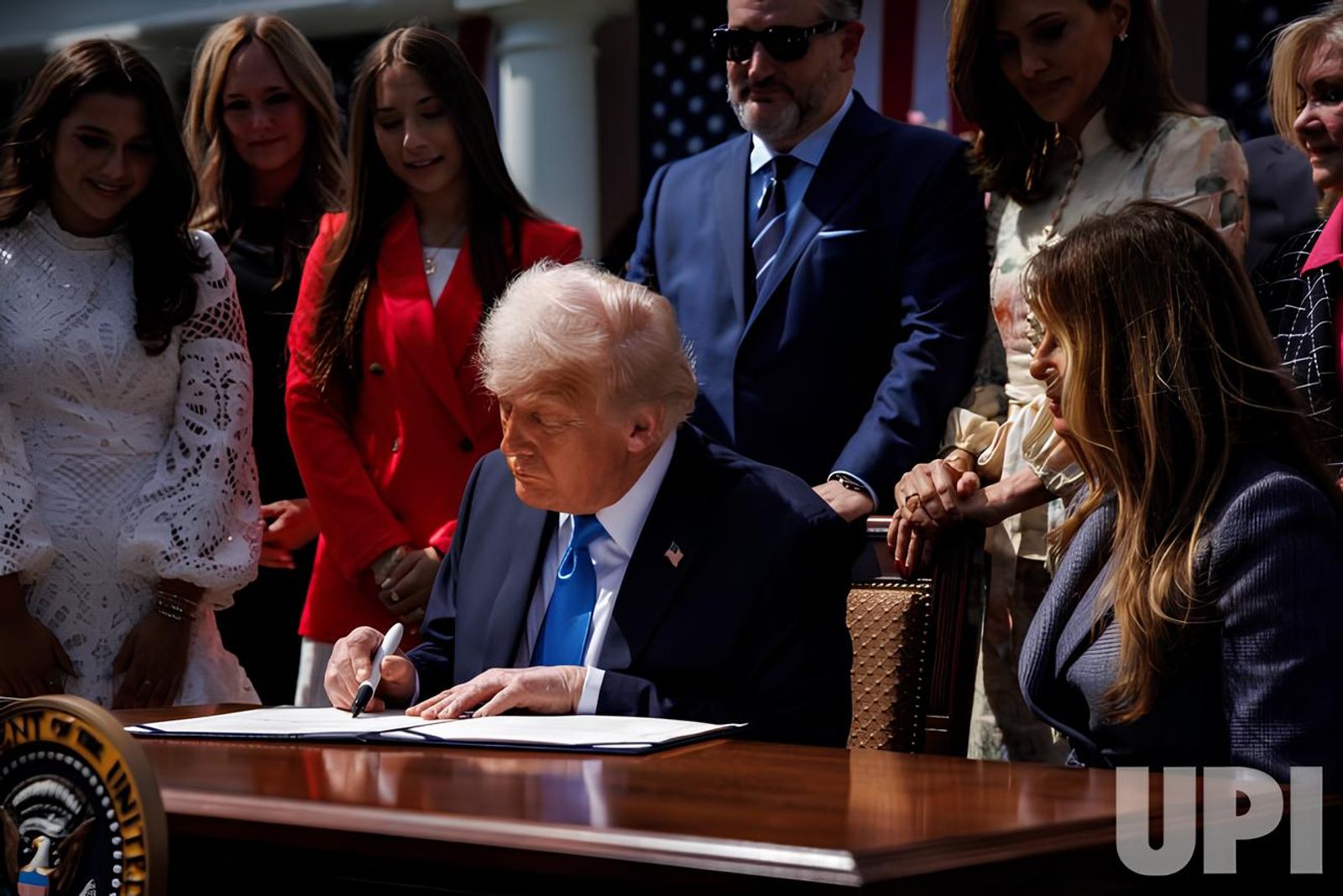
That is why the TAKE IT DOWN Act matters. As the White House notice on the signing of S. 146 explains, the law was signed on May 19, 2025, and it was designed to address both nonconsensual intimate imagery and certain AI-generated sexual deepfakes. Thorn’s research on deepfake nudes and young people helps explain why this matters beyond celebrity cases: the harm is reputational, emotional, and often intensified when harmful content cannot be removed.
This article looks at what the law changes, why rapid removal is central to the issue, where the law may still fall short, and what a victim should do in practice.
TL;DR
-
The TAKE IT DOWN Act creates a federal framework for the removal of certain nonconsensual intimate visual depictions.
-
It covers both authentic intimate imagery and certain AI-generated digital forgeries, including sexual deepfakes.
-
Covered platforms must provide a notice-and-removal process for depicted individuals or their authorized representatives.
-
A valid removal request must include a signature, enough information to locate the content, a good-faith statement that the depiction is nonconsensual, and contact information.
-
After receiving a valid request, a covered platform must act as soon as possible and no later than 48 hours, and must also make reasonable efforts to remove known identical copies.
-
The law matters not only because it creates criminal exposure for uploaders, but because it turns fast platform response into part of the legal remedy.
-
This is not only a celebrity problem: Thorn’s research shows that young people already see deepfake nudes as a real part of everyday digital risk, and one-third said the harm would be greater if the image could not be removed from the internet.
-
The law is significant, but it is not the end of the problem; critics warn that the 48-hour takedown design may encourage over-removal, weak review, and pressure toward automated filtering.
You Might Also Like:
Why the TAKE IT DOWN Act Matters Now
The urgency of this issue is not just that explicit fakes exist. It is that generative AI has made this form of abuse cheaper, faster, and easier to scale. Under the TAKE IT DOWN Act, the law now reaches both authentic intimate imagery and certain AI-generated digital forgeries, which reflects how quickly the threat has moved beyond old “revenge porn” assumptions.
A person no longer needs to have taken an intimate photo to become vulnerable. A normal image can now be turned into a sexual fake and spread with enough plausibility to cause panic before the target has time to explain what happened. That is why the problem is no longer limited to celebrities or public figures. In Thorn’s research on deepfake nudes and young people, the issue appears as part of ordinary digital risk, not a niche edge case. Thorn also found that one-third of respondents were more likely to view the harm as serious if the images could not be removed from the internet.
That is also why the old vocabulary is too narrow. Some cases still involve ex-partners redistributing authentic intimate content, but the larger problem is image-based sexual abuse more generally: classmates, peers, anonymous harassers, and extortionists can now weaponize ordinary photos. The person being targeted may have done nothing more than appear in a school picture, a social profile, or a private chat image. This is exactly the environment in which speed matters more than abstract legal recognition.
What makes this especially urgent is that delay is not neutral. In image-based sexual abuse, time is part of the injury. A fake or nonconsensually shared intimate image can move through screenshots, reposts, private messages, school circles, and workplace networks before a victim has time to document the abuse, explain that the content is fake, or persuade a platform to act. That is why the law’s platform piece matters so much: as the FTC’s summary of the Act explains, covered platforms must provide a notice process and remove reported depictions within 48 hours of receiving notice, with the FTC enforcing that process.
That is what makes the Act important now. Its significance is not only that it creates criminal exposure for certain uploaders. It is that it recognizes a practical truth older legal frameworks often missed: when intimate-image abuse spreads at platform speed, fast removal is not a side issue. It is part of the remedy.
What the Law Actually Changes
For years, victims were stuck in a patchwork system. Whether an intimate image could be challenged, how clearly deepfake sexual imagery was covered, and how quickly a platform would respond often depended on state law and the platform’s own internal rules. The TAKE IT DOWN Act changes that by creating a federal baseline. As the FTC’s summary of the Act explains, the law does not just criminalize certain conduct; it also requires covered platforms to provide a reporting process and remove covered content within 48 hours after receiving notice.
That shift matters because it changes the victim’s position in practical terms. Before, a target often had to search for the right form, hope a platform treated the post as a policy violation, and then wait without any clear timeline. Now the law creates a more defined route: covered platforms must establish a notice-and-removal process no later than one year after enactment, and the statute requires reasonable efforts to remove known identical copies as well.
Just as importantly, the statute expressly reaches certain AI-generated digital forgeries. That matters because a victim no longer has to show that the image was ever authentic for the harm to be legally recognized. Lawfare’s discussion of the Act describes this as the first major U.S. federal law to squarely target NCII while also requiring tech companies to act, which helps explain why the law is more than a symbolic update.
| Issue | Before | After |
|---|---|---|
| Legal framework | State-by-state patchwork | Federal baseline alongside state law |
| Deepfake sexual imagery | Uneven or unclear coverage | Certain AI-generated digital forgeries expressly covered |
| Victim reporting burden | Victim had to navigate platform-specific systems | Covered platforms must offer a notice-and-removal process |
| Platform response expectations | Often discretionary and inconsistent | Defined legal obligation to act |
| Speed of removal | No uniform federal timeline | 48-hour takedown requirement after valid notice |
The key point is not that every problem is solved. It is that the law turns fast removal from a matter of platform discretion into a matter of legal obligation. In practice, that may be the most important change of all.
What the Law Gets Right - and Where It May Still Fall Short

The strongest argument for the TAKE IT DOWN Act is that it finally treats nonconsensual intimate imagery as a federal problem with a platform-response component, not just a series of scattered state-law disputes. That matters because patchwork protection leaves victims navigating different definitions, different enforcement realities, and different levels of urgency depending on where they are and where the content appears. Lawfare’s discussion of the Act is useful on this point because it frames the law as the first major U.S. federal measure to squarely target NCII while also requiring tech companies to act.
The law also gets something important right about the deepfake era: it does not treat synthetic sexual images as a secondary problem. A person may never have created an intimate image and still face humiliation, reputational damage, coercion, or panic once a fabricated sexual fake begins circulating. By expressly covering certain AI-generated digital forgeries, the statute reflects a reality many legal systems were slow to absorb — that a fake sexual image can still produce very real harm. The FTC’s summary also reinforces the practical point that the law is designed around process as well as punishment: covered platforms must provide notice-and-removal systems and act within the statute’s timeframe.
But the criticism is serious, not marginal. The Electronic Frontier Foundation argues that the takedown mechanism is broader than the bill’s narrower criminal provisions and lacks strong enough safeguards against false or bad-faith notices. In EFF’s view, that creates a real risk that lawful material — including satire, journalism, or other protected speech — could be removed too quickly because platforms will be pressured to take content down first and sort out mistakes later.
There is also a harder implementation question beneath the speech debate. A fast-removal rule sounds straightforward in theory, but in practice it puts pressure on platforms to make high-speed decisions about consent, authenticity, context, and duplication. Critics worry that this may encourage over-removal or push some services toward aggressive automated filtering. Supporters, by contrast, would say that some risk of imperfect administration is unavoidable if the law is going to protect victims while harm is still spreading. That is probably the fairest way to read the statute overall: it is an important correction to a system that moved too slowly for victims, but it is not self-executing, and its success will depend heavily on how platforms and regulators handle edge cases in the real world.
Practical Response and Documentation Steps

The TAKE IT DOWN Act gives victims a faster takedown path, but it does not remove the need for self-documentation. If the post disappears, the evidence problem can start immediately; if it stays up, the spread problem gets worse by the hour. Thorn’s 2025 research shows that victims often use both platform tools and offline support, which is another way of saying the response quickly becomes administrative as well as emotional. The safest first move is to preserve the facts before links break, accounts vanish, or reposts split into new copies. According to the FTC’s summary of the TAKE IT DOWN Act and Thorn’s deepfake nudes research, the practical burden on victims is still immediate even when the law creates a faster removal route.
What to do first:
-
save screenshots, URLs, usernames, and timestamps;
-
preserve platform replies, case numbers, and takedown notices;
-
document threats, reposts, impersonation, and repeat uploads;
-
keep everything in one organized folder or timeline;
-
escalate quickly if minors, sextortion, coercion, or repeated harassment are involved.
Documentation matters because lawyers, schools, employers, or police often need a clear chronology more than a chaotic camera roll. A clean file with dates, links, usernames, notices, and account actions can save time and reduce how much paid work is spent reconstructing the basics. A tool like AI Lawyer can also help organize screenshots, notices, and timelines into a cleaner case file before a human lawyer reviews it. The FTC’s guidance notes that covered platforms must provide a notice-and-removal process and remove covered content within 48 hours of a valid request, so preserving both your report and the platform’s response is part of protecting your position.
The costs are real, but some are easier to verify than others. If a dispute escalates into federal civil litigation, the filing fee to start a civil action is generally $405. The federal fee schedule also lists $34 for a clerk-run district-court records search by name or item. And if you need PACER, access costs $0.10 per page, capped at $3.00 per document, with fees waived for users who accrue $30 or less in a quarter. By contrast, private consultation rates, demand-letter reviews, and online reputation-cleanup packages are much harder to verify from official public sources, so it is better to say that honestly than to fill the gap with invented averages.
Conclusion
The TAKE IT DOWN Act matters because it recognizes something older legal frameworks often missed: in image-based sexual abuse, delay is part of the harm. A sexually explicit fake or a nonconsensually shared intimate image can do serious damage before a victim has time to explain, document, report, or contain it. That is why the law’s importance is not limited to criminalizing certain conduct. It also creates a federal fast-removal mechanism backed by platform obligations and FTC enforcement.
That matters even more in the deepfake era. As Thorn’s research on deepfake nudes and young people shows, generative AI has made sexually explicit fakes easier to create, easier to spread, and harder for victims to outrun. The law does not solve every implementation or speech-related concern. But it moves the legal system in an important direction: away from treating removal as an afterthought and toward treating rapid response as part of digital safety, personal dignity, and meaningful protection.
Sources and References
-
The White House, “President Donald J. Trump Signed S. 146 into Law” (May 19, 2025)
-
NCMEC, “NCMEC Releases New Sextortion Data” (April 15, 2024)
-
Lawfare Daily, “Digital Forgeries, Real Felonies: Inside the TAKE IT DOWN Act” (May 6, 2025)
-
EFF, “Congress Passes TAKE IT DOWN Act Despite Major Flaws” (April 28, 2025)
Disclaimer: This information is for general knowledge and does not constitute legal advice. For guidance on your specific situation, consult a qualified attorney licensed in your state.