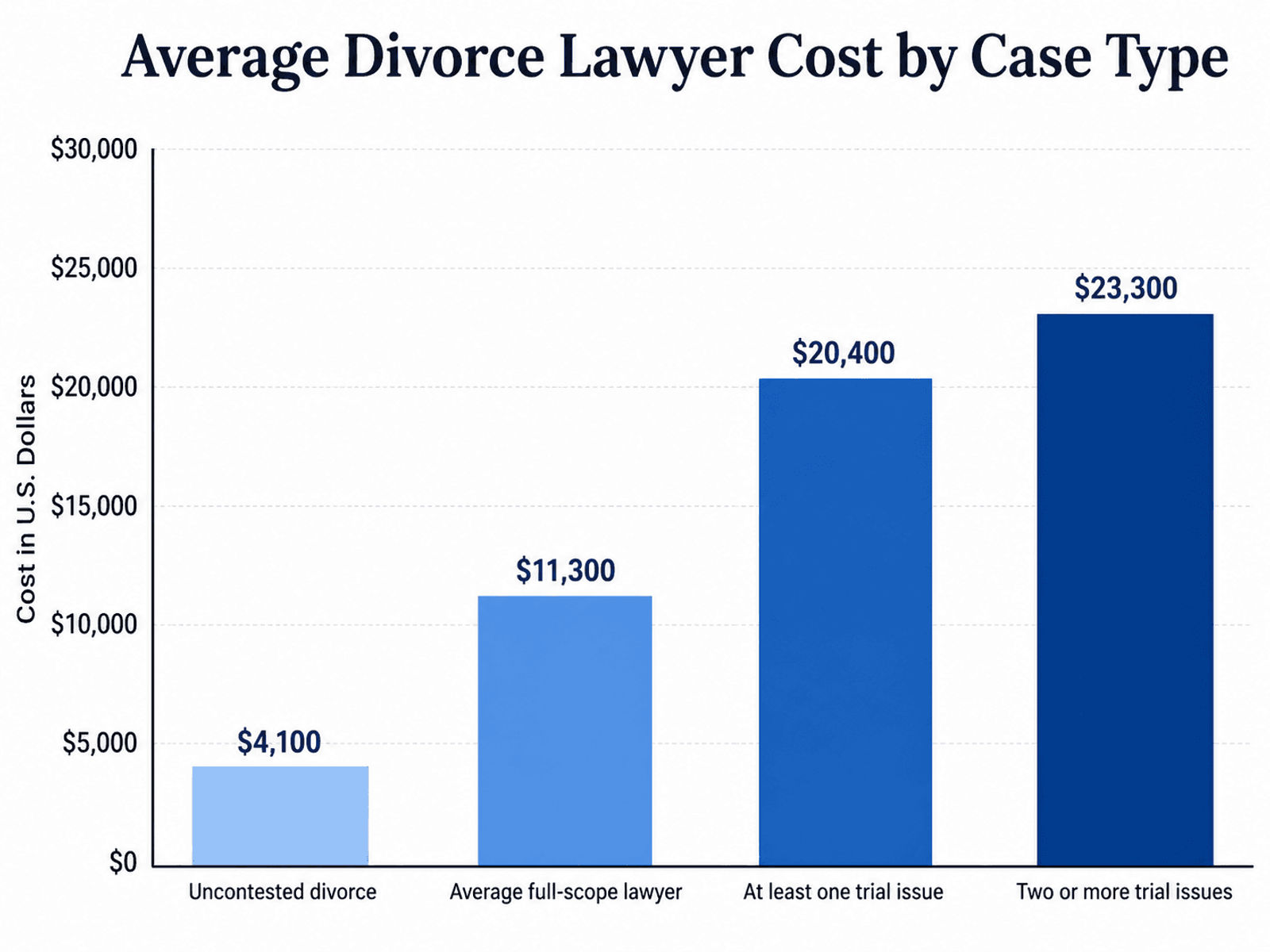


Lawyer fees in the U.S. typically range between $100 and $500 an hour, but sometimes specialists may ask for even more money. Legal costs may differ from several hundreds of dollars for some easy task completion up to 5,000–20,000+ dollars or even more, depending on the kind of legal work.
One of the reasons why lawyers charge high hourly rates is unbilled overhead. One out of four solo lawyers spends over 15 hours weekly on administrative tasks, which must somehow be reimbursed.
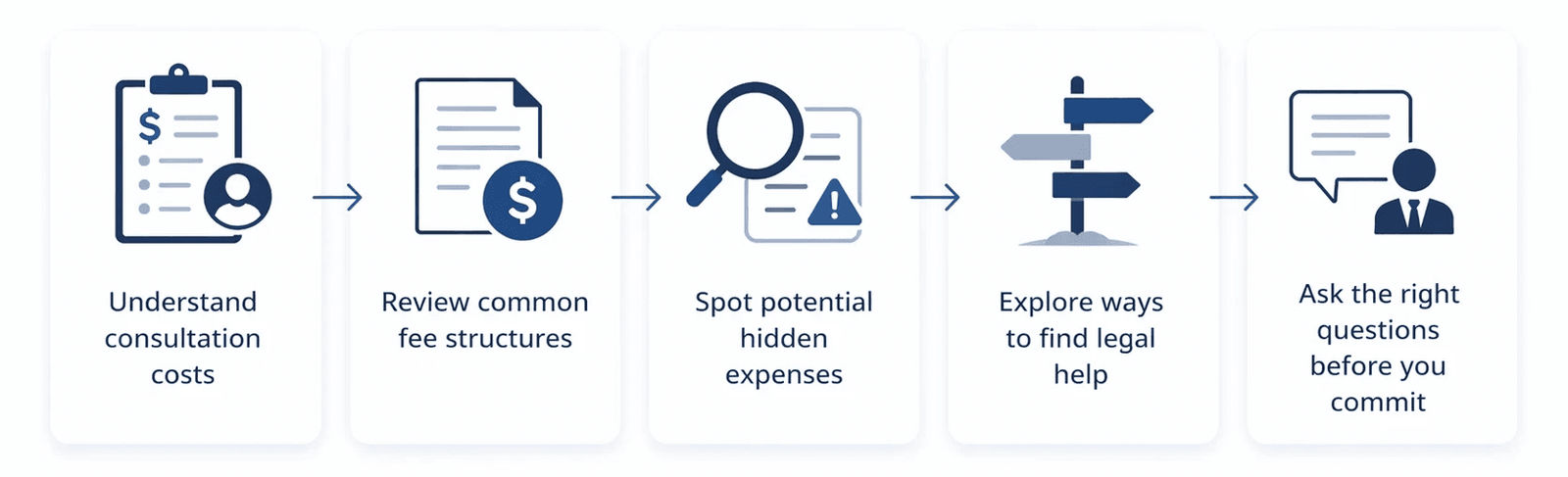
In this article, we are going to analyze fees lawyers usually charge, factors affecting prices, and whether it’s necessary to hire a lawyer. Moreover, we will provide you with information on how lawyers’ fees are structured and different areas of law.
You Might Also Like:
Common Lawyer Fee Structures
Knowing about the different lawyer fee structures will be of great help to the client in making wise decisions and managing his or her costs accordingly. There are four basic types of lawyer fees: contingency fees, hourly fees, flat fees, and retainer fees.
Contingency Fees
Contingency fees refer to a situation whereby a lawyer is paid depending on the results of the case at hand. In cases of personal injury and workers’ compensation, where there are chances of obtaining monetary compensation, contingency fees are very common. In the contingency fee arrangement, the lawyer usually gets a certain percentage of his/her client’s compensation that ranges between 25% and 40%. The percentage of money that the lawyer gets from the client is determined by how the case ends up, whether by settlement or by trial. One of the advantages of contingency fees is that clients do not have to pay any upfront fees, thus increasing accessibility of legal services even to those who could not otherwise afford them. In addition, some case expenses have to be borne by the client if not paid by the lawyer.
Hourly Rates
Hourly billing is among the most prevalent billing methods because, in many cases, a complex matter necessitates many hours of work from the lawyer. According to this method, the client pays the lawyer an amount that equals the time they spend working. The price of an hour varies a lot, depending on different aspects, including the experience, expertise of the lawyer, and location. A new lawyer, for instance, may charge their clients $100 per hour, while an experienced lawyer may ask for thousands of dollars per hour. According to Clio’s 2026 rate data, the average hourly rate across the country stands at $349. Billing is done in smaller increments of six minutes, which means even tasks such as phone calls and email responses may be charged.
Flat Fees
A fixed flat fee is a fee structure whereby a client knows the total cost of a particular service in advance. This type of fee structure is mainly used for simple jobs such as drafting of a will, divorce without any contestation or some business contracts. The benefit of using the fixed fee is that it is very clear because one does not expect any surprise fees. However, fixed fees are rarely used in complicated cases or cases that may continue for a long time since there is no way of knowing the amount of time that will be consumed on the case.
Retainers
The retainer is an advance payment of a deposit toward the payment for legal services, and it is normally asked for in situations where lawyers use an hourly fee structure. The amount of the retainer depends on the estimated length and complexity of the case. Thus, the lawyer representing the divorce case can require $2,000 as a retainer to start working on the case. Then, the fees will be taken from the retainer. In case the retainer runs out during the process of representation, the client will be required to make additional payments for the continuance of the services provided. The extra money is returned to the client after the completion of the case. Retainers are normally not asked for in contingency cases, whereas in hourly cases, they are almost always mandatory.
Factors Affecting Lawyer Costs
Many factors come into play when determining how much a lawyer will be paid for his/her work. Knowledge of these factors can assist individuals in knowing what to expect regarding costs involved.
Case Type
The kind of legal matter is one of the main determinants of attorney fees, since different types of matters call for different kinds of fees to be charged. In personal injury cases, contingency fees are common, whereby the attorney gets a certain percentage of the award made to the client should the case end up being won by the attorney. The attorney may earn considerable income from this type of fee arrangement, especially when the settlement is big. But estate planning does not normally involve complicated issues like disputes, but simple issues such as probate or drawing of a will and so on, and they attract flat fees which offer certainty of the cost.
Location and Cost of Living
The location of a law firm makes an important difference to how much one pays in legal fees because of variations in the cost of living in different regions and the local demand for legal services. Legal practitioners operating in big metropolitan cities or those located in states with expensive living standards, like New York or Washington D.C., usually tend to be more expensive than lawyers from other areas. According to Clio’s findings, for instance, whereas the average hourly fee in West Virginia is approximately $196, it increases to around $492 in Washington D.C. In expensive locations, high prices must be charged to pay for business operation costs such as rent, utilities, and salaries.
Experience Level
Experience and qualifications of the lawyer are also factors that help to determine their charges. Experienced attorneys who have vast experience and possess unique expertise tend to charge more than the newly admitted lawyers and those in the initial stages of their profession. For instance, senior partners of an outstanding law firm charge more on an hourly basis than junior associates in the same firm. The cost gap is justified since experienced lawyers have a proven record of success and hence possess more experience, effective problem solving skills and professional connections that might prove handy in difficult situations. Nonetheless, even if the experienced lawyers charge higher per hour, their experience might reduce time taken to settle the cases.
Case Complexity
The complexity of the issue being handled will also determine the cost, since the lawyer needs additional resources and research to handle the issue at hand. For example, the review of a contract will be cheaper compared to a corporate merger. This is because there are numerous things that need to be handled in a corporate merger such as the regulations governing the process and negotiations. Criminal defense cases with serious charges are also expensive. These kinds of cases require the lawyer to have high levels of experience and knowledge hence the increased cost. There are certain times when lawyers use additional resources such as expert witnesses and thorough investigations that make the cost of handling the case higher.
Examples of Lawyer Rates by Practice Area
The rate at which one pays for legal services differs greatly from one area of specialization to another because each field is different in demand, complexity, and level of specialization. The following are some examples of average hourly rates by field of law.
Juvenile Defense: $127 per Hour
Lawyers working in juvenile defense are those that take care of clients who are minors and have been charged with criminal offenses. In such cases, there is an emphasis on the rehabilitative nature of the offense rather than criminal penalties, and the cases are conducted using a completely different process as compared to regular criminal law. The lower amount paid for juvenile defense attorneys, which is about $127 per hour, is attributed to the process being slightly standard.
Intellectual Property: Over $400 per Hour
Intellectual property law encompasses different categories such as patent, trademark, copyright, and trade secrets, which tend to be very specialized. IP lawyers have to be up to date with constantly changing laws both within the country and internationally in order to defend their clients’ interests effectively. Owing to the complicated and technical aspects of IP law, the rates that lawyers who practice in this legal area usually charge exceed $400 per hour. The reason why people usually hire IP lawyers is because their intellectual property constitutes a large part of their assets.
Tax Law: Approximately $450 per Hour
Another field that features high attorney hourly rates is tax law, which averages about $450 per hour. These lawyers help people and businesses navigate through complicated situations relating to taxes, such as audits, compliance, tax planning, and litigation with the government tax authorities. Involvement with tax codes at the state level, federal level, and even internationally necessitates some expertise and proper strategy. Moreover, since tax laws tend to change regularly, tax attorneys have to keep themselves abreast of new developments in order to offer proper advice to their clients.
Bankruptcy Law: Around $400 per Hour
Bankruptcy attorneys, who have an hourly fee of about $400, provide services to individuals as well as businesses in dealing with their debt issues and guiding them through the bankruptcy procedure. In this field of law, one needs to conduct extensive research and be highly aware of not only the national laws governing bankruptcy but also those of various states. Bankruptcy law cases may range from simple personal bankruptcies to more complex corporate bankruptcies where there are also creditors involved. Due to the nature of these cases, people usually have no problem paying for such services.
Payment Options and Tips for Managing Legal Fees
Dealing with legal costs may prove to be difficult; however, understanding how to pay for services and requesting certain billing procedures will enable you to have greater control over your financial situation. Below are some tips for handling your legal fees.
Cost Estimates and Upfront Quotes
As a precursor to starting work on a case, many lawyers provide estimates or quotes in order to prepare the client financially. This will ensure that the client is aware of the fees that may be incurred from particular services provided. Estimates are normally dependent on the complexity of the cases, but when obtained early in the process, they help clients to get prepared financially. It is recommended that the client should ask for an estimate in writing so that the client can know in advance the cost of any hourly rate, flat fee, or additional cost. In cases where an exact quotation cannot be given because of uncertainty, clients may be quoted a range of fees.
Itemized Billing
Itemized billing can be very useful for clients who wish to have an itemized record of how their money is being spent, especially in cases where they are billed hourly. An itemized bill will contain a description of all the tasks completed in relation to a specific case, complete with time used for each activity, and possibly even notes such as “telephone call with client,” “court filings,” or “legal research.” This method allows the client to see the allocation of time and recognize the activities that increase the total cost. In looking at itemized bills, clients will get an understanding of the progress of their case, and they can see which activities can be cut down to save money. Clients should not hesitate to ask for billing records to keep track of their expenses and avoid sudden large charges at the end of the case.
Fee Cap or Payment Plans
If a client is concerned about the overall cost of legal services, alternative billing arrangements such as fee caps and payment plans can help make the financial commitment much more manageable.
-
Fee Cap. This is a mechanism in which the client pays an amount that is the maximum fee that he will incur for the whole legal process regardless of the total hours worked. In other words, the lawyer can bill his client $5,000 for a certain case even though he works more hours. This is particularly effective in ensuring the costs remain within the budget of the client.
-
Payment Plan. This is a mode in which the client makes payments in monthly or weekly installments rather than paying the total amount at once. For example, a client can be made to pay $300 per month until he settles his fees in a case that takes long such as divorce cases. The advantage of this is that it enables clients to enjoy the best legal services without having to pay the whole sum at once.
Fee caps and payment plans not only increase the accessibility of legal services but also alleviate the burden of having to pay all at once by spreading the cost over time.

Should You Hire a Lawyer?
Legal representation is definitely an expensive endeavor, but the involvement of lawyers in many cases often turns out to be absolutely necessary to obtain the desired results. Although the price for legal services is not cheap from the beginning, the consequences that can follow without a professional lawyer can cost much more later. Let us take a closer look at some important reasons for employing a lawyer.
Risks of Self-Representation
Not having legal representation means risking making crucial errors, which can be detrimental to one’s case. Failing to file the right documents within the required period may lead to the dismissal of one’s case. Moreover, not collecting important pieces of evidence for a case can make one’s argument weak in the eyes of the judge. There are some special procedures that need to be adhered to when conducting a lawsuit. Failure to follow the proper process in serving the documents and bringing forth the evidence can jeopardize a case. With the legal knowledge and experience that a lawyer has, he or she can ensure that all aspects of a case are followed according to the law. Apart from the processes involved in filing a lawsuit, representing oneself in court means that one will face the opposition with legal representation. In the cases of disputes in business, in criminal cases, and personal injury, the opposing side may have lawyers that are very experienced in countering one’s arguments.
Value of Professional Expertise
In addition to their extensive knowledge, lawyers also possess experience and strategies that can be useful in difficult situations. They have the ability to judge a case and provide a solution tailored to protect the client’s legal interests and financial well-being.
For example, in criminal cases, a lawyer may be able to reduce charges, negotiate a plea deal, or have the case dismissed due to errors in procedure or lack of evidence. In business litigation cases, a lawyer defends the assets of his or her client and makes sure that the compliance issues are settled and the negotiations end up in a good way for the client and not in a judgment for millions of dollars against the client. In personal injury cases, a lawyer often negotiates with the insurance companies to get fair compensation for his or her client in terms of medical bills, loss of earnings and other expenses.
Peace of Mind and Improved Case Outcomes
Not only will getting a lawyer increase chances for success, but it will ensure peace of mind during the legal proceedings as well. Legal matters are extremely stressful and trying to cope with them alone can add up to the burden of the situation emotionally and financially. A lawyer is someone who will act as a guide for the client, taking care of all the complexities of the case, communicating with the opposition, and ensuring that all the rights of the client are properly represented. This way, a client will be able to concentrate on other issues while the matter at hand is handled professionally.
Reduce Legal Costs with AI Lawyer: Affordable AI-Powered Legal Assistance

If you want to cut down the cost of legal services while still ensuring a high level of assistance, AI Lawyer presents an interesting and affordable way to make your legal process as effective and cheap as possible. AI Lawyer specializes in providing assistance to those who need help in legal content creation, legal document drafting, and legal research. It can be used by everyone who needs assistance but wants to avoid costly legal consultations. The use of AI Lawyer allows you to decrease dependence on high-priced consultations and cut down on the cost of your legal and content-related tasks. You will have access to services that will assist you in content tasks such as creating and comparing documents and even helping out law firms with marketing purposes.
Flexible Pricing Options
-
Weekly: $55 per week for full premium features.
-
Monthly: $159 per month.
-
Yearly: $759 per year, the cheapest plan per day of use.
-
Promotions: these plans are often discounted by half, to $27, $79 and $379.
-
Risk-free: every plan comes with a 30-day money-back guarantee.
Pros:
-
Fast, AI-driven content generation and legal research
-
Cost-effective document creation and analysis
-
Available on web, iOS, and Android platforms
-
Supports research in multiple languages
Conclusion
Although hiring a lawyer requires a significant investment, having knowledge on how the fees are calculated and the different factors that affect the price will assist you to make a proper choice. Apart from hourly charges, lawyers use various fee systems such as flat fees and retainers. The factors affecting the price include the complexity of the case, the expertise of the lawyer, and his or her geographical area.
Legal fees are expensive; however, hiring a lawyer will give you more than what you have paid for. It is difficult for one to handle a particular case without a professional due to mistakes that may arise, especially when it comes to deadlines. Ultimately, evaluating your budget and selecting an attorney who offers transparent pricing ensures you get professional legal support while keeping your expenses under control.
You Might Also Like:
FAQ
How much do lawyers charge on average?
The average hourly rate for lawyers in the U.S. is around $349, though rates can vary widely based on factors like location, case type, and lawyer experience. Specialized fields and high-cost areas may see rates significantly higher.
What are contingency fees?
A contingency fee is a payment arrangement where the lawyer only gets paid if they win the case. This fee is usually a percentage of the client’s award, commonly between 25% and 40%, and is mostly used in personal injury cases.
Do all lawyers require a retainer?
Not all lawyers require a retainer, but retainers are common for hourly-rate cases or ongoing legal matters. A retainer is an upfront payment that serves as a deposit for future legal services.
What is a flat fee?
A flat fee is a fixed cost for specific legal services, like creating a will or filing paperwork. This structure provides clarity on costs upfront and is typically used for straightforward legal matters.
How do lawyer costs differ by location?
Lawyer fees vary greatly by location due to local living costs and demand. For example, lawyers in large metropolitan areas or high-cost states often charge more than those in smaller towns or rural regions.
How can I control my legal expenses?
To manage costs, ask for a detailed quote upfront, consider payment plans, and request itemized billing. Exploring fixed-fee options for specific tasks can also help control costs.
Is hiring a lawyer worth the cost?
Hiring a lawyer can be essential in complex or high-stakes cases. While legal fees can be high, professional guidance often improves outcomes and helps avoid costly errors, making it worthwhile in many situations.
What other costs might I expect besides lawyer fees?
Besides professional fees, you may incur additional expenses like court filing fees, document costs, and fees for expert witnesses or investigators. Discuss these potential costs with your lawyer to plan accordingly.
Sources and References
Information on average legal fees and billing structures is based on data from the U.S. Bureau of Labor Statistics (BLS) – Occupational Data for Lawyers, which provides national and state-level insights into hourly rates and practice area variations.
Guidance on common fee arrangements and ethical billing practices references materials from the U.S. Department of Justice (DOJ) and the State Bar of Texas.
Additional insights on contingency, retainer, and flat-fee models are drawn from the U.S. Bureau of Labor Statistics and verified legal resources on attorney compensation and professional conduct.
Disclaimer: This information is for general knowledge and does not constitute legal advice. For guidance on your specific situation, consult a qualified attorney licensed in your state.