

A power of attorney in the U.S. usually costs from about $20 for a basic online form to $400+ for a lawyer-drafted document. Based on pricing data from ContractsCounsel and Rocket Lawyer, the cost of hiring a lawyer to prepare or review a power of attorney typically falls in the range of a few hundred dollars, depending on how much authority the document gives and how much legal customization it requires.
You Might Also Like:
How Much Does a Power of Attorney Cost?
A power of attorney usually costs about $20–$400+, depending on whether you use a basic online form, pay for a lawyer’s review, or hire an attorney to draft the document from scratch.
Quick cost snapshot:
-
online POA form: about $20–$40
-
POA review by a lawyer: about $210
-
POA drafting by a lawyer: about $380
-
hourly attorney rate: about $100–$350+
These estimates are based on current pricing examples from Nolo, average POA review and drafting costs reported by ContractsCounsel, and attorney hourly-rate guidance from Rocket Lawyer. Most people pay based on the level of service they choose, from a low-cost template to full legal drafting.
What Makes a Power of Attorney More Expensive?
The cost of a Power of Attorney usually goes up when the document needs broader authority, custom terms, or closer attention to state-law requirements. As the American Bar Association notes, a POA can be limited to one specific act or broader in scope, and the rules can vary from state to state.
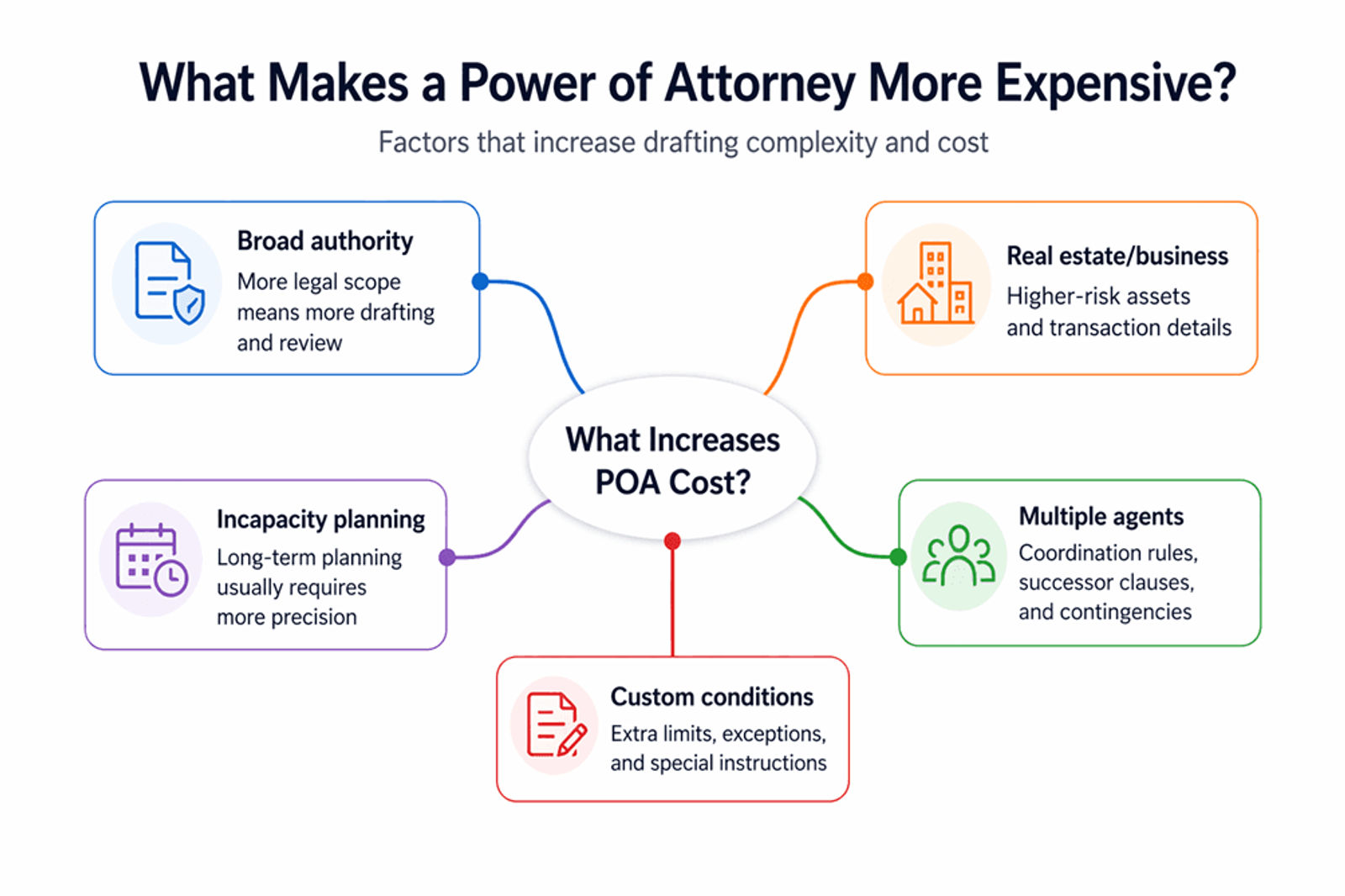
In practice, the price is often higher when the POA includes:
-
broad financial authority
-
real estate or business interests
-
multiple or successor agents
-
custom restrictions or conditions
-
long-term incapacity planning
-
stricter state-law compliance
The ABA also notes in Model Rule 1.5 that legal fees must be reasonable and may depend on the time, difficulty, and skill required.
Which Type of Power of Attorney Do You Actually Need?
The right Power of Attorney depends on what you need the agent to do and whether the document should still work if you become incapacitated. As the American Bar Association explains, a POA can be limited or general, and it may take effect immediately or only under certain conditions.
The main categories are straightforward:
-
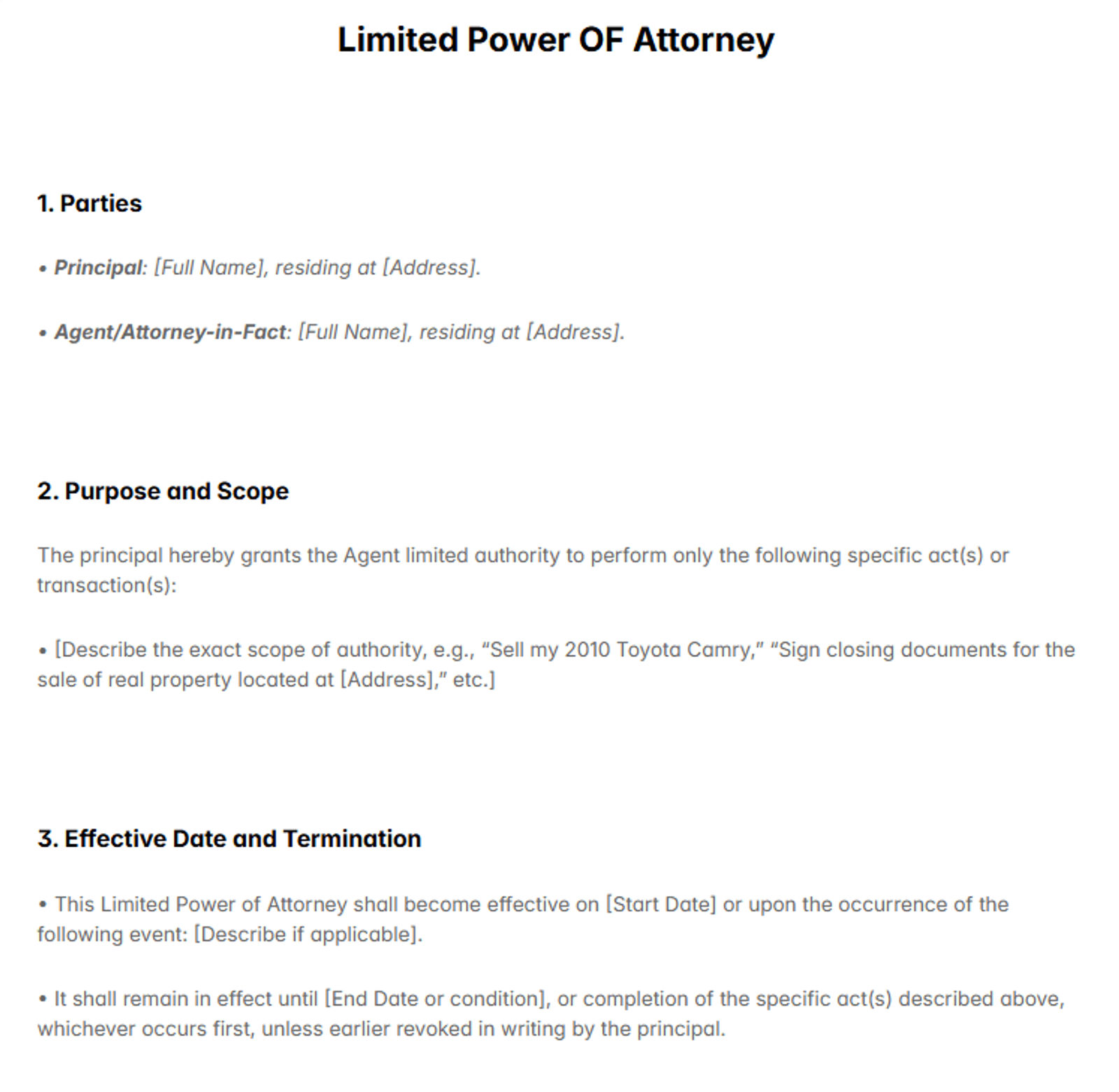
Limited POA — for one specific task or transaction
-
General POA — for broader authority over financial or legal matters
-
Durable POA — remains effective if you become incapacitated
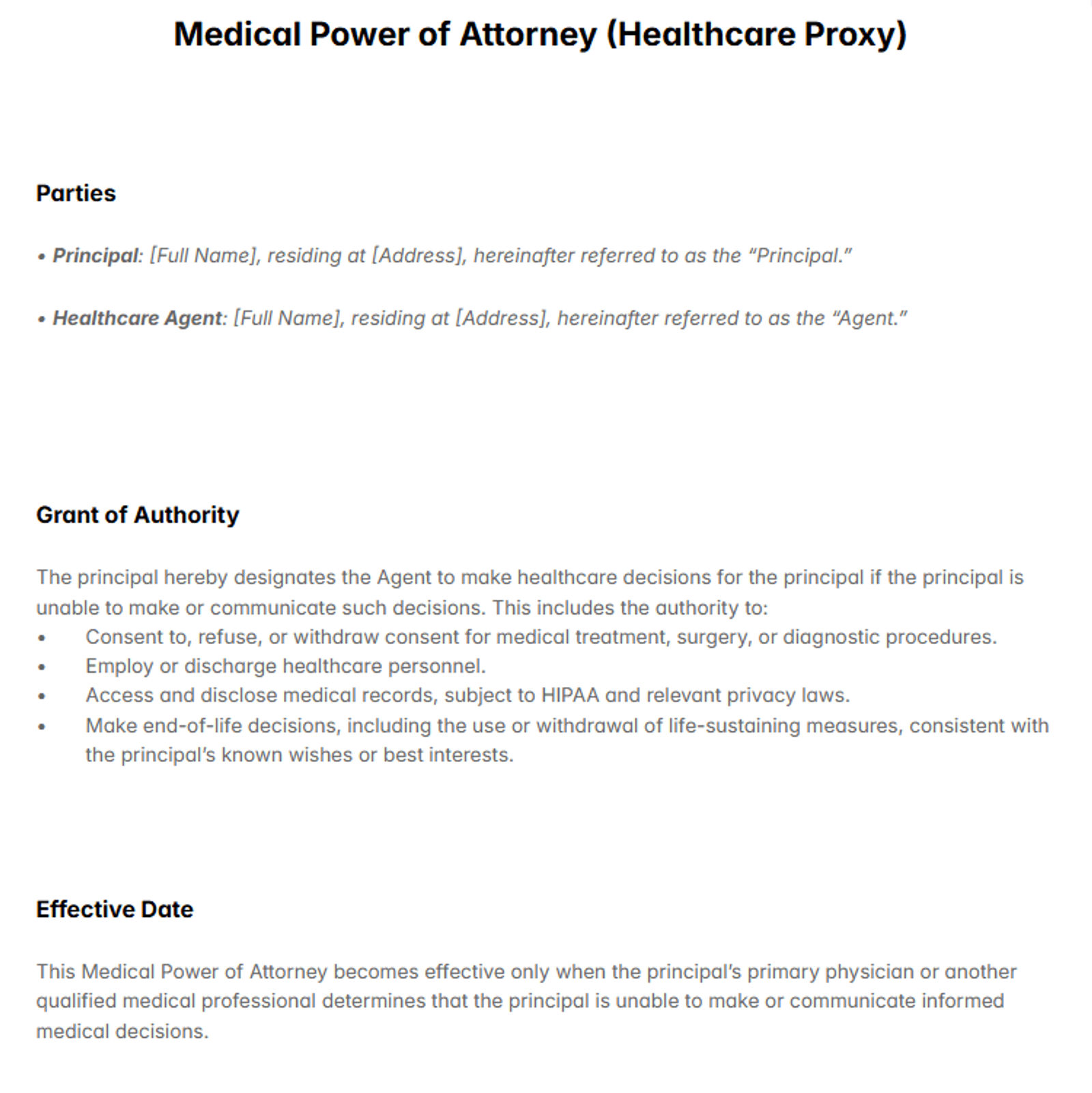
If you only need short-term authority for one issue, a Limited POA is usually enough. If you want broader authority over ongoing financial or legal matters, a General POA may be more appropriate. If you are planning for incapacity or long-term financial management, a Durable POA is usually the better fit. The Texas State Law Library guide explains that a durable power of attorney either takes effect upon or continues after the principal’s incapacity. In short, the right type depends on whether you need authority for one task, broader ongoing matters, or future incapacity planning.
DIY Power of Attorney vs Hiring a Lawyer
A DIY POA usually makes sense when the document is limited, the situation is straightforward, and there are no major assets or family conflicts, and hiring a lawyer is often advisable when a POA involves incapacity planning, financial or property matters, custom provisions, or strict state-law requirements.
How Do Lawyers Charge for a Power of Attorney?
Lawyers usually charge for a Power of Attorney in one of two ways: hourly or flat fee. With hourly billing, you pay for the time the lawyer spends drafting the document. This can be helpful for lawyers if the work takes longer than expected, but the total cost may be less predictable for clients. According to ContractsCounsel’s lawyer cost guide, lawyers typically charge around $250–$350 per hour. With a flat fee, you pay a fixed amount upfront for the entire service. This gives both the lawyer and the client a clear total cost from the start. According to ContractsCounsel’s Power of Attorney cost guide, the average flat fee for drafting a Power of Attorney is about $380.
Power of Attorney Cost by State
The cost of a power of attorney can vary by state because signing rules, witness requirements, and notarization rules are not the same everywhere.
-
California: about $660 on average. California Courts Self-Help notes that many estate planning documents must be signed before a notary or two witnesses, and ContractsCounsel California pricing data shows an average POA cost of about $660.
-
Texas: about $400 on average. Texas State Law Library explains that Texas has a statutory form for durable powers of attorney, and ContractsCounsel Texas pricing data lists an average of about $400.
-
New York: about $700 on average. New York State Comptroller says that POAs executed on or after June 13, 2021 must be signed by two disinterested witnesses, and ContractsCounsel New York pricing data lists an average of about $700.
-
Florida: about $680 on average. Florida Statute 709.2105 requires the principal to sign before two witnesses and acknowledge the document before a notary, and ContractsCounsel Florida pricing data lists an average of about $680.
-
Illinois: about $370 on average, according to ContractsCounsel Illinois pricing data.
How to Save on Power of Attorney Costs
The best way to save on a power of attorney is to match the level of legal help to the job. A standard form may be enough for a simple, one-task POA, such as Nolo’s Limited Power of Attorney for Finances. A lawyer review can be a good middle-ground option if you already have a draft and want to confirm that it is clear and valid; ContractsCounsel reports lower average costs for review than for full drafting. Full attorney drafting may be worth the extra cost when a POA needs tailored provisions or careful compliance with state-specific rules. The goal is not to buy the cheapest document, but to avoid paying for more legal help than you actually need.
Conclusion
A power of attorney is not just about cost. The right choice depends on the type of authority you need, how long it should remain in effect, and whether the document must meet any state-specific legal requirements. In a simple situation, a standard form or lawyer review may be enough. The best option depends on whether you need a simple document for a single task or a more carefully structured POA for ongoing or future planning.
FAQs
Can a bank refuse to accept a Power of Attorney?
Yes, it can happen in practice, especially if the POA is outdated, unclear, or does not meet state requirements. But if the document is valid and complies with state law, it is generally supposed to be accepted.
Can I name more than one agent in a POA?
Yes. A POA can give authority to one or more persons to act as your agent. You can also name a successor agent if you want backup planning.
Does a spouse automatically have Power of Attorney?
No. A spouse does not automatically get the right to sign financial or legal documents for you. A POA usually has to be created separately if you want that authority in place.
Can a Power of Attorney cover future incapacity?
Yes, if the document is drafted that way. A Durable POA is designed to take effect upon or last after the principal’s incapacity.
Should I update a Power of Attorney after major life changes?
Usually, yes. It makes sense to review the document after marriage, divorce, a move, major asset changes, or a change in the person you trust to act for you.
Can I revoke an old POA and sign a new one?
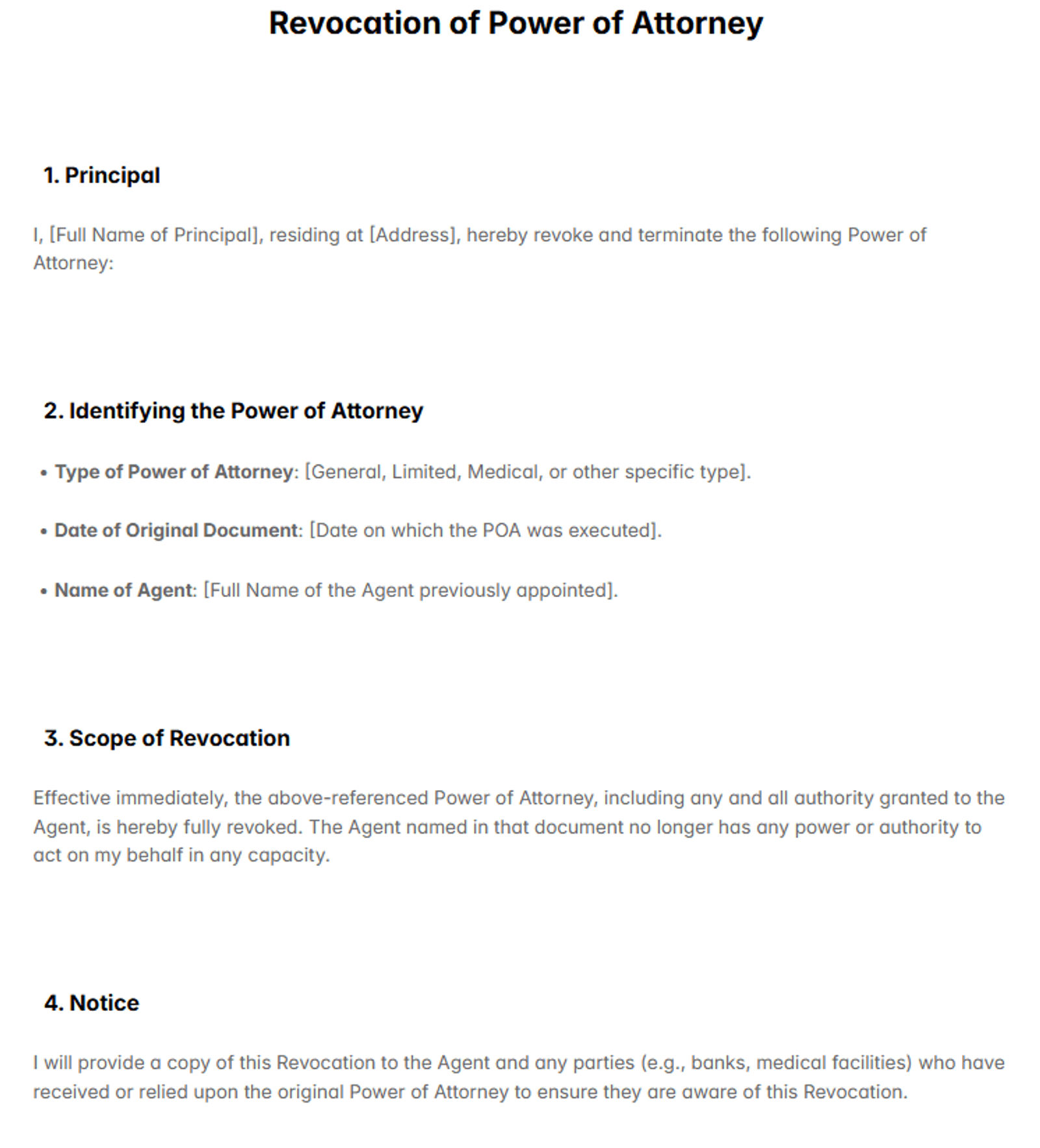
Yes, in many cases. But the old one should be revoked properly, and the right people should be told. Otherwise, the previous document can still create confusion.
Sources and References
-
Consumer Financial Protection Bureau — What is a Power of Attorney
-
Consumer Financial Protection Bureau — What if a bank will not accept a POA
Disclaimer: This information is for general knowledge and does not constitute legal advice. For guidance on your specific situation, consult a qualified attorney licensed in your state.