


Introduction
Let’s start with a simple question: What if the future of law isn’t about lawyers at all? Not in the way we’ve known them, at least. Think about it — a world where legal work isn’t weighed down by hours of paperwork or buried in back-and-forth emails. A place where artificial intelligence steps in, not just as a tool, but as a partner in practice. You could say it’s already happening. The quiet transformation of a field that’s built itself on tradition and precedent, now being reshaped by algorithms and data.
And here’s the real kicker: it’s not the technology that’s changing the game, it’s how we choose to use it. So, where does that leave us? Somewhere between the comfort of the old ways and the promise of something much more efficient, much more powerful. This isn’t just about keeping up; it’s about deciding what kind of lawyer you want to be in this new era.
Curious about the future of law? You don’t have to read through pages to understand how AI is changing the landscape. Let AI Lawyer demonstrate its power directly. Experience firsthand how it simplifies legal tasks, optimises your workflow, and adapts to your needs. Try AI Lawyer now:
You Might Also Like:
What is AI for lawyers?
Artificial intelligence for lawyers refers to the application of AI technologies to legal tasks and processes. These technologies can automate routine tasks such as document review, legal research, and contract drafting. AI can also be used to analyze vast amounts of data to identify trends, predict outcomes, and identify potential risks.
Types of AI for lawyers
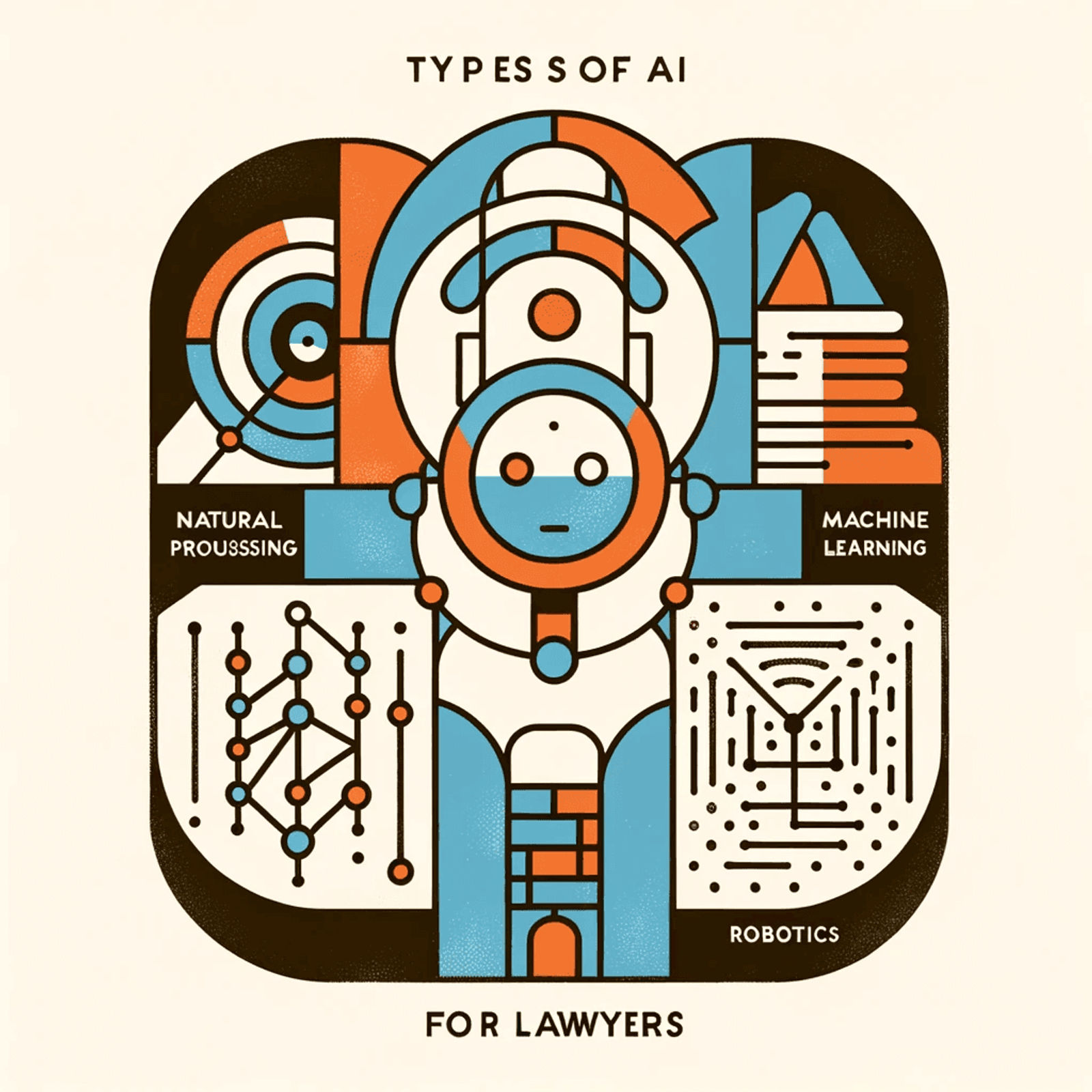
There are several types of AI for lawyers, including:
-
Natural language processing (NLP): NLP allows AI to understand and process human language, which can be used to generate legal documents, extract key information from case law and statutes, and translate documents into other languages.
-
Machine learning (ML): ML algorithms can learn from data to identify patterns and make predictions, which can be used to assess legal risks, predict case outcomes, and identify potential fraud.
-
Robotics: Robotics can be used to automate tasks such as document review and legal research. This frees up lawyers to focus on more complex matters.
To gain a broader perspective on the impact of AI across various legal domains, you might find these articles helpful:
-
[**Maximizing Efficiency with AI in Legal Practices**](/blog/ai-in-legal-practices)**:** Learn how AI tools are streamlining workflows and improving accuracy for legal professionals. -
[**AI and the New Age of Real Estate Law**](/blog/ai-and-the-legal-profession-a-comprehensive-analysis)**:** Discover how AI is revolutionising document drafting and risk assessment in real estate transactions. -
[**Navigating Compliance with AI Tools**](/blog/how-ai-enhances-compliance-monitoring-in-estate-planning)**:** Explore how AI is being used to enhance compliance monitoring in estate planning.
How AI is used in law firms

AI is being used in a variety of ways in law firms, including:
-
Document review: AI can be used to review large volumes of documents to identify relevant information. This can save lawyers a significant amount of time.
-
Legal research: AI can be used to search for and analyze legal information. This can help lawyers to find relevant case law and statutes.
-
Contract drafting: AI can be used to draft standard contracts, reducing the time and cost of contract review.
-
Case management: AI can be used to manage cases, track deadlines, and coordinate with clients and other lawyers.
Benefits of AI for lawyers

AI offers several benefits for lawyers, including:
-
Increased efficiency: AI can automate routine tasks, freeing up lawyers to focus on more complex matters.
-
Improved accuracy: AI can analyze vast amounts of data to identify patterns and inconsistencies. This can help lawyers to identify potential errors in legal documents.
-
Enhanced access to justice: AI can make legal services more affordable and accessible to a wider range of people.
AI Lawyer: your personal AI legal assistant

AI Lawyer is a revolutionary AI-powered legal assistant that can help you to streamline your legal work and improve your case outcomes. AI Lawyer can be used for a variety of tasks, including:
-
Asking legal questions: AI Lawyer can answer your legal questions in a clear and concise manner.
-
Generating legal documents: AI Lawyer can generate a variety of legal documents, including contracts, letters, and pleadings.
-
Analyzing legal information: AI Lawyer can analyze legal information to identify key patterns and trends.
-
Researching legal topics: AI Lawyer can research legal topics and provide you with summaries of relevant case law and statutes.
AI Lawyer: a game changer for the legal industry

AI Lawyer is a powerful tool that can revolutionize the way lawyers work. AI Lawyer is already being used by businesses, law firms, and individuals to improve their legal processes.
Here is a summary of the benefits of AI Lawyer:
-
Faster
-
More accurate
-
More affordable
-
More efficient
-
More accessible
If you are a lawyer who is looking to improve your practice, I encourage you to try AI Lawyer. You won’t be disappointed.
Sources and References
Discussion of how AI systems support tasks such as document review, research, and drafting in law practice is informed by professional-ethics guidance, including the American Bar Association’s Formal Opinion 512 on Generative Artificial Intelligence Tools and explanatory commentary on generative AI in legal practice, as well as state and city bar frameworks like the New York City Bar’s “seven C’s” for ethical use of AI by lawyers. Governance, risk, and compliance considerations for AI tools used by lawyers draw on the NIST AI Risk Management Framework and its reference publication AI RMF 1.0, together with the European Union’s Artificial Intelligence Act, Regulation (EU) 2024/1689 and accessible overviews of the AI Act text such as the AI Act Explorer, which together set out emerging global standards for trustworthy, high-risk AI systems in sectors including legal and justice services. Perspectives on AI’s role in expanding access to justice and reshaping legal service delivery are informed by international policy work from the OECD on AI in justice administration and access to justice, broader analysis of governing with artificial intelligence, thematic resources on AI in government justice systems, and comparative data on access to civil justice and justice data governance.
You Might Also Like:
Disclaimer: This information is for general knowledge and does not constitute legal advice. For guidance on your specific situation, consult a qualified attorney licensed in your state.