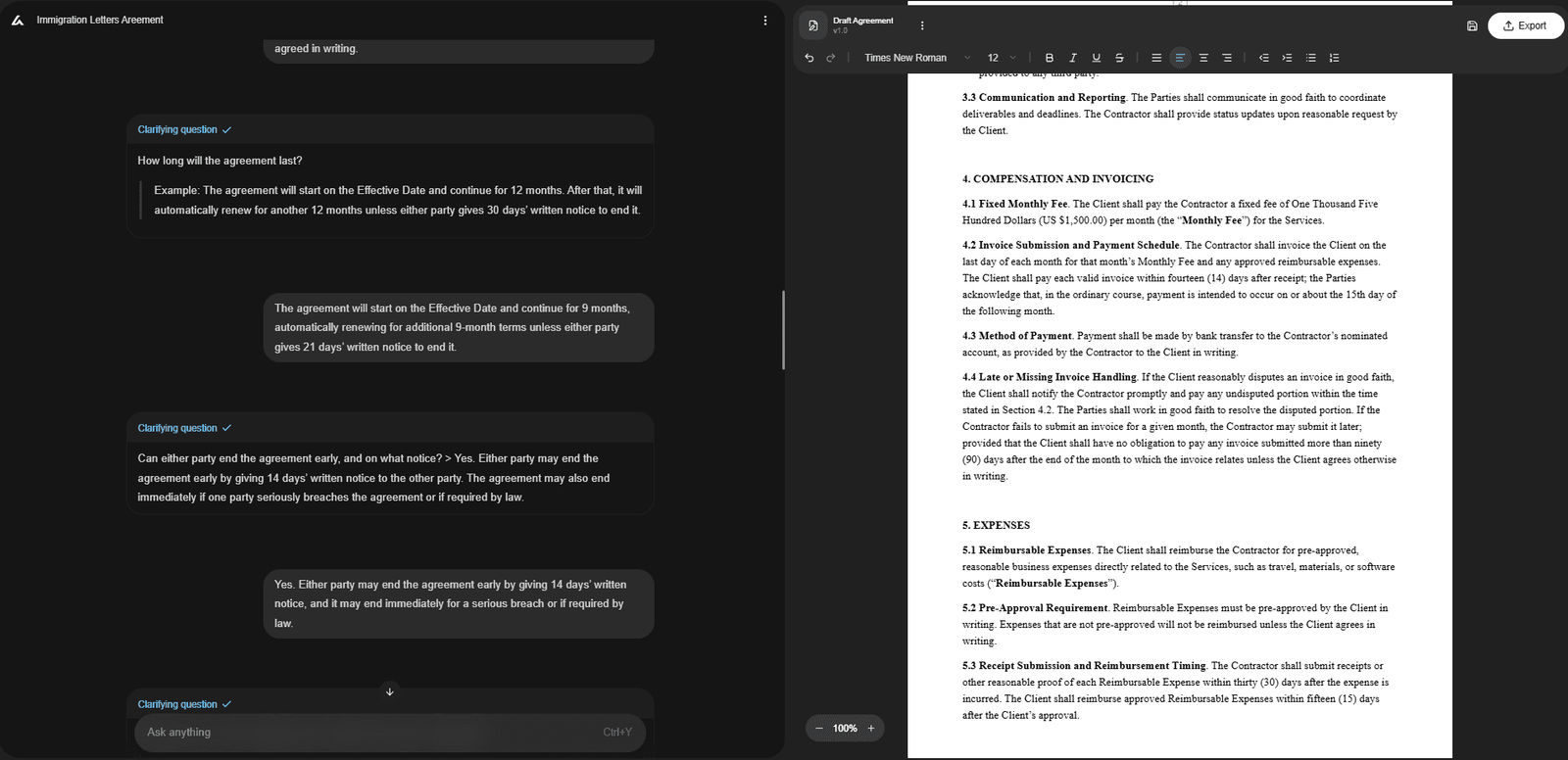


AI contract review software reads a contract, pulls out the key clauses, flags the risky ones, checks them against a standard or playbook, and can redline the document in Word, in minutes instead of hours. The catch in most "best tools" lists is that they mix a fifty-thousand-dollar enterprise platform with a lightweight Word add-in as if one buyer needs both. The right tool depends entirely on who you are. This guide sorts the 2026 options by audience, explains what AI review can and cannot do, and is honest about where a simple consumer-grade tool is enough and where it is not.
Speed matters here: per AI Lawyer's Small-Firm Legal Operations Report 2026, the typical 10–15 hours a week lost to routine work carries a billable-value ceiling of $170,000–250,000 a year — contract review is one of the fastest categories to claw that time back.
Match the tool to your scale. High-volume enterprises and legal-ops teams want a contract lifecycle platform like LinkSquares, Ironclad, Evisort, or Sirion. Law firms and in-house counsel want a review-and-drafting assistant like Spellbook, LegalOn, Luminance, Ivo, or Robin AI. Small businesses, startups, and solos reviewing the occasional NDA or vendor contract do not need any of that, and a lightweight legal AI tool such as AI Lawyer covers it without enterprise cost. Whatever you choose, a human still has to read the result before you sign.
This article is general information, not legal advice. AI contract review speeds up the work, but a qualified person should review anything before you sign it.
You might also like:
- 10 AI Legal Research Tools Worth Trying
- AI for Business Plans (2026)
- Legal Tech Companies Shaping the Industry
What does AI contract review software actually do?

The phrase "contract review" hides a second category. Some tools are review assistants that help with one contract at a time. Others are contract lifecycle management platforms that store, track, and renew thousands of contracts and add AI review as one feature. Knowing which you need is most of the decision.
What AI contract review can and cannot do
Vendors report strong accuracy on routine documents. Some cite figures like risk detection on standard NDAs that meets or beats a junior lawyer, and high extraction accuracy on benchmark datasets. Treat these as vendor-reported and as evidence the tools are useful, not as a license to skip review.
The honest rule: AI handles the first pass and the routine, you handle the judgment and the unusual.
The best AI contract review tools by audience

Enterprise and high-volume teams (contract lifecycle platforms)
If you manage thousands of contracts and need storage, tracking, approvals, and renewals as well as review, you want a contract lifecycle management platform.
| Tool | Known for |
|---|---|
| LinkSquares | AI review plus analytics across a large contract repository |
| Ironclad | Workflow-heavy CLM with strong AI review |
| Evisort (Workday) | AI extraction and analytics at scale |
| Sirion | Post-signature management and obligation tracking |
These are powerful and priced accordingly, usually a quote-based enterprise contract. They are overkill for a small team.
Law firms and in-house counsel (review and drafting assistants)
If your work is reviewing and negotiating contracts rather than warehousing them, a focused assistant that lives in Word is the better fit.
| Tool | Known for |
|---|---|
| Spellbook | Review and drafting inside Microsoft Word |
| LegalOn | Playbook-based review with built-in legal standards |
| Luminance | Analysis across large contract sets and due diligence |
| Ivo | Fast, accurate clause review and redlining |
| Robin AI | Negotiation and review assistance |
Most offer a low monthly subscription or a trial, which is a far gentler entry than enterprise CLM.
Small businesses, startups, and solos
If you sign a handful of contracts and just need to understand and improve them, you do not need legal-team software at all.
This is where a consumer-grade tool fits honestly. AI Lawyer reviews an NDA, a vendor agreement, or a freelance contract, explains the risky clauses in plain English, and suggests changes, without a CLM, a seat license, or a sales call. It will not run a thousand-contract portfolio, and it should not; it is built for the person reviewing one important document.
How to choose AI contract review software
A quick filter:
- Do you store and track many contracts, or review them one at a time? Storage points to CLM; review points to an assistant.
- Does it edit and redline inside Word, where your contracts already live?
- Is your data encrypted and kept private, and does the vendor train on your documents? Confirm before uploading anything sensitive.
- Is the price a transparent subscription, or a quote-only enterprise deal you have to negotiate?
How much does AI contract review software cost?
Frequently asked questions
How accurate is AI contract review compared to a lawyer?
Can AI replace a lawyer for contract review?
Is it safe to upload contracts to an AI tool?
What is the best AI contract review tool for a small business or solo?
Can AI review and redline contracts inside Microsoft Word?
What contract types are best suited to AI review?
Does AI contract review work for non-lawyers?
What is the difference between AI contract review and contract lifecycle management?
%22%2F%3E%3Cline%20x1%3D%22120%22%20y1%3D%2286%22%20x2%3D%22200%22%20y2%3D%2286%22%20opacity%3D%22.85%22%2F%3E%3Cline%20x1%3D%22120%22%20y1%3D%22110%22%20x2%3D%22200%22%20y2%3D%22110%22%20opacity%3D%22.6%22%2F%3E%3Cline%20x1%3D%22120%22%20y1%3D%22134%22%20x2%3D%22184%22%20y2%3D%22134%22%20opacity%3D%22.6%22%2F%3E%3Cline%20x1%3D%22120%22%20y1%3D%22158%22%20x2%3D%22200%22%20y2%3D%22158%22%20opacity%3D%22.45%22%2F%3E%3Cline%20x1%3D%22120%22%20y1%3D%22182%22%20x2%3D%22168%22%20y2%3D%22182%22%20opacity%3D%22.45%22%2F%3E%3C%2Fg%3E%3Cg%20fill%3D%22%235b3df5%22%3E%3Cpath%20d%3D%22M214%2036%20l7%2018%2018%207%20-18%207%20-7%2018%20-7%20-18%20-18%20-7%2018%20-7%20z%22%2F%3E%3Ccircle%20cx%3D%22250%22%20cy%3D%2292%22%20r%3D%224%22%20opacity%3D%22.8%22%2F%3E%3C%2Fg%3E%3C%2Fsvg%3E)
Disclaimer: This information is for general knowledge and does not constitute legal advice. For guidance on your specific situation, consult a qualified attorney licensed in your state.