

Creating a document with the help of AI is not limited anymore to writing a few paragraphs using a chatbot. Currently, the best AI tools for document creation assist with such processes as drafting, editing, formatting, summarizing, translating, branding, templates, signatures, and exporting. This checklist includes only tools which create actual documents, not simple text. The latter includes such types of documents as contracts, proposals, reports, business PDFs, internal documents, SOPs, legal letters, templates, signed documents, and client documents. With the help of this checklist, you will be able to choose the appropriate AI document creation tool based on the type of your document.
You Might Also Like:
-
Best AI Tools for Legal Questions: Simplify Your Legal Research
-
Child Travel Consent Form Template (Free Download + AI Generator)
Quick Comparison: Best AI Tools for Creating Documents
| Tool | Best for | Main use case |
|---|---|---|
| AI Lawyer | Legal documents | Contracts, legal letters, legal summaries, document review |
| Docubee (retiring Dec 31, 2026) | Contract automation | Agreements, approvals, routing, e-signatures |
| Jotform AI Document Generator | Forms and PDFs | Forms, contracts, certificates, proposals, signed documents |
| Microsoft 365 Copilot | Office documents | Word documents, spreadsheets, presentations, internal files |
| Gemini in Google Docs | Google Workspace documents | Drafts, summaries, proposals, project plans, personalized docs |
| Canva Docs | Visual documents | Proposals, reports, business memos, branded shareable docs |
| Notion AI | Workspace documents | Team docs, notes, knowledge bases, meeting summaries |
| ClickUp Brain | Project documents | Docs, task summaries, project updates, action items |
| Templafy | Enterprise templates | Brand-compliant proposals, presentations, contracts |
| Piktochart | Visual reports | Reports, proposals, newsletters, one-pagers, infographics |
| Visme | Designed documents | Reports, proposals, plans, ebooks, presentations |
| Aidocmaker | All-in-one generation | Reports, proposals, contracts, spreadsheets, presentations |
| Scribe | Process documents | SOPs, tutorials, onboarding guides, workflow documentation |
Why AI Document Tools Matter in 2026
AI document tools matter because most users do not only need text. They need a usable document with the right structure, format, sections, and next step.
A proposal needs scope, pricing, timeline, branding, and a clear call to action. A contract needs parties, obligations, payment terms, signatures, and review. A report needs findings, summaries, charts, and recommendations. An SOP needs clear steps, screenshots, and ownership.
That is why the better question is not, “Which AI tool can write?” It is, “Which AI tool can create the document I need with the least cleanup?”
How to Choose the Right AI Document Creation Tool
Begin with what you’re writing, not with features. If you need legal documents, contracts, policies, or legal correspondence, use an AI tool for legal drafting, reviewing, or contracts.
For proposals, reports, newsletters, and PDFs, focus on layout, template, design, exporting, and branding. An AI writer could help you generate text, but it will likely not make the document itself.
For internal documentation, consider collaboration, permissions, versioning, sharing, and context. For signed forms and intake documents, look for form fields, templates, audit trails, and e-signature.
Finally, consider your needs for reviewing the document. AI could draft your document in minutes, but some business and legal documents require human approval prior to sending or signing.
Top AI Tools for Creating Documents
AI Lawyer
Most suitable for: legal documents, contracts, legal letters, document review, document summarization, and legal document translation.
AI Lawyer may be a good choice for people who need help with creating legal documents, not business text in general. It allows you to draft, review, summarize, compare and translate legal documents, thus, it will be helpful for contracts, agreements, demand letters, explanations, document review, and other tasks.
Unlike the use of an AI writer, the preparation of legal documents implies some specific aspects, such as logical clauses, defined terms, obligations, etc. For instance, a small business owner can use the tool to summarize a vendor agreement, find out unclear terms and prepare an improved version.
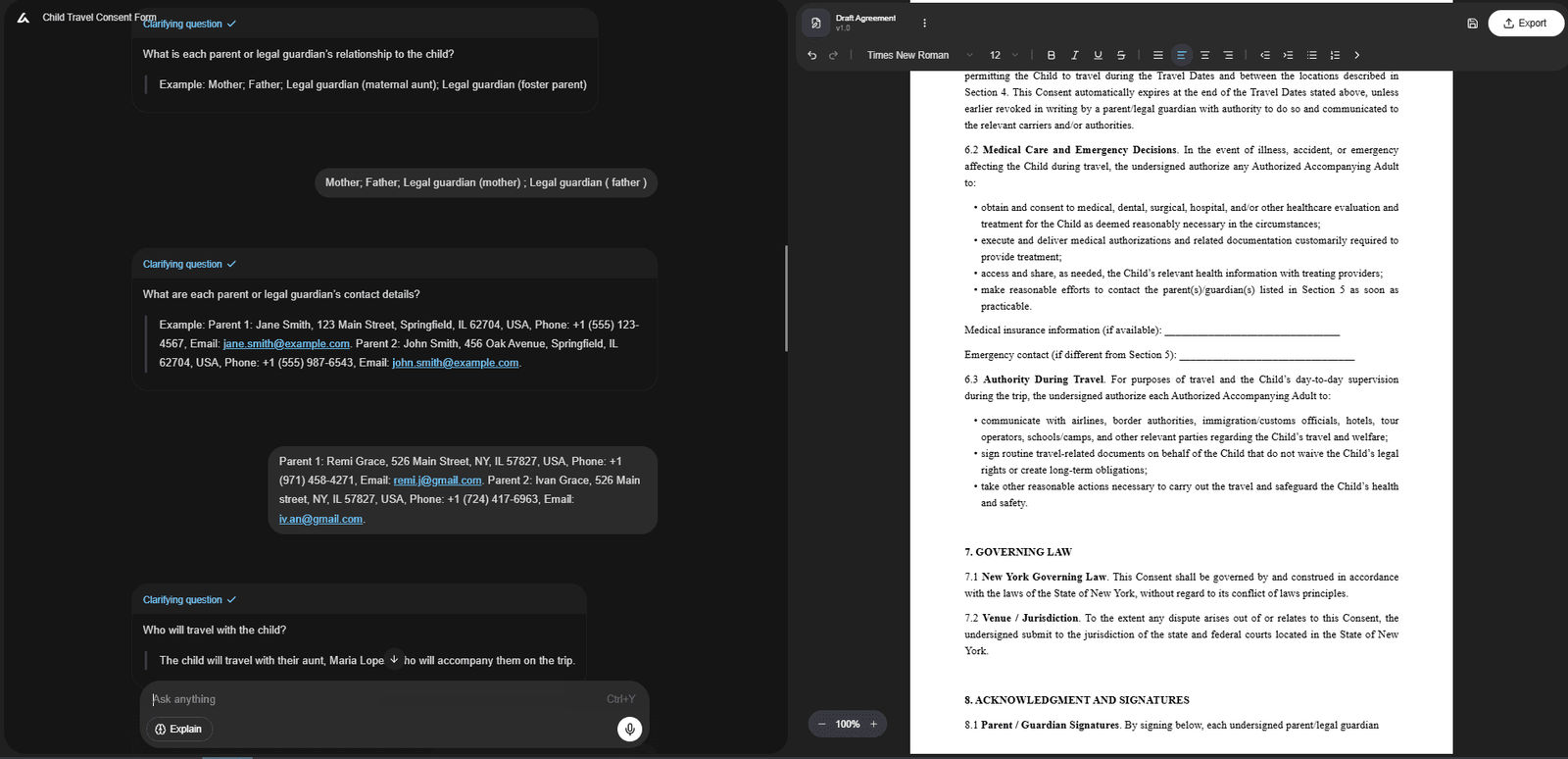
The screenshot below illustrates the document creation process in action. The user selects or describes the type of the legal document he/she needs, input necessary information and the AI Lawyer drafts the document based on this input data.
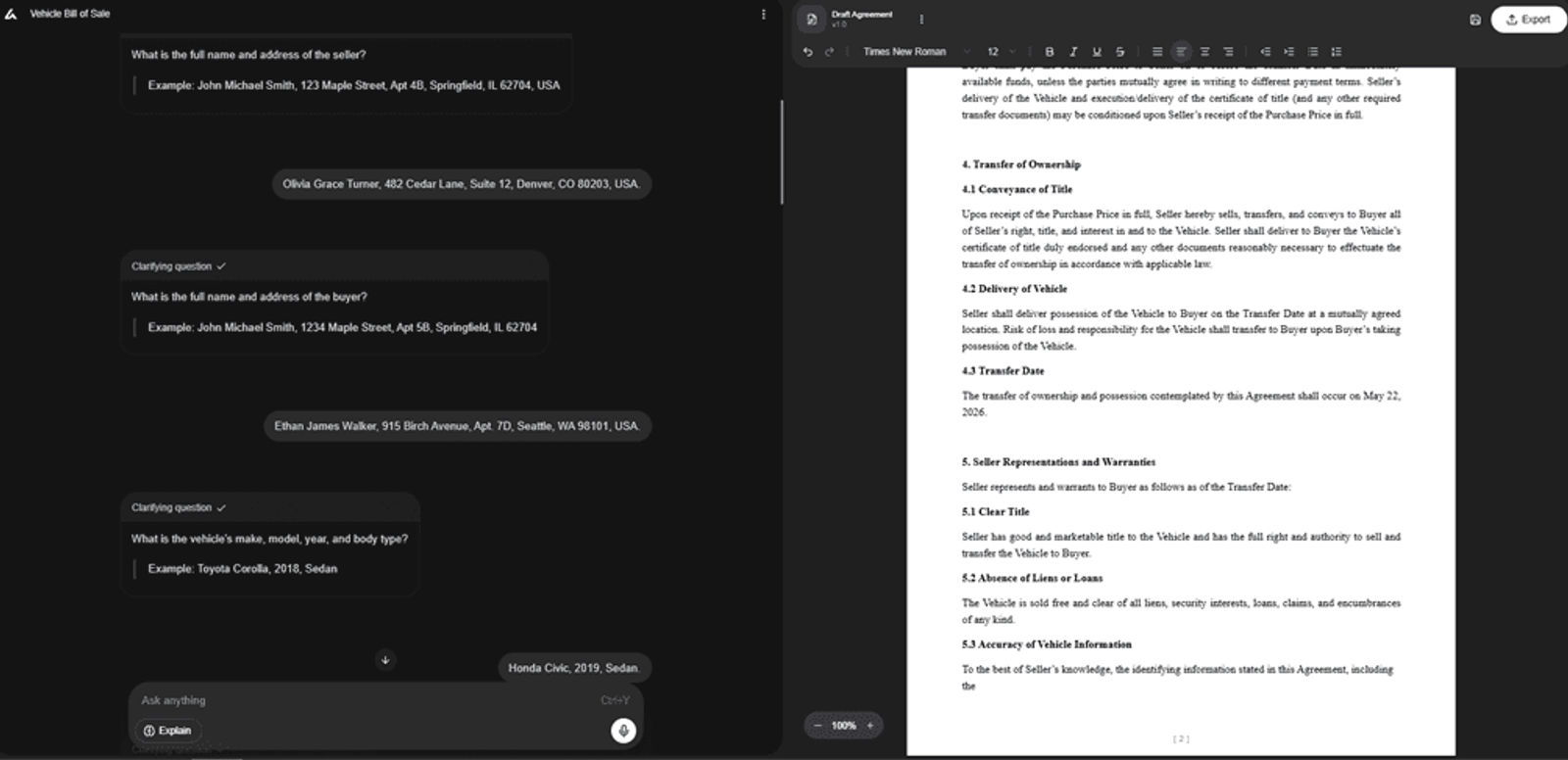
The most suitable use case of AI Lawyer is when the document has legal implications and wording impact some rights, obligations, payments, deadlines, or responsibilities.
Docubee
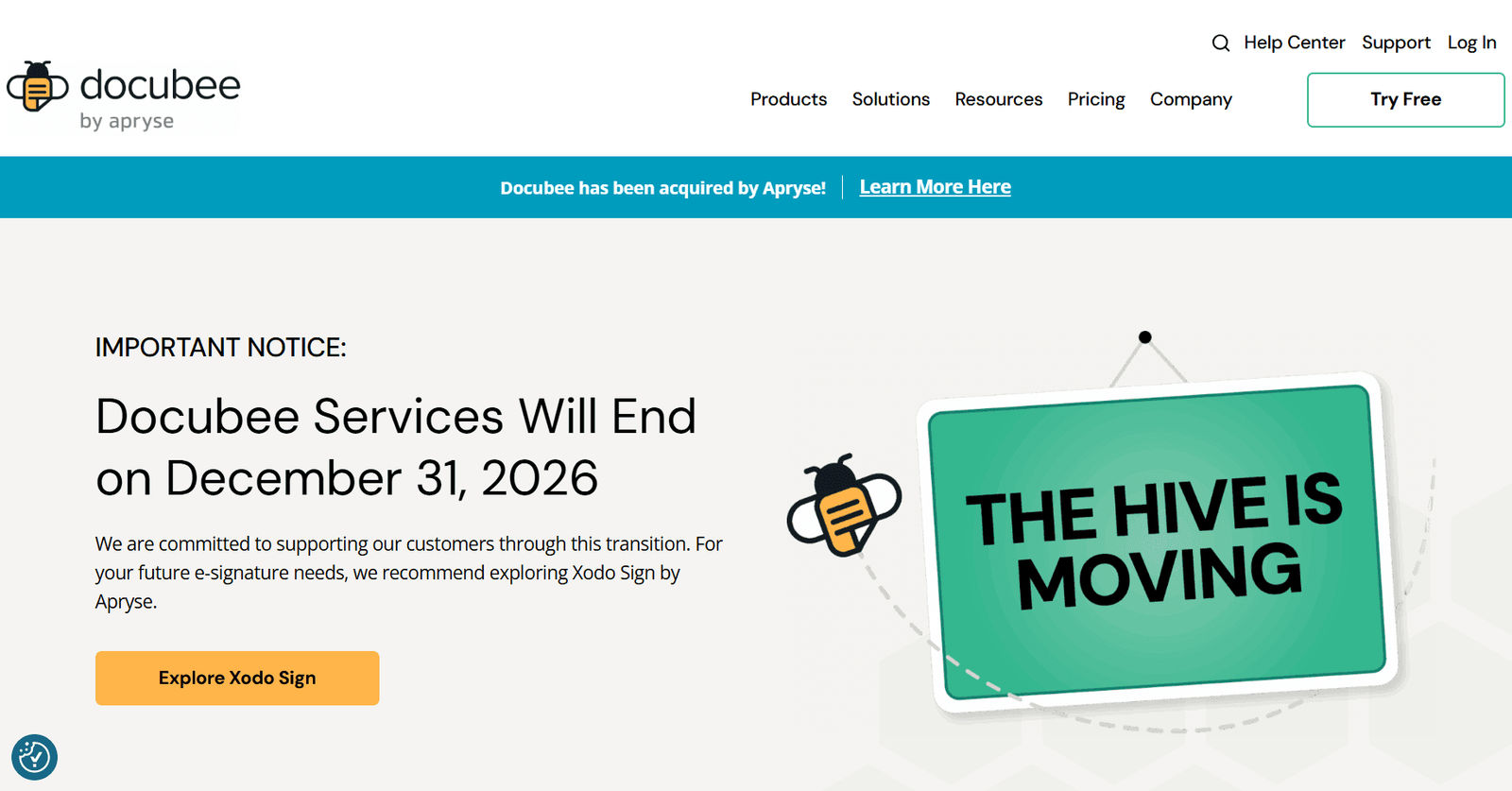
Important notice. Apryse is permanently retiring Docubee on December 31, 2026.
Good for: contract automation, e–signature, document workflows, business contracts.
Docubee is ideal for those businesses which need to draft and share the contract frequently. It has features other than creating texts. Rather, its capabilities include document workflow which includes preparation, routing, signing, and linking of documents with other business processes.
For instance, a team of salespersons can share the same service agreement among various clients without copying previous files and editing their content again and again.
Docubee is perfect for creating contract workflows rather than casual writing.
Jotform
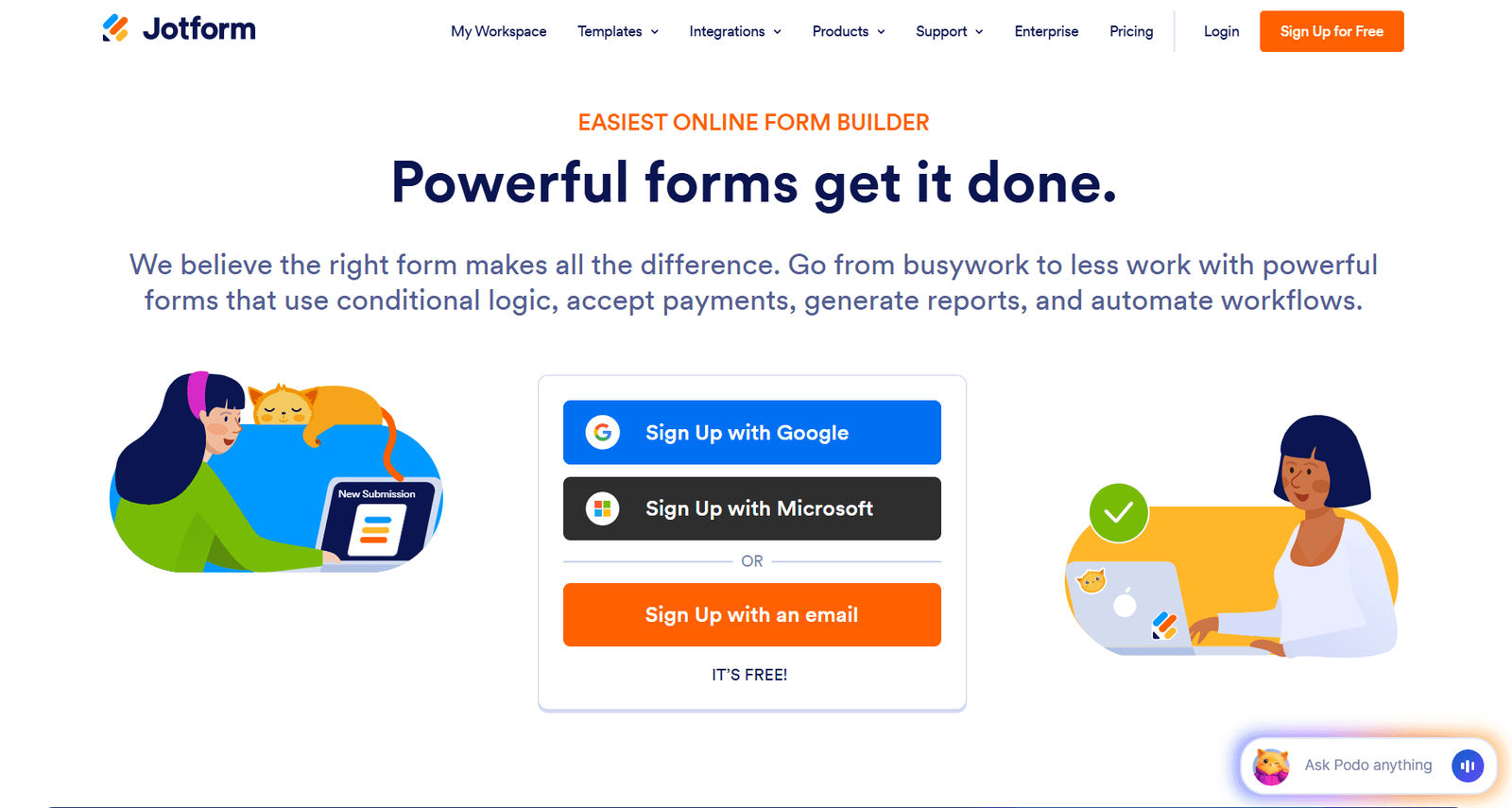
Recommended for: forms, agreements, templates, signatures, and other business-related documents.
Jotform comes in handy when documents are made based on the information that has been collected. This includes forms for gathering information from clients, forms of consent, order forms, applications, agreements, and signed business-related documents.
The usefulness of Jotform lies in integrating forms, templates, document creation, and e-signatures. In the case of a consultant, one can use a form to gather information from clients and create a proposal or an agreement.
Jotform works great when the document requires fields, answers, templates, and signatures.
Microsoft 365 Copilot
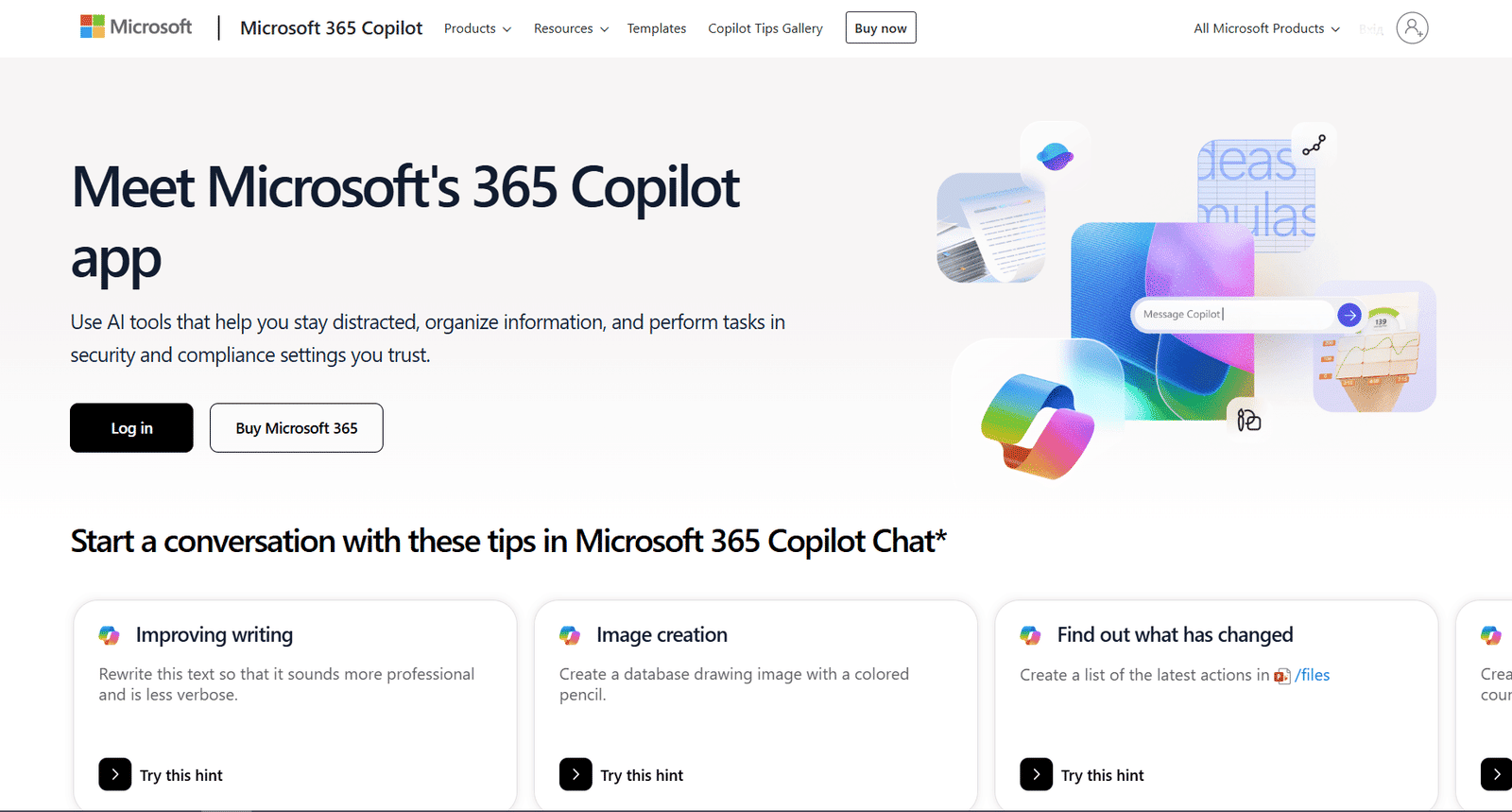
Recommended for: Word documents, Excel files, PowerPoint presentations, business draft writing, and office productivity.
Microsoft 365 Copilot serves well for businesses already using Word, Excel, PowerPoint, Outlook, and Teams. The software may assist in writing, rephrasing, summarizing, and enhancing documents within the applications that most businesses already use regularly.
The key feature of this software is its context. The user works within the existing Office documents rather than moving text from one application to another. This is useful for business reports, internal memos, spreadsheets, presentation, follow-ups, and executive summaries.
Microsoft 365 copilot is recommended if the document has to remain within the Microsoft environment.
Gemini in Google Docs
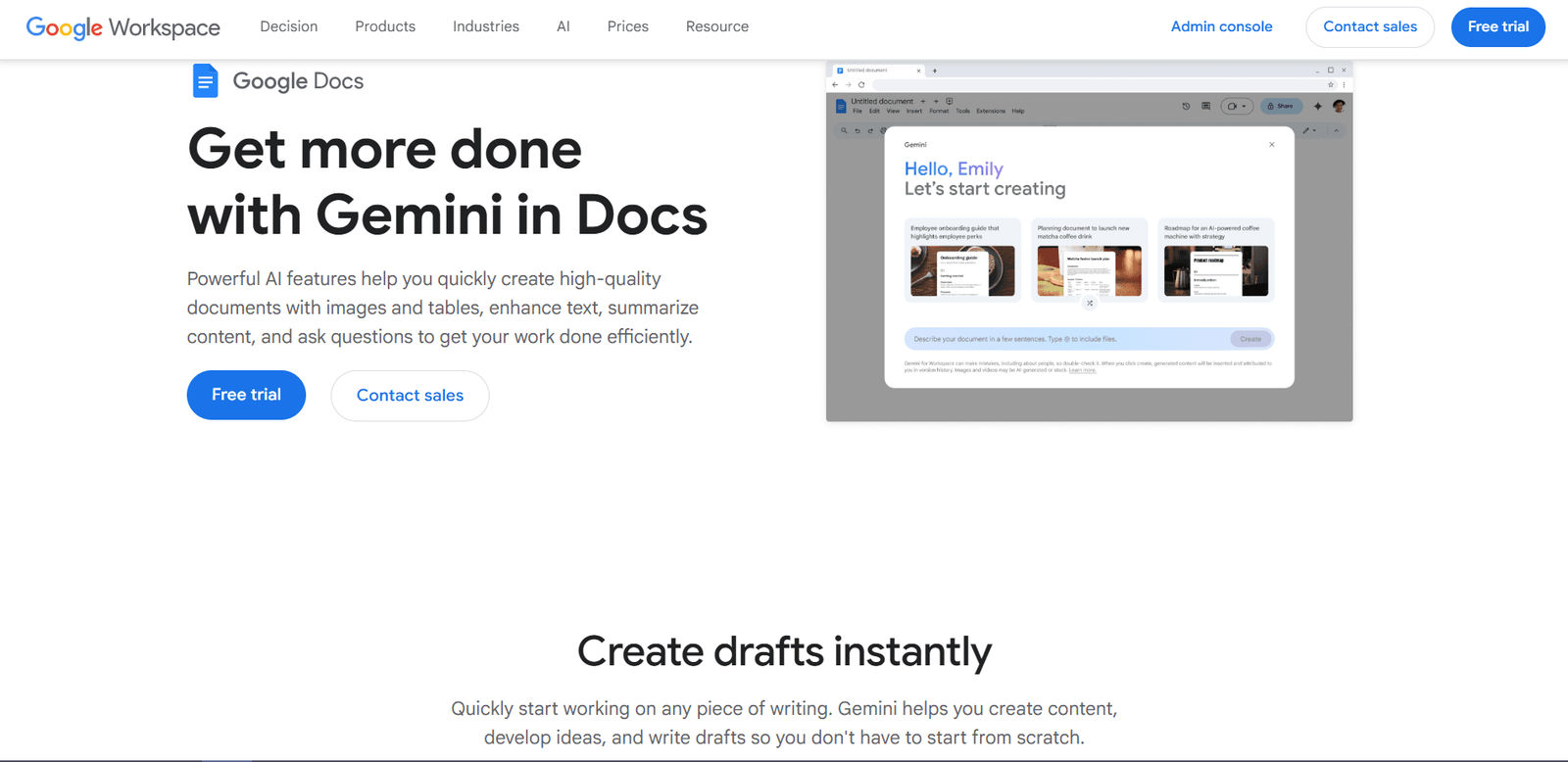
Suitable for: Google Docs, drafts, proposals, projects, summaries, personalization.
Gemini in Google Docs assists its users in drafting, summarizing, editing and organizing their content right from the Google Workspace environment. It is appropriate for organizations which maintain their documents through Google Docs, Drive, Gmail, Meet, and Chat.
It can be utilized by a team for drafting an initial version of their proposal, making it concise, converting notes to a project outline, or refining an existing draft to make it more professional. This happens in the convenience of the Google Docs environment, making the process easy.
Gemini in docs is perfect for users seeking AI writing assistance within Google workspace.
Canva Docs
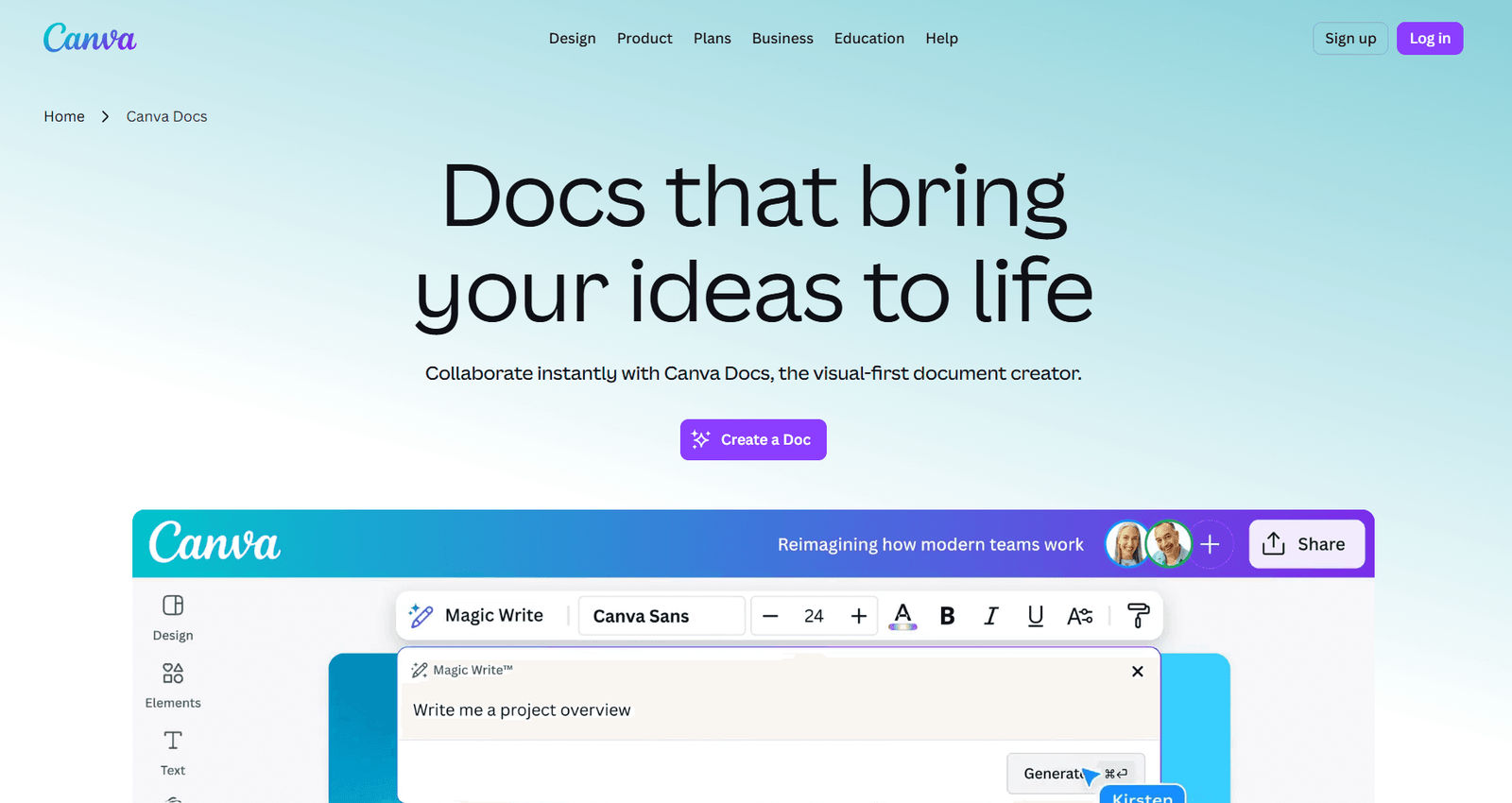
Useful for: visual documents, branded business documents, reports, proposals, memos, and shareable documents.
The Canva Docs application can be considered helpful when creating any document that should look neat, not just be readable. The Canva docs tool integrates document writing with design elements of Canva such as templates and designs, visuals, and sharing options.
Therefore, Canva Docs can help create marketing documents, event proposals, business memos, campaign reports, like client documents, and even internal documents with proper visual organization.
Canva Docs can be useful when you need a quick and visually attractive document designed without creating its layout from scratch.
Notion AI
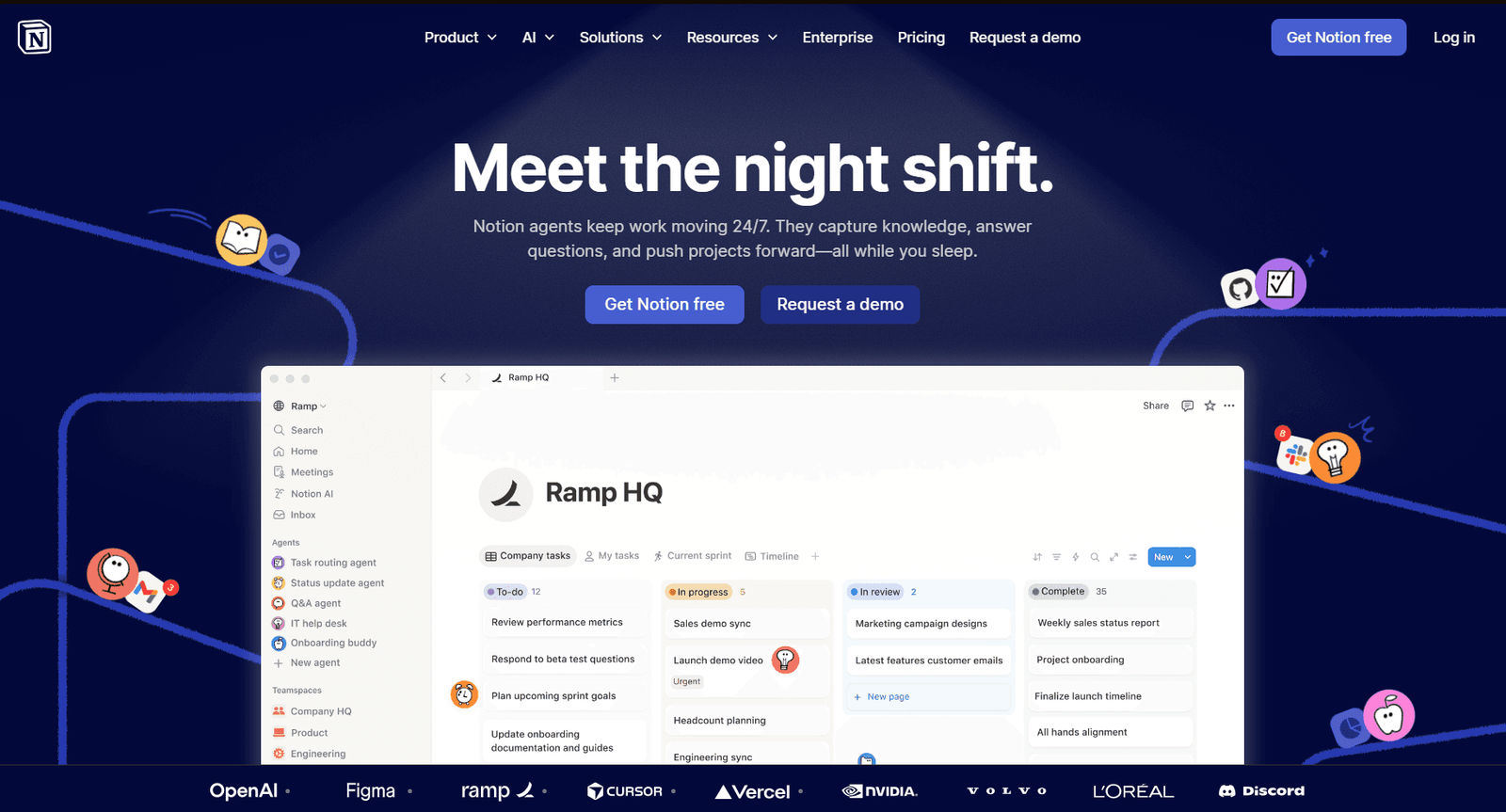
Best for: team documents, knowledge bases, meeting notes, planning documents, and internal wikis.
Notion AI works well when the document lives within a workspace as opposed to being just a stand-alone file. It assists in helping users condense their notes, rephrase certain parts of the document, outline an idea, structure ideas, and generally clear up internal documentation.
For instance, one could use Notion AI to convert a conversation into decisions, action steps, and even a project page within the document itself. It can also assist in cleaning up internal guides, policy drafts, and knowledge based articles.
Notion AI is best used for living documents.
ClickUp Brain
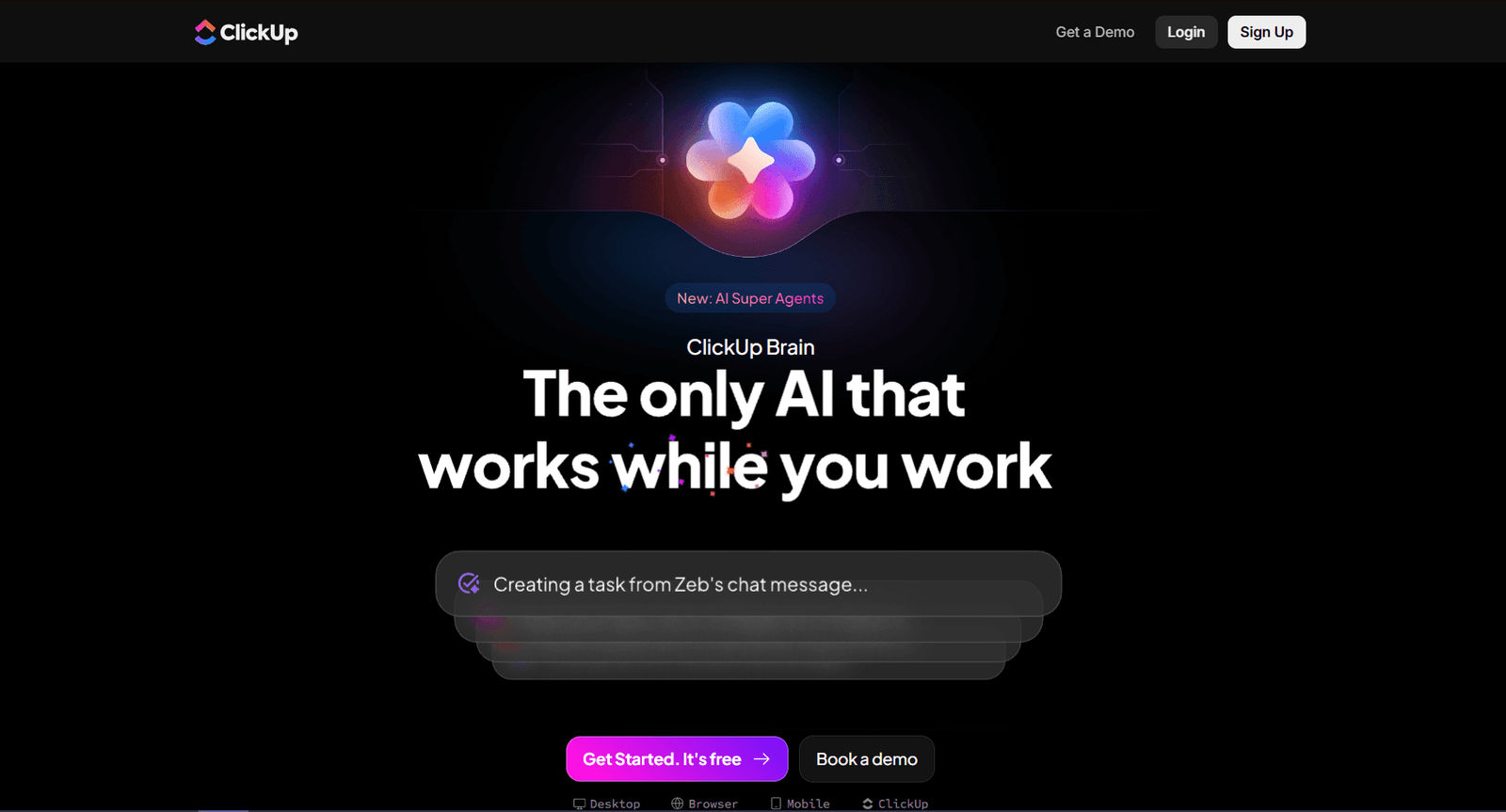
Best for: team documents, project documents, internal documents, summaries, and workflow documents.
ClickUp Brain is helpful for teams that have been organizing their work on ClickUp. It allows you to generate and summarize documents within an entire project management system.
It enables you to summarize task comments, create internal documents, write FAQs, summarize project updates, and summarize team knowledge.
ClickUp Brain is ideal for any document related to tasks, projects, and team workflows.
Templafy
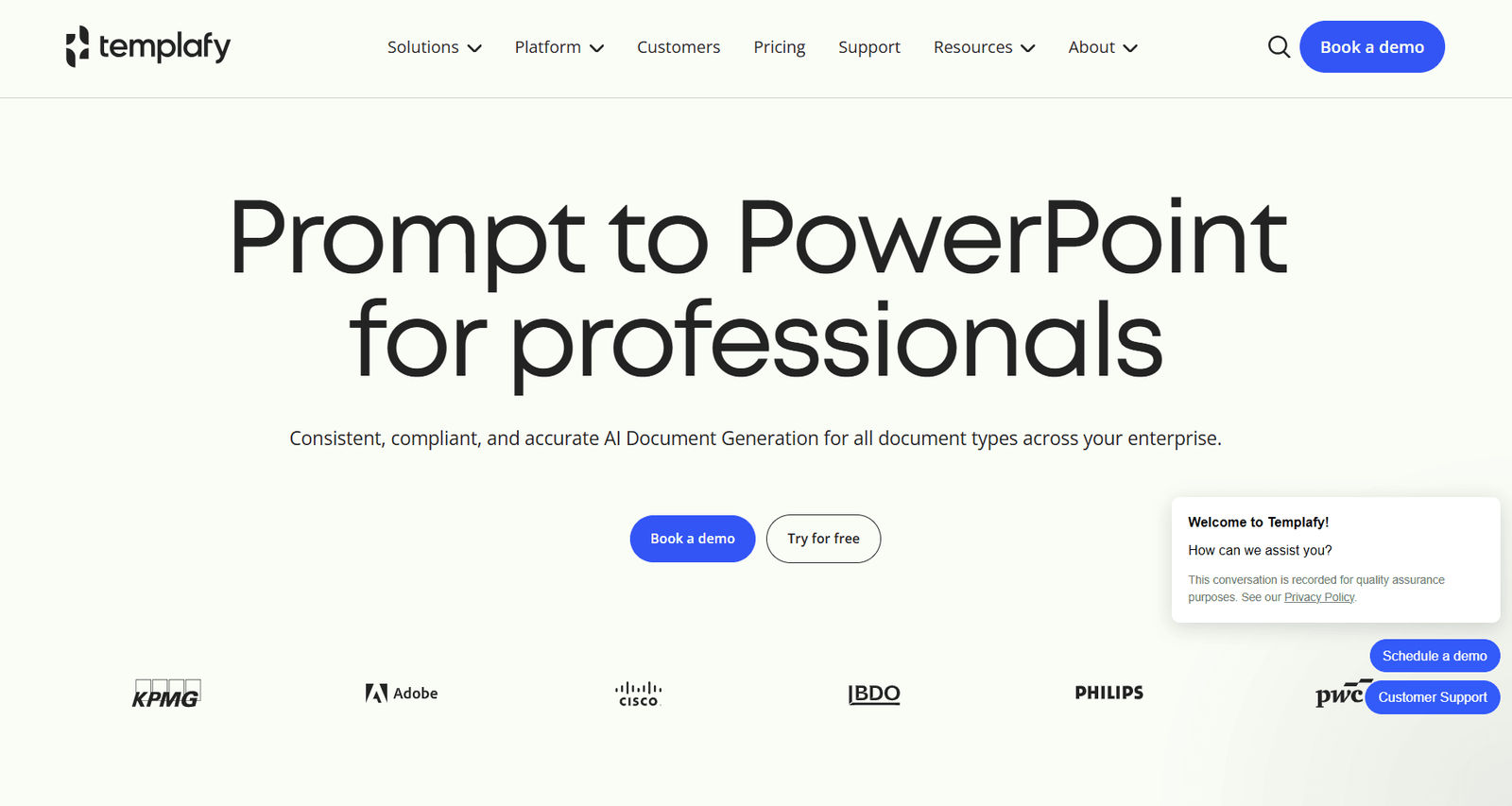
Best suited to: enterprise document automation, branded business documents, proposals, and presentations.
Templafy is meant to be used by large organizations that need their documents to comply with the corporate branding standards. It is used to ensure that the documents created by various departments in a company are consistent in terms of logos, fonts, disclaimers, legal information, slide layouts, and content.
This becomes important in situations where multiple people within an organization are creating documents and there is a need for the correct branding throughout.
Piktochart
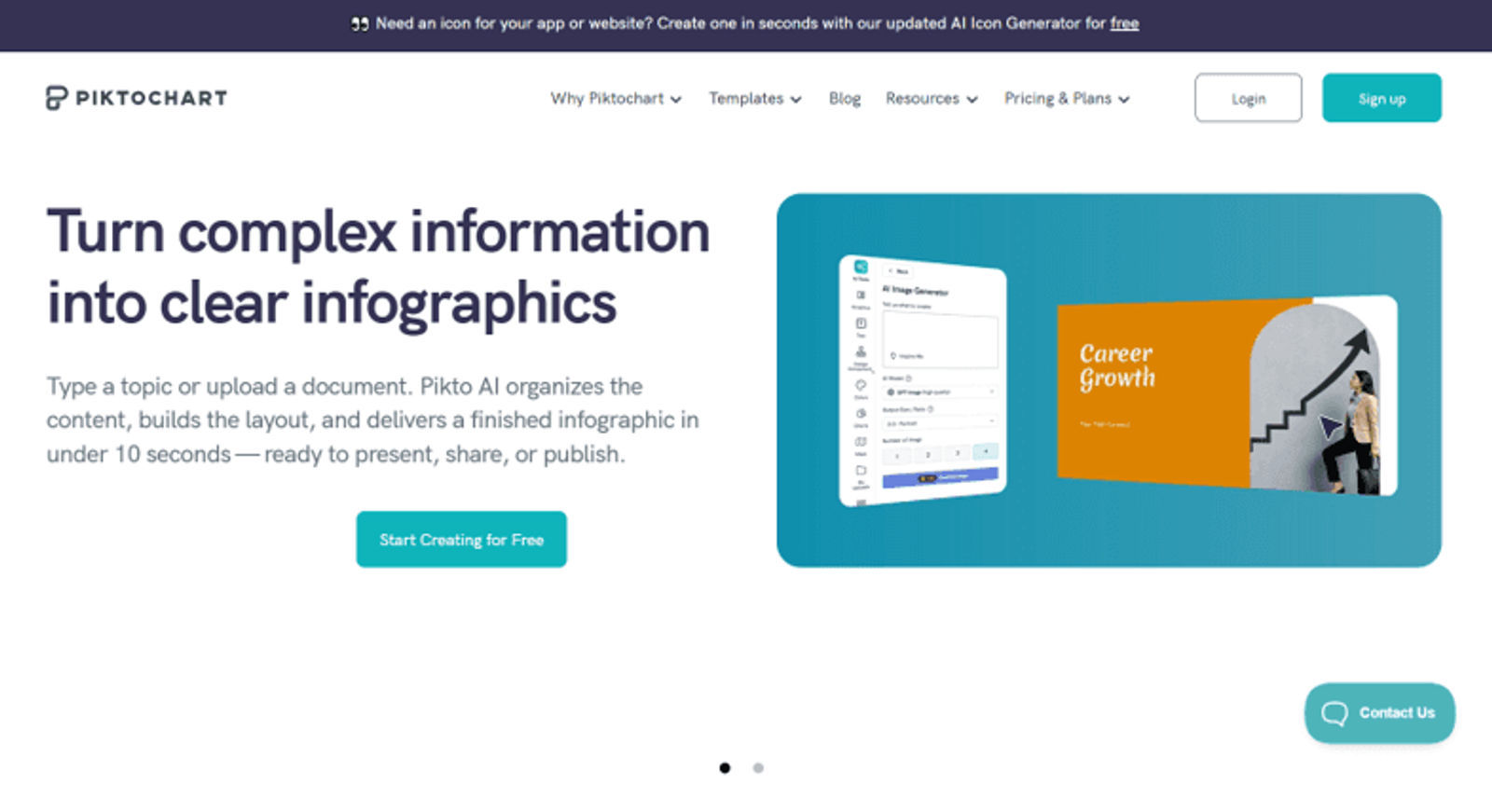
Best used for: reports, proposals, newsletters, infographics, and business documents that require visuals.
Piktochart would be helpful in situations where a document is supposed to not only be readable but also visually appealing. This software enables you to make reports, proposals, newsletters, infographics, and presentations — like business documents using templates and visuals.
For instance, marketers can use Piktochart to make a report out of their campaigns performance. Piktochart is powerful in the creation of visual business documents.
Visme
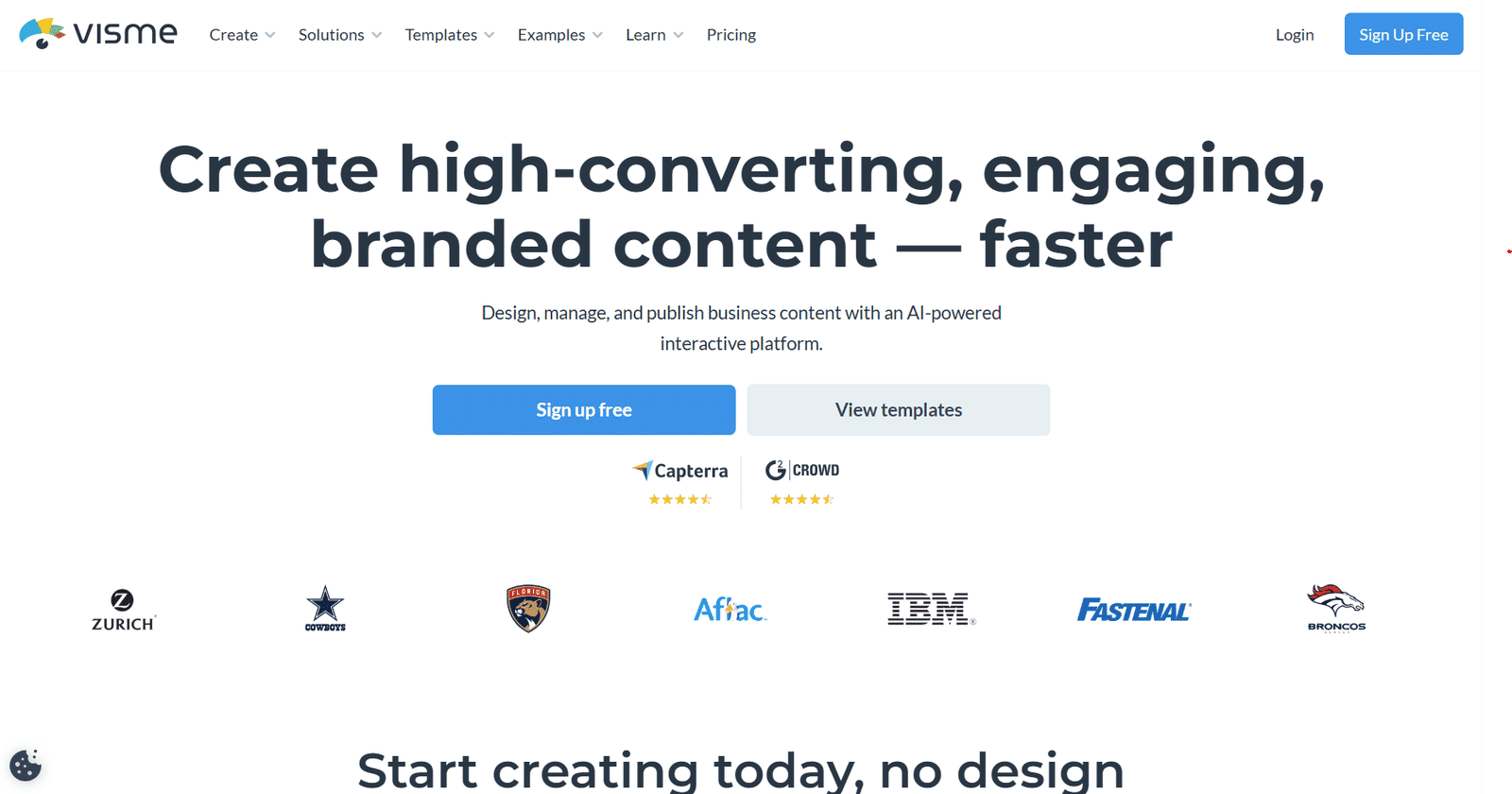
Useful for: branded presentations, reports, newsletters, and interactive documents.
Another good tool for creating visual documents is Visme. This tool is good for making reports, pitch decks, presentations, newsletters, education material, and branded client documents.
It is useful in situations where the visual persuasion of the document is as important as its explanation. For example, a start-up can use Visme to make an investor update document with explanations in written form, charts, screenshots, and visuals.
Visme is suitable for documents which act like both a report and a presentation.
Aidocmaker
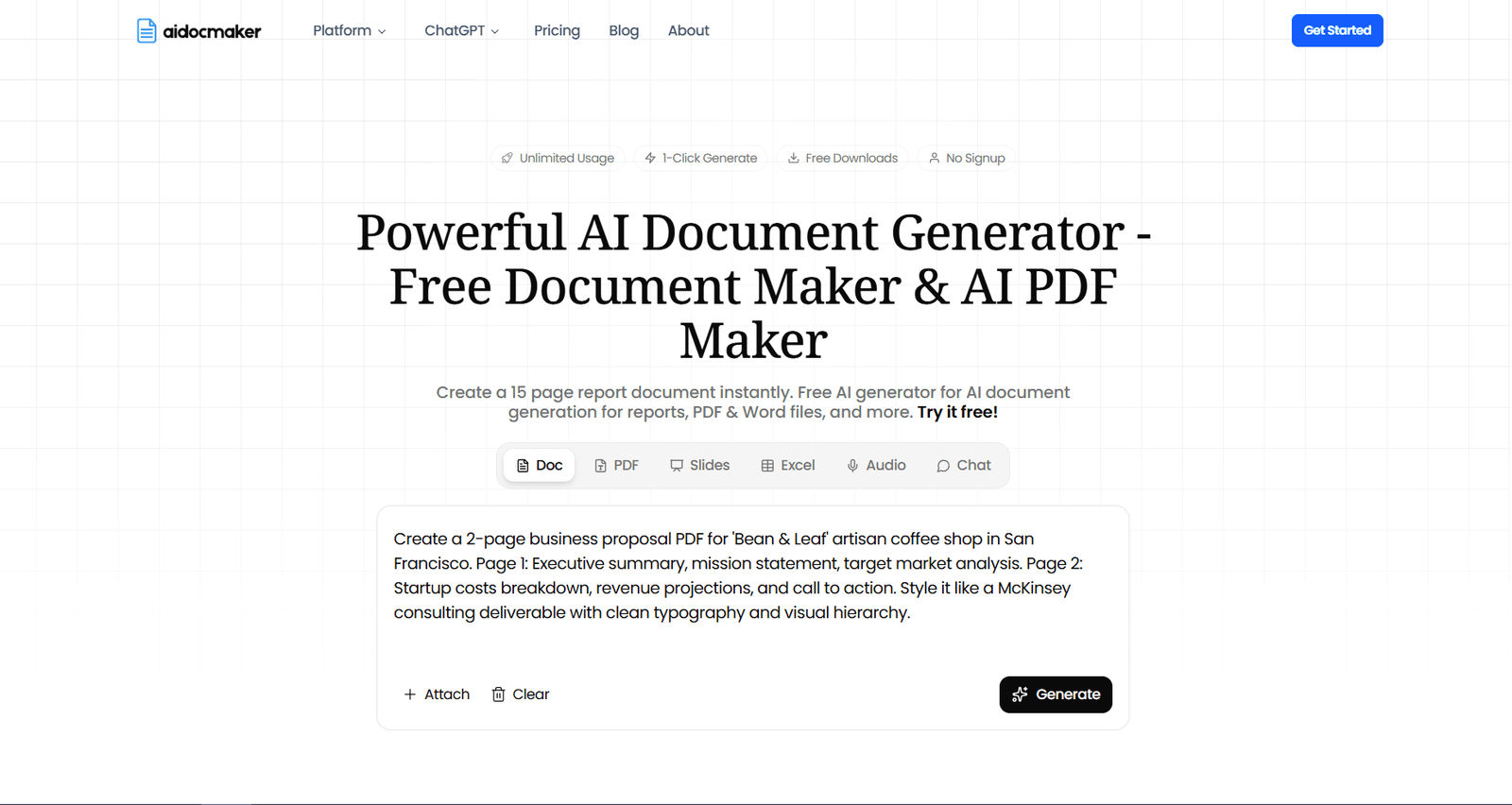
Good for: creating documents altogether, making presentations, reports, proposals, and spreadsheets.
Aidocmaker is presented as an all-in-one AI document maker. It will be helpful for making reports, proposals, presentations, spreadsheets, and other types of business documents.
Its primary benefit is convenience. It allows the freelancer or consultant to make multiple document types within a single tool rather than working on different platforms for proposal, deck, and summary.
Aidocmaker is suitable if you want fast drafts for multiple document types.
Scribe
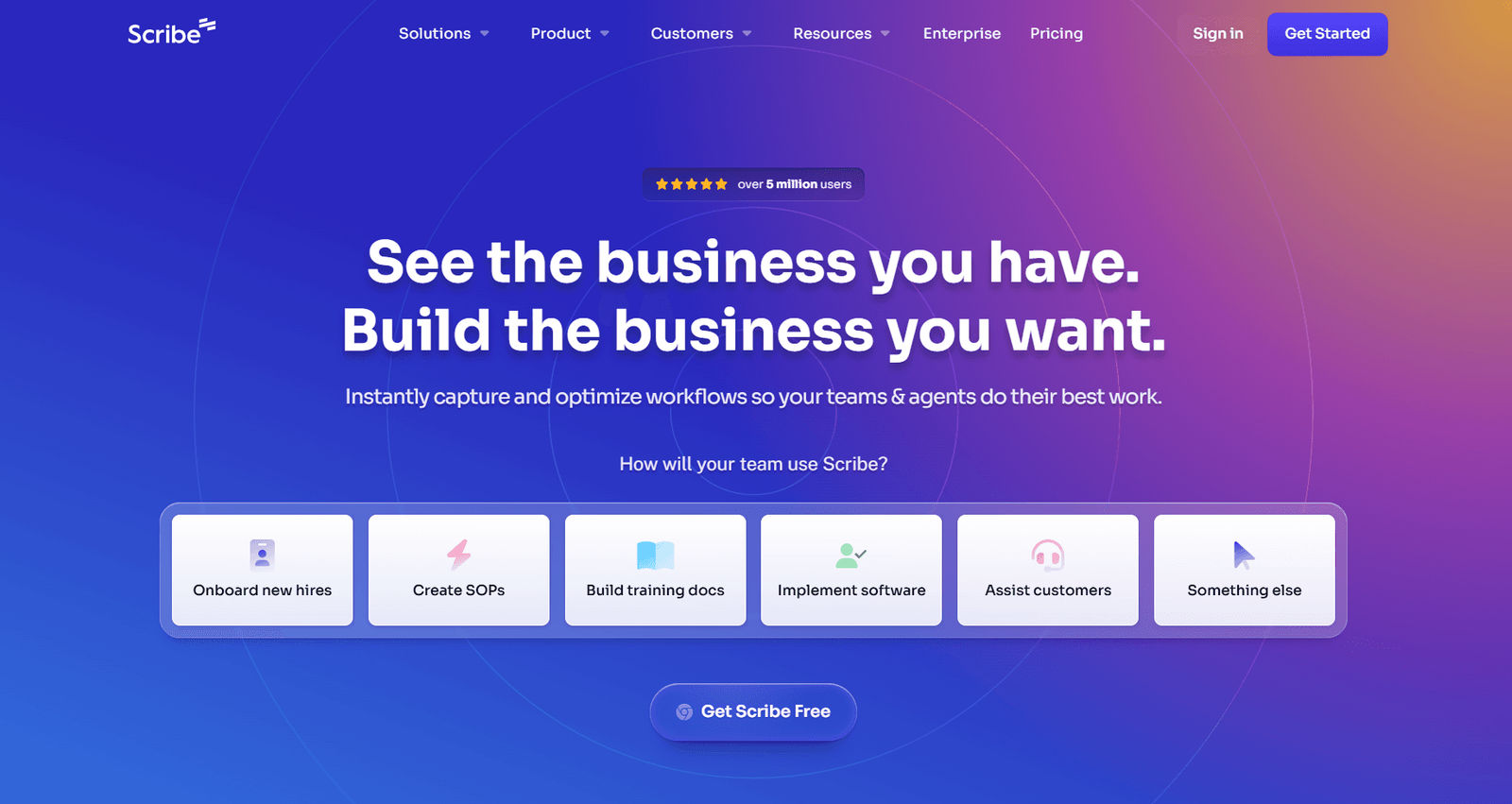
Good for: SOPs, how-to instructions, onboarding guides, tutorials, and process documentation.
Scribe is a document automation tool for processes. Instead of manually typing out each step and taking screenshots, users can simply go through a workflow and Scribe will capture it and generate a step-by-step guide complete with screenshots.
Scribe is good for when the document you create involves process documentation for operations, customer service, onboarding, training for software, internal procedures, and help centers.
Scribe is ideal if your document should include step-by-step instructions.
AI Writing Tool vs AI Document Generator
The primary role of an AI writing tool is to assist in writing words. It can draft paragraphs, rephrase sentences, modify tone, correct grammar, or extend ideas.
An AI document generator does more. It assists in structuring, templates, formatting, exporting, collaboration, data field management, signing, workflow process, visualization, or logic in the specific document.
Examples include Gemini from Google Docs and Microsoft 365 Copilot that are helpful for office drafts. Canva Docs, Piktochart, and Visme will be useful in creating visually-oriented documents. AI Lawyer will assist in legal language and review. Docubee (retiring) and Jotform will be more appropriate for signing and document workflow.
To put it simply, an AI writing tool writes texts while an AI document generator writes documents.
Which AI Tools Are Best for Formatting Documents?
The best tool for formatting depends on where the finished document will live and whose template it has to follow. Here is how the tools on this list handle formatting.
Word documents: Microsoft 365 Copilot. Copilot can create, refine, format, and reorganize content right inside Word. For example, you can ask it to turn a block of plain text into a table with the columns you name.
Google Docs: Gemini. Gemini can draft content from your Drive files. You can also give it an existing Google Doc as a template, and it will generate content that matches that document’s layout, style, and structure.
Company-wide templates: Templafy. Templafy’s document agents build every file from company-approved templates. It suits teams where brand consistency matters more than writing speed.
Designed documents: Canva Docs, Visme, and Piktochart. Canva Docs can start from brand-approved templates and download as PDF or DOCX. Visme and Piktochart turn a prompt into a designed first draft with text and visuals that you can then restyle.
Legal documents: AI Lawyer. AI Lawyer’s templates already follow a legal structure, fill in automatically from your answers, and export to PDF or DOCX.
Forms: Jotform. Jotform’s PDF Editor turns form responses into PDFs built from templates you can match to your brand.
How to Make AI Follow Your Company’s Template
Set up the template first and let the AI work inside it. In Google Docs, point Gemini to an approved document as the template. In Canva, start from a brand-approved template instead of a blank page. If every document across a team must stay on-brand, Templafy builds files from approved templates automatically.
Which AI Document Tool Should You Choose?
| If you need… | Start with… |
|---|---|
| Legal documents or contracts | AI Lawyer, Docubee (retiring), Jotform |
| Signed forms or intake documents | Jotform, Docubee (retiring) |
| Office documents and presentations | Microsoft 365 Copilot, Gemini in Google Docs |
| Visual reports and proposals | Piktochart, Visme, Canva Docs |
| Team docs and knowledge bases | Notion AI, ClickUp Brain |
| Enterprise templates and brand control | Templafy |
| Fast drafts across many formats | Aidocmaker |
| SOPs and process guides | Scribe |
Sole operators will require speed and efficiency. For different types of documents, depending on their needs, Canva Docs, Gemini in Google Docs, Microsoft 365 Copilot, Notion AI, AI Lawyer, and Aidocmaker could be sufficient.
Small companies will require something more functional for document work. Jotform, Docubee (retiring Dec 2026), Piktochart, Visme, Canva Docs, Scribe, and AI Lawyer will perform better if there is a need to use templates, signatures, design, and revision.
Bigger companies will definitely require consistency, privacy, collaboration, versioning, and approval. For bigger companies, Templafy, Microsoft 365 Copilot, ClickUp Brain, Notion AI, and Docubee (retiring Dec 2026) could be more suitable.
Free vs. Paid AI Document Tools: Plans and Pricing
Most tools on this list have a free plan or a trial, but free tiers cap how much you can use the AI. Copilot in Word and Gemini in Google Docs need a paid plan for their AI features.
| Tool | Free AI access | Paid AI access from |
|---|---|---|
| AI Lawyer | 30-day money-back guarantee | $55/week, $159/month, or $759/year; discounted to $27/$79/$379 during promotions |
| Docubee | Service ends December 31, 2026 | Apryse recommends Xodo Sign |
| Jotform | Free Starter plan: 10 signed documents and 100 form submissions per month; first AI-generated document free | From $19/month on the current offer ($39/month regular Bronze price) |
| Microsoft 365 Copilot | One-month free trial | Microsoft 365 Personal: $9.99/month or $99.99/year |
| Gemini in Google Docs | Not included in free Google accounts | Google AI Pro: $19.99/month; Google Workspace Business Standard: $14/user/month billed annually |
| Canva Docs | Docs are free; AI uses are limited each month | Canva Pro: $144/year |
| Notion AI | Trial on Free and Plus plans | Business: $20/seat/month |
| ClickUp Brain | 25 AI uses per workspace (50 for teams over 10 people), no reset | Brain add-on: $9/user/month on top of a paid plan |
| Templafy | Free Individual plan for one user (AI PowerPoint features) | Team: $40/user/month |
| Piktochart | 60 AI credits per month | Pro: $10/member/month billed annually |
| Visme | 10 AI credits per month | Starter: $12.25/month billed annually |
| Aidocmaker | Free Starter plan: 50 requests every 3 hours, 100 premium credits per month | Standard and Premium plans, billed annually, with a 7-day free trial |
| Scribe | Free Basic plan for capturing guides; Scribe AI requires Pro | Pro Personal: from $25/seat/month |
Prices are in US dollars, as listed in October 2026. Vendors change their plans and run discounts often, so it’s worth checking the pricing page before you sign up.
Common Mistakes When Using AI Document Generators
The worst mistake is considering the results provided by an AI as the final document. Even though AI may look good in terms of wording, it might be missing some elements such as details, inventions of facts, or needed formats.
Do not ask AI to make any legal documents without editing afterwards. The contract is not only about words; it can include elements like payments, obligations, confidentiality, termination, disputes, liabilities, and others.
Do not use AI to process any confidential documents without reading the privacy and security terms carefully. It is extremely necessary when working with customer documentation, contracts, personnel files, financial data, strategies, legal documents.
Do not allow AI to make up any missed elements. If the required names, dates, costs, scope, responsibilities, and deadlines are not given, AI will simply make its own assumptions about that.
Do not leave the formatting part till the very end. Any document may require such elements as pricing tables, branding, charts, numbers of paragraphs, signature lines, and others.
FAQ
What are the best AI tools for creating documents?
It depends on the type of the document. The best tools are AI Lawyer for legal documents, Jotform for signed documents (as Docubee is retiring in late 2026), Microsoft 365 Copilot and Gemini for office documents, and Piktochart, Visme, or Canva Docs for visual documents.
Can AI create legal documents and contracts?
Yes, although legal documents have to be reviewed before use. Use the tools that are focused specifically on legal documents, contract drafting or agreement workflow.
Can AI document tools create PDFs?
Yes, some can. It is more likely that Jotform, Canva Docs, Piktochart, Visme and other similar tools will be able to do that rather than AI writing assistance.
Which AI tool is best for business documents?
Depending on what kind of document you want to make, there are Microsoft 365 Copilot, Gemini, Notion AI, ClickUp Brain, Canva Docs, Piktochart, Visme, Jotform, and Docubee (retiring Dec 31, 2026).
Can AI create SOPs and training manuals?
Yes. Scribe can help with SOP development because it analyzes the processes in detail, taking screenshots.