Letter of Intent (LOI) Template: Terms, Timeline & Next Steps

Letter of Intent (LOI) Template: Terms, Timeline & Next Steps

Letter of Intent (LOI) Template: Terms, Timeline & Next Steps

Letter of Intent (LOI) Template: Terms, Timeline & Next Steps

Typical length: 4-6 pages

Length: 4-6 pages

AI Assisted

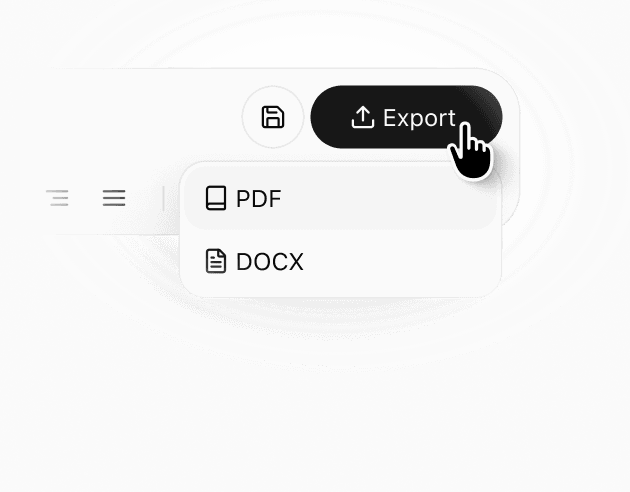
Export: PDF & DOCX

Multi-jurisdiction ready

Multi-jurisdiction

Get your custom agreement in minutes

4.8 Rating

Downloaded 4285 times

Google For Startups

Google For Startups

NVIDIA Inception Program

NVIDIA Inception Program

Letter of Intent (LOI)


This Letter of Intent ("LOI") is made and entered into on [Date], by and between:

Party A: [Full Name / Company Name]
Address: [Address]

and

Party B: [Full Name / Company Name]
Address: [Address]

Collectively referred to as "the Parties."


1. Purpose

The purpose of this LOI is to outline the preliminary understanding between the Parties regarding [brief description of intended transaction or agreement – e.g., potential business partnership, asset purchase, investment, etc.].

2. Proposed Terms

The Parties intend to negotiate and enter into a definitive agreement based on the following terms:

  • [Term 1 – e.g., Scope of Work / Asset to Be Acquired]

  • [Term 2 – e.g., Estimated Purchase Price / Investment Amount]

  • [Term 3 – e.g., Timeline for Completion]
    (Additional terms may be included as needed.)

3. Confidentiality

Both Parties agree to maintain the confidentiality of this LOI and any related discussions, documents, or information unless otherwise agreed in writing.

4. Exclusivity (if applicable)

[Optional clause] Party B agrees not to enter into negotiations with any other party regarding a similar transaction for a period of [number] days from the date of this LOI.

5. Non-Binding Nature

This LOI is non-binding and does not create any legal obligation on either Party, except for Sections 3 (Confidentiality), 4 (Exclusivity), and 6 (Governing Law), which shall be binding.

6. Governing Law

This LOI shall be governed by and construed in accordance with the laws of [State/Country].

7. Good Faith Negotiations

The Parties agree to engage in good faith negotiations to finalize a mutually acceptable definitive agreement.

IN WITNESS WHEREOF, the Parties have executed this Letter of Intent on the date first written above.


Party A Signature
Name:
Title:


Party B Signature
Name:
Title:
Letter of Intent (LOI)


This Letter of Intent ("LOI") is made and entered into on [Date], by and between:

Party A: [Full Name / Company Name]
Address: [Address]

and

Party B: [Full Name / Company Name]
Address: [Address]

Collectively referred to as "the Parties."


1. Purpose

The purpose of this LOI is to outline the preliminary understanding between the Parties regarding [brief description of intended transaction or agreement – e.g., potential business partnership, asset purchase, investment, etc.].

2. Proposed Terms

The Parties intend to negotiate and enter into a definitive agreement based on the following terms:

  • [Term 1 – e.g., Scope of Work / Asset to Be Acquired]

  • [Term 2 – e.g., Estimated Purchase Price / Investment Amount]

  • [Term 3 – e.g., Timeline for Completion]
    (Additional terms may be included as needed.)

3. Confidentiality

Both Parties agree to maintain the confidentiality of this LOI and any related discussions, documents, or information unless otherwise agreed in writing.

4. Exclusivity (if applicable)

[Optional clause] Party B agrees not to enter into negotiations with any other party regarding a similar transaction for a period of [number] days from the date of this LOI.

5. Non-Binding Nature

This LOI is non-binding and does not create any legal obligation on either Party, except for Sections 3 (Confidentiality), 4 (Exclusivity), and 6 (Governing Law), which shall be binding.

6. Governing Law

This LOI shall be governed by and construed in accordance with the laws of [State/Country].

7. Good Faith Negotiations

The Parties agree to engage in good faith negotiations to finalize a mutually acceptable definitive agreement.

IN WITNESS WHEREOF, the Parties have executed this Letter of Intent on the date first written above.


Party A Signature
Name:
Title:


Party B Signature
Name:
Title:
Get your complete
agreement in minutes

Select template illustration
Select a template

Each template already follows legal structure and best practices.

Provide details illustration
Provide details

The agreement is automatically filled and adapted to your inputs.

Review & download illustration
Review & download

Check the generated document, make edits if needed, and download a ready-to-use agreement.

Details

Learn more about

Letter of Intent (LOI) Template: Terms, Timeline & Next Steps

Click below for detailed info on the template.
For quick answers, scroll below to see the FAQ.

Click below for detailed info on the template.
For quick answers, scroll below to see the FAQ.

Frequently asked · Business & deal structuring

Letter of Intent (LOI) · Seven deal types, binding vs non-binding clauses

Seven questions to settle before drafting an LOI, plus the variant matrix that decides which clauses you actually need. The biggest LOI mistake is treating "non-binding" as if it means nothing legally enforceable: most LOIs include three or four binding provisions that survive even when the deal collapses.

01 Basics

What is a letter of intent (LOI)?

An LOI is a written statement of the principal terms on which two parties intend to negotiate a definitive agreement, signed by both and dated. It is the bridge document between a handshake and a contract.

The LOI does three jobs: it forces both sides to agree on price and the structural deal terms (what is being bought, by whom, for how much, by when), it sets ground rules for the negotiation process itself (exclusivity, standstill, confidentiality, deposit), and it gives both sides a document they can take to their boards, lenders, advisers, or counsel.

The persistent misunderstanding: an LOI is rarely "all non-binding". Almost every well-drafted LOI is partially binding (the process clauses) and partially non-binding (the deal terms). That mix is intentional and is what makes the LOI useful.

02 Why it matters

Why do you need a letter of intent?

Three reasons, each meaningful in real-world deals.

  • It uncovers deal-killers early. Many transactions fall apart because the parties had different assumptions about price, structure, or timing. An LOI surfaces these in 10-30 days, before either side has spent six-figures on due diligence and legal fees.
  • It enables third-party financing. Banks, investors, and boards will not approve transactions on a handshake. An executed LOI is the standard prerequisite for committed financing, board consent, or external advisor engagement.
  • It creates negotiating leverage and a baseline. Anything in the LOI is the new floor. Sellers cannot drop price below the LOI price without restarting; buyers cannot strip out terms they agreed to without giving something up. The document anchors the deal.
03 Use case

When should I use a letter of intent?

Use one whenever the deal is large enough or complex enough that the definitive agreement will take more than two weeks to draft and review. See the seven variants in the BONUS section for specific scenarios.

Common triggers for using an LOI rather than going straight to a definitive contract:

  • M&A: any asset purchase, stock purchase, or merger transaction
  • Real estate: commercial leases, commercial purchase contracts above local thresholds, ground leases
  • Employment: executive offer letters that include equity, severance, non-compete, or claw-back provisions
  • Joint ventures, partnerships, distribution agreements, franchises
  • Significant supplier contracts (long-term supply, exclusive distribution, OEM agreements)
  • Education: admissions LOIs (especially graduate, professional school), scholarship awards, recruiting commitments
  • Investment: a term sheet for VC or angel investments (technically a term sheet, but functionally equivalent)
04 How-to

How to write a letter of intent?

Six sections, in this order, in 2-4 pages. Anything longer often signals you should be drafting the definitive agreement instead.

  1. Identification. Date, parties (with legal entity names if corporate), and a single reference line identifying the transaction.
  2. Deal terms (non-binding). Numbered list of the principal commercial terms: what is being transferred or agreed, price or consideration, payment structure, closing conditions, key economic terms. Explicitly label this section "non-binding" or "subject to definitive agreement".
  3. Process and timing (often binding). Diligence period, exclusivity window, target signing date, target closing date, milestone events.
  4. Binding provisions, clearly labelled. Confidentiality, exclusivity/no-shop, expense allocation, standstill (M&A), break-up fee or escrow, choice of law and venue, and (in some jurisdictions) good-faith negotiation duty.
  5. Survival clause. Which sections survive if the deal does not close. Typically all binding provisions plus confidentiality and dispute-resolution.
  6. Signatures. Wet-ink or qualified electronic signature, with both parties' titles and dates.
05 Binding force

Is an LOI binding or non-binding?

Both, in different parts of the same document, and which is which depends on the exact language used, not a label at the top. Courts in Delaware, New York, California, Texas, and elsewhere have repeatedly held that a "non-binding" LOI was in fact binding because the language created enforceable obligations.

The binding-by-default provisions in most LOIs:

  • Confidentiality. Almost always binding; survives the LOI itself.
  • Exclusivity / no-shop. Binding during the stated period; courts enforce these strictly.
  • Standstill (M&A; prevents the buyer from accumulating shares).
  • Expense allocation. Who pays which advisor and what happens to unused retainers.
  • Choice of law and venue. Binding from signing.
  • Duty to negotiate in good faith. Recognised in NY, DE, IL and elsewhere; can be implied even when not stated.

The non-binding-by-default provisions:

  • Price, deal structure, closing conditions, and other commercial terms, IF clearly labelled "subject to definitive agreement" or "non-binding".

Always specify which provisions are binding and which are not, in a dedicated section. The Delaware Chancery Court and the NY Court of Appeals have both held that omitting this language can convert an entire LOI into a binding agreement.

06 Exclusivity

How long should the exclusivity window be?

Tied to the realistic time to negotiate and sign the definitive agreement. Typically 30 to 90 days, with M&A increasingly trending toward 45 to 60.

Common defaults by deal type (2026):

  • Small M&A (under $25M): 30-45 days exclusivity; due diligence often the bottleneck
  • Mid-market M&A ($25M-$500M): 45-60 days; longer for regulated industries
  • Large M&A ($500M+): 60-90 days, sometimes with extension rights tied to regulatory review (CFIUS, HSR, antitrust)
  • Commercial real estate: 30-60 days, often shorter for income-producing assets, longer for development
  • Employment LOI: usually no exclusivity; the LOI is the offer
  • Joint venture / partnership: 60-120 days; complex deals need time to structure

The 2026 trend across M&A: shorter initial exclusivity (30-45 days) with explicit extension mechanics tied to milestones. Sellers prefer this because it prevents being locked into a buyer who is dragging.

07 Compare

LOI vs MOU vs term sheet, what's the difference?

Three names for substantially the same document, with industry-specific connotations.

  • Letter of intent (LOI). Generic business and M&A term; the most common label in the United States for commercial transactions.
  • Memorandum of understanding (MOU). Preferred in government, non-profit, and international transactions; sometimes considered more diplomatic-sounding than "LOI". Functionally identical in legal effect.
  • Term sheet. Standard label in venture capital, private equity, and investment banking. Usually shorter than a full LOI, sometimes a single page of bullet-point terms. Legal effect depends on language, same as LOI.
  • Heads of agreement. Common in the United Kingdom and Australia; equivalent to LOI.

Whichever name you use, the legal analysis is the same: courts look at the language, not the heading. "This LOI is non-binding" at the top is not enough; the operative provisions must individually be labelled binding or non-binding.

08 Customise

Need a customized letter of intent?

Use AI Lawyer to generate one tailored to your deal type. Pick the variant (M&A, real estate, employment, partnership, admission, scholarship, supplier), set the parties, the consideration, the timeline; the assistant produces an LOI with the binding/non-binding section properly structured, the right exclusivity period for the deal type, and the standard process protections for that variant. Always have a transactional attorney review before signing on any deal above mid-six-figures in value or involving a regulated industry.

Draft an LOI with the right binding/non-binding split

Free template, seven deal-type variants, with automatic exclusivity-window guidance, standard confidentiality/no-shop language, and a clearly-labelled binding-provisions section.

Use the template

Similar templates

Other templates from

Letters and Notices Templates

Money back guarantee

Free trial

Cancel anytime

AI Lawyer protects

your rights and wallet

🌐

Company

Learn

Terms

©2026 AI Lawtech Sp. z O.O. All rights reserved.

Money back guarantee

Free trial

Cancel anytime

AI Lawyer protects

your rights and wallet

🌐

Company

Learn

Terms

AI Lawtech Sp. z O.O.

©2026

Money back guarantee

Free trial

Cancel anytime

AI Lawyer protects

your rights and wallet

🌐

Company

Learn

Terms

©2026 AI Lawtech Sp. z O.O. All rights reserved.

Money back guarantee

Free trial

Cancel anytime

AI Lawyer protects

your rights and wallet

🌐

Company

Learn

Terms

©2026 AI Lawtech Sp. z O.O. All rights reserved.