


Need a short-term document because a child will stay with another adult for a few days or weeks? The key is not the label on the form, but whether it gives the caregiver the specific authority the situation requires. A school form, a medical consent, and a broader delegation of parental authority are not interchangeable. Choosing a document by name instead of legal function is how families end up with paperwork that a school, clinic, or other institution may refuse to accept.
Disclaimer
This article provides general information, not legal advice, and is written for a U.S. audience. The effect of a private child-care authorization or delegation document depends on state law, the child’s circumstances, the legal rights of the parents or custodians, and the requirements of any school, hospital, or other institution asked to rely on it. Because these documents can affect who may act for a child — and whether that authority will be recognized in practice — legal review is the safer course in disputed, urgent, or high-stakes situations.
TL;DR
-
A temporary guardianship agreement usually refers to a short-term written authorization that lets another adult care for a child for a limited period.
-
It does not automatically create court-ordered custody or permanent legal rights.
-
Some situations need more than one form, especially for school, medical care, or travel.
-
In higher-risk or disputed cases, a private document may not be enough.
-
Choose the form by the caregiver’s actual task, not by the document name alone.
You Might Also Like:
What Is a Temporary Guardianship Agreement?
A temporary guardianship agreement is often used as a practical label for a short-term written document that gives another adult limited authority to act for a child. Depending on state law, the document may take a different legal form, but it usually identifies the caregiver, the scope of authority, and the length of the authorization.
In practice, this kind of document is closer to a temporary delegation of parental authority than to formal court-created guardianship. The Utah Courts guidance on Temporary Delegation of Parental Authority explains that a parent may temporarily delegate authority over a minor child through a specific power of attorney and that doing so does not create guardianship. So the key point is the document’s legal function, not the exact label on the form.
When Might You Need a Temporary Guardianship Document?
When a Parent Will Be Away for a Short Period
A temporary document becomes useful when a parent will be unavailable long enough that another adult may need written authority, not just verbal permission. Common examples include extended travel, hospitalization, recovery, or another family emergency.
When a Relative or Grandparent Is Providing Care
If a child will stay with a grandparent, aunt, uncle, or family friend for days or weeks, a casual note may not be enough. The more the caregiver is expected to do, the more important it becomes to define that authority in writing.
When School or Medical Access Matters
Problems usually appear when a caregiver needs to speak with a school, sign routine forms, pick up the child, or help with medical treatment. The Nebraska Judicial Branch guidance on Temporary Delegation of Parental Powers describes this kind of document as one used when another adult may need authority over medical treatment, school enrollment, or similar matters during a parent’s expected absence.
When a Family Needs Structure Without Immediate Court Action
Some families need a short-term arrangement quickly and without filing a case right away. A private document may help when the adults agree, the arrangement is temporary, and no immediate custody dispute is involved. Texas guidance on nonparent care also explains that a parent can authorize another adult to make decisions for a child without going to court in some situations.
Temporary Guardianship Agreement vs. Similar Documents
A temporary guardianship agreement is only one possible label for a short-term child-care authorization. Other documents may be limited to a narrower task, such as medical treatment, travel, or proof of facts, while court-based documents are designed to create formal, enforceable authority.
The main difference between these documents is the kind of authority they create. That distinction matters legally because Utah Courts states that a power of attorney for a minor does not create guardianship, which is why a private delegation form should not be treated the same way as a court order.
Quick picker
-
Need short-term caregiving authority by agreement?
Use a temporary guardianship agreement or a similar private delegation form. -
Need broader parent-delegated authority over routine decisions?
Use a guardianship power of attorney form, if your state provides one. -
Need only treatment authority?
Use a medical consent form for a minor. -
Need written consent for the arrangement itself?
Use parental consent for minor guardianship. -
Need a simple supporting document?
Use an affidavit of guardianship or a temporary guardianship letter, depending on the situation. -
Need enforceable authority during conflict or a dispute?
Use a court-based temporary guardianship or custody order.
| Document | What it is | Best used for |
|---|---|---|
| Temporary Guardianship Agreement | A private short-term caregiving authorization | A child staying with another adult for a limited period |
| Guardianship Power of Attorney Form | A parent’s delegation of specific powers | School, routine care, and other defined decisions |
| Affidavit of Guardianship (Temporary) | A sworn factual statement | Confirming status or supporting another form |
| Medical Consent Form for Minor | A treatment authorization | Doctor visits, urgent care, or emergencies |
| Parental Consent for Minor Guardianship | Written parental consent to a temporary care arrangement | Situations where consent itself must be clearly documented |
| Temporary Guardianship Letter | A simple written authorization | Low-risk situations where a basic letter is enough |
| Court-based temporary guardianship / custody order | A judge-issued order | Disputes, contested authority, or high-risk situations |
Similar forms can create very different kinds of authority. The right choice depends on what the caregiver needs to do and how much legal weight the document must carry.
What Authority Can a Caregiver Have Under a Temporary Delegation?
A temporary guardian may be allowed to speak with the child’s school, sign routine school forms, pick up the child, consent to ordinary medical care, manage prescriptions, and make day-to-day care decisions — but only if the document clearly grants those powers. The U.S. Children’s Bureau’s Child Welfare Information Gateway explains that most states let parents give kin caregivers some temporary decision-making authority through power-of-attorney laws.
How Broad Can That Authority Be?
Sometimes the authority is narrow. A parent may authorize only school contact and medical treatment during a 10-day trip. In another case, the document may cover most routine care for several months. Utah Courts explains that a parent may delegate all authority or only some authority over a minor child. That is why the exact powers written into the form matter more than the title on the document.
Where Does That Authority Stop?
A private caregiving document can help with school, healthcare, and daily care, but it does not turn the caregiver into a court-appointed guardian. Utah Courts also states that this kind of power of attorney does not create guardianship. It may expand what the caregiver can do in practice, but it does not replace a court order where formal or enforceable authority is required.

Format for a Temporary Guardianship Agreement
A usable temporary guardianship agreement should look like a document a school, clinic, or other third party can verify quickly and rely on.
-
The parent, caregiver, and child are identified clearly so no one has to guess who the document covers. Use full legal names, current contact details, and the child’s date of birth.
-
The delegated authority is stated in concrete terms so the caregiver knows what they may actually do. Spell out powers such as school pickup, school records, routine medical care, prescriptions, or travel consent. The Virginia statutory form for delegating parental or legal custodial powers is useful here because it names powers instead of hiding them behind vague wording.
-
Any limits are written directly so the document does not imply authority the parent never meant to give. If the caregiver may handle school matters but not out-of-state travel or major medical decisions, say that plainly.
-
The time period is fixed so the authorization is visibly temporary. Add a start date and end date. Virginia law also limits this type of delegation to no more than 180 days.
-
Emergency details are included so the form can work in a real situation. Add emergency contacts and, where relevant, the child’s doctor, insurance information, and school details.
-
The document explains how the delegation can end early so the parent keeps control over the arrangement. The Nebraska Judicial Branch instructions for Temporary Delegation of Parental Powers note that the parent may revoke the delegation before the stated end date by written notice.
-
The signature block is complete so another institution has a reason to trust the document. Include signatures, dates, printed names, and notarization where required.
A weak title rarely ruins the document by itself. Missing powers, dates, or signatures usually do.
When a Private Agreement Is Not Enough
A private agreement is enough for routine temporary care only while the adults agree and no one needs court-enforceable authority.
Once custody is disputed, the document reaches its limit. A signed private form cannot decide who has legal authority once another parent objects, a judge is already involved, or more than one state may claim jurisdiction. The Cornell Legal Information Institute overview of the UCCJEA shows why those questions belong to courts, not to private paperwork.
Safety creates a separate limit. This document can authorize temporary care, but it cannot solve a situation where the child needs protection rather than delegated supervision. If abuse, neglect, abandonment, or immediate danger is involved, the issue is no longer who may help with daily care, but what legal or protective action must happen next.
A private form can also fail for a simpler reason: a school, hospital, or other institution may refuse to rely on it and ask for court-issued proof of authority instead.
That is usually the point where a temporary agreement stops being enough and court involvement becomes more likely.
Scenario Templates
People searching for a temporary guardianship agreement are often trying to solve different problems under one label. The safer approach is to sort those problems by function first, because the right starting point is the task the caregiver must perform, not the title of the form.
1. Broad temporary caregiving authority
This category covers situations where another adult may need to handle a wider range of day-to-day decisions for a child for a limited period. That can include school contact, routine care, pickup and drop-off, and other practical matters that go beyond one narrow permission. In this category, the document is meant to support ongoing short-term care, not just one isolated action.
2. Limited-purpose authority
This category fits situations where the adult does not need broad caregiving powers, only permission for one defined issue. That may involve medical treatment, school-related action, travel, or another single task. If the need is narrow, the authority should stay narrow too, because a broader document creates complexity without solving a real problem.
3. Supporting consent or proof
Some situations call for a supporting document rather than the main authorization itself. Here the purpose is to confirm consent, verify facts, or strengthen another caregiving packet with something more formal. These documents matter because they help prove the arrangement, but they do not usually create the main authority on their own.
4. Court-based authority
This category applies when private paperwork is no longer enough. That usually happens when there is conflict, an existing custody order, an objection from another parent, or a third party that will accept only court-issued proof. In that setting, the legal problem is no longer temporary care but enforceable authority.
This structure keeps similar documents from being mixed together and makes the choice more practical from the start.
AI vs. Lawyer
Some situations are simple enough for a template. Others are risky enough that paying for legal review is cheaper than dealing with delay, refusal, or conflict later.
You can start at $0 with a free court or self-help form, such as the Utah Courts page on Temporary Delegation of Parental Authority. For lawyer help, Clio reports an average U.S. lawyer hourly rate of $349 for 2025, which gives a reasonable baseline for estimating review or drafting cost.
| Option | Best for | Typical spend / how to read it | Main risks |
|---|---|---|---|
| DIY / AI-assisted template | Agreed short-term care, no conflict, clear facts | $0+ if you use a free court or self-help form; higher only if you pay for a platform or add-ons | Wrong state form, vague powers, signing defects |
| Lawyer review of your draft | You already have a draft but want a state-specific check | Usually 0.5–1.5 lawyer hours; at $349/hour, that is roughly $175–$525 | Review still depends on the quality of the starting draft |
| Lawyer-drafted document + strategy | Existing order, cross-state risk, likely refusal by school or hospital, or conflict | Usually 2–4+ lawyer hours; at $349/hour, that is roughly $700–$1,400+ | Higher cost, but lower drafting risk |
The cheaper option is only cheaper if the form works the first time. These figures are planning estimates, not quotes. State-specific requirements, conflict between adults, or refusal by a school or hospital can increase the amount of legal work the situation actually needs.
Template Library

Use the library below to match the situation category to the most relevant starting documents. The goal is to choose the closest template set first, then tailor the draft to the facts.
| Category | Primary decision | What it helps prevent | Templates |
|---|---|---|---|
| Broad temporary caregiving authority | Decide whether the caregiver needs authority over several routine child-care decisions, not just one narrow task | Using a limited-purpose form when the adult may need wider short-term authority for daily care | - Temporary Guardianship Agreement - Guardianship Power of Attorney Form |
| Limited-purpose authority | Decide whether the problem is limited to one issue, such as medical care, travel, school pickup, or another single permission | Using a broader guardianship-style template when the need is actually narrow | - Medical Consent Form for Minor - Temporary Guardianship Letter |
| Supporting consent or proof | Decide whether the main need is to confirm consent or document facts rather than create the main authority itself | Treating a supporting document as if it were the full authorization | - Parental Consent for Minor Guardianship - Affidavit of Guardianship (Temporary) |
| Court-based authority | Decide whether the situation already requires enforceable authority, judicial involvement, or proof a third party will actually accept | Relying on private paperwork when the real issue already calls for court action | - Petition for Temporary Guardianship - Petition for Temporary Custody Order |
How to Use a Template Safely (Step-by-Step)
A template is safest when it is treated as a starting draft, not as a finished legal answer.
1. Start with the exact task
Do not begin with the title of the form. Begin with the real job the caregiver may need to handle: routine care, school contact, medical consent, travel, or broader short-term care.
If the task is narrow, the authority should stay narrow. If the caregiver may need a wider range of decisions, the document has to say that clearly.
2. Check the rules before editing the template
The legal name and format of this document may vary by state. State rules may also control duration, notarization, and signing requirements.
That is why it helps to check a court or state source before filling anything in. The Utah Courts page on Temporary Delegation of Parental Authority is a good example of how state-specific these forms can be.
3. Confirm who actually has authority to sign
This is where many workable-looking templates fail. If both parents still have legal rights, one signature may not be enough in practice.
If there is already a custody order, divorce case, or another parent with active rights, the signing issue is not just clerical. It affects whether the document can be relied on at all.
4. Fill in the core details with no gaps
Use full legal names, list each child separately, and give the document a clear start date and end date. Then define the authority in plain language: school pickup, school records, routine care, medical treatment, prescriptions, travel, or other named decisions.
The authority clause is the part most likely to decide whether the document works or fails. If the caregiver may do something, say so directly. If the caregiver may not do something, say that too.
5. Sign it correctly and send it where it will be used
A good draft can still fail if it is signed incorrectly or never reaches the school, clinic, caregiver, or other institution involved. Notarization and execution details matter for the same reason names and dates matter: they make the form easier to trust.
The Virginia statutory form for delegating parental or legal custodial powers shows how formal requirements can be built into the document itself. A template is most useful when it is completed correctly and delivered before anyone has to act on it.
Common Mistakes to Avoid
Even a legally decent template can fail in practice if it is used mechanically. This section focuses on drafting mistakes that make a workable document harder to trust or use.
Trying to solve every problem with one form
Some people try to build one document that covers school, medical care, travel, emergencies, and every possible future issue at once. That usually makes the draft harder to read and harder to trust. A form becomes weaker when it tries to do too many jobs at the same time.
How to fix: draft the document for one real caregiving arrangement, not for every scenario that might happen.
Leaving old names, dates, or leftover clauses in the draft
Templates often carry over the wrong child’s name, an old caregiver, expired dates, or clauses copied from another version. These mistakes make the document look unreliable before anyone even checks the substance.
How to fix: review the final draft line by line and check every name, date, and clause against the actual arrangement.
Making the document broader than the adults really agreed to
Sometimes the wording gives the caregiver more authority than anyone actually expects them to use. That can create friction later, especially if the arrangement was meant to be limited and temporary. A broader document is not always a safer document.
How to fix: keep the authority no broader than the real role the caregiver is expected to perform.
Writing in vague language that sounds formal but says little
Some drafts sound legal enough, but the actual authority remains blurry. Words like “as needed” or “for all necessary matters” may look flexible, yet they leave too much room for guesswork when a school, clinic, or camp reads the form.
How to fix: replace general language with concrete actions: school pickup, routine care, prescriptions, travel consent, or other named decisions.
Forgetting that the document has to work for a third party
A parent and caregiver may both understand what they meant, but the real test comes later. The document may be read by a registrar, nurse, receptionist, camp director, or airline employee who knows nothing about the family. If the form makes sense only to the people who signed it, it is still a weak document.
How to fix: read the draft as if you were a stranger seeing it for the first time and remove anything that depends on context no outsider would know.
Forgetting that the document has a life cycle
A temporary form can become risky after the situation changes. The child may return home, the caregiver may change, the dates may expire, or an old copy may still be sitting with a school or clinic. A document that was correct last month can become misleading later.
How to fix: replace outdated versions, revoke the document clearly when the arrangement ends, and make sure only the current version stays in use.
After Signing
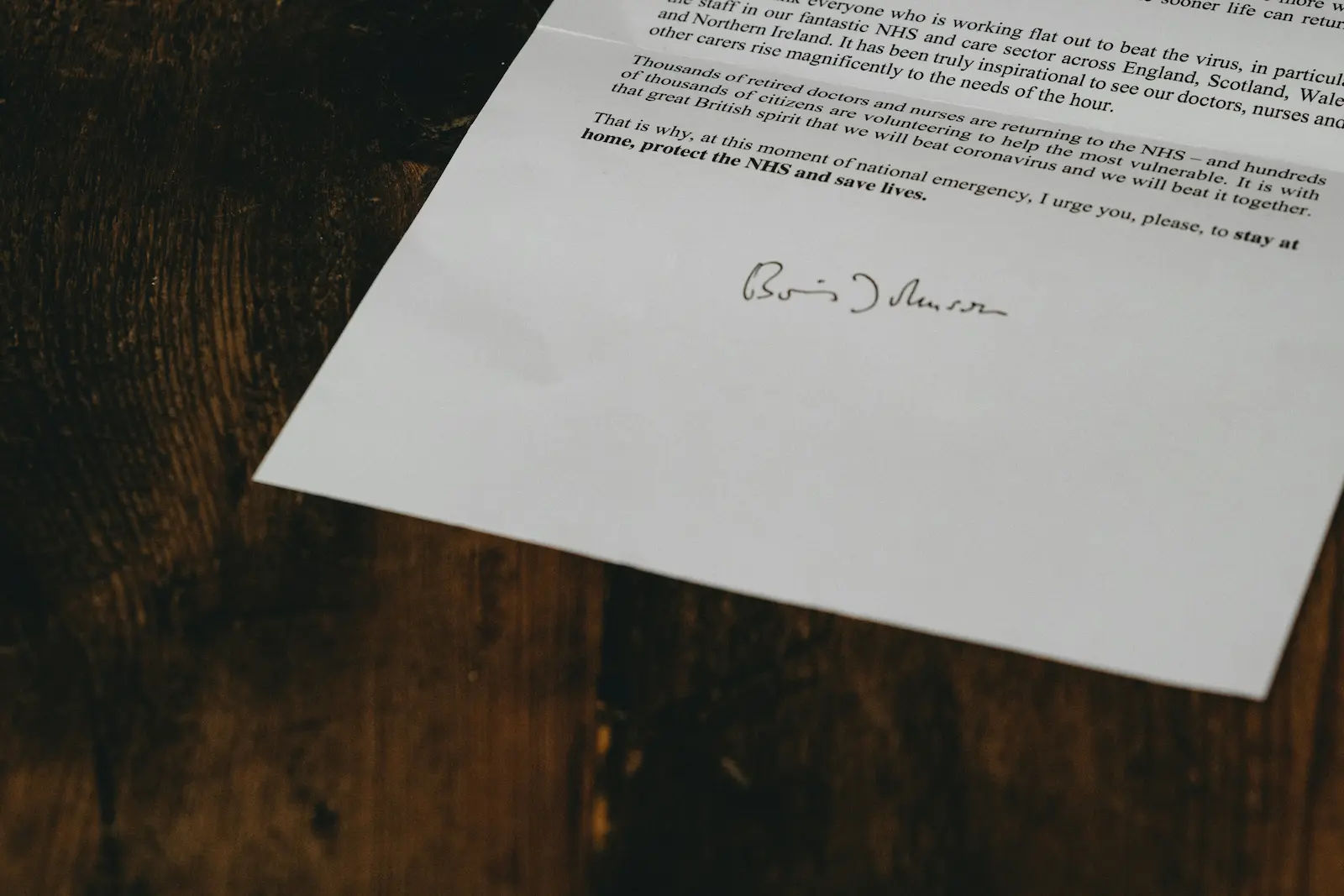
Signing the document is only the start. What matters next is whether the right people have the right version before a problem appears.
1. Send the final version where it may actually be used
Give the signed document to the caregiver first. Then send it to any school, daycare, camp, clinic, or other institution that may need to rely on it.
A form is much less useful when it appears for the first time during school pickup, a clinic visit, or another urgent moment.
2. Check whether each third party will accept it
Do not assume every institution will read the document the same way. A school may accept it, while a hospital or camp may ask for ID, more specific language, or a separate consent form.
A document can fail not because the whole form is wrong, but because one practical detail is missing.
3. Keep one final version in circulation
Temporary-care documents often become messy when several versions stay in use at once. One copy may have the wrong dates, another may include broader powers, and a third may still contain old edits.
Use one clean final PDF and one printable copy, and make sure older drafts are no longer being used.
4. Track the end date and close the document properly
A temporary form can create problems not only when it is missing, but also when it stays in use too long. If the arrangement ends, expired copies should not keep circulating as if they were still valid.
The Utah Courts guidance on Temporary Delegation of Parental Authority notes that a parent may revoke the document and should notify anyone who received a copy.
After signing, the practical test is simple: who has the document, what do they think it allows, and does that authority still exist?
Legal Requirements and Regulatory Context
This section is about the legal rules that can change how a temporary caregiving document works after it is signed. The key legal point is that a private form can delegate some authority, but it cannot override the limits built into state law.
Some powers cannot be delegated at all
A parent may be able to delegate many short-term caregiving powers, but not every decision can be handed over through a private form. For example, Virginia Code § 20-166 allows a parent or legal custodian to delegate powers over a child’s care, custody, or property for a limited time, but it does not allow delegation of consent to marriage or adoption, the performance or inducement of an abortion, or the termination of parental rights. A broad-sounding document can still leave some decisions completely outside its legal reach.
Who must sign may depend on custody status
A form can also fail because the right person did not sign it. Under the same Virginia delegation statute, both parents must execute the power of attorney if they are exercising joint custody. That matters because the signing question is not just paperwork — it depends on who still holds legal rights over the child.
Formalities can be part of legal validity
Notarization, acknowledgment, and statutory-form requirements are not just cosmetic details. Virginia Code § 20-167 requires the statutory delegation form to be signed by the parent or custodian, accepted by the delegate, and acknowledged or verified before a notary. Utah Courts’ guidance on Temporary Delegation of Parental Authority also states that the form takes effect when signed under oath before a notary. In some states, the wrong execution step does not just weaken the form — it can keep it from working as intended.
School authority and medical authority are not the same issue
These two areas often get collapsed together, but the rules are different. For school records, FERPA guidance from the U.S. Department of Education says “parent” can include a guardian or an individual acting as a parent in the absence of a parent or guardian. Medical privacy works differently: HHS guidance on minors and personal representatives under HIPAA explains that HIPAA generally defers to state or other applicable law when deciding whether a parent may access a minor’s records. So a form that helps with school access does not automatically answer the medical-consent or medical-records question in the same way.
Interstate use can trigger a different legal problem
A private document may still help with day-to-day care across state lines, but it does not decide which court has authority if a custody dispute starts later. That issue is governed by the Cornell Legal Information Institute overview of the UCCJEA, which explains the framework courts use to determine jurisdiction and enforce custody orders across state lines. Once the real issue is jurisdiction, the form stops being the main legal question.
The practical takeaway is that these documents do not operate on title alone. Their real effect depends on what state law allows, who still holds custody rights, whether the form was executed correctly, and whether the issue involves school access, medical authority, or interstate jurisdiction.
FAQ
What is a temporary guardianship agreement?
A temporary guardianship agreement is usually a short-term written authorization that lets another adult care for a child for a limited period. It may help with daily decisions, but it does not automatically create court-appointed guardianship.
Is a temporary custody agreement without court legal?
A parent can sometimes sign an out-of-court document that gives a nonparent limited authority to care for a child or make certain decisions. But that is not the same as court-ordered custody, and whether it works depends on state law and the facts — especially if another parent objects, a court order already exists, or a case is pending.
What is the difference between a temporary guardianship agreement and a guardianship power of attorney form?
In practice, these terms can overlap. A guardianship power of attorney usually describes a parent’s formal delegation of specific powers, while “temporary guardianship agreement” is often used more broadly as a practical label for short-term caregiving authority.
Does a temporary guardianship agreement need to be notarized?
Often yes, but state law controls. Utah says the form takes effect when the parent signs under oath before a notary, and Virginia requires signatures to be acknowledged or verified before a notary for legal sufficiency.
Can a medical consent form for minor replace a temporary guardianship agreement?
Only when the real need is limited to treatment consent. If the caregiver may also need school access, travel authority, or broader day-to-day decision-making power, a medical consent form alone is usually too narrow.
Will a school or hospital accept a printable temporary guardianship agreement form?
Maybe, but not automatically. A school may focus on education-related authority, while a hospital may look at treatment authority and state-law consent rules. Acceptance depends on the wording of the form, state law, and the institution’s own requirements.
How long does a temporary guardianship agreement last?
State law varies. Utah limits this kind of delegation to six months, while Virginia generally limits it to 180 days, with a longer rule for some active-duty service members.
When do you need a court order instead of a private agreement?
Usually when another parent objects, a court order already exists, a custody case is pending, or enforceable authority is needed. In Texas, court approval may be required before signing an authorization agreement in some of those situations.
Get Started Today
The fastest way to move forward is to choose the template that matches the caregiver’s real job, not the broadest-sounding form. A clearer starting document reduces delay, confusion, and the risk of using the wrong authority for the situation.
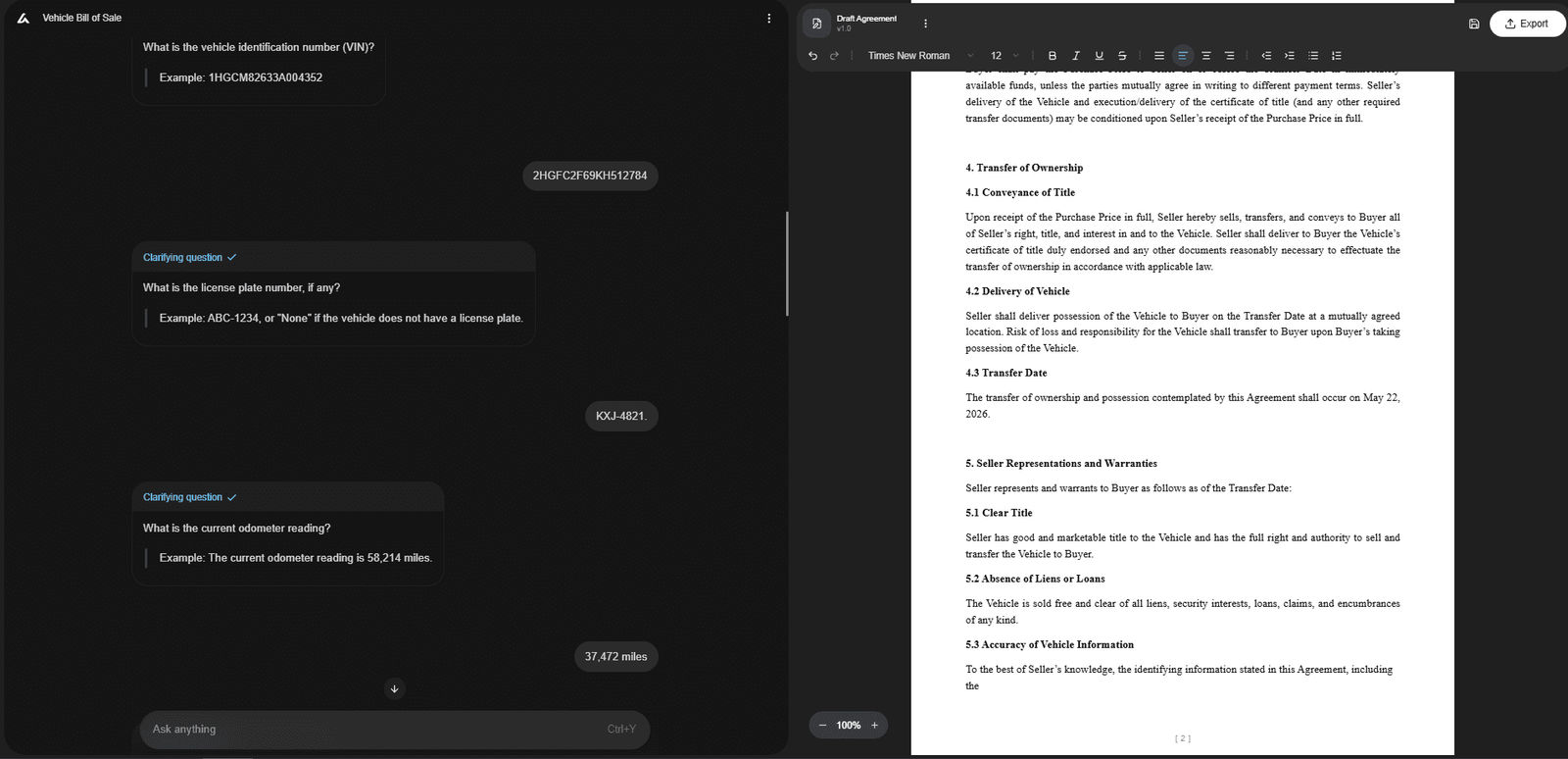
Start with the Temporary Guardianship Agreement Template, or generate a first draft with AI Lawyer and tailor it to the child, caregiver, scope, dates, and state-specific signing rules. If the situation involves conflict, an existing order, or likely refusal by a school or hospital, consider lawyer review before signing.
You Might Also Like:
Sources and References
-
Utah Courts guidance on Temporary Delegation of Parental Authority
-
Utah Code § 75-5-103 on delegation of powers by parent or guardian
-
Nebraska Judicial Branch page on Temporary Delegation of Parental Powers
-
Nebraska Judicial Branch form for Temporary Delegation of Parental Powers
-
Nebraska Judicial Branch instructions for Temporary Delegation of Parental Powers
-
Virginia Code § 20-166 on delegation of parental or legal custodial powers
-
Virginia Code § 20-167 statutory form for delegation of parental or legal custodial powers
-
Virginia Code Chapter 10 full text on delegation of parental or legal custodial powers
-
TexasLawHelp guidance on Authorization for Nonparent Care of a Child
-
TexasLawHelp guide on when court approval is required for an authorization agreement
-
U.S. Department of Education FAQ on who counts as a parent under FERPA
-
Child Welfare Information Gateway factsheet on kinship care and the child welfare system
-
Child Welfare Information Gateway guidance on how to report child abuse and neglect
-
Child Welfare Information Gateway overview of mandatory reporting of child abuse and neglect
-
Cornell Law School Legal Information Institute overview of the UCCJEA