
What is an OEM Agreement?
An OEM Agreement is a contract between a manufacturer and another company that allows the latter to sell products manufactured by the OEM under its own brand name or as part of its offerings.

This OEM Agreement (“Agreement”) is entered into on [Date], by and between:
OEM Manufacturer: [Full Legal Name / Company Name]
Address: [Address]
Contact: [Phone, Email]
Buyer/Brand Owner: [Full Legal Name / Company Name]
Address: [Address]
Contact: [Phone, Email]
Together referred to as the “Parties.”
The Manufacturer agrees to produce and supply the products described in Schedule A (Product Specifications) in accordance with the Buyer’s requirements and branding guidelines.
Buyer shall provide purchase orders specifying quantities, delivery dates, and destinations.
Manufacturer shall confirm acceptance within [X] business days.
Forecasts provided by Buyer are non-binding but used for production planning.
Buyer shall provide purchase orders specifying quantities, delivery dates, and destinations.
Manufacturer shall confirm acceptance within [X] business days.
Forecasts provided by Buyer are non-binding but used for production planning.
Prices shall be set forth in Schedule B (Pricing Terms) and remain valid for [X months/years].
Payment terms: [e.g., Net 30 days from invoice].
Late payments may incur interest at [X%] per month.
Prices shall be set forth in Schedule B (Pricing Terms) and remain valid for [X months/years].
Payment terms: [e.g., Net 30 days from invoice].
Late payments may incur interest at [X%] per month.
Manufacturer shall deliver products in accordance with the agreed schedule.
Risk of loss shall transfer to Buyer upon [delivery FOB shipping point / upon receipt].
Delays caused by force majeure shall not constitute breach.
Manufacturer shall deliver products in accordance with the agreed schedule.
Risk of loss shall transfer to Buyer upon [delivery FOB shipping point / upon receipt].
Delays caused by force majeure shall not constitute breach.
Manufacturer warrants that all products conform to agreed specifications and are free from defects.
Buyer may conduct inspections at Manufacturer’s facilities upon reasonable notice.
Manufacturer warrants that all products conform to agreed specifications and are free from defects.
Buyer may conduct inspections at Manufacturer’s facilities upon reasonable notice.
Buyer retains ownership of trademarks, trade names, and branding used on products.
Manufacturer may not use Buyer’s IP for any purpose other than fulfilling this Agreement.
Any improvements or modifications shall be owned by [specify Party].
Buyer retains ownership of trademarks, trade names, and branding used on products.
Manufacturer may not use Buyer’s IP for any purpose other than fulfilling this Agreement.
Any improvements or modifications shall be owned by [specify Party].
Both Parties agree to maintain confidentiality of technical, business, and pricing information shared under this Agreement.
Manufacturer warrants compliance with all applicable laws and safety standards.
Manufacturer shall indemnify Buyer against claims arising from defective products or non-compliance.
Buyer shall indemnify Manufacturer for claims related to branding or marketing materials supplied by Buyer.
Manufacturer warrants compliance with all applicable laws and safety standards.
Manufacturer shall indemnify Buyer against claims arising from defective products or non-compliance.
Buyer shall indemnify Manufacturer for claims related to branding or marketing materials supplied by Buyer.
Buyer agrees to purchase at least [X units/value] annually. Failure to meet minimum commitments may result in renegotiation or termination.
This Agreement begins on [Start Date] and continues for [X years].
Either Party may terminate for material breach with [30/60] days’ written notice.
Upon termination, outstanding orders shall be fulfilled unless otherwise agreed.
This Agreement begins on [Start Date] and continues for [X years].
Either Party may terminate for material breach with [30/60] days’ written notice.
Upon termination, outstanding orders shall be fulfilled unless otherwise agreed.
This Agreement shall be governed by the laws of [State/Country].
This document contains the full understanding between the Parties and supersedes all prior discussions.
Manufacturer: ____________________________ Date: _________
Name/Title: ____________________________________________
Buyer/Brand Owner: _______________________ Date: _________
Name/Title: ____________________________________________
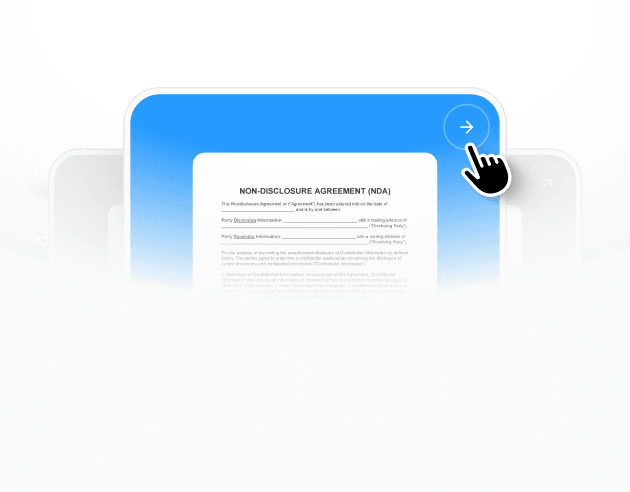
Each template already follows legal structure and best practices.
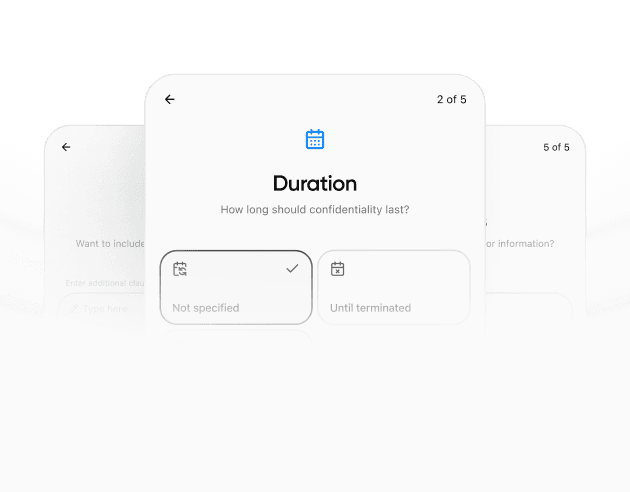
The agreement is automatically filled and adapted to your inputs.
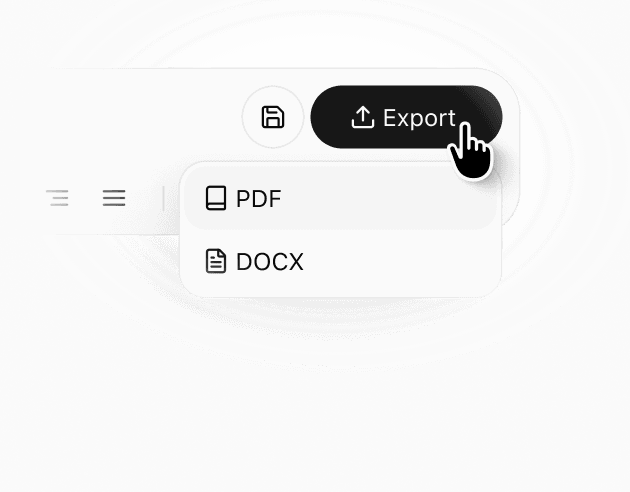
Check the generated document, make edits if needed, and download a ready-to-use agreement.
Click below for detailed info on the template.
For quick answers, scroll below to see the FAQ.
Frequently asked
An OEM Agreement is a contract between a manufacturer and another company that allows the latter to sell products manufactured by the OEM under its own brand name or as part of its offerings.
It protects both parties by clearly defining product specifications, quality control, intellectual property rights, branding, and liability. It also prevents disputes over pricing, delivery, and exclusivity.
Use it whenever outsourcing the production of goods to a third-party manufacturer while maintaining control over branding and distribution. It is common in industries like electronics, automotive, and consumer goods.
It should include product specifications, order procedures, minimum purchase commitments, delivery schedules, intellectual property protections, warranties, indemnification, and termination rights.
Not exactly. An OEM Agreement focuses on manufacturing products for another brand, while a distribution agreement regulates how products are resold and distributed. Often, both may be used together in supply chains.
Use our AI-powered builder to generate a tailored OEM Agreement in minutes — professional, enforceable, and ready for global trade.
 SPONSORSHIP AGREEMENT This Sponsorship Agreement (“Agreement”) is entered into on [Effective Date], by and between: Sponsor: [Full Legal Name], with principal business… B2B Legal Documents
  Master Service Agreement (MSA) This Master Service Agreement (“Agreement”) is entered into on [Date], by and between: • Service Provider: [Company Name], located at [Address]. • Clien… B2B Legal Documents
  This Master Supply Agreement (the “Agreement”) is entered into as of [Effective Date] by and between: Buyer: [Buyer Legal Name], with an address at… B2B Legal Documents
  Supply Agreement This Supply Agreement (“Agreement”) is entered into on [Date], by and between: • Supplier: [Company Name], with a principal place of business at… B2B Legal Documents
  Location Release Agreement Template This Location Release Agreement (“Agreement”) is entered into on [Date], by and between: Property Owner/Representative: Name: __________________________… B2B Legal Documents
  Purchase Order Terms and Conditions Template These Purchase Order Terms and Conditions (“Terms”) apply to all purchase orders (“POs”) issued by [Buyer Company Name] (“Buyer”) to suppliers… B2B Legal Documents
  Mutual Termination Agreement Template This Mutual Termination Agreement (“Agreement”) is made on [Date], by and between: Party A: [Full Legal Name / Company Name] Address: [Address] Contact… B2B Legal Documents
  This Share Transfer Agreement (“Agreement”) is made as of [Date of Agreement]. Parties Transferor (Current Shareholder) Full Legal Name: [Transferor… B2B Legal Documents
  This Exclusive Trademark License Agreement (the “Agreement”) is entered into as of [Effective Date] by and between: Licensor (Owner): [Licensor Legal… B2B Legal Documents
  Officer Certificate Template Date: [Date] To: [Recipient Name / Lender / Buyer / Investor / Other Party] Address: [Address] Re: Officer Certificate I, [Officer Full Name], certify as… B2B Legal Documents
  This Nunc Pro Tunc Trademark Assignment (the “Agreement”) is entered into as of [Signature Date] by and between: Assignor: [Assignor Legal Name], a… B2B Legal Documents
  Partner Agreement This Partner Agreement (“Agreement”) is effective as of [Date], by and between: • Partner A: [Company Name], [Address]. • Partner B: [Company Name]… B2B Legal Documents
  Novation Agreement Template This Novation Agreement (“Agreement”) is entered into on [Date], by and between: Original Party A (Continuing Party): [Full Legal Name / Company Name] A… B2B Legal Documents
  Partnership Agreement Template This Partnership Agreement (the “Agreement”) is made and entered into as of: Effective Date: [Date] Parties and Formation This Agreement is by and… B2B Legal Documents
  [Assignee Name] [Assignee Address] [City, State, ZIP] [Phone] | [Email] Date: [Date] To: [Counterparty Name] [Counterparty Address] [City, State, ZIP] Subject… B2B Legal Documents
  Patent License Agreement This Patent License Agreement ("Agreement") is entered into on [Date], by and between: Licensor: [Full Name / Company Name] Address: [Licensor’s… B2B Legal Documents
  [Assignee Name] [Assignee Address] [City, State, ZIP] [Phone] | [Email] Date: [Date] To: [Counterparty Name] [Counterparty Address] [City, State, ZIP] Subject… B2B Legal Documents
  Payment Bond Template Bond Number: [Bond Number] Date: [Date] Parties Principal / Contractor: [Full Legal Name] Address: [Address] Surety: [Full Legal Name] Address: [Address] Obl… B2B Legal Documents
  Notice of Arbitration Template This Notice of Arbitration (“Notice”) is issued on [Date], by: Claimant: [Full Legal Name / Company Name] Address: [Address] Contact: [Phone, Email] Respo… B2B Legal Documents
  This Performance Agreement (the “Agreement”) is made and entered into as of [Effective Date] (the “Effective Date”) by and between: Organizer/Venue… B2B Legal Documents
  This Non-Exclusive Agreement (“Agreement”) is made as of [Effective Date]. Parties Provider Legal Name: [Provider Legal Name] Entity Type: [Provider… B2B Legal Documents
  Photography Services Agreement Template This Photography Services Agreement (“Agreement”) is entered into on [Date], by and between: Photographer: [Full Name / Business Name] Address: [Address… B2B Legal Documents
  This Non-Exclusive Agency Agreement (“Agreement”) is made as of [Effective Date]. Parties and Relationship Principal Legal Name: [Principal Legal Name] En… B2B Legal Documents
  Physician Services Agreement Template This Physician Services Agreement is made on [Date] by and between: Client: [Hospital / Clinic / Medical Group / Company Name] Address: [Address] Physici… B2B Legal Documents