


An internship offer letter often becomes the document that turns an informal internship conversation into a clear next step for both the employer and the candidate. This guide explains how the letter fits into U.S. internship hiring, what role it plays alongside related documents, and which practical and compliance questions should be checked before it is sent.
Disclaimer
This article provides general information, not legal advice, and is written for a U.S. audience. The effect of an internship offer letter depends on state law, the structure of the internship, the employer’s practices, the school’s requirements, and the facts of the working relationship. Whether the internship is paid, unpaid, tied to academic credit, or connected to student work authorization can change which rules matter most. Because these documents can affect classification, compensation, onboarding, and acceptance terms, legal or HR review is the safer course in disputed, unusual, or higher-stakes situations.
TL;DR
-
An internship offer letter confirms the core terms of the internship before onboarding begins. It usually states the role, dates, schedule, supervisor, work location, and whether the position is paid, unpaid, or stipend-based.
-
This document is not always the same as a full internship agreement. Some employers use a short offer first and send separate supporting documents later.
-
The paid or unpaid structure matters because it changes what the letter must describe clearly. Compensation, stipend language, or unpaid status should never be left vague.
-
The acceptance process should be easy to follow and clearly documented. A deadline, signature route, or internship offer email template can help confirm whether the candidate accepted on time.
-
One template rarely covers the entire process by itself. Related documents may still be needed for confidentiality, onboarding, training, or acceptance.
What Is an Internship Offer Letter?
Before defining the document itself, it helps to look at what an internship is meant to be. The National Association of Colleges and Employers’ guidance on internship meaning and definition describes an internship as a structured learning experience rather than just a short-term task arrangement.
“An internship is a form of experiential learning that integrates knowledge and theory learned in the classroom with practical application and skills development.” — National Association of Colleges and Employers, Internship Meaning and Definition
That definition matters because the offer letter is the document that turns the internship opportunity into clear written terms the candidate can review. Instead of leaving the details in scattered emails or verbal discussions, it gives both sides a simple written reference point before the internship begins.
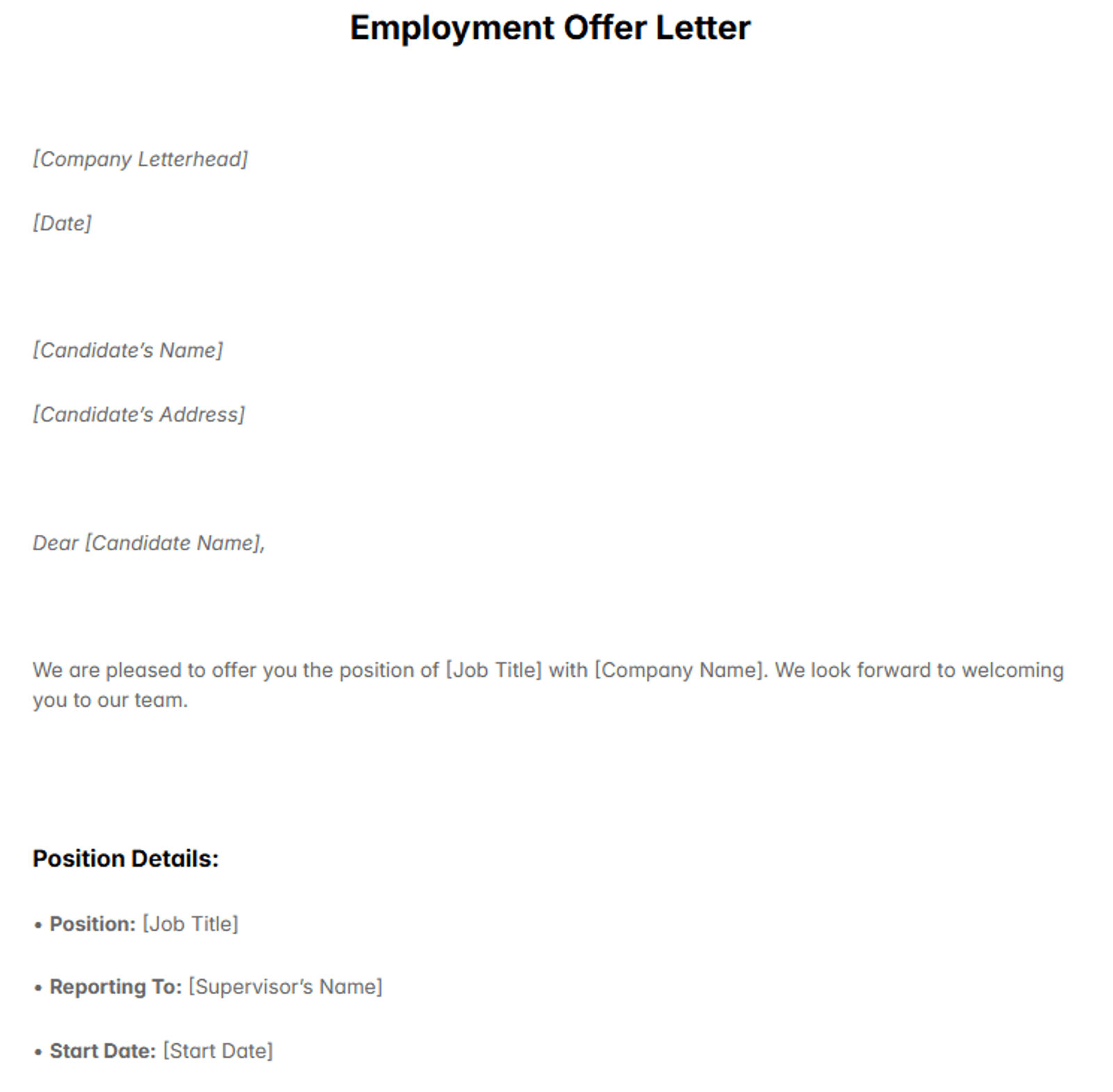
An internship offer letter is a written document that confirms the employer is offering the internship and states the main terms of that offer. In most cases, it tells the candidate what role is being offered, when it starts, how long it is expected to last, who the intern will report to, and whether the position is paid, unpaid, or stipend-based.
A typical letter may also confirm the department, work location, schedule, and the deadline or method for acceptance. Its main purpose is to make the offer clear enough for the candidate to understand the opportunity and decide how to respond.
When Might You Need an Internship Offer Letter?

Organizations usually use an internship offer letter when they want to move from an informal selection decision to clear written terms before onboarding begins.
Summer internship hiring often needs a written offer because the timeline is fixed and decisions are made quickly. Employers may review many candidates at once, confirm several start dates in the same period, and need a clean way to show the role, timing, and acceptance deadline before the season begins.
Campus recruiting makes written confirmation especially useful because students often compare several opportunities at the same time. A clear document helps the employer present the offer consistently and gives the candidate something more reliable than scattered emails, follow-up calls, or verbal discussions.
Student placement programs often benefit from a written offer because the internship may need to align with school calendars, placement timing, or academic expectations. Even when a school does not require a specific form, a written offer makes the arrangement easier to review, share, and confirm.
Remote or hybrid internships usually require extra clarity because work arrangements are easier to misunderstand before the role starts. The letter can make it clear where the intern will work, what schedule is expected, how availability should look, and who will supervise the internship from day one.
Paid, unpaid, and stipend-based internships especially need written terms because compensation structure should never be left vague. When the role is unpaid or uses a stipend instead of standard wages, the candidate should be able to see that clearly before deciding whether to accept.
Internship Offer Letter vs. Similar Documents
Several documents may appear around the same stage of internship hiring, which is why they are often confused. The easiest way to tell them apart is to look at what each document is meant to do in the process.
| Document | What it is | Best used for | What it does not replace |
|---|---|---|---|
| Internship offer letter | A written document that confirms the employer is offering the internship and states the main terms of that offer. | Explaining the role, department, dates, schedule, work location, supervisor, compensation or unpaid status, and acceptance method before onboarding begins. | It does not replace a fuller agreement, an onboarding process document, or a later update if the internship changes. |
| Internship agreement | A more detailed document that may include responsibilities, policies, confidentiality terms, training expectations, or other operating conditions. | Internships that need more structure than a short offer letter can provide, especially when the employer wants expectations stated in greater detail. | It does not replace the initial offer stage, because it is not mainly used to present the internship in a simple decision-ready format. |
| Internship offer acceptance email | A written response from the candidate confirming that the offer is accepted. | Recording acceptance in a quick and practical way, especially when the employer wants a clear written reply by a stated deadline. | It does not replace the original offer letter, because it confirms the candidate’s response rather than setting out the internship terms in the first place. |
| Onboarding checklist | A process document used after acceptance to track setup steps such as paperwork, orientation, access, or first-day preparation. | Managing what needs to happen once the intern has accepted and the organization is preparing for the start date. | It does not replace the offer letter, because it supports onboarding operations rather than making or defining the internship offer. |
In practice, these documents are easy to confuse because they appear close together, but they solve different problems. The offer letter presents the internship and its main terms. The agreement adds detail. The acceptance email records the candidate’s yes. The onboarding checklist helps the employer prepare for the start. Once those functions are separated, it becomes much easier to choose the right document instead of forcing one template to do everything.
Format for an Internship Offer Letter

A clear format matters because this document is usually read quickly and used to confirm whether the candidate understands the offer. A strong internship offer letter format puts the most important terms in a practical order, so the candidate can review the role, timing, work setup, and response steps without confusion.
-
Start with the employer’s details so the document clearly shows who is making the offer. This usually includes the company name, address, and contact information in the header.
-
Add the date near the top so the timing of the offer is easy to track. This helps with recordkeeping and makes any acceptance deadline easier to understand.
-
State the candidate’s full name so the offer is clearly tied to one person. This is especially useful when multiple internship offers are being sent at the same time.
-
Identify the internship title and department clearly. A specific title such as “Marketing Intern” or “Operations Intern” is more useful than a generic label.
-
List the start date and end date in direct language. These dates define the internship period and should be easy to find at a glance.
-
Explain the work location clearly. The letter should say whether the role is on-site, remote, or hybrid, and can add office or state details if needed.
-
Describe the expected schedule or hours. This helps the candidate understand availability expectations before accepting.
-
State the compensation model clearly and directly. A paid internship offer letter should say how pay works. If the role is unpaid or stipend-based, that should also be stated plainly.
-
Include a short summary of duties or responsibilities. The goal is not to write a full job description, but to show the general focus of the internship.
-
Name the supervisor or reporting contact. This gives the candidate a clear point of reference for the role.
-
Add contingencies only when they actually matter. If the offer depends on school approval, work authorization, a background check, or another condition, the letter should say so.
-
Set an acceptance deadline so the offer does not remain open-ended. This is especially helpful in batch hiring or campus recruiting.
-
Explain exactly how the candidate should accept. The response may require a signature, an email reply, or a portal submission, but the method should be stated clearly.
-
Use a closing and signature block that matches the employer’s real process. Some companies use signatures, while others rely on email confirmation.
-
Mention follow-up documents only if they are relevant to the next step. If onboarding forms or other materials will follow, the letter can note that briefly without turning into a document bundle.
It also helps to separate the letter from the email that delivers it. The offer letter contains the actual terms, while the offer email usually serves as the message that sends or introduces the document.
For employers using editable files, Word format is often the easiest option because it is simple to revise internally. The best offer letter format for internship roles is the one that stays clear, editable, and easy to customize without losing essential terms.
Add IP or work-product language when the intern will create valuable materials. If the internship involves code, designs, research, or content, the letter can reference an Intellectual Property Assignment Agreement so ownership of work created during the internship is clear before the start date.
Scenario Templates
People searching for an internship offer letter template are often trying to solve different problems under one label. The safer approach is to sort those problems by scenario first, because the right wording depends on the kind of internship arrangement that needs to be confirmed.
Standard internship offer scenarios
This category covers straightforward internship situations where the employer is ready to confirm the role in writing and the main goal is clarity. That usually means setting out the internship title, dates, schedule, reporting line, and response instructions in a way the candidate can quickly review.
Paid, unpaid, or stipend-based internship scenarios
This category fits internships where the compensation structure needs special attention. The practical issue here is not just making the offer, but making the financial terms clear enough that the candidate understands exactly what kind of arrangement is being offered. If pay, unpaid status, or a stipend could be misunderstood, the letter needs more precise wording from the start.
School-linked, remote, or structured placement scenarios
Some internships need more context because the arrangement is shaped by school timing, academic coordination, remote work setup, or another structured placement issue. In these scenarios, the document has to reflect how the internship will actually work in practice, not just confirm that an offer exists.
Extension or follow-on scenarios
This category applies when the internship is no longer being offered for the first time, but is being continued, adjusted, or formally carried forward. That usually happens when the original term is ending and the employer wants to extend the internship or confirm a new period in writing.
AI vs. Lawyer
Some situations are simple enough for a template. Others are risky enough that paying for legal review is cheaper than dealing with delay, revision, or compliance problems later.
The practical question is not whether a template can produce a usable draft, but whether the internship structure is simple enough for a draft-first approach or sensitive enough to justify review before the document is sent. For lawyer pricing, Clio’s benchmark for average lawyer hourly rates in the U.S. reports an average lawyer hourly rate of $349 as of 2025, which gives a practical baseline for estimating review or drafting cost.
| Option | Best for | Typical spend | Main risks |
|---|---|---|---|
| DIY / AI-assisted template | Straightforward situations with clear dates, schedule, supervisor, location, and compensation structure. | $0+ if you use an internal draft or free template; higher only if you pay for a platform or add-ons. | Wrong assumptions, vague compensation language, missing acceptance terms, or polished wording that does not match the real setup. |
| Lawyer review of your draft | You already have a workable draft but want a more careful check before sending it. | Roughly $175–$525, based on about 0.5–1.5 lawyer hours at a $349 average hourly rate. | The review still depends on the quality of the starting draft, and missing facts can make the review less useful. |
| Lawyer-drafted document + strategy | Higher-risk situations involving unpaid roles, international students, unusual stipend structures, school-linked placements, or other compliance-sensitive facts. | Roughly $700–$1,400+, based on about 2–4+ lawyer hours at a $349 average hourly rate. | Higher upfront cost, but lower drafting risk when the internship structure is unusual or sensitive. |
The cheaper option is only cheaper if the document works correctly the first time. These figures are planning estimates, not quotes, and the hour ranges are rough drafting assumptions rather than published fee schedules. The hourly-rate baseline comes from Clio’s national benchmark, while the review and drafting ranges are estimate bands built from that benchmark.
Template Library
Use the library below to match the internship scenario to the most relevant starting documents. The goal is to choose the closest template group first, then tailor the draft to the actual facts, timing, and structure of the internship.
| Category | Primary decision | What it helps prevent | Templates |
|---|---|---|---|
| Standard internship offer scenarios | Decide whether the main need is to make the offer, apply for the internship, confirm acceptance, or formally communicate a hiring decision at the offer stage. | Mixing employer-side offer language with candidate-side response language, or using the wrong document for the wrong point in the decision process. | - Internship Offer Letter - Internship Offer Acceptance Email - Internship Acceptance Letter - Internship Application Letter - Internship Rejection Letter |
| Paid, unpaid, or stipend-based internship scenarios | Decide whether the internship needs paid terms, unpaid terms, or stronger written structure around duties, term, and access to sensitive information. | Using vague compensation language, applying the wrong pay model, or overlooking supporting protections that matter more when the internship structure is sensitive. | - Paid Internship Agreement - Unpaid Internship Agreement - Intern Confidentiality Agreement |
| School-linked, remote, or structured placement scenarios | Decide whether the internship needs more operational structure because the arrangement depends on training goals, onboarding steps, performance tracking, school timing, supervision, or a more organized placement model. | Expecting the offer letter to handle setup, learning structure, and evaluation on its own, or leaving the internship too loosely organized after acceptance. | - Internship Training Plan - Internship Onboarding Checklist - Internship Evaluation Form - Internship Performance Review |
| Extension or follow-on scenarios | Decide whether the internship is being extended, formally completed, verified, or documented after the main work period has started or ended. | Relying on the original offer as if it were enough to document continuation, completion, proof of participation, or post-internship outcomes. | - Internship Completion Letter - Internship Recommendation Letter - Internship Certificate - Internship Completion Certificate - Internship Verification Letter - Internship Extension Letter |
How to Use a Template Safely (Step-by-Step)
A template can save time, but it does not make decisions for you. The safest way to use a template is to treat it as a structure for accurate facts, not as a shortcut that replaces judgment.
-
Identify the internship scenario before choosing the template. A standard offer, an unpaid internship, a school-linked placement, or an extension case may all need different wording even when the documents look similar at first glance. The first step is to match the template to the real situation instead of editing the wrong document from the start.
-
Confirm the core facts before you start rewriting language. That includes the internship title, dates, schedule, work location, supervisor, duties, and compensation model. If the role is paid, unpaid, or stipend-based, that point should already be settled before drafting begins. A template becomes risky when the facts are still moving underneath it.
-
Decide how acceptance will work and make that process clear in the document. Some employers want a signed letter, while others want a simple email reply. What matters is that the response method, deadline, and next step are easy to understand. **A template works better when the candidate can tell exactly how to accept without needing extra explanation.
** -
Check whether the letter needs supporting documents to do the job properly. Some internships also need confidentiality terms, onboarding materials, training documents, or a more detailed agreement. The offer letter should not be forced to carry the whole process by itself. **A template is safer when it fits into the right document set, not when it tries to replace every other form.
** -
Do a final consistency and risk check before sending. The dates, compensation language, work arrangement, and acceptance instructions should all match. If the internship involves unusual facts, unpaid status, international student issues, or another sensitive point, that is the stage where HR or legal review may be worth using. **The template is only the container; safety comes from correct facts, clear structure, and the right level of review.
**
In practice, safe template use comes down to one simple rule: choose the right version, fill it with the right facts, and make sure it matches the real internship before it goes out.
Common Mistakes to Avoid

A weak internship offer letter is not always missing obvious details. Sometimes the bigger problem is that the document looks polished but still creates the wrong expectations or describes the wrong kind of arrangement. The most serious mistakes usually happen when the draft sounds finished but does not match how the internship will actually work.
Copying language from a regular job offer
One common mistake is using a standard employment offer as the base document and changing only the title of the role. The wording may still frame the position like regular employment rather than a temporary internship with its own timing, supervision, and practical structure. That can make the offer feel off-balance from the start and create confusion about what is really being offered.
The safer approach is to draft around the internship itself rather than around a recycled employment model. A better letter describes the role as the internship it actually is, instead of treating the document like a job offer with minor edits.
Promising more structure than the organization can deliver
Another mistake is describing training, supervision, or responsibilities in stronger terms than the organization has actually confirmed internally. A letter may promise close guidance, structured learning, or clearly planned duties even though the team has not finalized who will supervise the intern or how the work will be organized. That creates a gap between the written offer and the real experience.
The better approach is to describe only the support, workflow, and role scope the employer is genuinely prepared to provide. The document should reflect the real internship plan, not the ideal version of it.
Hiding important conditions in soft wording
A third mistake is mentioning important conditions indirectly instead of stating them clearly. This often happens when the offer depends on school approval, work authorization, internal signoff, a background check, or another pre-start condition. If the condition is buried late in the letter or phrased too softly, the candidate may not understand that it affects whether the internship can actually begin.
The safer practice is to make real conditions easy to identify and easy to understand. If the offer depends on something important, the document should say so in plain language before the candidate accepts.
Turning the letter into a policy dump
Some employers try to make the offer letter do too much by loading it with internal rules, reminders, and policy language that belong elsewhere. When that happens, the core offer becomes harder to read. The candidate may have to search through dense wording just to understand the role, the timing, and the next step.
A cleaner approach is to keep the letter focused on the offer itself and move broader policy material into separate supporting documents when needed. A stronger offer letter is usually the one that stays clear enough to be understood in one reading.
The safest overall approach is to keep the document honest, specific, and proportionate to the internship that is actually being offered.
After Signing

Once the offer is accepted, the focus shifts from making the internship official to getting the start of the internship right. The main task after signing is to make sure the accepted terms carry through into onboarding, payroll, training, and recordkeeping.
Save the final record
The signed letter, acceptance email, or portal confirmation should be stored together with the final version of the offer. A clean record makes it easier to confirm what was accepted, when the offer became final, and which version controls if details changed during hiring.
Align the internal setup
The accepted start date, supervisor, schedule, location, and pay structure should match what the hiring team, payroll, and onboarding staff are actually using. The internship should begin on the same terms the candidate accepted, not on a different internal version created later. For paid internships, that alignment also connects to payroll setup, including forms such as IRS Form W-4, which employees use so employers can withhold the correct federal income tax from pay.
Send the next documents
Any remaining forms should move out without unnecessary delay. That may include onboarding paperwork, confidentiality documents, training materials, or work-authorization steps where relevant. For U.S. employment, USCIS guidance on Form I-9 is part of that follow-up process.
Keep later-stage documents separate
If the internship is extended, completed, or later needs proof of participation, those documents should be handled separately. That keeps the original offer letter focused on the offer and makes the later record easier to use for its actual purpose.
Legal Requirements and Regulatory Context
This section is less about formatting and more about the legal background that can change how an internship should be structured in the first place. The key point is that a well-written letter cannot fix a legally weak internship model, so the document has to match the real arrangement behind it.
Paid vs. unpaid is not decided by the label alone
In the U.S. for-profit sector, calling an internship “unpaid” does not settle the legal question by itself. The U.S. Department of Labor’s Fact Sheet #71 on internship programs under the FLSA explains that courts use the primary beneficiary test to evaluate whether the intern or the employer is the primary beneficiary of the relationship. NACE makes the same practical point in its legal guidance on internships: internship compliance can involve compensation, classification, workplace safety, and employment-agreement issues at the same time. That means an unpaid internship offer letter should be treated as a description of the arrangement, not as proof that the arrangement is legally safe.
State law and school structure can change the analysis
Federal law is only part of the picture. NACE notes that internship compliance may also be shaped by state law, academic-credit structure, and the actual way the internship is supervised and carried out. A letter that looks fine in isolation can still create problems if the real internship setup does not match school expectations, wage-and-hour rules, or local employment requirements. That is one reason employers should avoid assuming that one national template works the same way in every state or every school-linked placement.
International student timing matters before the start date arrives
Internships involving international students need extra care because work authorization can limit when and how the internship may begin. In its guidance on students and employment, USCIS states that F-1 students may not work off-campus during the first academic year except through authorized pathways and subject to stated conditions. The practical takeaway is simple: the letter should not promise a start date or work setup that the student is not yet authorized to begin.
Hiring paperwork starts after the offer, but it has its own rules
If the internship is employment in the United States, Form I-9 requirements can also come into play. USCIS states in its Section 1 guidance for Form I-9 that employees must complete and sign Section 1 no later than the first day of employment, and the official Form I-9 instructions say the form cannot be completed before the offer of employment is accepted. That timing matters because the offer letter starts the hiring record, but it does not replace post-offer verification steps.
Equal-opportunity and contract assumptions can also trip employers up
Another nuance is that unpaid status does not automatically remove discrimination concerns. In an EEOC informal discussion letter on interns and federal EEO coverage, the agency explains that unpaid interns may still be treated as employees in some circumstances, while applicants to or participants in training programs may have separate protection around admission or participation. Also, even if the letter includes start and end dates, that does not automatically create a fixed-term contract. Cornell’s Wex explanation of the employment-at-will doctrine notes that at-will employment is the default where there is no set period of employment. So dates in an internship letter should not be read as automatically overriding at-will principles unless the document and the governing law clearly do more than that.
FAQ
What is an internship offer letter?
An internship offer letter is a written document that confirms the employer is offering the internship and states the main terms of that offer. It gives the candidate a clear written basis for reviewing the role before accepting it.
What should be included in an internship offer letter?
A typical letter should include the internship title, department, start and end dates, work location, schedule, supervisor, compensation or unpaid status, and acceptance instructions. The most useful version is the one that makes the core terms easy to understand in one reading.
Is an internship offer letter the same as an internship agreement?
No. An offer letter usually confirms the opportunity and its main terms, while an internship agreement usually goes further into responsibilities, policies, confidentiality, training, or other operating details. The two documents may work together, but they do not usually do the same job.
Can an internship offer letter be sent by email?
Yes. In many cases, the letter can be sent by email as an attachment or in the body of the message itself. What matters most is that the candidate receives a clear written version of the offer and understands how acceptance should be given. If the organization uses electronic acceptance, the process should still create a clean record; the legal effect of electronic records and signatures is generally supported by the E-SIGN Act.
What is the difference between a paid and unpaid internship offer letter?
The overall structure may look similar, but the compensation language should not. A paid version should explain how pay works, while an unpaid version should state that status directly and avoid vague wording. If the financial structure could be misunderstood, the letter should make it clear before the candidate accepts.
How do you write an internship offer acceptance email?
The response should be short, direct, and consistent with the offer. A good acceptance email usually confirms that the candidate accepts the internship, refers to the role, and makes clear that the response is being sent by the requested deadline. A strong acceptance email confirms the offer rather than rewriting its terms.
Can an intern ask for changes before accepting the offer?
Yes. A candidate can ask questions or request changes before accepting, especially if the issue involves timing, schedule, work location, supervision, or compensation. It is usually better to resolve those points before acceptance than to treat them as minor issues afterward.
Can an internship offer letter be binding?
It can be, depending on how the letter is written and the law that applies. That is why the acceptance language and any stated conditions should be clear, and why start and end dates alone should not be assumed to override at-will principles.
Can employers run background checks on interns?
Yes. If the offer depends on screening, the letter should state that condition directly, and employers that use a consumer reporting agency should follow the FTC’s employer background check guidance on disclosure and consent before acting on the results.
Get Started Today
The fastest way to move forward is to choose the template that matches the actual internship scenario, not just the broadest-sounding form. A clearer starting document reduces rewrites, confusion, and the risk of using the wrong structure for the internship.
Start with the Internship Offer Letter Template, or generate a first draft with AI Lawyer and tailor it to the role, dates, pay model, supervisor, and acceptance process. If the internship involves unpaid status, international students, school-linked requirements, or another sensitive setup, an HR or legal review is the safer final check before sending the document.
Sources and References
NACE guide on internship meaning and definition
NACE legal issues guidance for internships
U.S. Department of Labor Fact Sheet #71 on internship programs under the FLSA
Clio benchmark on average lawyer hourly rates in the U.S.
USCIS guidance on students and employment
USCIS guidance on completing Form I-9
USCIS guidance on completing Section 1 of Form I-9
Instructions for Form I-9, Employment Eligibility Verification
EEOC informal discussion letter on interns and federal EEO coverage
Cornell Law School Wex entry on the employment-at-will doctrine