AI Lawyer Blog
Flowers Foods v. Brock and the Last-Mile Arbitration Fight

Greg Mitchell | Legal consultant at AI Lawyer
3
Imagine you drive bread from a warehouse to the same grocery stores every morning. Same streets. Same stops. Nothing about the job feels dramatic. Then a pay dispute hits. I think the first real question is often not whether the employee was underpaid, but whether they even have access to the courtroom.
That is why Flowers Foods v. Brock is worth reading about. The Supreme Court took up the case to decide whether a local delivery driver at the end of a bigger shipping chain can be pushed into private arbitration instead of public court. In other words, a job that looks small and local may carry much bigger legal consequences than most workers would ever guess. See Cornell LII’s overview of Flowers Foods, Inc. v. Brock, the Supreme Court docket, and Reuters’ report on the March 25, 2026 argument.
Disclaimer
This is a commentary piece, not legal advice. If I were dealing with a real dispute over pay, a contract, or an arbitration clause, I would talk to a qualified U.S. attorney.
TL;DR
Flowers Foods v. Brock asks whether a last-mile driver can be forced into private arbitration instead of going to court.
The Supreme Court is deciding whether a short local delivery can still count as part of interstate commerce.
If Flowers wins, more businesses may treat local drivers as easier to funnel into arbitration.
If Brock wins, more workers may keep a stronger path to a public courtroom.
You Might Also Like:
Why Flowers Foods v. Brock matters beyond one driver
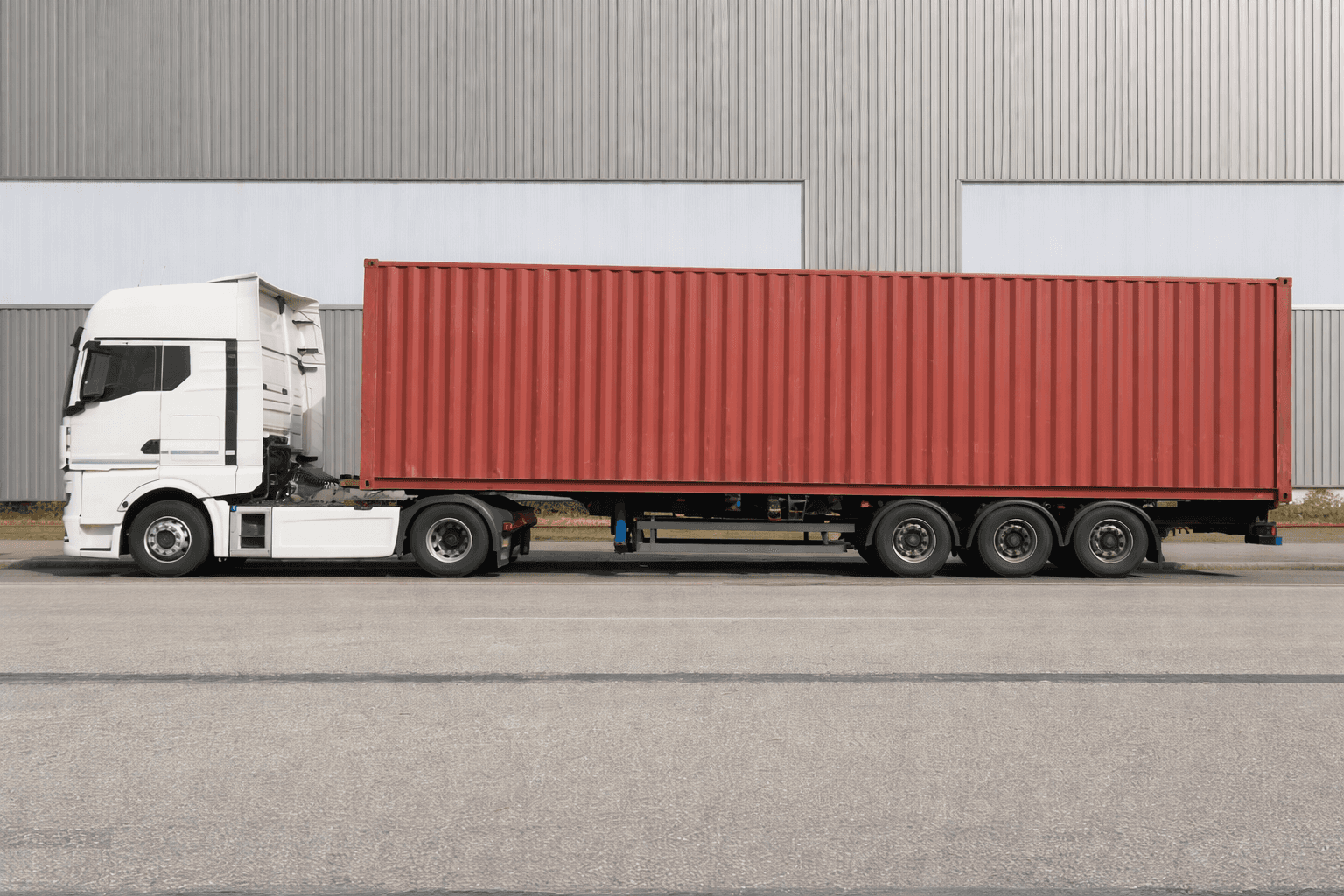
“Last mile” sounds technical, but to me, it is really just the final stretch of delivery — that quick hop from a warehouse to a store, a business, or your front door.
The Supreme Court heard arguments on March 25, 2026, over whether drivers who finish deliveries after goods cross state lines still fall within the transportation-worker exemption in the Federal Arbitration Act. In Flowers Foods v. Brock, that short final stretch is basically the whole fight. You can see that setup in the Supreme Court docket, the Court's oral-argument page, and Cornell LII's overview of Flowers Foods, Inc. v. Brock.
What stands out to me is that this case goes far beyond bread routes.
Think about grocery deliveries, retail drop-offs, Amazon-style logistics, or gig runs that feel hyperlocal but actually sit at the tail end of a massive interstate chain. Reuters and SCOTUSblog both note that lower courts have split on how to treat these end-of-chain workers. To me, that is exactly why this case could ripple far beyond one bakery company.
A driver may never cross a state line and still end up in the middle of a national fight over arbitration and access to court.
What the Supreme Court is really deciding
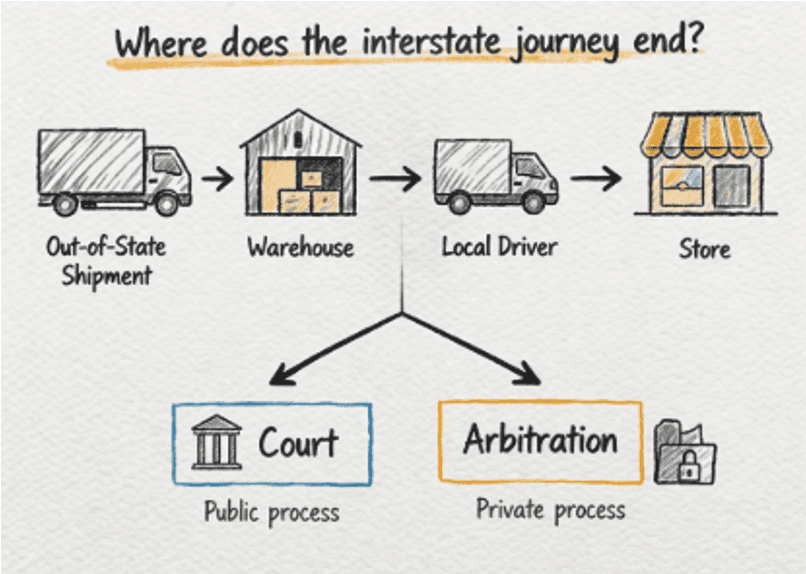
Bread gets baked in one state, shipped to a warehouse in another, and then a local driver takes it to nearby stores. The Supreme Court's deciding one deceptively small thing: did the interstate trip end at the warehouse, or was the warehouse just a pause before the final drop?
That's the core question in Section 1 of the Federal Arbitration Act, on the Supreme Court docket for Flowers Foods v. Brock, and in Cornell LII's case overview.
Sounds like an exaggeration, doesn’t it? I don’t think it is. The court has already said in Southwest Airlines Co. v. Saxon that judges must consider the work an employee actually performs. And in Bissonnette v. LePage Bakeries, the answer doesn’t depend on whether the employer is formally a transportation company.
Flowers says Brock started a new local job after the warehouse stop.
Brock says he finished the same shipment.
That tiny gap between "new trip" and "same trip" may decide whether the case stays in court or gets pushed into arbitration.
Why forced arbitration changes everything
This is where this whole fight stops being a theoretical debate. Imagine a driver who is a few hundred dollars short. I’m not talking about a huge lawsuit — just money that would have been used to pay rent, gas, maybe groceries.
The nasty shock? That first battle might not even touch the missing pay. It's about whether this thing ever sees the inside of an actual courtroom.
The AAA pitches employment arbitration as this sleek system — efficient, speedy, private.
Sounds pretty reasonable to me.
Reasonable — until the lawsuit gets small.
Then everything shifts: the dispute goes underground, workers end up fighting solo, and suddenly that modest claim feels way too pricey or draining to chase down.
That's exactly why arbitration isn't just some sidebar issue. It reshapes the entire pressure dynamic before anyone actually debates wages.
The Supreme Court hammered this point home in Epic Systems v. Lewis — they enforced those individualized arbitration deals in workplace disputes.
And here's the brutal reality: a wage claim doesn't need to fail on merit to die. Sometimes it dies because the whole process becomes quieter, tougher, and way more isolating first.
AAA describes its employment arbitration framework as a formal dispute-resolution system, and Epic Systems is the Supreme Court decision commonly cited for enforcing individualized arbitration agreements in employment disputes.
What changes depending on who wins
This is the part I would actually look at more closely if I were running routes, drafting contracts, or trying to decide whether to file a wage claim at all. The Supreme Court is looking at whether a local driver finishing delivery after goods crossed state lines still falls within the FAA exemption, and that answer could shift the balance for both workers and businesses. That is the core setup in Cornell LII’s overview of Flowers Foods, Inc. v. Brock, the Supreme Court docket, and Reuters’ report on the oral argument.
If Flowers wins | If Brock wins |
|---|---|
Companies get a stronger path to arbitration for local drivers. | Workers get a stronger path to court even on local routes. |
A warehouse starts to look more like a clean legal endpoint. | A warehouse looks more like a handoff point, not the end of the trip. |
Contract language becomes more powerful in early fights. | The real movement of goods becomes harder to ignore. |
More delivery businesses may structure routes around forum risk. | More plaintiffs’ lawyers may build cases around the full delivery chain. |
What I like about this framing is that the stakes quickly become clear. A Flowers win makes it easier to separate the final drop from the bigger shipment. A Brock win makes it easier to say the last driver was still finishing the same trip. And that is not some academic distinction. It changes who has leverage first.
What delivery businesses should review now
If I were sitting in a meeting at a delivery company right now, I would not start with legal theory. I would start with a map, a warehouse schedule, and a stack of driver agreements. That is the part the official oral-argument transcript and Reuters’ report on the hearing make feel real.
Say one warehouse gets goods from out of state, stores them for days, mixes them with other inventory, and sends drivers out on whatever route is open. That story helps the company. It makes the local trip look more separate.
Now flip it. The bread comes in at night, gets sorted, and goes out the next morning to the exact stores it was always meant to reach. That story helps the worker. Now the warehouse looks less like an endpoint and more like a handoff.
Here are a few things to look for first:
how the route really works, not how the contract describes it;
what the warehouse actually does in practice;
whether the paperwork matches the trucks.
A business gets exposed when its documents tell a cleaner story than its operation can prove.
Conclusion
What stands out to me is how a driver can spend the day making short, ordinary deliveries and still end up in a fight over whether the courthouse door is even open. That is what modern delivery work has done to the law: the route looks small, but the consequences can be huge when your paycheck is on the line.
FAQ
Q: Why are plaintiffs’ lawyers following this case so closely?
A: This decision could change the way these cases are built from the ground up. If the Court gives workers a better way to avoid arbitration, you’re likely to see lawyers put a lot more effort into identifying actual supply chains rather than just fighting over the terms of the contract. That would be a very different kind of trial, in my opinion.
Q: What kinds of business records might become unexpectedly important after the decision?
A: To me, it goes far beyond just contracts. Think of shipping logs, warehouse timesheets, shipping schedules, routing assignments, and even inventory records. Here’s the thing: all that boring operational documentation that everyone ignores could end up being some of the most important evidence in a case.
Q: Can companies still face risk even if their arbitration clauses are carefully written?
A: Absolutely. A carefully drafted arbitration clause can help, but I don’t think it eliminates risk by itself. One of the biggest mistakes a company can make is assuming that polished contract language will trump messy real-world operations. To me, if the actual delivery flow, warehouse handling, and route structure tell a different story, the clause may not do as much work as the company expects.
Q: What’s the main lesson from this case for people outside the bakery business?
A: I’ve noticed that modern delivery jobs can seem entirely local, when in fact they’re part of a vast national system. And that’s not just important for bakery routes — retail, app-based delivery, warehouse-to-store logistics, the myriad other tasks involved in getting products to customers. Frankly, it matters across the entire gig economy.