AI Lawyer Blog
Birthright Citizenship and the Supreme Court’s New Test

Greg Mitchell | Legal consultant at AI Lawyer
3
A child is born in a U.S. hospital, and for generations that has usually settled one basic question at once: citizenship. Birthright citizenship has long been treated as a constitutional starting point, not a political favor. Now the Supreme Court is being asked to reconsider how secure that promise really is.
On April 1, 2026, the Court heard arguments in a case over whether the government can deny automatic citizenship to some children born in the United States based on their parents’ legal status. The stakes reach far beyond one administration. This is not simply an immigration-policy dispute. It is a test of whether citizenship remains a stable legal guarantee tied to birth on American soil, or whether that guarantee can be narrowed by a new reading of the Constitution.
Disclaimer
This article is for informational purposes only and does not constitute legal advice. Constitutional litigation, immigration policy, and agency guidance can change, and the Supreme Court had not issued a final ruling at the time discussed here.
Because legal outcomes depend on specific facts and current law, readers should consult a qualified attorney for advice about any individual case or immigration-related status question.
TL;DR
Birthright citizenship has long meant that a child born in the United States is generally a U.S. citizen from birth under the 14th Amendment.
The Supreme Court birthright citizenship case now asks whether that rule can be read more narrowly for some U.S.-born children based on their parents’ immigration status.
This dispute matters beyond immigration politics because it tests whether citizenship is still a stable constitutional guarantee tied to birth on American soil.
The central legal fight is over the meaning of “subject to the jurisdiction thereof.”
If the Court adopts a narrower reading, some U.S.-born children could face uncertainty over legal status and recognition at birth.
You Might Also Like:
What birthright citizenship actually means in U.S. law
In simple terms, birthright citizenship means that a child born in the United States is usually a U.S. citizen from birth. The rule comes from the 14th Amendment’s Citizenship Clause, which says that people born in the United States and “subject to the jurisdiction thereof” are citizens.
For more than a century, U.S. law has treated that as a broad rule with only narrow exceptions. The USCIS policy manual still follows that framework.
The phrase that now matters most is “subject to the jurisdiction thereof.” In plain English, it means being under U.S. law. The current fight is over whether that phrase can be read more narrowly to deny automatic citizenship to some children born on U.S. soil because of their parents’ legal status.
What the usual exceptions actually are
The rule of birthright citizenship has long been broad, but it has never been absolute. In practice, the best-known exception involves children of accredited foreign diplomats, because diplomats are not treated as fully subject to ordinary U.S. legal authority in the same way other people in the country are. The USCIS policy manual reflects that framework.
The traditional exceptions are narrow:
children of accredited foreign diplomats;
other highly limited situations recognized under long-settled law and government practice.
This matters because the current dispute is not really about whether exceptions exist. It is about whether the government can turn a narrow exception into a much broader exclusion based on the parents’ immigration status.
So the legal issue is not whether American law has ever recognized limits. It is whether those limits can be expanded enough to deny automatic citizenship at birth to some children born in the United States.
Why this Supreme Court case matters now
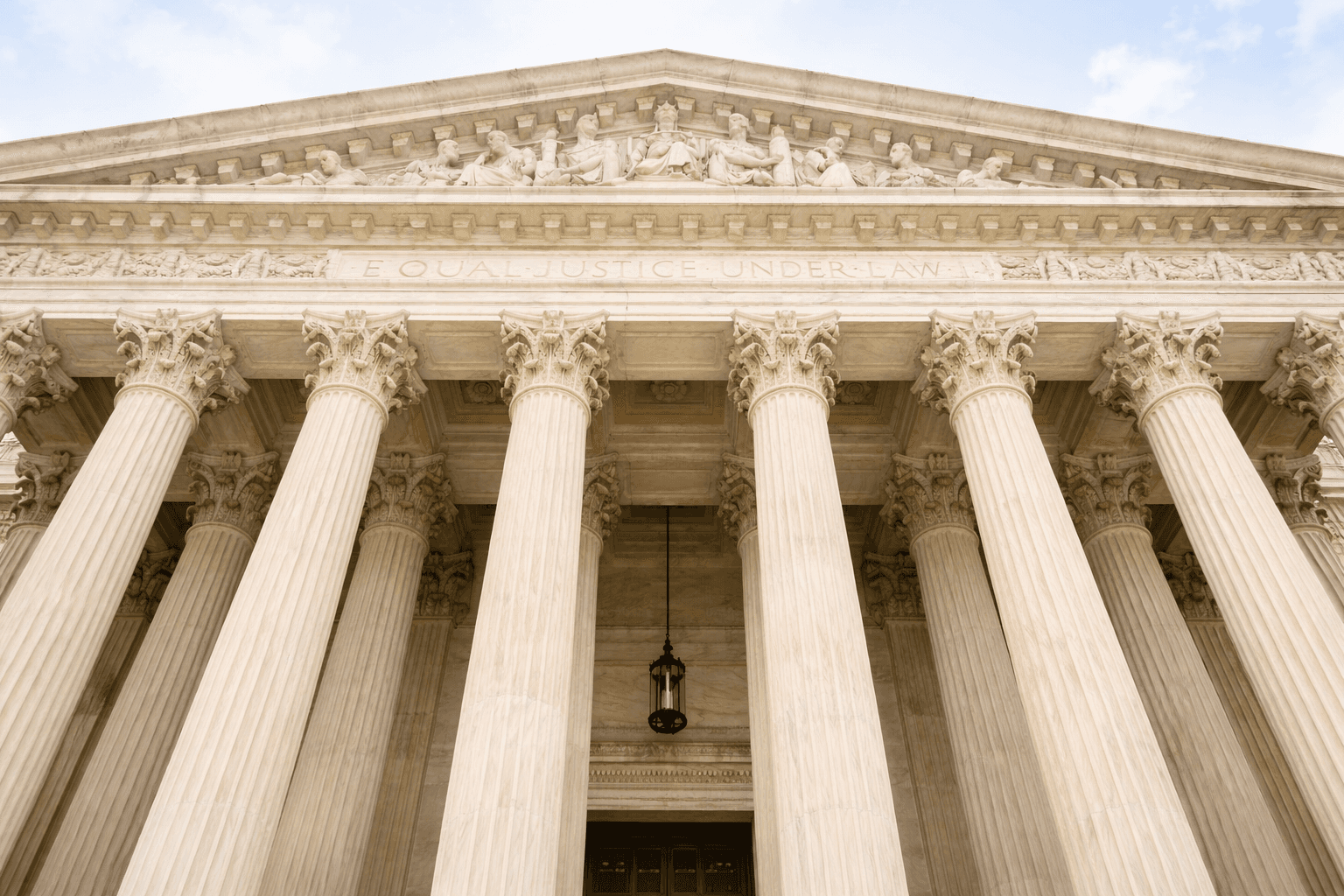
This case matters now because the Supreme Court is no longer dealing with the issue in the abstract. On April 1, 2026, the Court heard arguments in Trump v. Barbara, a case tied to Executive Order 14160, “Protecting the Meaning and Value of American Citizenship.” In the government’s own Supreme Court brief, the administration argues that automatic citizenship at birth should not apply to some children born in the United States if their parents are not U.S. citizens, not lawful permanent residents, or are only in the country on a temporary status.
Three facts make this moment especially important:
The Court has already heard the case.
Several justices appeared skeptical during oral argument.
A ruling is expected by the end of June 2026.
The immediate legal question is whether the Citizenship Clause can be read more narrowly than courts and agencies have read it for generations. Put more simply, the Court is deciding whether a president can use a new constitutional reading to deny birthright citizenship to a category of U.S.-born children.
The 14th Amendment was written to make citizenship harder to deny
The 14th Amendment was adopted to put citizenship on firmer legal ground. In the aftermath of the Civil War, its Citizenship Clause helped answer a question the country could no longer leave to politics: who belongs to the nation as a matter of law.
That was a direct response to Dred Scott, which showed how dangerous it was to let basic membership depend on exclusionary power. By writing citizenship into the Constitution, the amendment aimed to make that status more durable and less vulnerable to shifting political moods. The Constitution Annotated traces that background clearly.
Historically, the amendment was designed to make national membership more secure and harder to deny.
Why Wong Kim Ark still sits at the center of the debate
The modern argument keeps returning to United States v. Wong Kim Ark because it remains the Supreme Court’s clearest statement on citizenship by birth. Wong Kim Ark was born in San Francisco to Chinese parents who were not U.S. citizens, and in 1898 the Court held that he was a U.S. citizen by birth.
That decision still matters because it turned a personal dispute into a national rule: birth on U.S. soil generally confers citizenship, even when the parents are not citizens themselves. For the current case, that makes Wong Kim Ark the precedent neither side can avoid.
Point | Why it matters now |
|---|---|
Born in the U.S. | Place of birth was central to the ruling |
Parents were not citizens | The case addressed a question still disputed today |
Supreme Court ruling | It remains the leading precedent on birthright citizenship |
What changes today is not the underlying legal question, but the way the government is trying to read that precedent more narrowly.
What would actually change for families if birthright citizenship were narrowed
For families, the biggest change would be uncertainty at birth. Right now, being born in the United States usually settles citizenship immediately. Under a narrower rule, that answer could depend on the parents’ legal status instead. That would turn birth from a clear legal starting point into a documentation and recognition issue.
The effects would be practical, not abstract. Families could face questions about whether a newborn qualifies for a U.S. passport, what proof of citizenship would be required, and how quickly the government would recognize the child as fully American. The current legal framework described by USCIS treats most people born in the United States and subject to its jurisdiction as citizens at birth.
A recent estimate from Pew Research Center suggests the issue could affect about 260,000 births in 2023.
This case is really about the meaning of an American guarantee
At its core, this case asks how secure citizenship at birth remains under the Constitution. The 14th Amendment treats citizenship as a legal status, not something to be easily redefined through changing interpretations.
What the case puts pressure on is the idea of:
clear membership from birth;
legal certainty at the start of life;
consistent recognition by the state.
If birth on U.S. soil no longer gives the same legal starting point in every case, then citizenship at birth becomes less settled than many Americans have assumed.
Conclusion
The case asks whether birth on U.S. soil still provides a clear and reliable path to citizenship from birth. For generations, that has usually been the legal starting point in the United States. Now the Supreme Court is being asked whether that answer should remain automatic or be read more narrowly through the Citizenship Clause.
The ruling will shape more than doctrine. It will help determine how secure citizenship at birth remains for children born in the United States.
FAQ
Q: Does being born in the United States still usually mean citizenship at birth?
A: Yes. Under the traditional reading of the 14th Amendment, a child born in the United States is generally a U.S. citizen from birth. The recognized exceptions have historically been narrow, not broad.
Q: What are the usual exceptions to birthright citizenship?
A: The best-known example is children of accredited foreign diplomats. The current case matters because it is not just applying an old exception — it is testing whether the government can expand exclusions tied to parental immigration status.
Q: What is the Supreme Court deciding in this case?
A: The Court is considering whether automatic citizenship at birth can be denied to some U.S.-born children based on their parents’ legal status and a narrower reading of the Citizenship Clause.
Q: Why does Wong Kim Ark matter here?
A: Wong Kim Ark remains the leading Supreme Court precedent on birthright citizenship. It is central because it treated birth on U.S. soil as the key legal fact, even when the parents were not U.S. citizens.
Q: Has the Supreme Court already issued a final ruling?
A: No. The Court heard arguments on April 1, 2026, but no final decision had been issued at the time discussed here.
Sources and References