

When facing criminal charges, the need for a skilled criminal lawyer cannot be overstated. Whether you are dealing with minor infractions or serious felonies, having the right legal representation can make all the difference in the outcome of your case. Here’s a comprehensive guide to help you find the best criminal lawyer near you and how AI Lawyer can assist you in your legal journey.
You Might Also Like:
1. Why You Need a Criminal Lawyer
Criminal law is complex, and navigating it without expert assistance can be overwhelming. A criminal lawyer provides several critical services:
-
Legal Advice and Representation: They help you understand the charges against you and the potential consequences.
-
Negotiation Skills: A lawyer can negotiate with prosecutors to reduce charges or secure plea bargains.
-
Courtroom Experience: Experienced lawyers know how to present your case effectively in court.
2. How AI Lawyer Can Assist with Criminal Cases
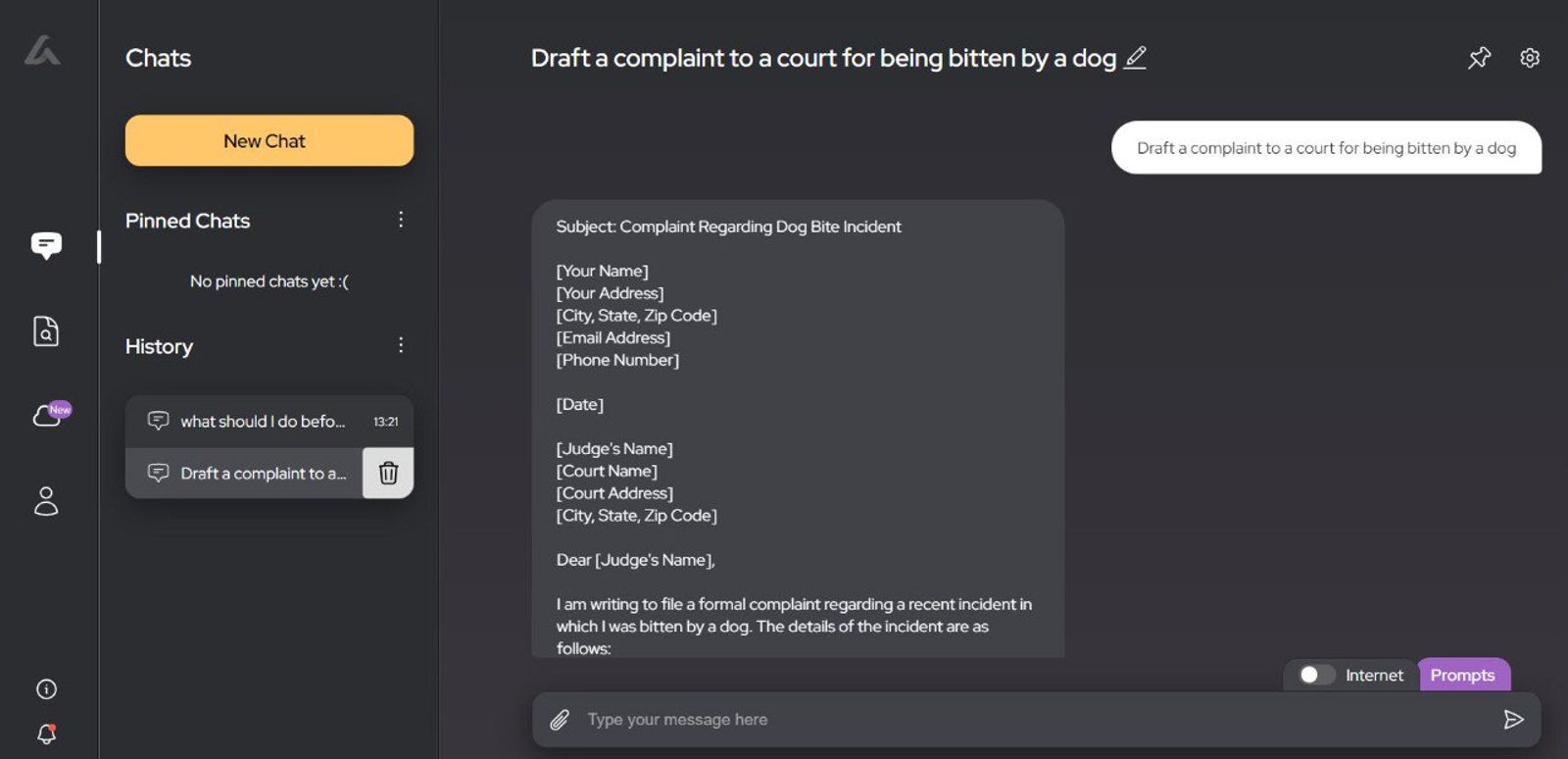
In addition to hiring a traditional criminal lawyer, you can leverage the power of AI Lawyer to assist with your case. AI Lawyer is an innovative platform designed to offer legal research assistance, document analysis, and more. Here’s how AI Lawyer can help:
-
Legal Research: AI Lawyer can quickly analyze vast amounts of legal data to provide relevant case law, statutes, and legal precedents that can strengthen your defense.
-
Document Analysis: Upload your legal documents, and AI Lawyer will help you understand their contents, identify critical issues, and suggest possible responses.
-
Writing Assistance: AI Lawyer can assist in drafting legal letters, motions, and other documents, ensuring they are professionally written and adhere to legal standards.
-
Insight and Guidance: The platform offers insights and simple answers to complex legal questions, making it easier for you to understand your case and your legal options.
3. Questions AI Lawyer Can Help With
AI Lawyer can provide assistance with questions that usually require a criminal lawyer, such as:
-
What are the potential penalties for the charges I am facing?
-
Are there any precedents or case laws that could benefit my defense?
-
How can I respond to a legal notice or court summons?
-
What are my rights during a police interrogation?
-
How can I prepare for my court hearing?
-
What should I include in a legal motion or plea?
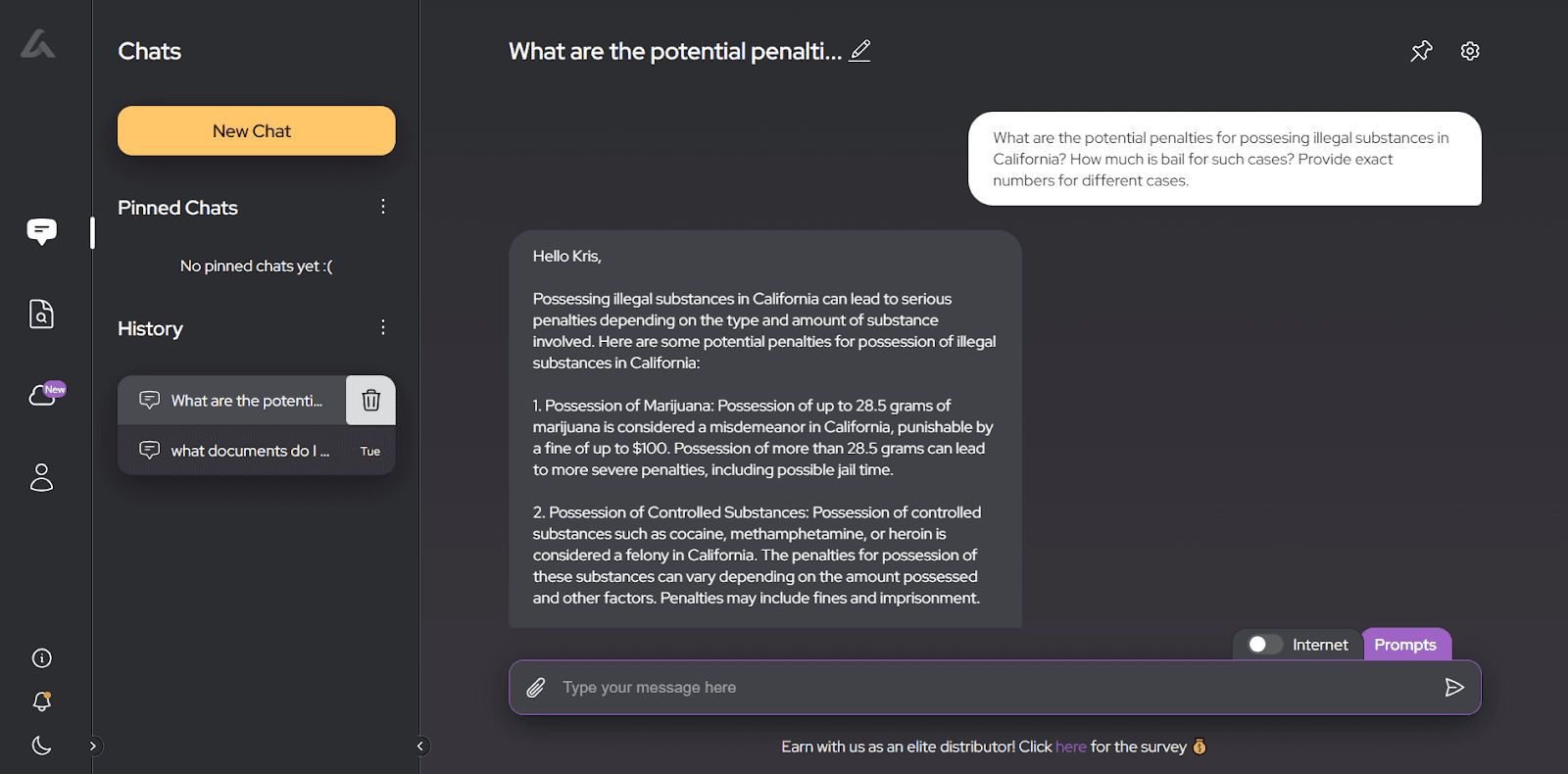
Example on how AI Lawyer can provide information on legal matters: What are the potential penalties for possesing illegal substances in California? How much is bail for such cases?
Possessing illegal substances in California can lead to serious penalties depending on the type and amount of substance involved. Here are some potential penalties for possession of illegal substances in California:
1. Possession of Marijuana: Possession of up to 28.5 grams of marijuana is considered a misdemeanor in California, punishable by a fine of up to $100. Possession of more than 28.5 grams can lead to more severe penalties, including possible jail time.
2. Possession of Controlled Substances: Possession of controlled substances such as cocaine, methamphetamine, or heroin is considered a felony in California. The penalties for possession of these substances can vary depending on the amount possessed and other factors. Penalties may include fines and imprisonment.
3. Possession of Prescription Drugs without a Prescription: Possessing prescription drugs without a valid prescription can also lead to criminal charges. The penalties for this offense can vary depending on the specific drug involved and the circumstances of the case.
As for bail amounts for possession of illegal substances in California, it’s important to note that bail amounts can vary widely depending on the specific circumstances of the case, including the type and amount of the substance involved, the defendant’s criminal history, and other factors. Bail amounts are typically set by a judge based on these factors.
To provide exact numbers for different cases, I would recommend contacting a criminal defense attorney in California who can assess your specific situation and provide you with more accurate information on potential penalties and bail amounts. It’s important to seek legal advice and representation if you are facing charges related to possession of illegal substances in California.
4. How to Find a Criminal Lawyer Near Me
1. Legal Directories
Websites such as Avvo, Martindale-Hubbell, and the American Bar Association’s directory offer detailed profiles and reviews of criminal lawyers.
3. Referrals
Ask friends, family, or colleagues if they can recommend a good criminal lawyer. Personal referrals can be a reliable source of information.
4. Local Bar Association
Contact your local bar association for a list of criminal defense lawyers in your area. They can also provide information on a lawyer’s credentials and disciplinary history.
5. Relevant Statistics
According to the Bureau of Justice Statistics, there were approximately 1.2 million criminal cases filed in the United States in 2023. This statistic underscores the high demand for competent criminal lawyers to handle the various charges that individuals face.
Most Common Crime in the USA
The most common crime in the USA is property crime, which includes burglary, larceny-theft, and motor vehicle theft. According to the Federal Bureau of Investigation (FBI), there were over 6 million property crime offenses reported in 2020, making it the most frequent type of crime in the country.
6. What to Look for in a Criminal Lawyer
1. Experience and Specialization
Ensure the lawyer specializes in criminal law and has experience handling cases similar to yours. An attorney with a track record in criminal defense will be more equipped to handle your case.
2. Reputation and Reviews
Look for reviews and testimonials from previous clients. Positive feedback and a strong reputation in the legal community are good indicators of a competent lawyer.
3. Communication Skills
A good lawyer should be able to explain legal terms in plain language and keep you informed about the progress of your case. Effective communication is key to a successful attorney-client relationship.
4. Fees and Costs
Discuss the lawyer’s fees upfront and make sure you understand their billing practices. Some lawyers charge by the hour, while others may offer a flat fee or work on a contingency basis. According to LegalMatch, criminal lawyers charge between $150 and $700 per hour, depending on their experience and the complexity of the case. Some cases may also require a retainer fee, which can range from $2,000 to $10,000.
7. Questions to Ask a Potential Criminal Lawyer
When you have narrowed down your list of potential lawyers, schedule consultations to ask the following questions:
-
How long have you been practicing criminal law?
-
Have you handled cases similar to mine?
-
What is your success rate?
-
How will you approach my case?
-
What are your fees and payment terms?
8. The First 24–72 Hours After an Arrest: Why Speed Beats Everything
Most people think a criminal case “starts” when a lawyer has time to dig in. In practice, it starts the moment of arrest — and the earliest hearings can shape the entire case before any real investigation begins. The U.S. federal courts describe the sequence from arrest through arraignment, bail, and trial in their overview of the criminal justice process.
-
Bail and release conditions can be set before your side has gathered facts. If no one pushes back at the first appearance, you may face higher bail, stricter supervision, or custody time that pressures later decisions.
-
Protective orders and no-contact rules can appear early. In cases involving alleged violence, threats, or domestic situations, courts may impose restrictions fast — and violations can trigger new charges or revoke release.
-
Statements happen before strategy. Police questioning, recorded jail calls, and even texts can become evidence long before you understand what the state claims it has.
-
Evidence disappears quickly. Video overwrites, phones get wiped, witnesses scatter, and memories fade. The first days are often your best chance to preserve details.
Mini-checklist — the first 60 minutes after an arrest, or before arraignment:
-
Say you want a lawyer and stop answering questions.
-
Avoid “explaining” to fill silence.
-
Assume jail calls are recorded and monitored.
-
Write down your timeline while it’s fresh.
-
Identify evidence that could vanish (video, messages, logs).
-
List witnesses and save reliable contact info.
-
If you have court, arrive early and take it seriously.
-
Call a lawyer for speed and courtroom familiarity, not a sales pitch.
The takeaway: “local” is operational, not cosmetic — early hearings set bail, restrictions, and next steps in minutes, and a lawyer who already works in that courthouse can appear fast enough to shape them instead of reacting to them.
9. Public Defender, Conflict Counsel, or Private Firm: How Local Defense Really Works
In real courtrooms, “local” defense is rarely one person — it’s a coverage network with three layers:
-
Public defender. The office built to appear early and handle volume. Appointment is typically automatic if you qualify financially, but it depends on the office actually having capacity when your case arrives.
-
Conflict (panel) counsel. Court-appointed private attorneys who step in when the public defender cannot ethically take a case — usually structural conflicts such as co-defendants or overlapping witnesses. In San Francisco, this handoff runs through the Bar Association of San Francisco’s Indigent Defense Administration.
-
Private defense firms. Retained directly for speed, focused attention, or courthouse familiarity — either immediately, or after delays surface in the appointment pipeline.
Case study — San Francisco, January 2026. When felony filings outpaced staffing, the San Francisco Public Defender’s Office said it could no longer accept some new felony appointments, and defendants began appearing at early hearings without counsel. Judge Harry Dorfman ordered the office to resume felony intake except in true conflict situations and raised the threat of contempt — the court’s enforcement tool for disobedience of its orders (see Cornell LII on contempt of court, plus the San Francisco Chronicle’s coverage of the order and the Daily Journal on the contempt posture). The office countered that overloaded lawyers cannot meet California’s professional duty of competent representation (see the State Bar of California’s Rules of Professional Conduct), and private local attorneys absorbed part of the overflow (Mission Local on private counsel acting as a “second office”).
The lesson travels to every county: the Sixth Amendment right to counsel can exist on paper while access fails at the exact moment the court keeps moving — so never assume the appointment pipeline is instant. If it stalls, ask the court about conflict/panel counsel, and consider private counsel for speed.
10. FAQ: Urgent Questions When You Need a Criminal Lawyer Fast
A public defender refused my case or said they can’t take it yet — what now?
In many places, a refusal is tied to conflicts, capacity, or appointment logistics, not a judgment about you. Courts can appoint conflict counsel when the public defender cannot ethically represent you, and some jurisdictions use panel programs to assign attorneys. If the appointment pipeline is delayed, the urgent question becomes who can intervene before the next hearing — that may be court-appointed panel counsel or private counsel, depending on your situation.
What if I show up in court without a lawyer?
You can still be called and processed through arraignment steps, including bail and release conditions. Some judges will continue the case briefly to allow counsel to be appointed, but the court may still set dates and impose conditions. Going alone increases the risk that early decisions get made without anyone pushing back. If you must appear, show up, say you want counsel, and avoid discussing facts on the record.
How do I find a criminal lawyer near me tonight or on a weekend?
Focus on lawyers who advertise emergency availability and who actually practice in the courthouse handling your case. When you call, lead with your next court date, custody status, and the charge level (misdemeanor vs felony), and ask whether they can appear. A fast “yes” means little if the lawyer cannot realistically attend the next hearing. If you can’t reach anyone, keep calling and document who you contacted.
Are jail phone calls really recorded, and can they be used in court?
Often, yes. Many facilities record calls and announce it at the start, and prosecutors can seek those recordings. A “private” explanation to family can become evidence that locks in a timeline or admissions. Avoid discussing facts, witnesses, or messages on any monitored line.
Should my family contact the alleged victim or complainant to “fix it”?
Usually no. Contact can violate no-contact conditions even if you think no order exists yet, and it can create new allegations like witness intimidation or harassment. Well-meant outreach is one of the quickest ways families accidentally make a case worse. Route communication through counsel once you have it.
Conclusion
Sources and References
Finding the right criminal lawyer near you is crucial for mounting a strong defense and ensuring the best possible outcome for your case. By following the steps outlined above, you can identify and hire a qualified lawyer who meets your needs. Additionally, leveraging AI Lawyer can provide valuable support and insights throughout your legal journey. Remember, the sooner you secure legal representation, the better your chances of a favorable resolution. Information on the role, ethics, and selection of criminal defense counsel is grounded in the American Bar Association’s Criminal Justice Standards on the Defense Function and public guidance on how to find a lawyer, including use of referrals and bar association resources when choosing a criminal attorney. Statistics on crime trends and the prevalence of property offenses draw on national data from the Bureau of Justice Statistics’ Federal Justice Statistics reports and the FBI’s Crime Data Explorer and Crime in the Nation releases, as well as summaries noting that more than 6 million property crime offenses occur annually in the United States. Typical cost ranges for criminal defense representation referenced in this guide (hourly rates of roughly $150–$700 and four-figure retainers for many cases) are based on consumer-facing legal cost analyses such as LegalMatch’s overview of criminal defense attorney fees and similar recent market surveys of criminal lawyer pricing.
You Might Also Like:
Disclaimer: This information is for general knowledge and does not constitute legal advice. For guidance on your specific situation, consult a qualified attorney licensed in your state.