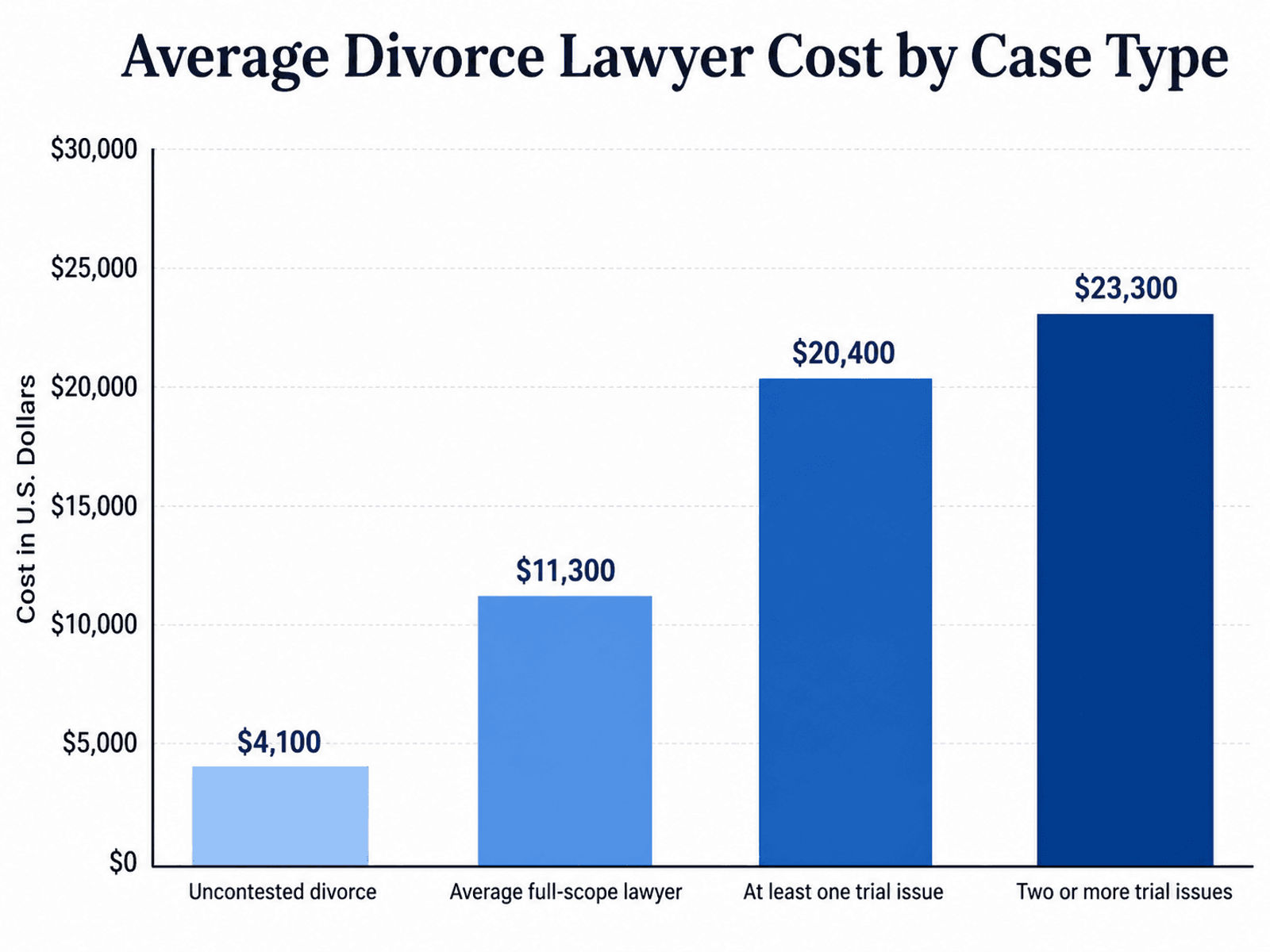



If you are trying to understand how much does a medical malpractice lawyer cost, the most honest answer is that there usually is no single flat price. Many of these cases are handled on a contingency basis, which means the lawyer is paid from a recovery rather than through large upfront fees. At the same time, the total financial picture may also include expert review, medical records, litigation expenses, and the added cost of taking a case deeper into court.
Because these claims are medically and legally complex, the final cost often depends on the facts, the stage of the case, and the rules of the state where the claim is being pursued.
You Might Also Like:
Typical Medical Malpractice Lawyer Fees in 2026 (Quick Breakdown)
When people ask how much does a malpractice lawyer cost, they are usually asking what stage the case has reached. Medical malpractice cases often become more expensive as the lawyer moves from screening to litigation because the amount of records review, expert analysis, and case development increases.
A practical breakdown looks like this:
-
Consultation and initial screening: this may be free or paid, depending on the firm and whether basic record review is needed.
-
Pre-suit investigation and demand: if the lawyer sees potential merit, the firm may gather records, consult experts, and prepare a demand package.
-
Lawsuit filed: once litigation begins, costs usually rise because discovery, depositions, motions, and formal expert work become necessary.
-
Trial-stage case: this is usually the most expensive phase because trial preparation requires more attorney time, more experts, exhibits, and courtroom presentation work.
This is why people searching how much do lawyers charge for medical malpractice or the average cost of medical malpractice lawyer services often do not see one clear number. In medical negligence cases, the work is tied to proving standard of care, causation, and damages through detailed medical records and expert testimony. Patients often need records early, and HHS guidance on access to health information under HIPAA explains those rights, while Cornell Law’s overview of expert testimony shows why expert review matters in technically complex disputes.
In practice, medical malpractice lawsuit lawyer cost depends less on a fixed price and more on case stage, medical complexity, and how much proof is needed before settlement or trial.
How Medical Malpractice Lawyers Charge (Contingency Fees, Hourly Work, and Retainers)
In most cases, a contingency fee medical malpractice lawyer is paid from a settlement or verdict rather than from large upfront bills. That is why many people describe the model as “no win, no fee.” But a contingency arrangement usually does not eliminate financial questions about the case, because the agreement may still address record costs, expert expenses, and when those costs are deducted. Cornell Law’s overview of contingency fees and ABA Model Rule 1.5 on attorney fees both help explain that structure.
The most common billing setups are:
-
Contingency fee for full representation in a malpractice claim.
-
Hourly or limited-scope work for a paid review, second opinion, or local counsel task.
-
Retainer-based work when the lawyer is hired for defined services rather than a full contingency case. Cornell Law’s retainer definition offers a neutral explanation of that model.
Before signing, ask only a few direct questions:
-
Does the percentage change if the case settles, is filed, or goes to trial?
-
Is the fee calculated from the gross recovery or the net recovery after expenses?
-
Who advances expert, records, and filing costs?
The real comparison is not just the percentage, but what you actually keep after fees and case expenses are deducted.
Medical Malpractice Contingency Fees Explained (What the Percentage Covers)
A medical malpractice contingency fee percentage is the share of the recovery that goes to the lawyer if the case succeeds. When people ask how much do malpractice lawyers charge, they often focus only on that percentage. In reality, the better question is what that percentage covers and what it does not. In most agreements, the attorney fee covers the lawyer’s legal work on the case, such as investigation, legal analysis, negotiation, drafting, strategy, and preparation for settlement or trial. A contingency fee is a payment method tied to the result of the case, not a label for every cost connected to the claim. A neutral explanation of that structure appears in Cornell Law’s overview of contingency fees, and ABA Model Rule 1.5 on fees also reflects that attorney fees and charged expenses must be handled reasonably.
That distinction matters because medical malpractice attorney fees and case expenses are not the same thing. A medical malpractice settlement lawyer fee usually refers to the lawyer’s percentage of the recovery, while case expenses refer to the money spent to prove the case, including records collection, expert review, depositions, filing fees, and trial materials. In malpractice litigation, expert support is often central because the case may depend on specialized medical proof, which is why Cornell Law’s explanation of expert testimony is relevant here. The number that matters most is usually not just the fee percentage, but what you actually keep after fees and case expenses are deducted.
Consultation Fees (What to Expect Before Hiring a Medical Malpractice Attorney)
A consultation with medical malpractice lawyer services may be free, but not always. Some firms offer a no-cost screening and then decide whether the case is strong enough for deeper review. Others charge a medical malpractice lawyer consultation fee when the lawyer is expected to review records, assess a timeline, or provide a second opinion on whether negligence can likely be shown. That means medical malpractice attorney price at the consultation stage often depends on how much analysis you are asking for.
To make the meeting useful, bring a simple timeline, the names of treating providers, discharge papers, consent forms, medication information, and any documents that show what happened before and after the suspected error. It also helps to ask how the firm wants records collected, since HHS guidance on access to health information and MedlinePlus information on patient rights can help patients understand basic access issues.
Before hiring the lawyer, ask whether the consultation fee is credited toward later work and whether the meeting is only a screening or a more detailed legal review.
Additional Costs Beyond Attorney Fees (Case Expenses in Med Mal Cases)
Even when a firm handles a case on contingency, medical malpractice lawsuit lawyer cost usually includes more than the attorney’s percentage. The biggest additional expenses often come from obtaining records, paying for expert review, taking depositions, ordering transcripts, paying filing or service fees, and preparing visual materials for settlement or trial. Patients generally have rights to inspect and obtain copies of medical and billing records, but collecting a complete file from multiple providers can still take time and money, especially when certified copies, imaging, or pharmacy records are involved. HHS guidance on access to medical records helps explain the access process, and MedlinePlus guidance on patient rights gives useful background for patients trying to organize care documents.

Typical case expenses may include:
-
medical records and certified copies;
-
expert reviews on standard of care, causation, and damages;
-
depositions, transcripts, and service fees;
-
exhibits, timelines, and medical illustrations for negotiation or trial.
That distinction matters because medical malpractice attorney fees and case expenses are not the same thing. A lawyer may take the same percentage in two cases, yet one case may cost much more to build because it needs several specialists, more providers, or more extensive discovery. Expert review is often a major cost driver because malpractice claims usually depend on proving standard of care and causation through specialized testimony. Federal Rule of Evidence 702 gives a neutral legal reference point for expert testimony, and Cornell Law’s overview of expert testimony helps explain why that evidence matters.
Depositions and transcripts can add another layer of expense, and filing fees are separate from what the lawyer earns. The U.S. Courts fee schedules show that court charges exist independently from attorney compensation, even though state-court amounts differ. In hospital malpractice lawyer cost questions, families should ask who advances these expenses, when they are reimbursed, and whether they are deducted before or after the contingency fee is calculated. In many med mal cases, the expert budget is one of the main reasons a firm may accept, decline, or delay a case.
Lower-Cost and Lower-Risk Options (Screening, Second Opinions, and Fee Transparency)
If you are trying to control medical malpractice attorney price early in the process, the goal is usually not to find the cheapest lawyer, but to reduce risk before committing to full representation. A low cost medical malpractice lawyer option may begin with a free screening, a paid second opinion, or a limited review of records and timelines instead of immediate full litigation. In consumer terms, that approach is similar to limited-scope legal help, which the ABA Unbundling Resource Center describes as an alternative to full-service representation.
These lower-commitment steps can make a consultation with medical malpractice lawyer services more useful because they help clarify whether the main issue is liability, causation, damages, or missing documentation. They also give the patient or family a chance to organize records before a firm commits substantial resources to the case. That matters in malpractice claims, where weak chronology and incomplete records can make even a serious injury harder to evaluate. Patients who need to gather records from several providers may also find HHS guidance on access to medical records useful at this stage.
Lower upfront cost does not always mean lower overall risk in a medical malpractice case. The better question is whether the lawyer’s process gives you a clearer picture of proof problems, expense exposure, and likely net recovery before you sign.
Cost by Medical Malpractice Case Type (Most Common Scenarios)
Medical malpractice cases are often billed under a similar fee model, but they do not cost the same to investigate and litigate. The real difference usually comes from how difficult the medicine is to analyze, how many experts are needed, how many providers or institutions are involved, and how long it takes to prove that the error actually changed the outcome. In practice, cost usually rises with the difficulty of building reliable proof, not with the label of the claim itself. For neutral medical context, AHRQ PSNet’s primer on diagnostic errors, MedlinePlus on anesthesia, MedlinePlus on childbirth problems, and FDA guidance on medication errors are useful reference points.
| Case type | Typical billing | What drives cost up |
|---|---|---|
| Surgical & anesthesia errors | contingency + high expenses | expert review, causation disputes, records volume |
| Misdiagnosis / delayed diagnosis | contingency + high expenses | timeline proof, differential diagnosis, multiple providers |
| Birth injury cases | contingency + very high expenses | life-care plans, long-term damages, multiple experts |
| Hospital/ER/medication/dental negligence | contingency + expenses | institutional records, staffing/policy proof, multiple defendants |

1) Surgical and anesthesia error malpractice
These cases are often expensive because they require careful reconstruction of a technical event. A poor outcome after surgery is not enough by itself, so the lawyer usually has to show what should have happened, what actually happened, and why the difference matters. That often means reviewing operative reports, anesthesia records, consent forms, postoperative notes, and monitoring data. These cases often cost more because the facts must be reconstructed in detail, not just described in broad terms.
2) Misdiagnosis and delayed diagnosis malpractice
Diagnostic cases are often more expensive for a different reason: they usually have to be proven across time. Instead of focusing on one event, the lawyer may need to build a timeline across multiple appointments, referrals, scans, lab results, symptoms, and follow-up failures. The central issue is often not only whether the patient was seriously ill, but whether earlier action would likely have changed the outcome. These claims often cost more because the proof depends on sequence, missed opportunities, and a longer causation analysis.
3) Birth injury malpractice cases
Birth injury cases are often among the most resource-intensive in this field. They may involve labor and delivery records, fetal monitoring strips, neonatal records, and expert review from more than one specialty. In addition to proving what happened during labor or delivery, the case may also require extensive work on future care needs and long-term harm. These cases are often expensive because they combine complex medical proof with long-range damages evaluation.
4) Hospital / ER / medication / dental malpractice (institutional negligence)
Cases involving hospitals, emergency rooms, medication errors, or dental negligence often become more expensive when the claim expands beyond one provider and into a broader system failure. The lawyer may need to review:
-
staffing and supervision records;
-
medication administration or handoff documentation;
-
internal policies, protocols, or discharge procedures;
-
the role of multiple providers or defendants.
That broader structure can make these cases harder to evaluate and present. Emergency care is especially difficult because decisions are made quickly and the records may reflect several teams. These cases often cost more because the lawyer is not just proving what one person did, but how several people, records, and systems fit together.
Legal Requirements and Regulatory Context (State Rules, Deadlines, and Med Mal Screening)
Medical malpractice rules are highly state-specific, which is one reason costs and timelines can vary so much. The key issue is not only whether negligence happened, but what legal steps must be completed before a case can move forward. Depending on the state, that may include filing deadlines, pre-suit notice, expert review, or a certificate of merit. For example, the California Courts Self-Help Guide on medical malpractice claims explains California’s timing rules, while Florida Statutes section 766.106 on presuit notice shows how some states require formal notice before filing.
These rules matter because they can increase the amount of work required at the very beginning of the case. If a lawyer must gather records, consult an expert, and satisfy screening requirements before filing, the case may cost more to evaluate and take longer to prepare. NCSL’s overview of merit affidavits and expert witness rules is useful because it shows how much these requirements differ across states.
State rules affect more than procedure; they often affect the budget, the timeline, and whether a lawyer can take the case at all. That is why families should ask about deadlines, screening requirements, and expert review before signing a fee agreement.
How to Find the Right Medical Malpractice Lawyer (What to Ask About Fees and Experts)
Choosing a medical malpractice lawyer is not just about asking how much do medical malpractice lawyers charge. It is about learning how the lawyer evaluates risk, builds proof, and explains what you may actually keep after fees and expenses. A useful starting point is the written fee agreement. ABA Model Rule 1.5 on fees emphasizes that fees and charged expenses must be reasonable, and Cornell Law’s overview of contingency fees explains that a contingency agreement should clearly describe how the fee is calculated and what expenses the client may still owe. The best fee conversation is the one that makes the net recovery picture easier to understand, not harder.
When you speak with the lawyer, ask whether the percentage changes if the case settles early, is filed, or goes to trial, whether the percentage is calculated on the gross recovery or the net recovery, and who advances record costs, expert fees, and filing expenses. You should also ask how the firm screens cases, what kind of expert network it uses, and whether it is prepared to take the case through trial rather than only negotiate an early settlement. Because expert proof is central in malpractice claims, Cornell Law’s explanation of expert testimony is especially relevant here.
Red flags are usually practical: unclear expense terms, vague answers about experts, promises of a guaranteed outcome, or pressure to sign quickly. A strong consultation should leave you with clearer expectations about proof, cost, and communication.
Common Mistakes That Increase Med Mal Legal Costs (or Weaken the Claim)
Some of the costliest problems in a medical malpractice case begin before a lawsuit is filed. Delays in requesting records can slow screening, weaken the timeline, and force the lawyer to spend more time filling basic gaps. That is why early document collection matters, and HHS guidance on access to medical records is especially useful at this stage.
Common mistakes include:
-
waiting too long to request records;
-
giving an incomplete list of providers;
-
missing key timeline details;
-
speaking with insurers or hospital representatives without counsel;
-
confusing attorney fees with case expenses;
-
failing to keep devices, medications, or discharge papers.
These mistakes can increase medical malpractice lawsuit lawyer cost because they make the claim harder to investigate and prove. The easiest way to control cost is to preserve records, documents, and key details before proof problems start.
Save on Legal Fees with AI Lawyer
AI Lawyer can be used as a support tool before or during a consultation. It may help users organize documents, prepare a treatment timeline, summarize records, and make a focused list of questions to ask a medical malpractice attorney.
That kind of preparation can make it easier to explain the facts clearly and identify missing information before speaking with counsel. It may also help patients and families keep records more organized during an active claim.
AI Lawyer does not replace a licensed attorney, does not provide legal advice, and does not evaluate whether a medical malpractice case is legally valid.
Conclusion
The cost of a medical malpractice case usually depends on more than the lawyer’s fee alone. Even when representation is handled on contingency, the financial picture may also include records, expert review, depositions, and other case expenses.
That is why the most important questions are often practical ones: how expenses are handled, who advances them, and whether deductions are taken before or after the fee is calculated.
Before signing any agreement, make sure you understand both the fee structure and the expense policy in clear written terms.
You Might Also Like:
FAQ
How are medical malpractice lawyers usually paid?
Many medical malpractice lawyers handle cases on a contingency basis, which means the lawyer is paid from a settlement or verdict rather than through large upfront fees.
Are medical malpractice consultations always free?
Not always. Some firms offer a free initial screening, while others charge for a more detailed review of records or case materials.
What case expenses are separate from the lawyer’s fee?
Separate expenses may include medical records, expert review, depositions, filing fees, transcripts, and other litigation-related costs.
Who usually advances expert and litigation costs?
That depends on the fee agreement. In some cases, the law firm advances those costs and later seeks reimbursement from the recovery.
Why do some medical malpractice cases cost more to build than others?
Costs often rise when the case involves more complex medicine, multiple providers, disputed causation, or extensive expert review.
What should I ask before signing a fee agreement?
Ask how the fee is calculated, how expenses are handled, who advances costs, and whether deductions are taken before or after the lawyer’s fee is applied.
Does a contingency fee mean there are no other costs at all?
No. A contingency fee usually refers to how the lawyer is paid, but other case expenses may still apply depending on the agreement.
Sources and References
This article relies on neutral, non-competitor sources that help explain both legal process and case-building costs. These include state court guidance such as the California Courts Self-Help Guide on medical malpractice claims, state-law surveys such as NCSL’s overview of merit affidavits and expert witness rules, and patient-record access guidance from HHS on medical records. Neutral legal background also comes from Cornell Law’s explanation of contingency fees, while medical context can be supported by educational patient-safety resources such as AHRQ PSNet on diagnostic errors.
Disclaimer: This information is for general knowledge and does not constitute legal advice. For guidance on your specific situation, consult a qualified attorney licensed in your state.