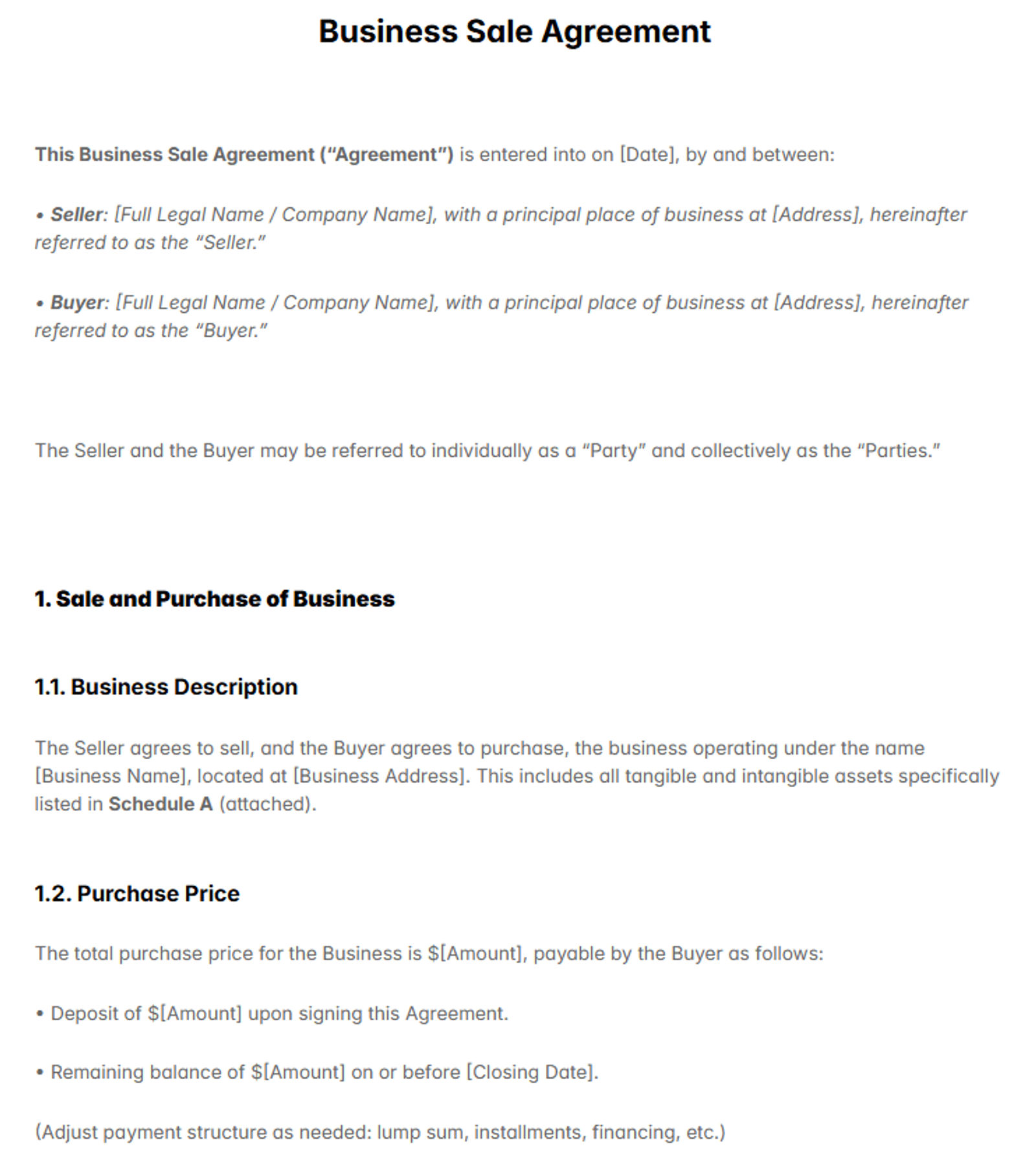



Buying or selling a business is where “we agreed on the price” collides with operational reality: what exactly transfers, what stays behind, and what happens if something breaks between signing and closing. If the paperwork is vague, small gaps turn into big disputes — over assets, debts, timelines, and who is responsible for cleanup.
In practice, deals fail when the commercial story isn’t tied to the transfer mechanics (what can actually be assigned, re-issued, or delivered at closing). A strong deal package turns assumptions into written workflows: schedules that list what’s included, conditions that must be met before money moves, and a closing checklist that makes the handover provable.
Disclaimer
This article provides general information — not legal advice — and it is written for a U.S. audience. Business sale documents can be interpreted and enforced differently depending on state law, the deal structure, and the facts of the transaction, so the same clause may operate differently across jurisdictions or industries. Because these terms can shift tax outcomes, allocate liabilities, and control what actually transfers at closing (including contracts, employees, IP, and data), having a qualified attorney review the documents before signing can prevent expensive mistakes that are difficult to unwind later — especially when there’s seller financing, earn-outs, escrow/holdbacks, regulated licenses, or meaningful customer data involved.
TL;DR
-
A business purchase and sale agreement defines four things in writing: what you’re buying, what you’re not buying, how you pay, and what must happen before closing. If any of those are fuzzy, the deal gets renegotiated at the worst moment.
-
If you’re buying assets (equipment, inventory, customer list, brand), you usually need an Asset Purchase Agreement (APA) + schedules + transfer documents. The APA is the “rules,” the schedules are the “inventory list,” and the transfer docs are the “receipt.”
-
If you’re buying the company itself (shares/membership interests), you typically need a Stock Purchase Agreement (SPA) + equity transfer documents. You’re stepping into the entity, so contracts and liabilities often follow unless carved out.
-
If the seller keeps any debts, taxes, or claims, you must separate them on paper. Use an assumed liabilities schedule and an excluded liabilities schedule so “who pays what” is not implied.
-
If the business has a lease, key vendor contracts, or big customers, check assignability before you sign. A purchase agreement can’t force a landlord or counterparty to consent — your closing conditions should.
-
If payment is not “100% at closing,” you need trigger-based terms. Seller financing, earn-outs, and holdbacks require dates, formulas, and “what counts” definitions — or the buyer and seller will calculate different numbers.
-
If you’re relying on a bill of sale alone, you’re missing the risk controls. A bill of sale proves transfer; it usually does not cover reps/warranties, indemnity, conditions to closing, or dispute mechanics.
-
Templates work when you fill facts first, then test consistency across documents. A fast safe workflow is: pick the right scenario, list assets and liabilities, define closing deliverables, add protections, then sign with proof.
-
You need a lawyer when the downside is hard to price. Regulated licenses, employee issues, tax exposure, IP ownership, liens/UCC filings, or disputed revenue are the common “don’t DIY” zones.
You Might Also Like:
What Is a Business Purchase and Sale Agreement?
Definition (plain English)
A business purchase and sale agreement is the main contract that makes the transaction clear enough to close and specific enough to enforce later. It turns a handshake deal into testable terms: what is being sold, what is excluded, how payment works, what must happen before closing, and what each side must do if something goes wrong.
You’ll see different labels in the wild (purchase agreement, sale agreement, agreement of purchase and sale of business assets). The name isn’t the point. What matters is whether a third party could verify what changed hands and under what conditions. That’s what prevents “we thought this was included” from becoming a dispute after money moves.
Also, in real deals this is rarely a single PDF. The “purchase and sale agreement” often works as an umbrella package: a core contract plus schedules and closing papers that document delivery and actually move ownership.
“The legal advisors of the parties prepare and negotiate a contract, which allocates the risks between the buyer and the seller.” — Cornell Law School LII (Wex): Mergers & acquisitions
That’s the practical job of this agreement. It doesn’t just describe the business — it allocates deal risk in writing. If the buyer discovers a missing asset, an undisclosed liability, or a blocked consent, the contract should already say who bears the cost and what the remedy is.
What it covers
At minimum, the agreement should cover:
-
It identifies who is buying and selling, and what structure applies (asset purchase vs equity/stock purchase).
-
**It defines what transfers and what is excluded so scope is measurable.
** -
It states the price and payment mechanics (timing, adjustments, and any holdback, seller note, or earn-out).
-
It allocates liabilities in writing (what the buyer assumes vs what the seller keeps, typically via schedules).
-
It lists closing conditions and closing deliverables (consents, releases, assignments, transfer paperwork).
-
It defines what happens if something is wrong (reps/warranties, remedies, and dispute terms).
We unpack these in Business Sale Agreement Format (Core Structure + Key Terms) with a checklist. The goal here is simpler: these are the minimum “must-be-true” components that make a sale workable.
What it doesn’t solve (state-specific + special cases)
Even a strong agreement can’t force transfers that legally require extra steps. A lease, lender agreement, franchise agreement, or key vendor/customer contract may require written consent, and the contract can’t compel a third party to approve. Some licenses and permits are non-transferable and require a new application or transition plan.
Liens on equipment or inventory don’t disappear because the parties agreed; clean title usually requires payoff and a release. A contract can assign responsibility for these issues, but it cannot override state rules, agency requirements, or third-party rights.
That’s why experienced buyers and sellers treat the purchase agreement as part of a system: define the rules, attach schedules that make scope provable, and use closing deliverables that prove the transfer actually happened.
When Do You Need a Business Sale/Purchase Agreement?
You need a full business sale/purchase agreement whenever the deal has enough moving parts that a simple transfer form can’t keep it honest. If there’s uncertainty about what transfers, what doesn’t, or who is responsible for past problems, a full agreement is the safest minimum.
This is typically true when the sale includes more than inventory or equipment. As soon as you add goodwill, customer relationships, IP, contracts, employees, a lease, or “money later” terms (holdback, seller note, earn-out), the risk profile changes. The agreement becomes the control system that locks the deal mechanics in place so the transaction doesn’t get renegotiated under pressure.
If you want a plain-language baseline, the SBA’s overview on closing or selling your business (including preparing a sales agreement) is a useful reference point.
When a simpler document might work (and risks)
A simpler document (like a bill of sale or short transfer contract) can work only when the transaction is truly narrow. Think low-dollar, one-time transfer of clearly identified items for immediate payment, with no employees, no lease, no meaningful contracts, no customer data, and no continuing obligations.
The trade-off is that simplicity removes the safety rails. A basic transfer document usually proves that something changed hands; it usually does not protect either side if the “something” is incomplete, encumbered, or misrepresented. That’s where disputes come from: unclear exclusions, liabilities that weren’t separated, missing consents, and payment terms without triggers.
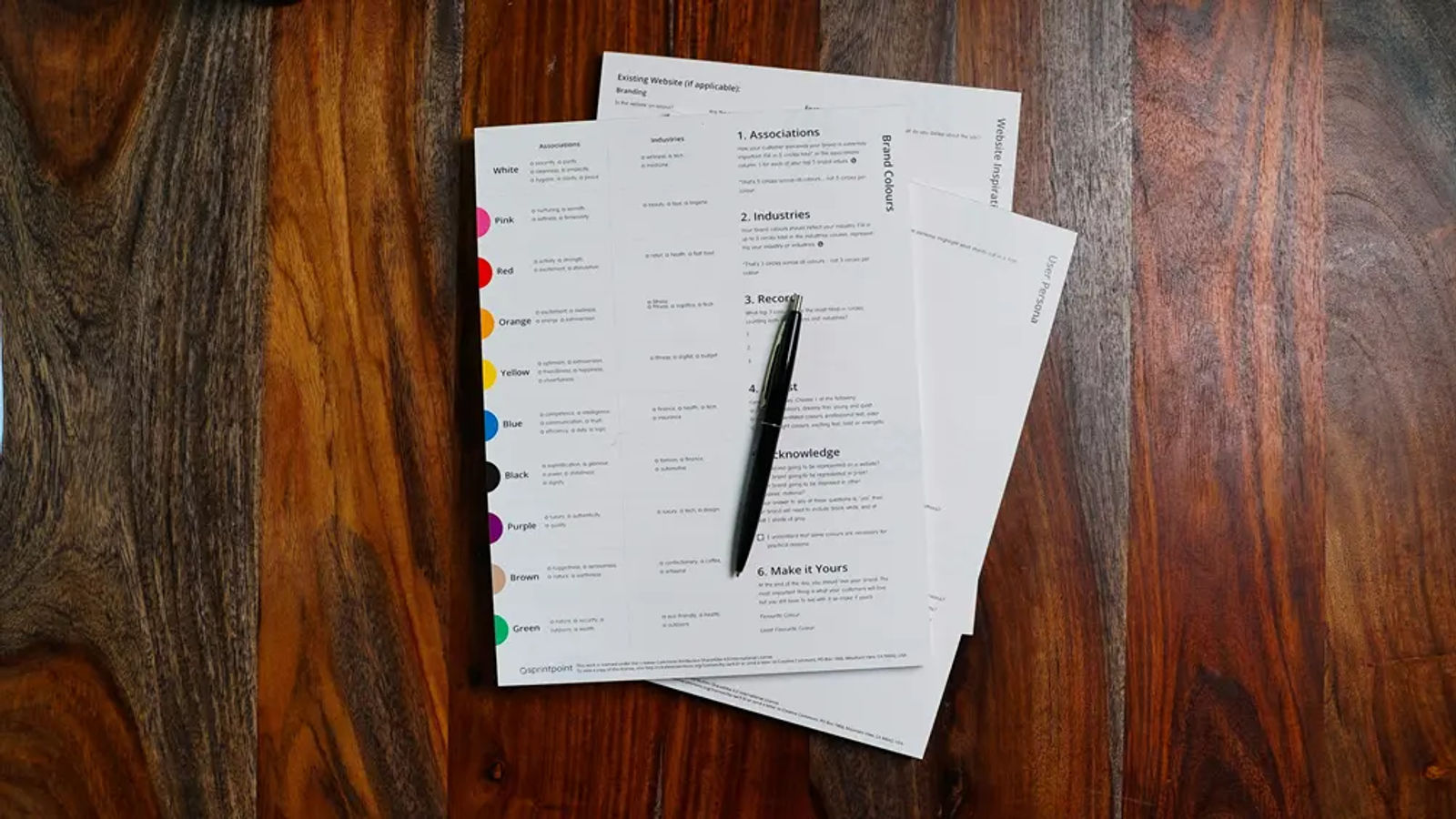
Business Sale/Purchase Agreement vs APA vs SPA vs Bill of Sale vs Transfer Docs
Agreement (full contract)
Think of the “business sale/purchase agreement” as the umbrella. It sets the rules of the transaction: what is being sold, what is excluded, how payment works, who keeps which liabilities, what must be delivered at closing, and what happens if a key statement is untrue.
In practice, that umbrella is often an APA (asset deal) or SPA (equity deal) plus schedules and closing deliverables. The name matters less than whether the package is complete and consistent.
Asset Purchase Agreement (APA)
An APA is used when the buyer purchases selected assets rather than buying the entity itself. Its job is to define the scope item-by-item (included assets, excluded assets, assumed liabilities, excluded liabilities), so the buyer is not relying on assumptions.
Stock Purchase Agreement (SPA)
An SPA is used when the buyer purchases equity (shares or membership interests). The entity stays the same and ownership changes, which can preserve operational continuity, but usually means historical liabilities remain inside the entity unless addressed by disclosures and risk terms.
Bill of sale (closing document)
“A bill of sale is a written instrument that attests to a buyer’s purchase of property from a seller.” — Cornell Law School LII (Wex): Bill of sale
That definition matters because it explains the limit. A bill of sale proves that a transfer happened — it does not define the full deal. On its own, it usually won’t cover conditions to closing, detailed scope exclusions, liability allocation, or remedies if something turns out to be wrong. That’s why you use it as closing evidence inside a larger agreement package, not as a substitute for one.
Ownership / share transfer documents
In equity deals, transfer documents (share/interest transfer instruments and related approvals) are what make the ownership change recordable and provable. They prove “the transfer happened,” while the SPA explains “the deal terms and protections.”
Comparison table
| Document | What it is | Primary job | Typical use |
|---|---|---|---|
| Full purchase/sale agreement (umbrella) | Main deal contract/package | Defines scope, price, liabilities, conditions, remedies | Most business acquisitions |
| APA | Definitive contract for asset deals | Transfers selected assets + splits liabilities via schedules | Asset purchase |
| SPA | Definitive contract for equity deals | Transfers ownership of the entity | Stock/equity purchase |
| Bill of sale | Closing instrument | Evidence of asset transfer | Closing (asset deals) |
| Transfer docs | Closing instruments/records | Evidence/mechanics of ownership change | Closing (equity deals) |
Pick in 30-second decision logic (plain English)
-
Choose an SPA if you’re buying the entity (shares/ownership) and want continuity, but you’re ready to diligence and contract around entity liabilities.
-
Choose an APA if you’re buying specific assets and want a cleaner boundary, with assets and liabilities separated in schedules.
-
Use a bill of sale for closing proof, not as the only contract, unless the deal is truly narrow and low-risk.
-
Use ownership/share transfer documents to make the equity transfer “real” on paper, but don’t expect them to cover the economics or protections.
-
If there’s a lease, key contracts, or licenses, treat consents as a closing condition, not a “we’ll handle it later.”
Business Sale Agreement Format (Core Structure + Key Terms)
A strong business sale agreement (whether it’s an APA-style asset deal or an SPA-style equity deal) should read like something you can run. If a clause doesn’t change what someone must do, by when, and with what proof, it isn’t carrying its weight. The goal is a document package that survives real-world pressure: missing consents, last-minute surprises, and post-closing “that wasn’t included” arguments.
“It will serve as a road map for the time until the closing by spelling out the obligations of each party.” — American Bar Association: The Purchase and Sale Agreement (extract PDF)
That “road map” idea is the test. A good format doesn’t just describe the deal; it assigns obligations and makes closing measurable. If you can’t point to where a responsibility lives (and how it’s proven), you’ll renegotiate it when time pressure is highest.
Core structure checklist (what must be defined)
-
Parties and deal structure: legal names, entity types, and whether this is an asset purchase or an equity purchase. Structure changes what must be assigned vs what transfers automatically, so state it clearly.
-
Purchased assets/shares and excluded items: a measurable description of what transfers and what does not. Use lists that can be checked (inventory categories, serial numbers, domains, accounts, “all right, title, and interest in X”). **If it can’t be verified, it will be argued.
** -
Price and payment terms: purchase price, timing, deposits, and how adjustments work. If there’s escrow/holdback, seller financing, or earn-out, define triggers, calculation method, records used, and dispute handling. **Payment terms should function like operating instructions.
** -
Assumed vs excluded liabilities: write the split so responsibility isn’t implied later. In asset deals, this is usually schedule-driven; in equity deals, disclosures and risk terms do heavier lifting. **An unclear liability split is a hidden price term.
** -
Representations and warranties: the “truth statements” the other side relies on (authority, ownership, financial disclosures, no undisclosed issues, compliance basics). Reps should be specific enough to test, and paired with a remedy system that works.
-
Covenants (pre- and post-closing): pre-closing “operate normally” rules, plus post-closing transition and cooperation commitments. **Covenants turn “we’ll help” into deliverables and timelines.
** -
Conditions to closing: consents, lien releases, payoff letters, required approvals, and other gates that must be satisfied before the buyer must close. **Conditions prevent paying for a deal that can’t legally transfer.
** -
Closing deliverables: a closing checklist of what must be signed/delivered (agreement, schedules, bills of sale, assignments, transfer docs, keys, admin access, notices). **Deliverables create proof that the deal actually happened.
** -
Indemnification: what claims are covered, how notice works, process for third-party claims, and limits (cap, basket/deductible, survival). **Indemnity is how the contract prices “unknowns.”
** -
Confidentiality and restrictive covenants: confidentiality, non-solicit, and non-compete where enforceable and properly scoped. Overbroad restrictions can fail when you need them most, so scope matters.
-
Dispute resolution: venue/arbitration choices, attorneys’ fees, and urgent relief where needed. **A clear process reduces “fight about where to fight.”
** -
Governing law and signatures: governing law, notices, e-sign/counterparts language, and a correct exhibits/schedules list. If schedules aren’t properly incorporated, your “deal lists” can become optional.
A practical test: if you can’t run closing from the agreement and its schedules, the format is not complete. The most common friction points are scope, liability split, payment mechanics, and closing conditions — so those must be consistent across the agreement, schedules, and closing papers.

Asset Purchase vs Stock Purchase
Asset deal (what usually transfers)
In an asset purchase, the buyer purchases specific assets from the business. You are buying “pieces of the business,” not the legal entity itself. That usually lets you define the scope more precisely and avoid taking on obligations you didn’t price in. (For a general overview of how asset vs stock structures show up in M&A contracts, see Cornell Law School LII (Wex): mergers & acquisitions.)
Asset deals commonly transfer equipment, inventory, phone numbers, domain names, websites, certain IP, goodwill, and sometimes a customer list (only if it can be transferred legally). Many contracts and leases do not transfer automatically — they may require assignment language and third-party consent. Licenses and permits can also be non-transferable depending on the industry and state.
The upside is control. The buyer can intentionally choose what comes over and what stays behind, and that often means a cleaner boundary around liabilities. The downside is operational friction. Asset deals often require more “re-papering”: assignments, new accounts, updated vendor setups, and permission to keep using key relationships.
Stock deal (what changes)
In a stock (equity) purchase, the buyer purchases shares or membership interests in the entity. The legal entity stays the same; ownership changes hands. That continuity can reduce transfer work because the company is still the contracting party for many relationships.
But continuity cuts both ways. Liabilities and historical issues often stay inside the entity, which means the buyer is more exposed unless the deal is protected by strong disclosures and risk terms. Also, even in a stock deal, change-of-control clauses can still trigger consent requirements, especially in leases, financing documents, and major customer/vendor agreements.
Risk trade-offs (buyer vs seller)
From a buyer’s perspective, asset deals usually reduce unknown-liability exposure because the buyer can define assumed vs excluded obligations. From a seller’s perspective, stock deals can feel like a cleaner exit because the whole entity transfers as one unit.
In practice, the “best” structure is the one that matches what must stay continuous (licenses, contracts, financing) while keeping the risk you can’t price from becoming your problem. If the business depends on non-transferable permits or hard-to-assign contracts, that constraint can drive the structure more than preference.
Mini checklist: pick asset vs stock
-
Pick an asset deal if you need to exclude historical liabilities and buy only certain assets.
-
Pick an asset deal if the entity has messy history (old debts, disputes, unclear books) and you want a clean boundary.
-
Pick a stock deal if continuity is critical (licenses, financing, key contracts that are hard to re-paper).
-
Pick a stock deal if transferring assets one-by-one would break operations or create delays you can’t tolerate.
-
Either way, treat consents as a closing gate for leases, key contracts, and any required permits.
Scenario Templates
Use scenarios to pick the right template set. A “generic” draft fails because it guesses the structure, then the schedules, then the closing steps. Start with the closest deal shape, then make sure your facts, transfers, and closing proof match it.
Core asset deal (most small business acquisitions)
When it fits: You’re buying a defined set of assets (equipment, inventory, goodwill, brand items) and you want a clean line around liabilities. This is common when the buyer doesn’t want the seller’s old obligations to follow the transaction.
Risks: Asset deals fail when scope isn’t measurable. “Included vs excluded” gets renegotiated if items aren’t listed clearly. Also watch for liens and “silent” obligations (open orders, refunds, warranties) unless the liability split is explicit.
Core equity deal (buying the company for continuity)
When it fits: You need continuity because the entity holds contracts, permits, financing relationships, or vendor approvals that are hard to re-paper.
Risks: Liabilities tend to stay with the entity after ownership changes. Diligence and disclosures carry more weight. Also, change-of-control clauses can still require consents and delay closing.
Transfer + takeover (operator handover)
When it fits: The deal is mainly about handover: accounts, admin access, vendor setups, customer communications, and short-term seller support.
Risks: Takeovers break when transition promises aren’t operationalized. Missing passwords, unclear responsibilities, and no post-close support plan create downtime and disputes.
Customer list / goodwill-heavy deal
When it fits: You’re paying mainly for customers/leads/subscribers plus goodwill, sometimes with only a small asset bundle.
Risks: Weak consent/permissions can create compliance and deliverability risk. If the list definition and quality aren’t pinned down, valuation and “what you bought” can drift.
Digital-first business sale (domains, accounts, IP)
When it fits: The business is primarily digital assets and access credentials: domain, site, content/code, analytics, ad accounts, marketplaces.
Risks: Digital deals fail when control doesn’t transfer cleanly. Platform transfer limits, lost admin access, and unclear IP ownership can block a real handover even after payment.
If you’re between scenarios, pick the one that changes what must be proven at closing.
AI vs. Lawyer
There isn’t one “right” way to paper a business purchase/sale deal. The best option depends on your downside risk, how complex the transaction is (asset vs stock structure, assumed liabilities, licenses/permits, employees, tax exposure, customer data, IP), and how likely a real dispute becomes. Because pricing varies a lot by state and practice area, treat any cost ranges as directional — if you want a benchmark view, see Clio’s lawyer rate benchmarks by state.
| Option | Best for | Typical cost range (U.S.) | Main advantages | Main risks |
|---|---|---|---|---|
| DIY / AI (template + self-serve) | Simple, low-stakes deal: clear assets, no lease, no employees, cash at closing. | Low to moderate (tool/template dependent) | Fast structured first draft. It forces schedules and a closing checklist before negotiations drift. | Easy to miss high-risk gaps. Consents, liability split, and payment triggers can stay vague. |
| Lawyer review (you draft, lawyer edits) | Mid-stakes deal: some negotiation, lease or key contracts, holdback/seller note, basic schedules. | Moderate (varies by market/time) | Efficient risk tightening. It catches contradictions and state-sensitive issues without full custom drafting. | Review can’t replace missing facts. Weak schedules and incomplete diligence still create ambiguity. |
| Lawyer draft + strategy | High-stakes deal: licenses, taxes, earn-out, employees, liens/debt, IP or customer data transfer. | Higher (varies by market/time) | Cohesive risk strategy. It integrates structure, diligence, protections, and closing mechanics. | Higher cost and coordination. Outcomes still depend on complete disclosures and clear goals. |
Practical rule: use AI + a template when the facts are straightforward and the downside is manageable; pay for lawyer review when the deal touches liabilities, consents, payment mechanics, data/IP, indemnities, or liability caps; invest in full drafting when the agreement must carry serious consequences if things go wrong.
Template Library

Templates are a powerful starting point, but they only work when they match the deal you’re actually making. The right template turns business terms into enforceable workflows instead of leaving them as assumptions. Use the library below to pick the closest scenario and complete the key fields before you circulate a draft.
| Category | Best for | Key fields to complete | Templates |
|---|---|---|---|
| Core asset deal | Buying selected assets while keeping a clean boundary around old liabilities | Included assets; excluded assets; assumed liabilities; price and payment timing; closing deliverables | - Business Sale Agreement - Letter of Intent (LOI) for Asset Purchase - Term Sheet for Asset Purchase - Bill of Sale for Business Assets |
| Core equity deal | Buying the entity for continuity (contracts, permits, financing relationships) | Equity being sold; disclosures; approvals/consents; closing deliverables; post-close protections | - Business Sale/Purchase Agreement - Letter of Intent (LOI) for Stock Purchase - Letter of Intent (LOI) to Buy Shares - Equity Interest Transfer Agreement - Share Transfer Agreement |
| Lease-dependent local business | Deals where location is core (often restaurants and salons) | Lease consent/assignability; handover timeline; what happens if consent is delayed; transition responsibilities | - Business Transfer / Takeover Agreement - Ownership Transfer Contract - Restaurant Bill of Sale - Nail Salon Bill of Sale |
| Customer list / goodwill-heavy deal | Buying customers/leads plus goodwill where permissions and use rules matter | List definition; consent/permissions; opt-outs/suppression; allowed use; liability allocation | - Customer List Purchase Agreement - Assumed Liabilities Schedule (APA) - Excluded Liabilities Schedule (APA) |
| Digital-first business sale | Domains, websites, accounts, content/code, and access are the “business” | Proof of ownership; access transfer steps; platform constraints; what counts as successful handover | - Digital Asset Purchase Agreement - Assignment of Asset Purchase Agreement - Indemnification Addendum (APA) - Non-Compete Addendum (APA) |
How to Use a Template Safely (Step-by-Step)
Step 1: Pick the closest scenario first (don’t draft “generic”)
Templates fail when the deal type is wrong, not when the wording is imperfect. First decide whether you’re buying selected assets (asset deal) or the entity (equity deal). That choice changes what must transfer, what must be listed, and what “proof” looks like at closing.
If you’re torn, choose the structure that matches what must stay continuous (key contracts, permits, financing).
Output: A one-sentence deal definition (asset vs equity) plus the closest scenario category.
Step 2: Fill facts first (then stop and verify)
A template is only as accurate as your facts. Fill parties, legal names, entity types, price, payment timing, and the target closing date. Then stop and verify the identity layer: authority to sign, who owns the assets/equity, and whether key items can transfer (lease, major contracts, permits, domains, merchant accounts).
Output: A “facts page” both sides can confirm (who, what, price, timing, scope summary).
Step 3: Build schedules like a tracker (assets, liabilities, deliverables)
Treat schedules as the deal tracker. Schedules make the agreement measurable. List included and excluded items in a checkable way (serial numbers, domains, account identifiers). Separate liabilities explicitly using an Assumed Liabilities Schedule and an Excluded Liabilities Schedule so responsibility is not implied.
Then build a closing deliverables list: what must be signed and handed over at closing (bills of sale, assignments, consents, releases, keys, admin access).
Output: Three trackers you can run closing from: assets, liabilities, and closing deliverables (with an owner next to each item).
Step 4: Add protections that match the risk, then check consistency
Risk controls are pricing and accountability mechanisms. If payment is delayed or conditional, define triggers, dates, records used, and what happens on dispute. If the seller keeps liabilities, tie that allocation to remedies (reps/warranties and indemnity).
Then do a consistency pass: included/excluded items, payment terms, and closing conditions must match across the agreement, schedules, and closing papers.
Output: No contradictions across the package and one clear “source of truth” for scope, liabilities, payment, and conditions.
Step 5: Sign cleanly and set up proof so the deal stays real
A clean closing creates proof that ownership actually transferred. Make sure the signature block matches the legal parties and authority (titles, approvals). Keep a complete closing file: signed agreement, schedules, transfer documents, and payment evidence.
If the deal requires ownership transfer paperwork (for example, an agreement for transfer of ownership), include it in the closing packet with dated copies.
Output: A closing folder that stands on its own: signed docs, transfer proof, receipts, and a completed deliverables checklist.
Due Diligence Checklist (Before You Sign)
“In short, it boils down to this: do your due diligence.” — U.S. Small Business Administration: Buy an existing business or franchise
-
Financials: P&L, balance sheet, cash flow, bank statements, debt, AR/AP
-
Taxes: returns, sales tax status, payroll records, notices, liens
-
Assets: inventory and equipment list (serial numbers), liens/UCC, payoff and releases
-
Contracts: customer/vendor agreements, lease, assignment and change-of-control clauses, required consents
-
People: payroll, employment/contractor agreements, benefits, accrued PTO, restrictive covenants
-
IP/brand: domains, trademarks, software/code ownership, licenses, contractor IP assignments
-
Compliance: permits/licenses, regulated requirements
-
Litigation: claims, lawsuits, fines, chargebacks/refund patterns
-
Data/privacy: customer list legality, consent basis, marketing permissions, opt-outs
-
Closing readiness: what must be signed/delivered on closing day, by whom, with what proof
After Signing
Payment tracking and escrow/holdback
After signing, treat payment as a process, not a single event. Your goal is to make every payment step provable and tied to a clear trigger. If you’re using escrow or a holdback, document exactly what releases the funds, who confirms the condition is met, and what happens if there’s a dispute.
If the price is paid over time (seller note or installment plan), keep a simple ledger with dates, amounts, and proof of payment. Clean payment records reduce leverage games and make it easier to enforce defaults or negotiate amendments.
For a practical post-sale checklist mindset, the SBA’s overview on closing or selling your business is a useful reference.
Transition plan and handover checklist
The deal stays real only if operations actually transfer. A transition plan turns “handover” into deliverables and deadlines. Make sure you have written clarity on what gets handed over (keys, access credentials, vendor accounts, customer communications, training time) and who owns each step.
If the seller is providing post-close support, define the basics: time window, hours, response expectations, and what support is included versus out of scope.
Changes later (written amendment)
Deals often change after signing. The safe rule is simple: if it changes money, scope, timing, or liabilities, it needs a written amendment. Verbal side deals create conflicts with the signed agreement and are hard to enforce.
Even small changes (like extending closing, swapping an included asset, or adjusting a holdback trigger) should be captured in a short written modification signed by both parties.
When obligations end (final release / confirmation)
Don’t let obligations linger indefinitely. If you used a holdback, escrow, or post-close adjustments, close the loop with a written confirmation when conditions are satisfied. A final release (or written confirmation of completion) reduces future “surprise” claims and makes your records clean for banks, accountants, and future buyers.
For asset deals, it can also help to know what tax reporting gets triggered by an acquisition allocation; see IRS instructions for Form 8594 (Asset Acquisition Statement) for the standard U.S. filing that often follows qualifying asset sales.
Legal Requirements and Regulatory Context

Contract enforceability basics
“A contract is an agreement between parties, creating mutual obligations that are enforceable by law.” — Cornell Law School LII: Contract
That definition is your template filter. If the agreement doesn’t create clear, enforceable obligations, it won’t protect you when something goes wrong. In practice, enforceability usually comes down to clear parties, provable core terms, and real signing authority.
Statute of frauds, writing, and signatures
“A contract for the sale of goods for the price of $500 or more is not enforceable… unless there is some writing… and signed…” — Cornell Law School LII: UCC § 2-201
Even though a business sale is broader than “goods,” the practical takeaway is simple: when equipment and inventory are part of the deal, written and signed terms keep scope and price enforceable instead of arguable. For the plain-English framing of writing requirements, see Cornell LII: Statute of Frauds.
E-signatures and record retention
“A signature… may not be denied legal effect… solely because it is in electronic form.” — E-SIGN Act (15 U.S.C. § 7001)
The deal implication is operational: e-signatures work, but only if you can reproduce the final record and attachments later. Keep a clean closing file (signed PDFs, schedules, exhibits, and any audit trail). For a regulated record-retention perspective, see SEC guidance on applying E-SIGN to record retention.
Tax and reporting touchpoints
Taxes follow deal economics. If you’re allocating price across asset categories, start with IRS Publication 544. If payment continues after the year of sale, confirm whether installment rules apply using IRS Publication 537. If the deal is an applicable asset acquisition, Form 8594 may be part of the post-closing workflow; see IRS: About Form 8594.
Non-compete enforceability is state-by-state
“Most U.S. courts will enforce noncompete agreements if they are reasonable as to geography and time and there is a legitimate business interest at stake.” — ABA Business Law Today: Drafting an Enforceable Noncompete Agreement
This leads to the practical rule: non-competes only protect the deal when they’re narrowly tailored and state-appropriate. Also, policy and litigation can shift; for an official federal status signal, see the FTC press release (Sept. 5, 2025).
Data/privacy issues when buying customer lists
“Given the cost of a security breach… safeguarding personal information is just plain good business.” — FTC: Protecting Personal Information (Guide for Business)
Deal takeaway: a customer list is only valuable if it can be used lawfully and stored safely. If you need a state-framework example that often affects list transfers, start with the California Attorney General’s CCPA overview.
Common Mistakes to Avoid
Most deal problems don’t come from bad faith. They come from vague scope, missing schedules, and assumptions that never make it into a closing-ready workflow. The highest-impact mistakes are the ones that turn “we agreed” into “we can’t prove it.”
1) Treating the deal scope as a description instead of a checklist
In business sales, what’s included must be provable, not just described. Vague phrases like “the website,” “all equipment,” or “the customer base” create two different mental models — then the deal breaks under pressure.
Fix: Write scope so it can be checked in minutes. Use serial numbers for equipment, SKU/category lists for inventory, domain names and account IDs for digital assets, and a clear included/excluded split. If you can’t verify delivery quickly, you’re not done.
2) Leaving liabilities implicit instead of scheduled
Liability confusion is the most common post-close surprise. In asset deals, buyers often assume “no liabilities transfer,” while sellers assume the opposite. In equity deals, liabilities usually stay with the entity unless disclosures and remedies handle them.
Fix: Make the split explicit in schedules and make the agreement point to them. Use an assumed liabilities schedule and an excluded liabilities schedule, and keep definitions consistent across the package. An unclear liability split becomes a hidden price term.
3) Underpricing consents (lease, key contracts, permits)
Many closings fail because a third party controls a gate. Leases can require landlord consent, contracts can block assignment/change-of-control, and permits may be non-transferable. If you find this late, the buyer can’t operate even if everyone “wants to close.”
Fix: Treat required consents as closing conditions with deadlines and proof. If consent is required, “we’ll handle it later” is not a plan. The SBA’s overview on closing or selling your business is a useful reference point for the practical follow-on steps and documentation that often show up after a sale.
4) Writing payment terms without operational triggers
Payment disputes usually come from missing mechanics, not missing intent. “Paid after transfer” doesn’t define what counts as transfer, who confirms it, or what happens if the parties disagree. Holdbacks and escrow also fail when release conditions are vague.
Fix: Tie each payment to an if/then trigger, a date, and proof. Define adjustment mechanics, what records are used, who signs off, and what happens on dispute. If money moves later, you need enforcement-ready rules now.
5) Treating handover as “common sense” instead of a closing deliverable
After closing, the business must actually run. Admin access, passwords, vendor portals, merchant accounts, phone numbers, and customer communications must transfer in reality, not just on paper. Deals stall when ownership changes but control doesn’t.
Fix: Turn handover into a closing checklist with owners and evidence. Require confirmations for critical access transfers and define post-close support windows. Operations transfer only when control transfers — and control needs proof.
FAQ
What is a Business Purchase and Sale Agreement?
It is the main contract that defines what the buyer gets, what the seller keeps, and what must happen to close. In most deals it relies on schedules and closing papers to make the transfer provable.
What should a Business Purchase Agreement include?
A usable agreement states the parties, the deal structure, the purchase price, the payment mechanics, and the closing conditions in plain, testable terms. It should also spell out what counts as a default, what remedies exist, and what documents and items must be delivered at closing.
Asset purchase vs stock purchase: what’s the difference?
An asset purchase transfers specific listed assets, while a stock purchase transfers ownership of the entity that already owns the business. Asset deals often reduce unknown-liability exposure but require more assignments and consents. Stock deals preserve continuity, but liabilities typically stay inside the entity.
How does ownership transfer work in a business sale?
Ownership transfer is shown by closing deliverables, not by the purchase agreement alone. In asset deals, bills of sale and assignment documents evidence the change. In equity deals, share/interest transfer paperwork plus updated company records (and required approvals) make the change real.
Do I need a Letter of Intent (LOI) before selling a business?
Not always. An LOI is helpful when it prevents wasted diligence and drafting by locking the key terms early. It can set structure, price range, timing, and “must-have” conditions like lease consent. Some provisions may be binding, so treat it carefully.
Business sale agreement vs buy-sell agreement: what’s the difference?
A business sale agreement documents a specific buyer-seller transaction. A buy-sell agreement is an internal owner document that sets future transfer rules (exit, death, disability, disputes) and valuation mechanics.
What documents usually come with a business sale?
Most transactions use a package: a confidentiality agreement, an LOI or term sheet, the definitive agreement (asset or equity), schedules/disclosures, and closing transfer papers (bills of sale, assignments, ownership transfer docs, and consents).
How do I protect confidential information during a business sale?
Protecting confidentiality is a workflow, not a promise. Use an NDA before sharing sensitive materials, disclose in stages, limit access, and keep a log of what was provided. Avoid handing over credentials or full customer data until timing and protections are clear.
Do I need a non-compete agreement when selling a business?
Sometimes. A non-compete is most defensible when it is narrowly tied to protecting goodwill and customer relationships the buyer paid for. If state law or deal dynamics make it risky, a tight non-solicitation plus confidentiality may be a safer substitute.
How are shares or stock transferred in a sale?
Shares are transferred through written transfer documents plus updated company records. That typically includes approvals required by the operating agreement or bylaws, an updated ownership ledger/cap table, and any notices the governing documents require.
Get Started Today
A strong business purchase and sale agreement protects your time, your budget, and your leverage. When the key terms are written down, the scope is measurable, and the liability split is explicit, you reduce “endless back-and-forth” and move faster toward a clean closing.
Use the scenario section above to choose the closest template (asset deal, equity deal, takeover, customer list, digital assets), then pair it with a simple diligence plan so the other side can’t stall on “missing details.” A clean draft plus a clear review window turns negotiation into a trackable process instead of scattered emails.
Start with the Business Sale/Purchase Agreement Template from our library, or generate a first draft with AI Lawyer and then customize it to your deal points (price mechanics, deadlines, closing conditions, and any carve-outs). If the stakes are high — licensing or permits, meaningful debt/liens, earn-outs, employee issues, customer data transfer, or a large purchase price — consider having a U.S. lawyer review the agreement before you sign.
You Might Also Like:
-
Payment Agreement Templates: U.S. Payment Terms for Any Scenario
-
White Label Agreement: Meaning, Key Clauses & Templates (U.S.)
Sources and References
Core definitions (what a contract is, why writing/signatures matter, and plain-English legal framing) draw on Cornell Law School’s Legal Information Institute: Cornell LII — Contract (Wex), Cornell LII — Statute of Frauds (Wex), and the UCC writing baseline for goods-related terms: Cornell LII — UCC § 2-201.
E-signature validity and the “keep it reproducible” record-retention concept rely on the federal E-SIGN statute: GovInfo — 15 U.S.C. § 7001 (E-SIGN Act), plus SEC discussion of how electronic signatures/records intersect with compliance expectations: SEC — Application of E-SIGN Act to Record Retention Requirements.
Post-closing tax touchpoints referenced in the guide (asset sales concepts, installment sales, and asset acquisition statements) follow IRS primary materials: IRS — Publication 544 (Sales and Other Dispositions of Assets), IRS — Publication 537 (Installment Sales), and the standard reporting entry point for allocation filings: IRS — About Form 8594 (Asset Acquisition Statement), with practical detail in: IRS — Instructions for Form 8594.
Operational “what happens after the sale” guidance and practical exit/transition reminders use SBA small business resources: SBA — Close or Sell Your Business.
Advertising and marketing substantiation risk (relevant when customer lists, claims, and outreach are part of the transaction or transition) references FTC business guidance: FTC — Advertising and Marketing. Data security expectations and post-close handling of sensitive information follow: FTC — Protecting Personal Information (Guide for Business).
Non-compete enforceability concepts and drafting reasonableness framing use a professional legal overview: ABA Business Law Today — Drafting an Enforceable Noncompete Agreement, and the article’s note on the federal non-compete rule posture links to the FTC’s official update: FTC — Sept. 5, 2025 press release on the non-compete rule litigation posture.
Customer list/privacy transfer context includes a concrete example of a major U.S. state privacy framework that frequently affects data-driven deals: California Attorney General — CCPA overview.
Cost benchmarking for “AI vs. lawyer” decision framing references a market-level rate overview (directional only): Clio — Lawyer rate benchmarks by state.
Secured-transactions and lien context (useful when checking whether assets are encumbered and what “security interest” means in practice) uses the UCC Article 9 primary text overview: Cornell LII — UCC Article 9.