AI Assisted
Export: PDF & DOCX
Get your custom agreement in minutes
4.8 Rating
Downloaded 4021 times
Get your complete
agreement in minutes
Select a template
Each template already follows legal structure and best practices.
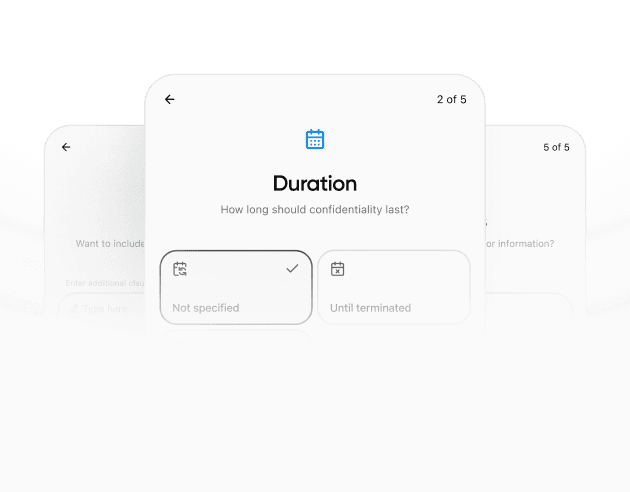
Provide details
The agreement is automatically filled and adapted to your inputs.
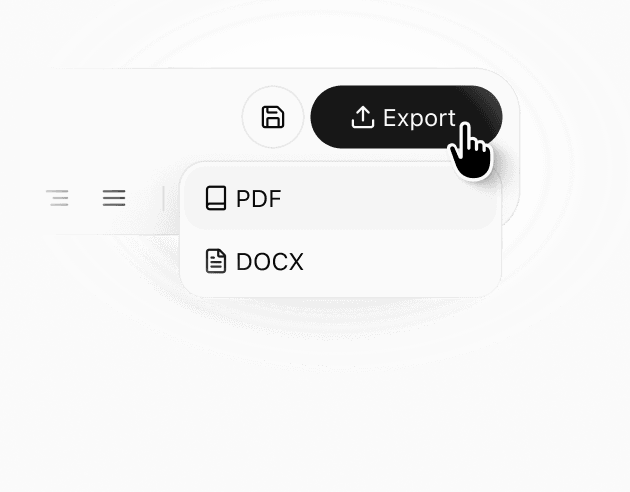
Review & download
Check the generated document, make edits if needed, and download a ready-to-use agreement.
Details
Learn more about
Child Custody Agreement Template – New York
New York Child Custody Agreement Template FAQ
How can we set up holiday and school-break time sharing without confusion?
Holiday and break provisions are clearer when they use a repeatable rule and state the exchange window for each event. Many parents use an even-year and odd-year rotation for major holidays, then set a specific start time and end time so there is no guessing. For school breaks, define what counts as the beginning and end of the break, such as the school dismissal time and the first day back at school. Keep the list focused on the holidays your family actually uses, and make sure the holiday rule clearly overrides the regular weekly schedule.
What does “legal custody” cover in practical day-to-day decisions?
Legal custody generally concerns major decisions, such as education choices and significant medical care. Routine day-to-day decisions are often handled by the parent who has the child during that parenting time, like meals, bedtime, and ordinary activities. A good agreement reduces friction by separating major decisions from routine choices and by stating how parents share information. If there are categories you expect to revisit, such as therapy, tutoring, or changing schools, include a process for proposals, timelines for responses, and what happens if you cannot agree.
How should parents document access to school and medical records?
The agreement can list the types of records each parent may obtain and the method used to authorize access, such as a release form, portal access, or provider authorization. It also helps to state where key documents are stored so both parents can find them without repeated requests. If communication is strained, using one channel for record-related requests reduces confusion and creates a clear history of what was asked for and when it was provided. Clear record-access terms also help schools and providers understand how to share information without being pulled into parental conflict.
What is a good notice process for travel or schedule changes?
A practical notice clause sets a timeframe, a method, and the minimum information required. For travel, parents often include dates, destination address, and a contact phone number, and they limit the rule to overnight travel or travel beyond a set distance. For schedule changes, require written confirmation of the new dates and times, plus an explicit acknowledgment that both parents agree. Choosing one official channel for notices reduces “missed message” arguments and keeps the record easy to find later if questions come up.
How can we reduce conflict about third-party caregivers or pickups?
Conflict tends to drop when the agreement defines who is authorized to pick up the child and how updates to that list are made. Parents can list common caregivers and programs, then state whether either parent may arrange backup care during their parenting time and how the other parent is notified. If safety is a concern, require advance notice for new caregivers and include basic identifiers like name and phone number. Clear rules help schools and programs avoid confusion and reduce last-minute disputes that can spill over into exchanges.
What steps should we take if we cannot agree even after talking?
When direct discussion is not working, a structured process keeps the issue from looping endlessly. Many parents exchange short written summaries of the problem and the requested outcome, then schedule mediation if there is still no resolution. A defined timeline prevents an argument from dragging on while decisions remain stalled. If the agreement allows temporary plans, parents can keep the child’s routine stable while the dispute is addressed. Once there is an outcome, document it in writing so the new plan is easy to follow and does not depend on memory.
Similar templates