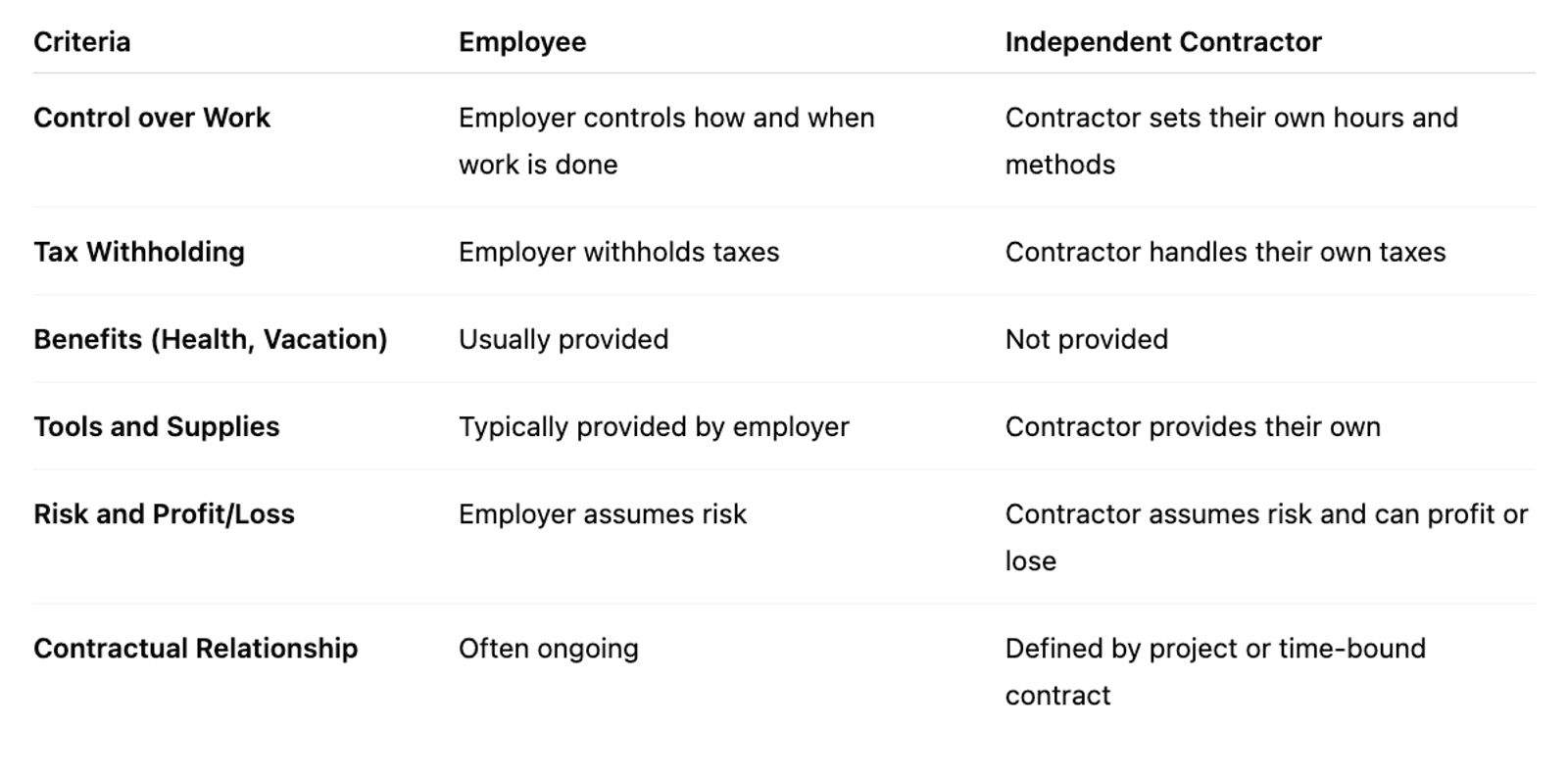



If you hire freelancers, work as a contractor, or manage HR and compliance, the key question is whether the U.S. Department of Labor’s February 26, 2026 action changes classification risk right now. The answer is still no: the DOL announced a proposed rule, not a final nationwide rule that automatically reclassifies workers. The agency’s news release, 2026 rulemaking page, and the Federal Register notice all show that this remains an active rulemaking process, with comments accepted through April 28, 2026, at 11:59 p.m. ET.
You Might Also Like:
What Happened on February 26, 2026?
On February 26, 2026, the Wage and Hour Division announced a proposed rule on worker classification, and the formal notice was published in the Federal Register on February 27, 2026. That date matters because it marks a proposal, not an immediate reset of worker status across the country. The rule had to move through notice-and-comment rulemaking before any final version could take effect.
The practical significance is not that every contractor suddenly became an employee. The practical significance is that the DOL publicly signaled where it wants federal classification guidance to go next. In the agency’s description, the proposal would simplify the analysis and align it more closely with federal court precedent.
What the DOL Wants to Change
The 2026 rulemaking page and the NPRM FAQs show that the Department is proposing to rescind the 2024 rule and replace it with a more streamlined analysis that resembles the 2021 approach. Instead of treating all factors without predetermined weight, the proposal would again give special attention to two core questions: how much control exists over the work, and whether the worker has a real opportunity for profit or loss based on initiative or investment.
The DOL also ties this proposal to its broader enforcement posture. In its May 1, 2025 enforcement guidance, the Department said investigators were directed not to apply the 2024 rule’s analysis in current enforcement matters while review was underway. The 2026 proposal continues that same directional shift. So while the final nationwide legal standard has not yet changed through this proposal, the Department has already made clear that it prefers a narrower and more predictable framework.
The Economic Reality Test, Explained in Plain English
The two core factors
The proposal keeps the familiar economic reality idea at the center: is the worker in business for themself, or economically dependent on the company for work? The two core factors are the nature and degree of control over the work and the worker’s opportunity for profit or loss based on initiative and investment. In plain English, the test asks who really runs the work and whether the worker can grow earnings through business judgment rather than just doing more hours.
The other factors
The proposal also says other facts remain relevant, especially when the two core factors point in different directions. These include the skill required, the degree of permanence in the relationship, and whether the work is part of an integrated unit of production. Those supporting factors matter most in close cases where the relationship is not obviously independent or obviously employee-like.
Why actual practice matters more than paperwork alone
One of the clearest parts of the proposal is its emphasis on actual working conditions. The DOL says the parties’ real practices matter more than what is merely contractually or theoretically possible. That means an independent contractor agreement can help as evidence, but it does not decide the issue by itself if the day-to-day relationship looks like employment. A label on paper does not control if the real relationship points the other way.
The proposal would also include eight examples showing how the factors apply in real-world situations. That matters because examples often shape compliance behavior more than abstract legal wording does.
Comparison Table: 2024 Rule vs. 2026 Proposed Approach

The biggest practical difference is that the 2024 rule used a six-factor analysis with no predetermined weight, while the 2026 proposal would again elevate two core factors. The 2024 final rule FAQs and the 2026 NPRM FAQs make that contrast clear.
| Issue | 2024 rule | 2026 proposal | Why it matters |
|---|---|---|---|
| Overall structure | Six-factor economic reality test | Streamlined model similar to the 2021 approach | More cases may turn on a smaller set of facts |
| Weight of factors | No factor or group of factors had predetermined weight | Control and profit/loss are treated as the two core factors | Businesses will focus more heavily on supervision, scheduling, pricing, and entrepreneurial upside |
| Supporting factors | Investment, permanence, control, integral work, skill, and other facts could all matter | Skill, permanence, integrated unit of production, and additional factors still matter, especially in harder cases | Secondary facts still count, but they are less central in the proposed structure |
| Beyond the FLSA | 2024 rule focused on the FLSA | Proposal would apply the same part 795 analysis to the FMLA and MSPA | Some employers may need a more uniform federal compliance review across related statutes |
Who Should Review Their Arrangements Most Carefully
This proposal matters most in working relationships that already sit in the gray area between real independent contracting and economic dependence. If the contract says “contractor” but the day-to-day setup looks employee-like, that relationship deserves a fresh look now. The DOL’s 2026 FAQs stress that the analysis depends on the facts of the relationship, not just labels.
Groups that may want closer review include:
-
Small businesses that call workers contractors but still control schedules, methods, and performance standards.
-
Founder-led companies that use flexible talent while managing them like internal staff.
-
Gig platforms because control and profit opportunity sit at the center of the proposed analysis.
-
Consultants and project specialists whose contract language promises independence, but whose actual workflow is tightly directed.
-
HR and compliance teams that need one review process for FLSA, FMLA, and MSPA questions if the proposal is finalized.
Legal Context in One Section
At the federal level, worker classification starts with the Fair Labor Standards Act, which governs minimum wage, overtime, recordkeeping, and child labor standards for covered employees. The DOL’s Fact Sheet #13 explains that the core legal issue is whether the worker is economically dependent on the business for work or instead operating a business of their own. That is why federal wage-and-hour classification is ultimately a facts-and-reality question, not a wording exercise.
The 2026 proposal also matters because it would apply the same classification framework to the Family and Medical Leave Act and the Migrant and Seasonal Agricultural Worker Protection Act, both of which incorporate the FLSA’s relevant definitions. The DOL says that change would create a more uniform standard across these three laws. But the Department also says this rulemaking would not change other federal, state, or local classification tests that use different legal standards.
Common Mistakes Businesses and Contractors Make

Many classification problems start because businesses focus on what they meant to create instead of how the relationship actually works. The most common mistake is assuming the contract ends the analysis when the daily facts point in another direction. The DOL’s Fact Sheet #13 and the 2026 NPRM FAQs both point back to the same practical lesson: classification turns on economic reality.
Common mistakes include:
-
Assuming the written agreement alone decides the outcome.
-
Treating flexible scheduling as automatic proof of contractor status.
-
Ignoring whether the worker can actually increase profit through initiative, pricing, marketing, or investment.
-
Overlooking permanence, skill, or operational integration because the business focuses only on invoicing or tax forms.
-
Mistaking a proposed federal rule for an already binding automatic reclassification standard.
What Happens Next
The next step is still rulemaking, not implementation. Interested parties were invited to comment through the rulemaking docket, and the DOL has said the comment period closed at 11:59 p.m. ET on April 28, 2026. After that, the Department still has to review comments, decide whether to revise the proposal, and publish any final rule before a new nationwide regulatory standard could take effect. So the current moment is best understood as “watch closely and review risk,” not “assume the law already changed.”
Bottom Line
This February 2026 DOL action is important, but it is still a proposal. The Department wants to replace the 2024 framework with a more streamlined economic reality analysis that emphasizes control and opportunity for profit or loss, while also using the same approach for relevant FMLA and MSPA questions.
For businesses, the immediate task is to identify contractor relationships where the paperwork says “independent contractor” but the real arrangement looks more like supervised, economically dependent work. For workers, the key point is just as simple: what happens in practice matters more than what the agreement calls the relationship.
Sources and References
U.S. Department of Labor news release on the February 26, 2026 proposed rule
Federal Register notice for the proposed rule
U.S. Department of Labor 2026 rulemaking page on independent contractor status
U.S. Department of Labor FAQs on the 2026 NPRM
U.S. Department of Labor 2025 enforcement guidance on independent contractor misclassification
U.S. Department of Labor 2024 final rule FAQs
U.S. Department of Labor Fact Sheet #13 on the employment relationship under the FLSA
U.S. Department of Labor overview of the Fair Labor Standards Act
U.S. Department of Labor overview of the Family and Medical Leave Act
U.S. Department of Labor overview of the Migrant and Seasonal Agricultural Worker Protection Act
Regulations.gov docket for comments on the 2026 proposal
Disclaimer: This information is for general knowledge and does not constitute legal advice. For guidance on your specific situation, consult a qualified attorney licensed in your state.