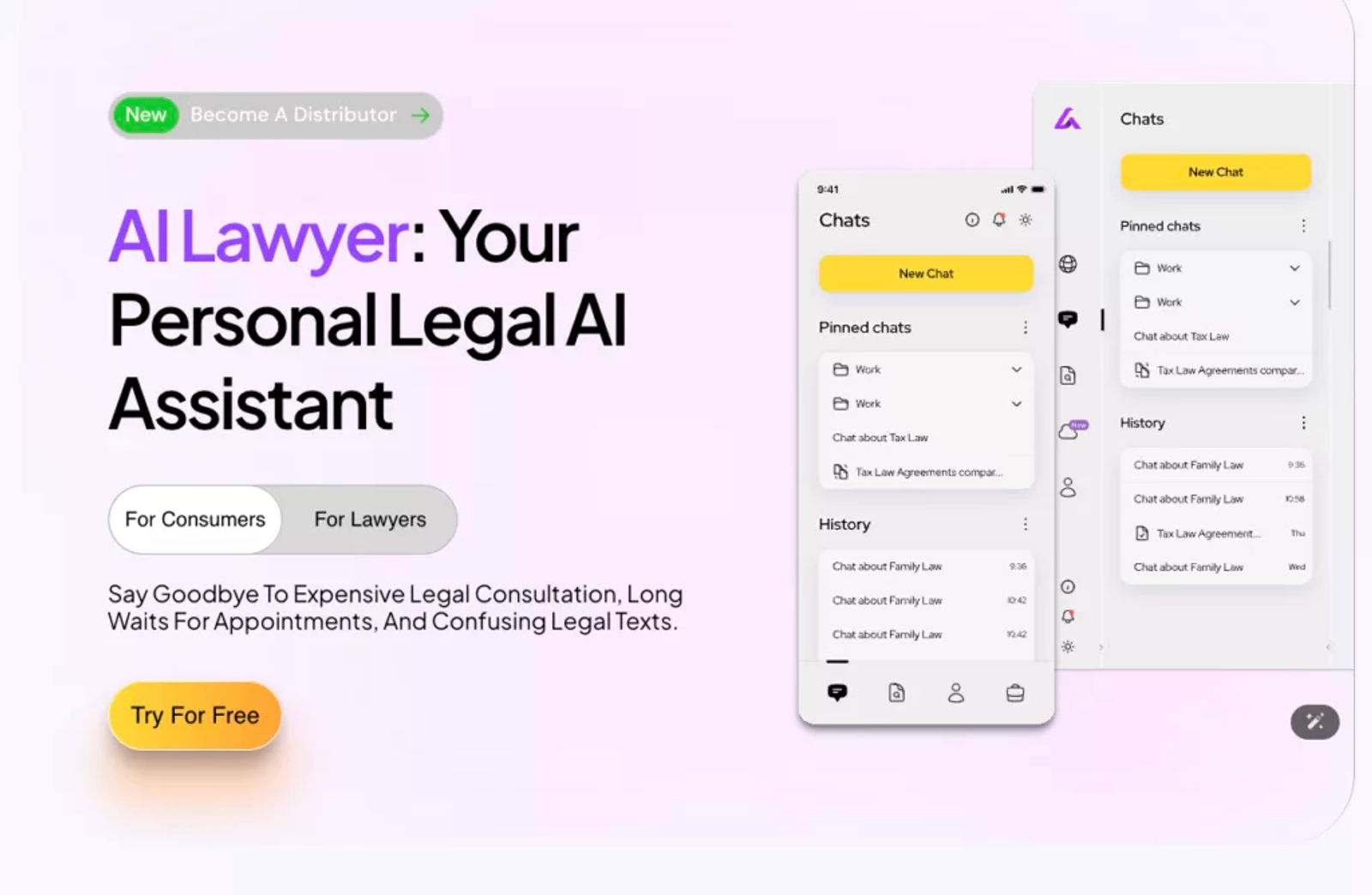


Need to write an immigration letter but do not want it to sound generic, stiff, or obviously AI-made? Start with a strong first draft, then shape it around real facts. That is where AI Lawyer is useful: it helps you move from scattered notes to a cleaner draft faster, while you stay in control of the details, tone, and customization instead of relying on one-size-fits-all copying.
Most articles on this topic explain what an immigration letter is. That is not the real problem. The real problem is this: how do you write a letter that actually helps the case? A weak letter sounds supportive but proves very little. A strong one gives the reviewer something concrete to trust.
Before we dive deeper into crafting the perfect letter, why not see how AI can assist you firsthand? Try AI Lawyer and experience how effortlessly you can draft, review, and perfect your immigration letters of recommendation. Start now and simplify your legal tasks
You Might Also Like:
Why these letters still matter
Immigration filings already include forms, records, and supporting documents. A letter helps in a different way: it adds context, firsthand knowledge, and human detail. USCIS guidance across several evidence contexts makes the same practical point: affidavits, letters, and similar statements are most useful when they come from people with direct knowledge and contain specific facts rather than broad praise.
That is why a short, specific letter can be more useful than a longer one full of compliments. The goal is not to sound impressive. The goal is to sound credible.
AI-Based Drafting Help for Immigration Letters
Not all tools solve the same problem. Some are better for a fast first draft. Others are built for immigration firms that need drafting, evidence handling, and workflow control at scale.
| Tool | Best for | Main strength | Main limitation |
|---|---|---|---|
| AI Lawyer | Individuals or small teams | Fast first drafts and easy customization | Less immigration-workflow depth |
| LegalBridge | Immigration firms producing many letters | Letter-specific workflow and review flow | More process-heavy for one-off use |
| VisaLaw AI | Immigration lawyers who need research plus drafting | Immigration-specific research and citations | More specialized for professionals |
| DocketWise IQ | Firms handling letters inside broader casework | Drafting tied to forms and document data | Best inside the DocketWise ecosystem |
| Parley | Evidence-heavy immigration teams | Drafting linked to source evidence and assembly | Better for professional teams than casual users |
AI Lawyer
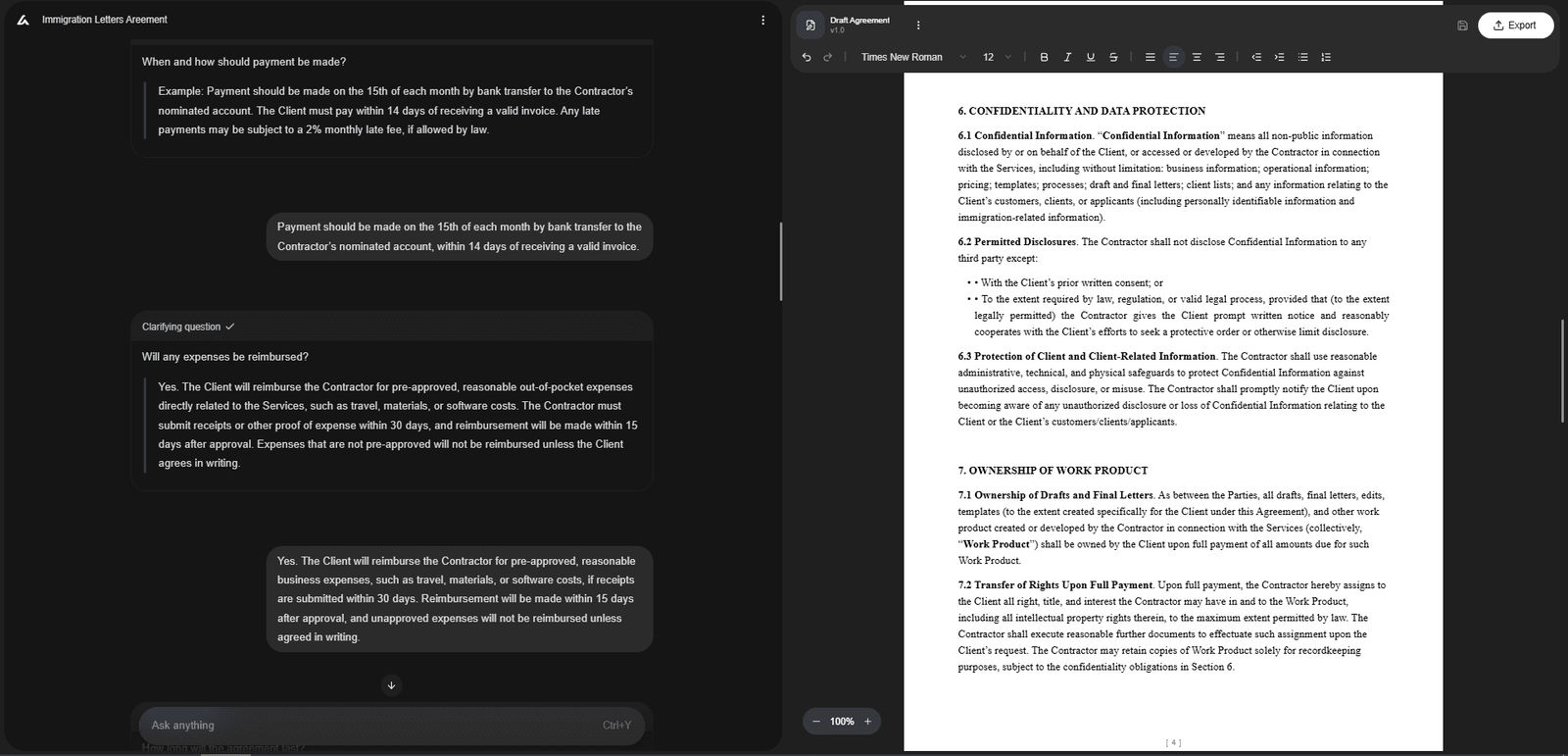
AI Lawyer is the most accessible option here if the main goal is speed. It offers immigration recommendation and support letter templates, plus guided drafting built around the applicant’s facts and use case.
It works best when someone wants to go from blank page to workable draft quickly. Its main advantage is simplicity.
LegalBridge
LegalBridge is more workflow-driven. Its product materials focus on questionnaires, AI drafting, editing tools, and review plus signature flow for immigration letters.
It is better suited to immigration practices that create letters repeatedly and need consistency across many matters.
VisaLaw AI
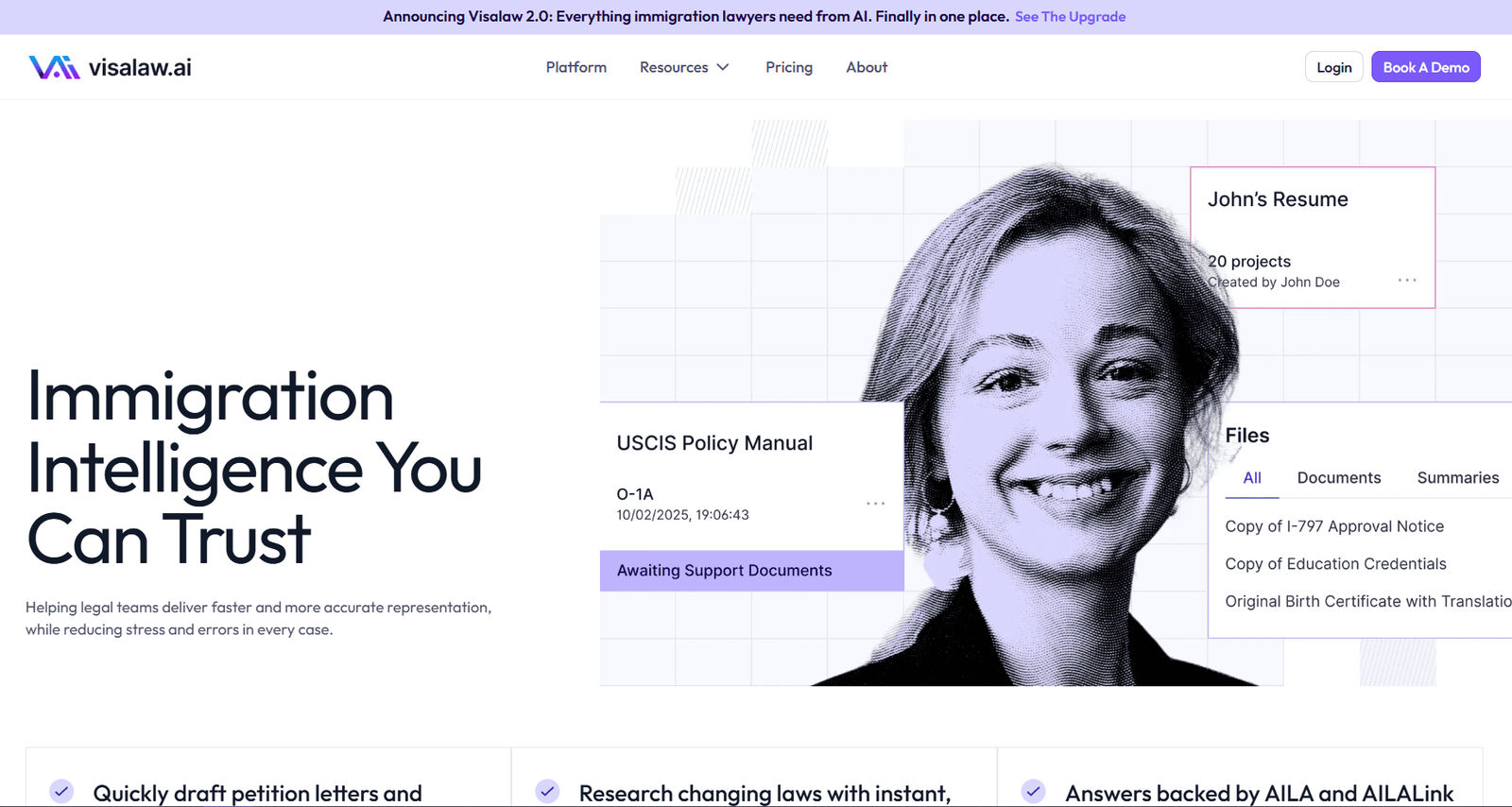
VisaLaw AI positions itself as an immigration-focused platform for lawyers, combining research, drafting, and workflow tools with verifiable citations.
It makes more sense for technical or research-heavy matters than for a simple one-off draft.
DocketWise IQ
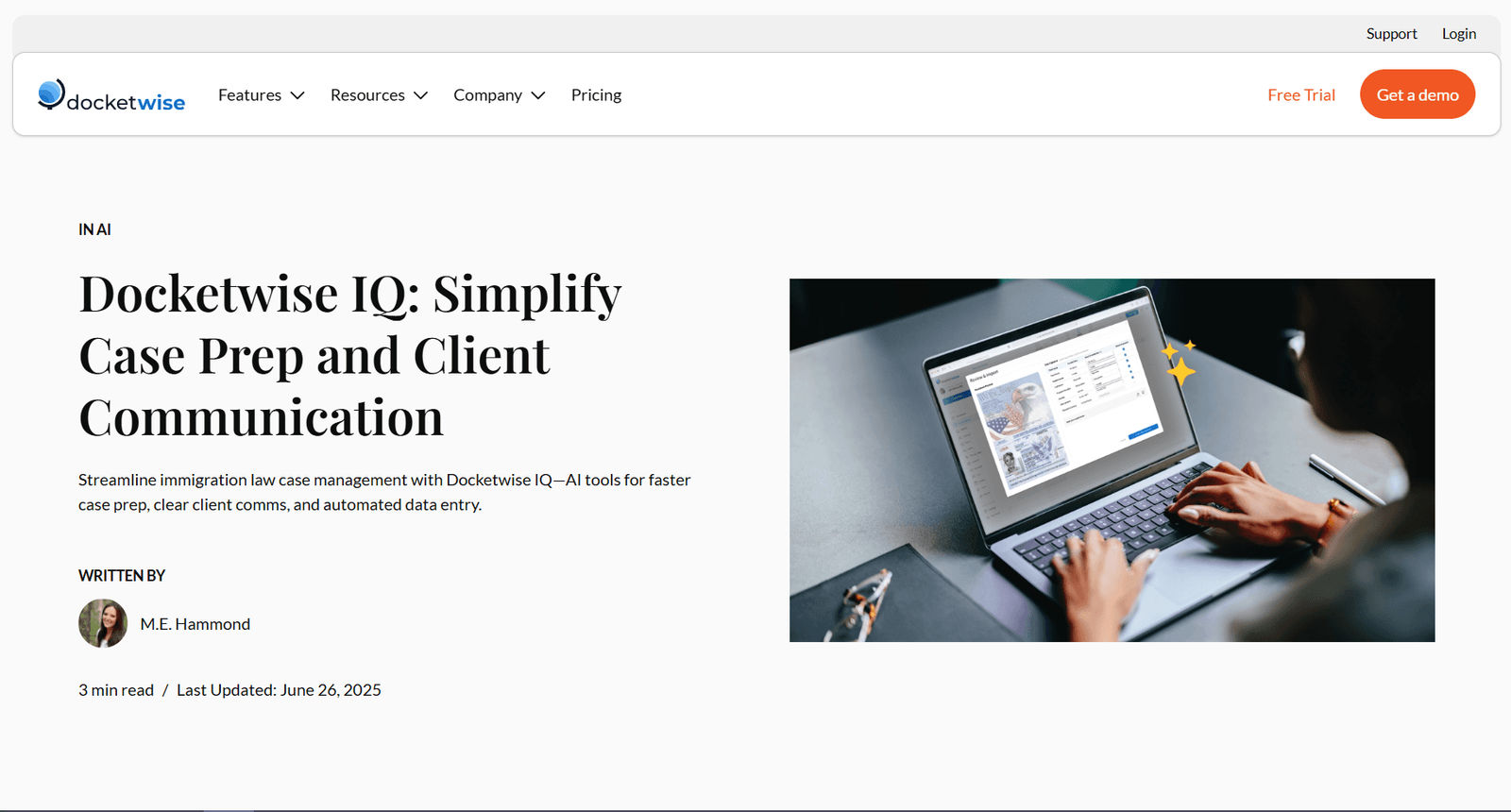
DocketWise IQ is strongest when the letter is only one part of a larger workflow. Its materials emphasize writing help, translation, and extraction of names, dates, and case details from immigration documents into forms.
Its key advantage is workflow integration.
Parley
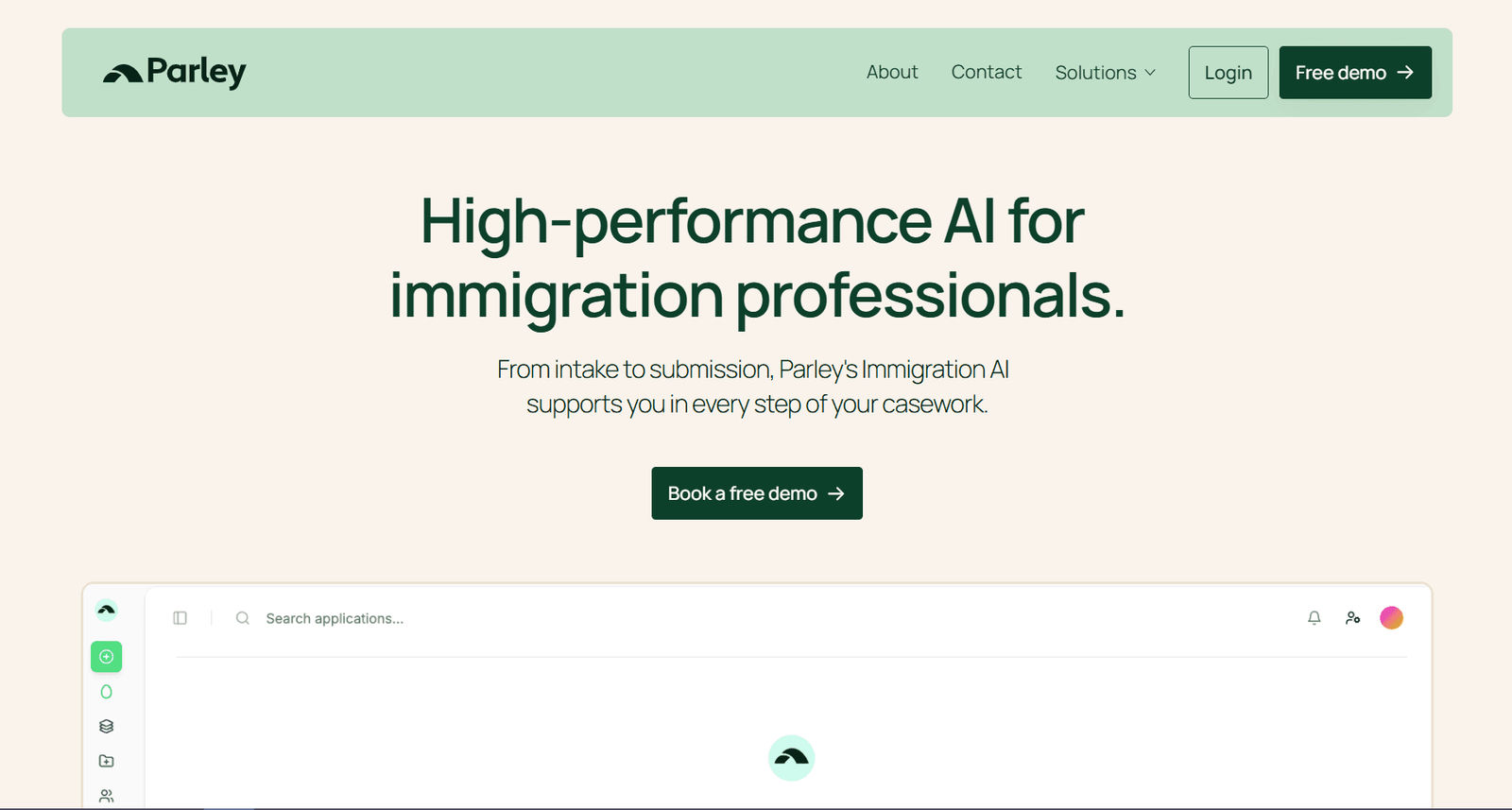
Parley positions itself as an AI immigration associate for end-to-end workflows, with evidence-aware drafting, research, and case management.
It is especially useful for document-heavy petitions where the letter needs to align with a broader evidence package.
Start with the job of the letter
Before drafting anything, figure out what the letter needs to do. That one step prevents most bad drafts.
| Letter type | What it should show | Typical writer |
|---|---|---|
| Character or support letter | Reliability, conduct, role in family or community | Employer, pastor, mentor, landlord, family friend |
| Employer letter | Duties, value, timeline, business need | Manager, HR, founder |
| Expert or recommendation letter | Why the applicant’s work matters in the field | Professor, senior specialist, expert |
| Hardship-related support letter | Real impact on spouse, parent, child, or caregiver | Relative, doctor, counselor, caregiver |
| Attorney cover letter | How evidence fits the filing strategy | Attorney or legal team |
If you are not clear on the purpose, AI will usually give you a polished draft that still misses the point.
Where AI helps most
Used well, AI saves time in four places:
-
turning rough notes into structure;
-
cutting repetition;
-
making the tone smoother;
-
helping the signer get from “blank page” to “usable draft.”
That is why AI works best after the facts are already collected. AI is good at shaping material. It is bad at replacing it.
Where AI makes letters worse
The most common AI mistake is easy to spot. The sentence sounds formal, but it could be written for anyone.
Weak version:
I am honored to recommend Michael, a person of exceptional character and unwavering dedication.
Better version:
I supervised Michael for three years at our auto parts warehouse in Houston. He handled early morning receiving shifts, trained two new employees, and was the person I called first when another team member missed work.
The second version is stronger because it gives the reader real information. Specificity creates trust.
A simple drafting process that works
Gather facts first
Before opening any AI tool, collect:
-
who is writing;
-
how they know the applicant;
-
how long they have known them;
-
two or three real examples;
-
why this letter matters in this case;
-
the writer’s title and contact information.
Without those facts, most drafts stay thin no matter how polished the wording becomes.
Prompt with details, not vague requests
Bad prompt:
Write an immigration support letter for my friend.
Better prompt:
Draft a one-page immigration support letter from a bakery owner who has known the applicant for four years as an employee. Include these facts: she handled opening shifts, covered extra hours during staff shortages, and volunteers twice a month at church food drives. Keep the tone natural and credible.
The better prompt works because it gives AI real material to shape.
Cut every sentence that could fit ten different people
Weak:
She is hardworking and respected by everyone.
Better:
During the holiday rush, she stayed late three weekends in a row to help finish large catering orders without being asked.
A concrete example does more than a flattering adjective.
Read the final letter out loud
If the signer would never naturally say “pillar of society” or “exceptional moral fiber,” cut it. A strong letter should sound like a real person with firsthand knowledge, not like a machine trying to impress someone.
What strong immigration letters usually include
A useful letter usually follows a simple order.
Who the writer is
Start with identity and credibility.
Example:
I am the operations manager at NorthLine Freight, and I supervised Luis Moreno directly from May 2021 through February 2025.
This gives role, authority, and timeline right away.
How the writer knows the applicant
Do not make the reviewer guess.
Example:
We worked together five days a week, and I reviewed his attendance, client communication, and team performance as part of my job.
Now the relationship feels real and verifiable.
Specific observations
This is the core.
Example:
In late 2023, Luis took over two delayed client accounts and stabilized both within a month. One client later asked that he remain the main contact because he explained problems clearly and followed through.
This is much stronger than simply calling him professional.
A restrained closing
End with support, not drama.
Example:
Based on my direct experience working with Luis, I am comfortable recommending him and would be glad to provide any additional information if needed.
The best letters feel steady, specific, and believable.
A live example: weak vs useful
Let’s say a pastor is writing a community support letter.
Weak version:
Elena is a wonderful person with a kind heart. She is always helpful and devoted to her community. I fully support her immigration case.
Useful version:
I have known Elena Cruz since 2020 through St. Matthew’s Church, where I serve as pastor. She volunteers twice each month at our food pantry and regularly helps elderly parishioners fill out forms and understand service schedules. I have seen that consistency over several years, which is why I trust her character and reliability.
Why this works: it gives time, place, conduct, and direct observation.
The reader sees a real person, not a generic compliment.
Common mistakes to avoid
Being too generic
Supportive language is fine, but it needs proof behind it.
Choosing the wrong signer
A senior title does not help much if the person barely knows the applicant.
Letting AI make the letter too polished
If it sounds borrowed, credibility drops.
Repeating the same point
One good example is stronger than three vague compliments.
Making the letter sound like legal argument
Most support letters work better as factual, personal evidence than as mini-briefs.
Final checklist before the letter is signed
Before the final version goes out, check this:
-
Does the first paragraph clearly identify the writer and relationship?
-
Are there at least two real examples?
-
Does the tone sound like the actual signer?
-
Is the letter built for the right purpose?
-
Are names, titles, dates, and contact details correct?
-
Has someone removed the generic filler?
If yes, the letter is probably already stronger than most template-based drafts.
Final takeaway
A strong immigration letter does not need inflated language. It needs a real writer, a real relationship, and real examples.
That is why AI works best here as a drafting assistant, not as the source of the substance. Give it the facts, let it improve the structure, and keep only the lines that sound believable.
The best AI-assisted immigration letter is not the one that sounds the most polished. It is the one that feels true.
Sources and References
USCIS Policy Manual — Chapter 6: Evidence
AI Lawyer — Immigration Recommendation Letter
LegalBridge — AI Drafting: Professional Letters in Minutes, Not Hours
DocketWise IQ — AI for Immigration Lawyers
Parley — AI Immigration Platform: Core Solutions and Workflow
Disclaimer: This information is for general knowledge and does not constitute legal advice. For guidance on your specific situation, consult a qualified attorney licensed in your state.