


A real estate deal can look fine until someone opens the document folder. That is often when the real friction starts: an old addendum, a missing disclosure, or two versions of the same agreement sitting side by side.
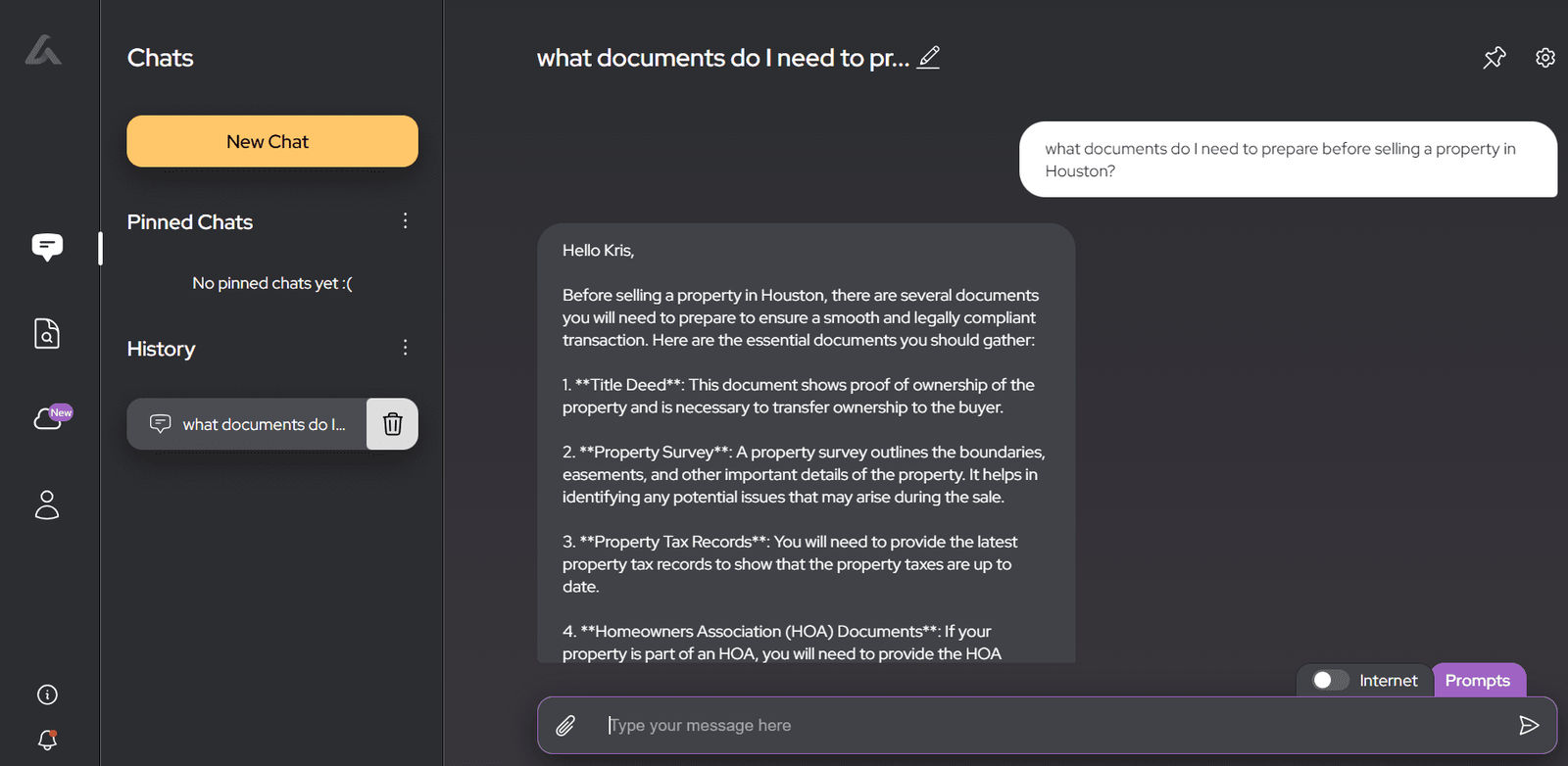
That is one reason AI is getting real attention in property work. In this article, I use “AI Lawyer” to mean an AI legal assistant for document-heavy workflows. It is not a licensed attorney. Its role is narrower: helping professionals review files, compare documents, sort information, and prepare paperwork more efficiently. That aligns with guidance from the American Bar Association and the National Association of REALTORS® on practical AI use in legal and real estate work.
One example in this space is AI Lawyer. Tools like this reflect a broader shift in real estate, where teams want faster review and less friction in document-heavy work without losing control over the process.
You Might Also Like:
Where the Value Shows Up First
The clearest value shows up in routine work. A real estate professional may need to review a contract packet, check whether a disclosure set is complete, compare updated agreements, or pull key terms from a lease.
That is where an AI legal assistant becomes useful. It can summarize a packet, highlight changes, surface likely gaps, and point to clauses that deserve a closer look. As a result, the review starts from a clearer place instead of from scratch.
A Simple Residential Example
Take a residential agent handling a live sale. The file includes the purchase agreement, seller disclosures, repair addenda, and a revised signature page. During review, it becomes clear that one attachment was updated, but the disclosure packet was not.
A document-review AI tool can catch that mismatch earlier by comparing the file set and flagging what no longer lines up. The benefit is practical. The issue is found before the file moves further, and the final review begins with a shorter checklist.
Why Due Diligence Is Such a Strong Use Case
If there is one area where AI’s value becomes especially clear, I would point to due diligence.
In commercial real estate, teams often work through leases, title materials, zoning records, surveys, permits, and supporting documents. These files do not always come from one clean system. The hard part is not only reading them. The harder part is keeping the review organized while spotting what could affect the deal.
That is why due diligence stands out. Sources like ICSC and Predio describe AI as useful for sorting records, surfacing issues, and reducing manual review in commercial workflows. In practice, that may mean spotting a changed lease clause, noticing a permit reference that needs a second look, or finding a missing supporting document before it turns into a delay.
Residential and Commercial Use Cases Are Different
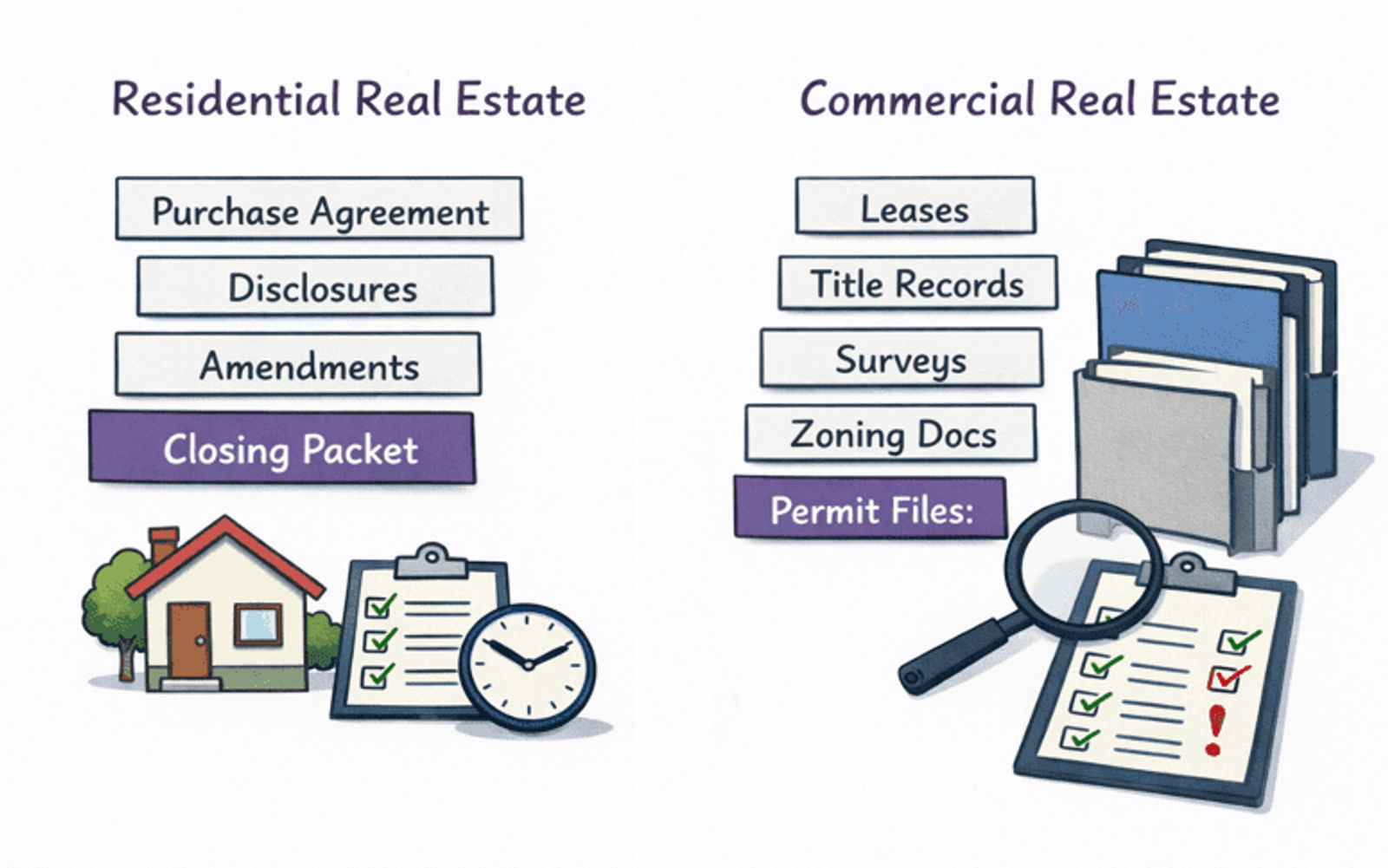
The same tool can help in both residential and commercial real estate. But the pressure points are different.
| Area | Typical documents | Where AI helps most |
|---|---|---|
| Residential | purchase agreements, disclosures, amendments, lease forms, closing packets | version checks, gap spotting, faster first-pass summaries |
| Commercial | leases, title records, surveys, zoning documents, permit files, due diligence folders | organizing large files, surfacing issues, comparing document sets |
In residential work, the pressure is usually pace. In commercial work, it is more often scale and complexity.
What Different Roles Actually Get From It
“AI for real estate” means different things depending on the job.
Agent
For agents, the value is immediate. Faster packet review means less time spent chasing document gaps before a file moves forward.
Broker
For brokers, the benefit is broader. AI helps create cleaner review steps, stronger internal guardrails, and less variation from file to file. That aligns with NAR’s AI Policy Template for Brokers.
Property Manager
Property managers deal with recurring lease paperwork, notices, renewals, and record organization. AI can reduce friction in that admin-heavy work, especially on the internal prep side. NAR has also published role-specific guidance in Generative AI for Property Managers: A Beginner’s Guide.
Transaction Coordinator
Transaction coordinators benefit when the tool helps keep the file in order, surface gaps, and make handoffs cleaner between people and stages of the deal.
Boundaries, Risks, and Tool Choice
This part should stay clear. AI can support summaries, comparisons, checklists, and document organization. It should not be used as a substitute for legal judgment.
The National Association of REALTORS® warns professionals against relying on AI for client legal advice or contract changes without proper oversight. The ABA’s ethics guidance makes the same point from the legal side.
The risks are not limited to wrong output. Teams also run into privacy issues, inconsistent staff use, and tools drifting into tasks they should not handle. That is why a few questions matter early:
-
Who can upload client documents, and what are the limits?
-
Who checks AI-generated output before anyone relies on it?
-
Is the tool being used only for internal prep, or also for client-facing language?
The same logic helps when choosing a tool. Start with one real workflow: contract comparison, packet review, lease abstraction, or due diligence file organization. Then ask direct questions. Does it work well with the files your team already uses? Can it compare documents clearly? Does it help catch gaps or inconsistent language? Are the privacy rules easy to understand?
If those answers are weak, the tool is probably not worth adopting. That is why NAR’s article on why every brokerage needs an AI use policy is so useful. It moves the conversation from curiosity to control.
Final Thought
AI is most useful in real estate when it makes document-heavy work easier to manage. Files become easier to review. Issues show up earlier. Teams spend less time digging through avoidable mess.
That is where the value really sits.
FAQs
Is an AI legal assistant only useful for large brokerages?
No. Smaller teams often feel the benefit faster because they usually have less admin and legal support behind them. A tool that makes review less messy can have a visible impact on a lean team.
Is it more useful in residential or commercial real estate?
Both, but for different reasons. In residential work, it often helps with speed and consistency. In commercial work, it is more valuable for handling larger and more fragmented document sets.
What kinds of tasks can it help with most?
It is most useful for packet summaries, document comparison, gap spotting, clause review, and file organization. In other words, it works best on the routine document work that slows teams down.
Can it replace a lawyer in a real estate deal?
No. It can support the review process, but it should not replace legal judgment. If the deal is unusual, disputed, high-value, or legally sensitive, a licensed attorney still needs to review it directly.
Sources and References
-
American Bar Association — The Impact of AI on Real Estate Lawyers
-
American Bar Association — Your Ethical Obligations When Using Generative Artificial Intelligence
-
National Association of REALTORS® — Artificial Intelligence in Real Estate
-
National Association of REALTORS® — Using AI in Your Real Estate Business? 3 Traps to Avoid
-
National Association of REALTORS® — Why Every Brokerage Needs an AI Use Policy
-
National Association of REALTORS® — AI Policy Template for Brokers
-
National Association of REALTORS® — Generative AI for Property Managers: A Beginner’s Guide
-
Predio — The Due Diligence Process in Commercial Real Estate: A Comprehensive Guide
-
ICSC — Commercial Real Estate Is Different. Your Legal AI Should Be Too
Disclaimer: This information is for general knowledge and does not constitute legal advice. For guidance on your specific situation, consult a qualified attorney licensed in your state.