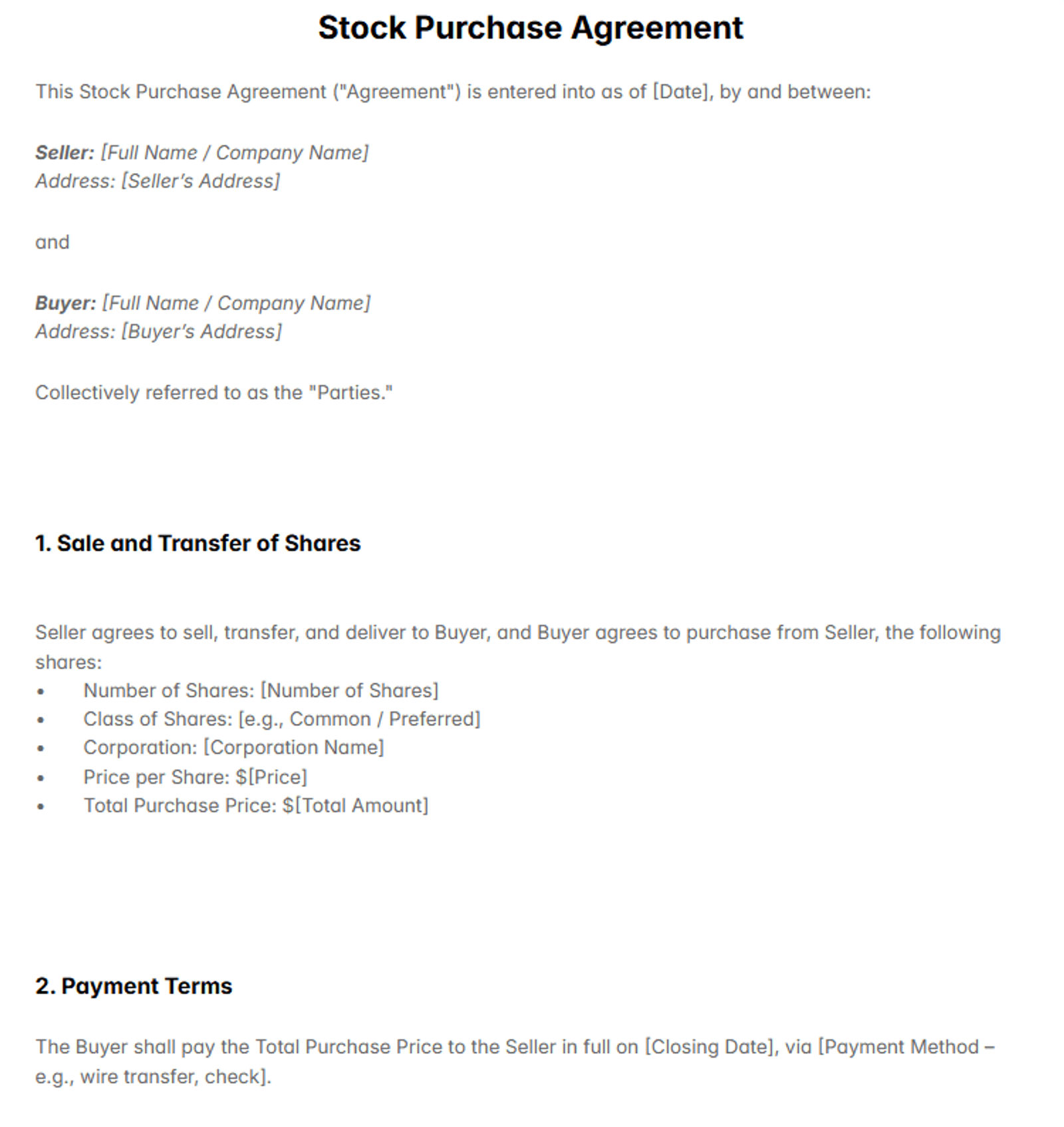



An Equipment Purchase Agreement is the contract used when one party sells equipment, machinery, tools, vehicles, or other business assets to another party. It covers the price, specifications, warranties, delivery terms, inspection rights, and what happens if something goes wrong. For many businesses, equipment is one of the largest financial commitments they make, which is why a written agreement matters.
Business spending on equipment is also a major driver of economic activity. According to the U.S. Bureau of Economic Analysis, private businesses spent over $1.37 trillion on equipment in 2023, representing a significant portion of total private investment.
With numbers that large, even small mistakes in documentation, warranties, or delivery terms can create costly disputes making a clear Equipment Purchase Agreement essential.
Download the free Equipment Purchase Agreement Template or customize one with our AI Generator, then have a local attorney review before you sign.
You Might Also Like:
-
Equipment Rental Agreement Template (Free Download + AI Generator)
-
Equipment Maintenance Agreement Template (Free Download + AI Generator)
1. What Is an Equipment Purchase Agreement?
An Equipment Purchase Agreement is a legally binding contract outlining the sale and transfer of equipment from a seller to a buyer. It describes the equipment, purchase price, payment method, delivery process, warranties, inspection rights, and what happens if the equipment is defective or late.
Businesses rely on these agreements for everything from computers and office systems to industrial machinery, vehicles, medical devices, construction tools, and manufacturing equipment. Unlike small cash purchases, equipment transactions often involve large sums of money, financing conditions, or long-term warranties.
A written agreement gives both parties certainty. The buyer knows exactly what they are purchasing, and the seller has clear proof of the terms they agreed to. This reduces disputes, prevents misunderstandings, and creates a clear record of rights, obligations, and remedies.
2. Why Equipment Purchase Agreements Matter in 2026?
Equipment purchases continue to grow in complexity, and economic conditions make written contracts more important than ever.
A major factor is rising reliance on durable goods and capital equipment. The Federal Reserve’s industrial production report shows that U.S. business equipment output increased in 2024, reflecting continued demand for machinery, vehicles, and technology-heavy equipment needed for modern operations.
This means more businesses from small contractors to large manufacturers are regularly entering equipment transactions. As prices increase, the risk of disputes also rises.
Another reason these agreements matter is regulatory requirements. In many jurisdictions, sales of certain high-value items such as commercial vehicles, medical machinery, food-processing equipment, and hazardous-materials devices require compliance with safety standards. When a contract clearly describes condition, compliance, and warranties, it protects both the buyer and seller.
Finally, equipment markets increasingly involve used, refurbished, or imported machinery. Without a written agreement specifying conditions, testing, inspections, and “as-is” rules, misunderstandings can lead to financial loss. A proper contract creates clarity before money changes hands.
3. Key Clauses and Components
-
Parties & Effective Date: Identify buyer and seller along with the effective date of the agreement.
-
Equipment Description: Provide detailed specifications including model numbers, serial numbers, features, accessories, and condition (new, used, refurbished).
-
Purchase Price & Payment Terms: State the full purchase price, deposit (if any), payment schedule, financing terms, and accepted payment methods.
-
Delivery and Transfer Terms: Define delivery method, shipping responsibilities, risk of loss, title transfer, and any installation or setup obligations.
-
Inspection and Testing: Allow the buyer to inspect the equipment before final acceptance, including testing conditions and timelines.
-
Warranties: Provide manufacturer warranties, seller warranties, or “as-is” disclaimers. Clarify what is covered and for how long.
-
Compliance Requirements: Confirm whether the equipment meets applicable safety, environmental, or regulatory requirements.
-
Maintenance and Training: Define who provides setup, maintenance, user manuals, or training (if included).
-
Liability and Indemnification: State who is responsible for damages, defects, or third-party claims.
-
Default and Remedies: Explain what happens if either party fails to meet their obligations, including return rights, refunds, or replacement.
-
Confidentiality (If Needed): Protect sensitive business information shared during the transaction.
-
Governing Law & Dispute Resolution: Choose which jurisdiction’s law applies and how disputes will be resolved (court or arbitration).
-
Signatures: Both parties sign to confirm agreement.
4. Legal Requirements by Region
-
Commercial Sales Laws: Many regions follow versions of the Uniform Commercial Code (UCC) for sales of goods, which governs warranties, delivery terms, and remedies.
-
Safety Compliance: Some machinery requires certification such as CE marking (EU) or OSHA compliance (U.S.).
-
Vehicle-Specific Rules: Purchases of commercial vehicles must follow registration and title transfer rules.
-
Tax and Reporting Requirements: Some regions require reporting of high-value equipment transactions for tax purposes.
-
Local Attorney Review: A licensed attorney ensures compliance with local sales laws, safety standards, and contract requirements.
5. How to Customize Your Equipment Purchase Agreement?
-
Tailor to the Type of Equipment: Heavy machinery needs more detail than office electronics.
-
Adjust Warranties: Choose between full warranty, limited warranty, or “as-is, no warranty.”
-
Match Delivery Reality: Add transportation, loading/unloading, and installation terms.
-
Add Testing Procedures: Specify performance tests for specialized equipment.
-
Clarify Condition: For used or refurbished items, include photos, maintenance history, or written condition statements.
-
Include Training: Add training obligations when equipment requires specialized operation.
-
Add Compliance Language: Address any special permits, safety requirements, or documentation.
6. Step-by-Step Guide to Drafting and Signing
-
Step 1-Identify the equipment: Include detailed specs, model numbers, conditions, and attachments.
-
Step 2-Set the price and payment terms: State deposit, installments, financing, or full payment.
-
Step 3-Define delivery and title transfer: Specify when ownership and risk transfer.
-
Step 4-Add inspection and testing procedures: Give the buyer time and instructions to validate equipment condition.
-
Step 5-Document warranties: State what is covered, for how long, and any exclusions.
-
Step 6-Address liability and default: Define consequences if either party fails to perform.
-
Step 7-Choose governing law: Set the legal jurisdiction clearly.
-
Step 8-Execute and store: Sign the agreement and keep copies in business records.
7. Tips for Buyers and Sellers
Document equipment condition:
Photos, maintenance records, and inspection notes reduce disputes.
Clarify risk transfer:
Specify exactly when the buyer becomes responsible for loss or damage.
Check warranty details:
Confirm what is covered before the sale don’t assume manufacturer coverage.
Use clear delivery terms:
Include shipping method, insurance, and who pays transportation costs.
Keep communication in writing:
Written confirmations help protect both sides.
8. Checklist Before You Finalize
-
Equipment description is complete
-
Price and payment terms are clear
-
Delivery and transfer terms are stated
-
Inspection rights are included
-
Warranties are documented
-
Liability and remedies are defined
-
Governing law is specified
Download the Full Checklist Here
9. Common Mistakes to Avoid
-
Using vague descriptions: Without full specifications, disputes about condition are common.
-
Skipping inspection rights: Buyers should always have an inspection window before final acceptance.
-
Ignoring warranty limitations: Sellers often include disclaimers buyers must read them carefully.
-
Confusing delivery vs. title transfer: These are not always the same and must be clearly defined.
-
Not documenting used equipment condition: Missing maintenance history can lead to conflict later.
10. FAQs
What is an Equipment Purchase Agreement in simple terms?
It is a contract that outlines the sale of equipment from one party to another. It includes specifications, price, delivery, warranties, testing rights, and other terms so both sides know exactly what to expect. It protects the buyer from receiving the wrong or defective item, and it protects the seller by documenting the terms clearly.
Does the agreement need to include inspection rights?
Yes, especially for used or specialized equipment. Inspection clauses allow the buyer to test or examine the equipment before accepting it, reducing disputes over defects or performance issues. Clear inspection timelines help both parties avoid uncertainty.
Are warranties required in an equipment purchase?
Not always. Some equipment is sold “as-is,” while other items include manufacturer or seller warranties. The agreement should state exactly what warranty, if any, applies. Buyers should never assume coverage; it must be written into the contract.
When does ownership officially transfer to the buyer?
Transfer of title depends on the contract terms. Some agreements transfer ownership upon full payment, others upon delivery, and others upon signing. The contract should specify when title and risk transfer to avoid misunderstandings or financial loss.
Can used or refurbished equipment be included in an Equipment Purchase Agreement?
Yes. These items are commonly sold through written agreements. The contract should include the condition, testing results, maintenance records, and any “as-is” disclaimers so the buyer fully understands what they are purchasing.
Disclaimer
This article is for informational purposes only and does not constitute legal advice. Laws vary by jurisdiction and change over time. Always consult a licensed attorney in your region before drafting, signing, or relying on an Equipment Purchase Agreement.
Get Started Today
A well-written Equipment Purchase Agreement protects both buyers and sellers by laying out the details clearly. It reduces risk, prevents misunderstandings, and ensures the transfer of equipment happens smoothly and fairly.
Download the free Equipment Purchase Agreement Template or customize one with our AI Generator then have a local attorney review before you sign.
You Might Also Like: